 Nordic
Medium · Hot
Baked Salmon with Mustard-Dill Glaze and Roasted Potatoes
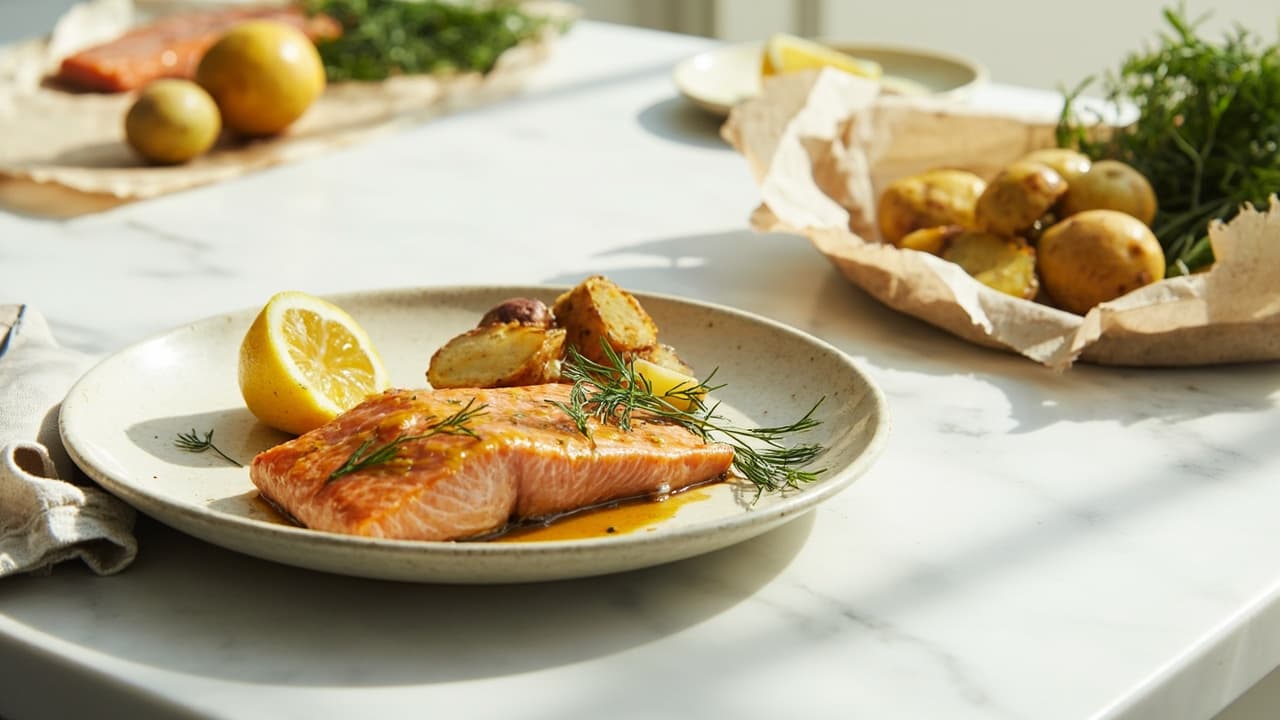
Oven-baked salmon fillets finished with a bright mustard-dill glaze, served alongside golden roasted potatoes with fresh dill. A clean, Nordic-inspired meal from Søren's kitchen.

Prep
15 min
Cook
30 min
Rest
5 min
Total
50 min
Method
Make the Glaze
Season the Salmon
2
Preheat oven to 200°C. Pat salmon fillets dry with paper towel. Season evenly with salt and white pepper on both sides.
Roast the Potatoes
3
Cut potatoes into even 2cm cubes. Toss with olive oil and salt. Spread on a baking sheet in a single layer.
Bake the Salmon
5
Place seasoned salmon fillets on a separate baking sheet or in a baking dish. Spread the mustard-dill glaze generously over the top of each fillet.
Plate
7
Arrange roasted potatoes on each plate. Place a glazed salmon fillet alongside. Finish with a light squeeze of lemon and a few fresh dill sprigs.
B
Nutri-Score
Good balance
A–E · lower is better · score 1
Calories
563
per serving
High in protein · 34gLow sugar · 3g
Protein
34g
Carbs
30g
Fat
33g
Sat. fat
9g
Fiber
5g
Sugar
3g
Sodium
1903mg
Gluten FreeHeart HealthyOmega 3 RichHigh ProteinLow CarbBalanced MealMuscle Recovery
Nutri-Score is a general nutritional-balance guide, not medical or dietary advice.
D
Environmental impact
High impact
A–E · lower is better · includes estimates
kg CO2e
2.3
per serving
DCarbonAEU all-round· carbon sets the grade
Water
0.8m³
Land
47Pt
Runoff
0.2g P
Salmon Fillet drives 90% of this recipe’s estimated footprint.
Carbon from Poore & Nemecek 2018; water, land & runoff from Agribalyse — modelled averages for comparing recipes, not a measurement of your groceries.
Flavor Profile
7
Umami
3
Sweet
5
Salty
3
Sour
1
Bitter
1
Spicy
Textures
TenderFlakyCrispy
Aromas
HerbalPungentCitrus
Kitchen Equipment
Primary Tool
OvenCounter FootprintSmall
Safety & Storage
Cooking Temperature
Bake salmon at 200°C until internal temperature reaches 63°C (145°F). Fish is done when it flakes easily with a fork and appears opaque throughout.
Cross Contamination
Use separate baking sheets or thoroughly wash between uses when roasting potatoes and baking salmon to prevent allergen cross-contact, especially important given fish allergen presence.
Storage
Refrigerate leftover salmon within 2 hours of cooking. Store in airtight container at 4°C (39°F) or below. Consume within 2 days for best quality and safety.
Handling
Pat salmon fillets dry before seasoning and baking. Ensure raw fish does not contact ready-to-eat items like fresh dill or lemon slices used for garnish.
Allergen Warning
Clearly label and communicate presence of fish, milk, and mustard allergens when serving this dish to guests. Butter may be substituted with dairy-free alternative if milk allergy is severe.
High Risk Population
Ensure pregnant individuals consume only fully cooked salmon (no raw or rare sections). Immunocompromised individuals should verify salmon is cooked to proper temperature throughout.
Shelf Life
Cooked salmon prepared with butter-based glaze has a refrigerated shelf life of 2 days. Do not leave at room temperature for more than 2 hours total including meal time.
Pro Tips
Technique
When spreading the glaze, work from the center outward with gentle pressure. The butter needs to be softened but not melted — it should hold its shape just enough to create those beautiful caramelized edges.
Substitution
Fresh dill is essential here — dried won't give you the same clean, bright finish. If fresh dill is unavailable, try tarragon with a splash of white wine vinegar for a different but equally elegant profile.
Equipment
A rimmed baking sheet ensures proper air circulation around the potatoes. Crowding them leads to steaming rather than roasting, and we want those edges to turn golden and slightly crisp.
From the chef
Salmon baked with a mustard-dill glaze is one of those combinations that earns its place at the Nordic table — the glaze catches in the oven, caramelizes at the edges, and draws the fish into something quietly complete. The potatoes roast alongside until golden, then get folded with butter and a handful of fresh dill at the end. Nothing fights for attention here. The mustard keeps the sweetness in check, the lemon lifts the whole plate, and the dill does what it always does: ties everything together without a word.
TagsBakedRoastedSalmonDill ForwardWeeknight DinnerNordicClean EatingGluten Free
AllergensFishMilkMustard
Source: generated · June 10, 2026