 Thai
ThaiMedium · Hot
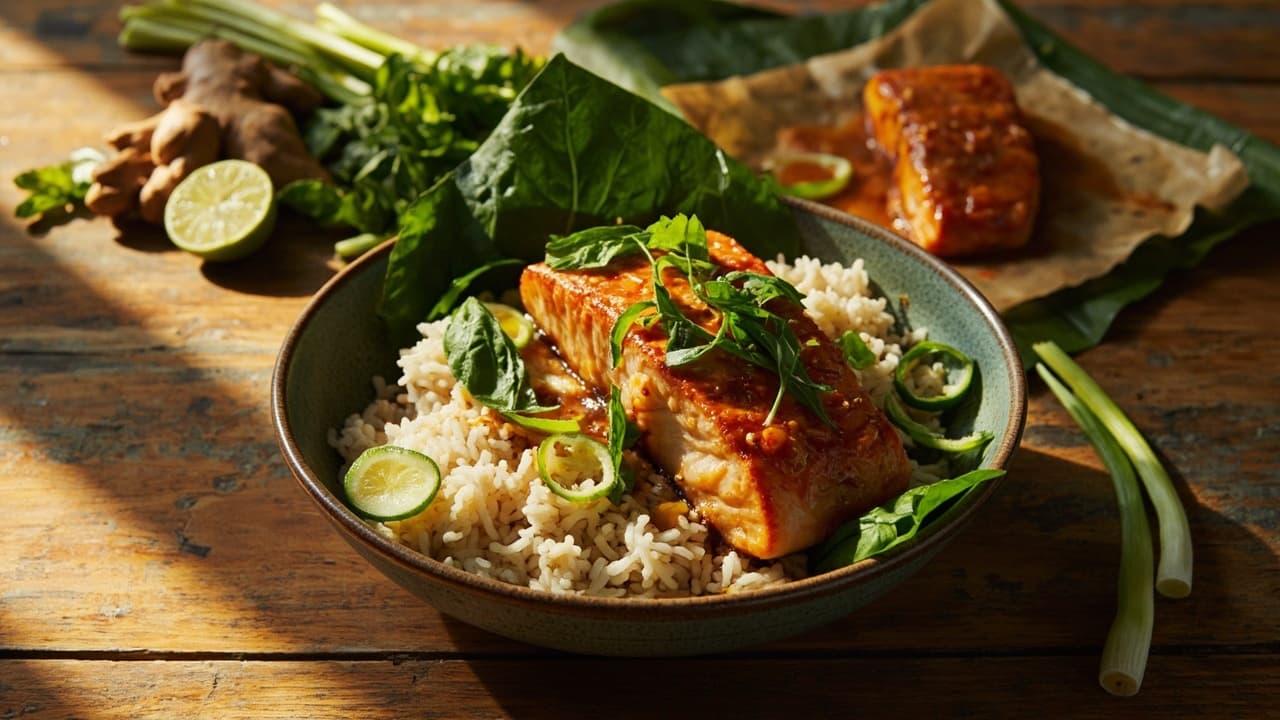
Coconut-Ginger Salmon with Thai Basil
Tender salmon fillets bathed in a fragrant coconut-ginger sauce with bright Thai basil, a perfect balance of savory, sweet, and aromatic flavors in every bite.

Prep
15 min
Cook
25 min
Rest
5 min
Total
45 min
Method
Prepare the Salmon
1
Pat the salmon fillets completely dry with paper towels and place on a cutting board.
2
Sprinkle evenly with salt, black pepper, grated fresh ginger, juice from half the lime, and torn basil leaves. Let rest while you prepare the sauce.
Build the Coconut-Ginger Sauce
3
Heat coconut oil in your wok over medium-high heat until it shimmers and smells fragrant, na krap.
4
Add the sliced fresh ginger and stir-fry for 30 seconds until you can smell that beautiful aroma.
5
Add the minced garlic and cook for another 15 seconds, stirring constantly so it doesn't burn.
6
Sear the Salmon
8
Return the wok to high heat and add the remaining coconut oil.
9
10
Use an instant-read thermometer to verify the salmon reaches exactly 145°F (63°C) at its thickest point before consuming.
Finish and Plate
12
Remove from heat and fold in the fresh basil leaves — they'll wilt slightly and release their amazing aroma.
14
Serve immediately over steamed jasmine rice, spooning plenty of that gorgeous coconut-ginger sauce over each fillet.
D
Nutri-Score
Needs balance
A–E · lower is better · score 13
Calories
483
per serving
High in saturated fat · 14gHigh in protein · 36gLow sugar · 2g
Protein
36g
Carbs
8g
Fat
34g
Sat. fat
14g
Fiber
2g
Sugar
2g
Sodium
1533mg
Gluten FreeDairy FreeLow CarbPescatarianHeart HealthyAnti InflammatoryMetabolic HealthHigh ProteinOmega 3 Rich
Nutri-Score is a general nutritional-balance guide, not medical or dietary advice.
D
Environmental impact
High impact
A–E · lower is better · includes estimates
kg CO2e
2.4
per serving
DCarbonAEU all-round· carbon sets the grade
Water
0.8m³
Land
45Pt
Runoff
0.2g P
Salmon drives 95% of this recipe’s estimated footprint.
Carbon from Poore & Nemecek 2018; water, land & runoff from Agribalyse — modelled averages for comparing recipes, not a measurement of your groceries.
Flavor Profile
6
Umami
3
Sweet
4
Salty
5
Sour
1
Bitter
4
Spicy
Textures
CrispyTenderSilkyMoist
Aromas
HerbalCitrusPungentCoconutGarlicky
Kitchen Equipment
Techniques
Safety & Storage
Cooking Temperature
Cook salmon to an internal temperature of 145°F (63°C) to ensure food safety. The flesh should appear opaque and flake easily when tested with a fork.
Cross Contamination
Use separate cutting boards and utensils for raw salmon and ready-to-eat ingredients. Wash all surfaces, knives, and plates thoroughly after handling raw fish.
Handling
Pat salmon completely dry before seasoning and searing. Moisture on the fish surface will prevent proper searing and crispy skin formation.
Storage
Refrigerate leftover salmon within 2 hours of cooking. Store in an airtight container and consume within 3 days. Reheat to 165°F before eating.
High Risk Population
Pregnant individuals, elderly, and immunocompromised persons should ensure salmon is fully cooked to recommended internal temperature of 145°F.
Allergen Warning
This dish contains fish (salmon) and soy. If using wheat-free tamari instead of traditional soy sauce, adjust for gluten-free requirements. Cross-check all packaged ingredients for allergen statements.
Pro Tips
Technique
When searing your salmon, na krap, resist the urge to move it around! Let that skin get crispy and golden for a full 3-4 minutes — patience is the secret to restaurant-quality texture.
Substitution
No Thai basil on hand? Holy basil works beautifully too, or even a mix of regular sweet basil with a pinch of anise extract — but please, never skip the fresh herbs entirely!
From the chef
This coconut-ginger salmon is what happens when the wok meets the sea, na krap. The fillets go in skin-side down over high heat until they crackle and turn golden, then a sauce of fresh ginger, garlic, and lime wraps everything in warmth. Coconut oil carries all those aromatics deep into the flesh, and torn Thai basil stirred in at the last second releases its anise-y perfume without wilting away. The result is tender, fragrant, perfectly balanced — savory, sweet, and bright all at once.
TagsWeeknight DinnerQuickSpicySeafoodThai BasilCoconutOne PotWok Cooked
AllergensFishSoyGluten
Source: generated · June 10, 2026