 Fusion
Medium · Room Temp
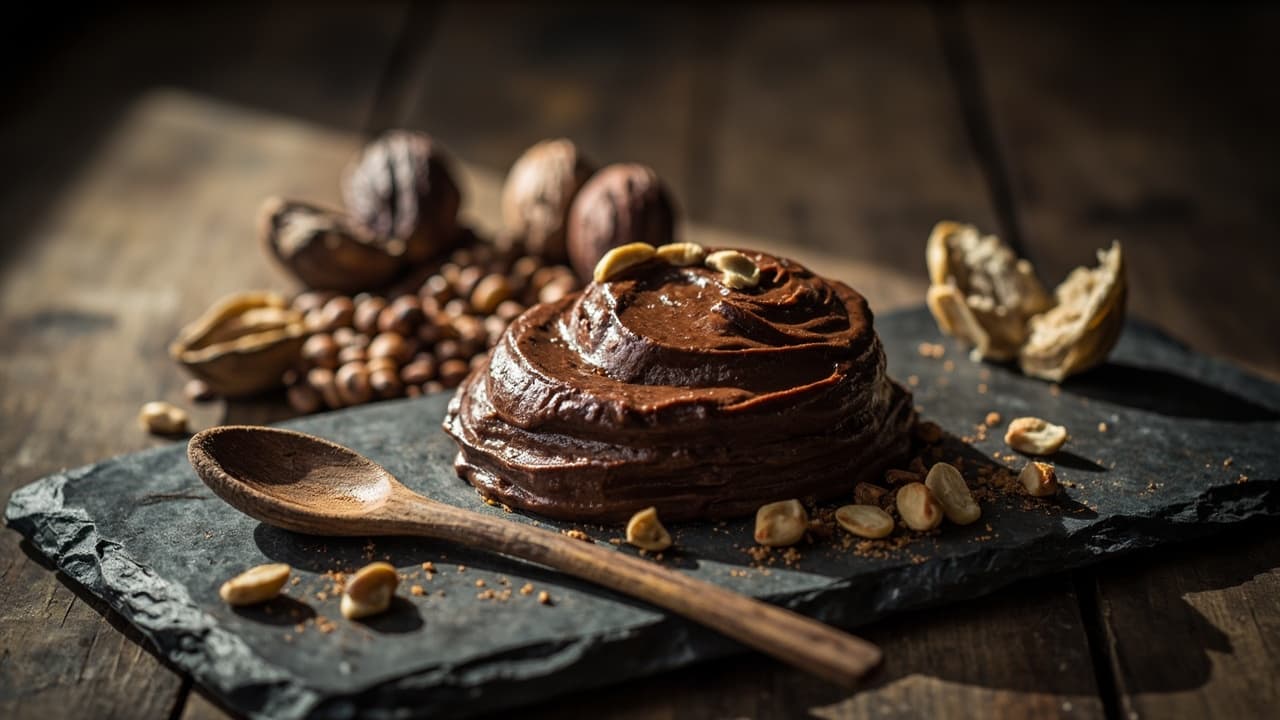
Pinto Bean Chocolate Spread with Toasted Hazelnuts
A silky, terroir-forward spread where pinto beans provide a velvety canvas for single-origin dark chocolate, enriched with golden toasted hazelnuts and a whisper of smoked sea salt.

Prep
15 min
Cook
30 min
Total
45 min
Method
1
Place cooked pinto beans and 1/2 cup water in a medium saucepan over medium heat. Simmer gently for 10 minutes until beans are very tender and liquid has reduced slightly.
2
Transfer warm beans and remaining liquid to a high-speed blender. Blend on high for 2 minutes until completely smooth, scraping down sides once. Set aside.
3
Set up a double boiler: place a heatproof bowl over a pot of barely simmering water. Add chopped dark chocolate and cocoa powder to the bowl, ensuring water does not touch the bottom.
4
Melt chocolate mixture undisturbed for 3-4 minutes, then stir gently with a spatula until glossy and fluid. Remove from heat and let cool 2 minutes.
5
While chocolate melts, spread toasted hazelnuts on a clean work surface. Rub vigorously with a kitchen towel to remove loose skins. Roughly chop half the hazelnuts; leave remaining half in larger pieces for texture.
6
Pour melted chocolate into the blender with the bean puree. Add honey, coconut oil, and 1/4 tsp salt.
7
Blend on medium-high for 90 seconds until fully emulsified and glossy. The mixture should coat a spoon thickly.
8
Add chopped hazelnuts (reserving some for garnish). Pulse 3-4 times to fold through, keeping pieces intact.
9
Transfer spread to a clean glass jar. Press a piece of plastic wrap directly onto the surface to prevent skin formation.
10
Cool at room temperature for 15 minutes, then refrigerate until firmly set, about 2 hours. The spread will thicken considerably as it cools.
11
Before serving, let stand at room temperature 10-15 minutes until spreadable. Garnish with reserved toasted hazelnut pieces. Store refrigerated for up to two weeks.
C
Nutri-Score
Fair balance
A–E · lower is better · score 7
Calories
497
per serving
High in saturated fat · 8gCalorie-dense · 497 kcalSource of protein · 18gHigh in fibre · 13g
Protein
18g
Carbs
60g
Fat
23g
Sat. fat
8g
Fiber
13g
Sugar
14g
Sodium
293mg
Dairy FreeGluten FreePlant ForwardHeart HealthyPlant ProteinHigh FiberPlant Based Protein
Nutri-Score is a general nutritional-balance guide, not medical or dietary advice.
E
Environmental impact
Very high impact
A–E · lower is better · includes estimates
kg CO2e
0.9
per serving
ECarbon
Dark chocolate, finely chopped drives 78% of this recipe’s estimated footprint.
Carbon from Poore & Nemecek 2018; water, land & runoff from Agribalyse — modelled averages for comparing recipes, not a measurement of your groceries.
Flavor Profile
6
Umami
4
Sweet
5
Salty
2
Sour
3
Bitter
1
Spicy
Textures
CreamyCrunchySilkySmooth
Aromas
CocoaEarthyHerbalNuttySmoky
Kitchen Equipment
Primary Tool
High Speed BlenderDouble BoilerHigh Speed BlenderChef KnifeCutting BoardKitchen TowelMeasuring CupsMeasuring SpoonsMedium SaucepanSpatulaGlass ContainerHeatproof BowlPlastic Wrap
Safety & Storage
Allergen Warning
Hazelnuts are a primary allergen in this recipe. Verify all chocolate products are from facilities that properly disclose allergen information. Some dark chocolates may contain milk, soy lecithin, or be processed on shared equipment with allergens.
Cross Contamination
Use dedicated equipment for hazelnut processing if preparing for individuals with severe tree nut allergies. Clean blender thoroughly between uses if avoiding allergen cross-contact.
Storage
Store finished spread in an airtight glass container with plastic wrap pressed directly against the surface to prevent skin formation. Refrigerate immediately after cooling to room temperature.
Shelf Life
Consume within two weeks when refrigerated. Do not leave at room temperature for more than 15 minutes before serving as the bean base creates a favorable environment for bacterial growth.
Cooking Temperature
Maintain water at a bare simmer (not vigorous boil) when melting chocolate in double boiler. Water vapor or splashing can cause chocolate to seize and become unusable.
Handling
Allow melted chocolate to cool 2 minutes before adding to blender with bean puree to prevent thermal shock and ensure proper emulsion. The spread reaches optimal consistency after 2 hours of refrigeration.
High Risk Population
This recipe contains tree nuts and potential milk/soy allergens. For immunocompromised individuals, pregnant persons, or those with severe nut allergies, exercise extreme caution and verify all ingredient sources.
Pro Tips
Technique
When melting your chocolate over the double boiler, patience is everything—stirring too early can introduce air bubbles and dull that beautiful sheen. I wait until I see the edges just beginning to soften before I drag my spatula through, and the result is a glossy, fluid chocolate that emulsifies seamlessly with the bean puree.
Substitution
If Ecuadorian single-origin chocolate isn't available, reach for any 70% dark chocolate with recognizable origin on the label. The terroir matters less than the quality—avoid anything with soy lecithin or vegetable oils, as these will fight the coconut oil's natural binding and create a grainy texture.
From the chef
I discovered this spread almost by accident—my first batch was meant to be a thick drinking chocolate, but the pinto beans changed everything. They absorb the cacao's terroir like a fine Burgundy absorbs its oak, creating a silky foundation that lets the chocolate's origin story shine through rather than overwhelming it. The toasted hazelnuts bring that Piedmontese earthiness that every great chocolate deserves, and a whisper of smoked sea salt is the only seasoning needed to remind you that you're tasting something honest.
TagsChocolateBean BasedHazelnutSweet SpreadMake AheadGluten FreeVeganGourmetSilkyTerroir Focused
AllergensTree NutsMilkSoyGluten
Source: generated · June 13, 2026