 Ethiopian
Medium · Hot
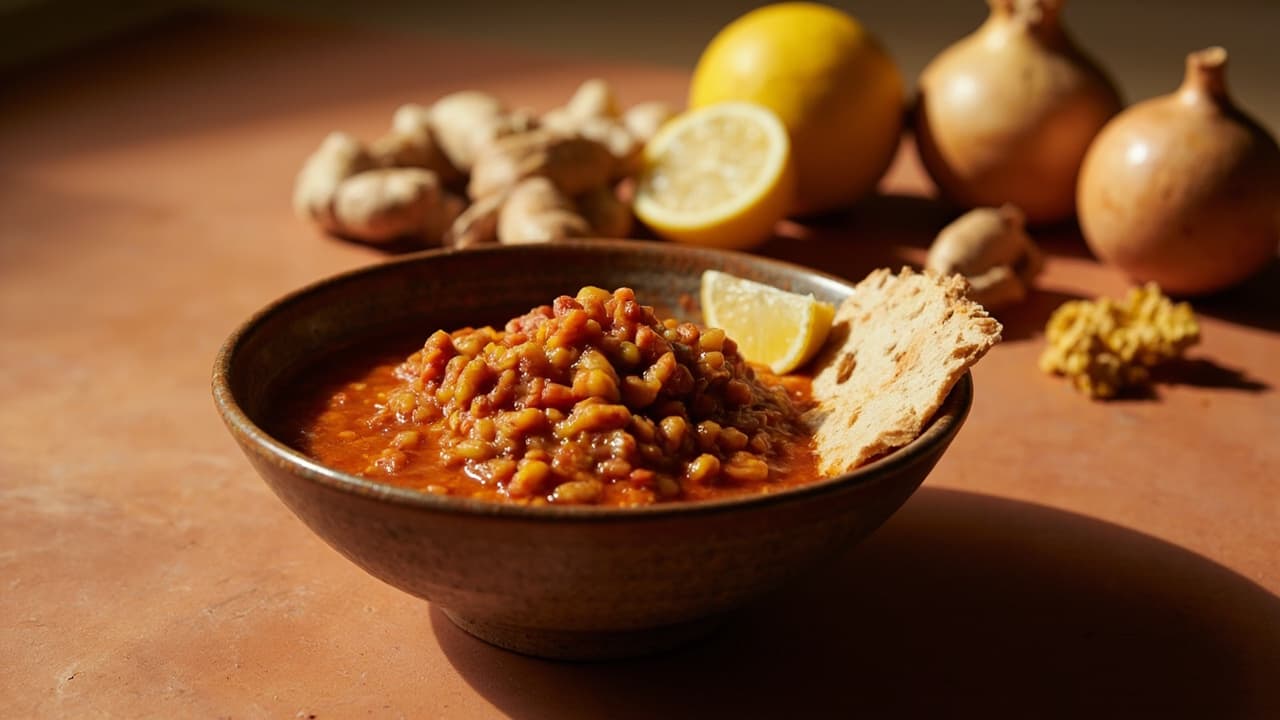
Red Lentil Wat with Lemon and Paprika
A fragrant Ethiopian red lentil stew infused with warm berbere-style spices, brightened with fresh lemon juice and finished with paprika.

Prep
15 min
Cook
35 min
Total
50 min
Method
Prep
1
Dice the yellow onion, mince the garlic, and grate or finely mince the fresh ginger. Set aside.
2
Rinse the red lentils under cold water until water runs clear. Drain well and set aside.
3
Cut the lemon in half. Juice one half and slice the other half into wedges for serving.
Build the Base
4
Bloom the Spices
Simmer the Wat
7
Add the rinsed red lentils and chicken broth to the pot. Stir well to combine everything.
8
9
If the stew is too thick, add additional chicken broth or water, ¼ cup at a time, until desired consistency is reached.
A
Nutri-Score
Excellent balance
A–E · lower is better · score -7
Calories
455
per serving
Calorie-dense · 455 kcalHigh in protein · 24gSource of fibre · 7gLow sugar · 3gLow saturated fat · 2g
Protein
24g
Carbs
68g
Fat
12g
Sat. fat
2g
Fiber
7g
Sugar
3g
Sodium
803mg
Weight ManagementHigh ProteinHigh FiberLow SodiumLow Sugar
Nutri-Score is a general nutritional-balance guide, not medical or dietary advice.
A
Environmental impact
Very low impact
A–E · lower is better · includes estimates
kg CO2e
0.2
per serving
ACarbonAEU all-round· both agree
Water
0.6m³
Land
21Pt
Runoff
0.04g P
Red Lentils drives 56% of this recipe’s estimated footprint.
Carbon from Poore & Nemecek 2018; water, land & runoff from Agribalyse — modelled averages for comparing recipes, not a measurement of your groceries.
Flavor Profile
6
Umami
3
Sweet
5
Salty
5
Sour
1
Bitter
5
Spicy
Textures
SilkyTenderCreamyThick
Aromas
EarthySpicyWarmCitrus
Kitchen Equipment
Primary Tool
StockpotCounter FootprintMedium
Safety & Storage
Cooking Temperature
When blooming spices, heat olive oil over medium heat and add spices only after onion is softened. Stir constantly for 30-60 seconds until fragrant but not burning. Spices should sizzle gently; if they smoke or turn dark brown immediately, remove from heat and reduce temperature to prevent scorching and bitter flavors.
Cross Contamination
Rinse red lentils thoroughly under cold running water until water runs clear to remove dust and debris. Use separate cutting boards for raw aromatics and any allergen-containing ingredients. Clean utensils thoroughly between uses if preparing multiple dishes.
Allergen Warning
Chicken broth may contain hidden allergens including gluten, soy, celery, and fish. Always check ingredient labels or use homemade broth. When serving communal-style from one pot, note that the entire dish may be contaminated for guests with these allergies.
High Risk Population
For immunocompromised individuals, elderly, or pregnant individuals, ensure chicken broth is heated to a rolling boil (212°F) and lentils reach tender consistency (approximately 25-30 minutes of simmering). Undercooked lentils may harbor bacteria and antinutrients.
Storage
Cool stew to room temperature within 2 hours of cooking. Store in airtight containers in refrigerator at 40°F or below for up to 4 days, or freeze at 0°F for up to 3 months. Reheat leftovers to 165°F until steaming hot throughout before serving.
Handling
When juicing lemon, avoid contact with eyes and open wounds as citric acid may cause irritation. Wash hands thoroughly after handling raw garlic and cayenne pepper, and avoid touching face or eyes during preparation.
Equipment Safety
Use a large stockpot (minimum 6-quart capacity) to accommodate lentils expanding and liquid simmering without overflow. Partially cover pot to allow steam escape while preventing excessive evaporation during the 20-25 minute simmer.
Ingredient Quality
If using store-bought chicken broth, verify it has been stored at or below 40°F and check the use-by date. Do not use broth from damaged, bulging, or rusted containers as this indicates potential bacterial contamination.
Pro Tips
Technique
When you bloom the spices in the hot oil, keep that ladle moving! Thirty seconds of constant stirring releases the essential oils without burning. You want to see them glisten and bloom, not sizzle and smoke—that's the difference between flat spices and the soul-deep warmth of berbere.
Substitution
No niter kibbeh? A good extra virgin olive oil works beautifully here, though you're missing that spiced butter soul. In a pinch, half butter and half oil gives you something close. And if berbere isn't in your pantry, this blend of paprika, cayenne, turmeric, and cumin will carry you home to Ethiopia.
Make Ahead
This wat actually improves overnight! The spices deepen and the lentils meld into something richer. Make it the day before your gathering, and on the day you only need to gently reheat while the aroma reminds everyone why they came.
Flavor Boost
For an extra layer of complexity, sauté the onions longer until deeply golden—almost jammy. And don't skip the fresh ginger; it brings a brightness that dried can never match. The lemon juice at the end isn't just acidity, it's the dish waking up.
From the chef
Red lentil wat begins with a conviction: lentils left unseasoned are a waste of everyone's time. Here, paprika, cayenne, turmeric, and cumin toast directly in the onion-garlic oil for a full minute before the rinsed lentils go in, so the spice is already woven into the foundation before anything simmers. Twenty minutes covered and the lentils break down into a thick, fragrant stew that carries berbere warmth without any single spice dominating. A squeeze of fresh lemon at the very end is what makes it dance — bright against the deep earthiness, just enough edge to remind you there is something new in this old tradition. Serve from the communal pot, tear the injera, eat together.
TagsEthiopian CuisineWatRed LentilsBerbereOne PotWeeknight DinnerHigh ProteinGluten FreePlant BasedSpicedCommunal Dining
AllergensGlutenSoyCeleryFish
Source: generated · June 10, 2026