 Nordic
Medium · Hot
Mustard-Glazed Cod with Braised Cabbage and Potatoes
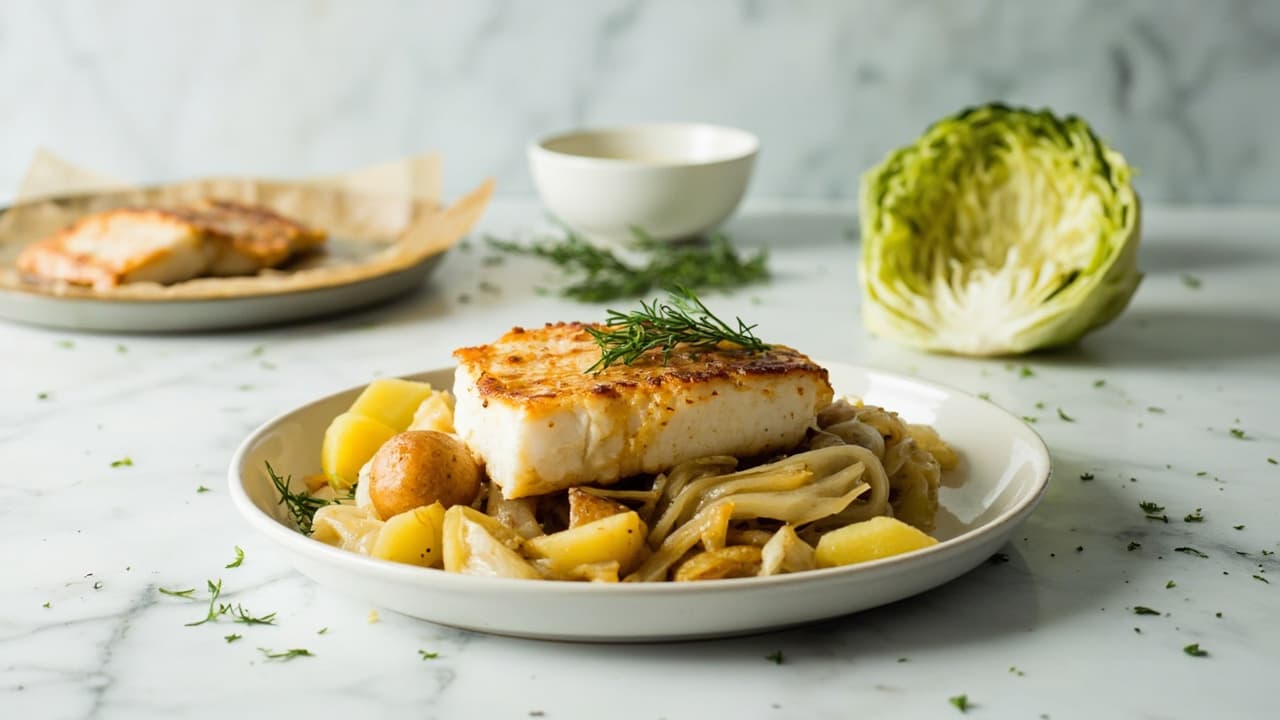
Flaky cod fillets brushed with a bright mustard-lemon glaze, nestled beside tender braised cabbage sharpened with white vinegar and a side of buttery new potatoes with fresh dill. A clean, Nordic-inspired plate from Chef Søren Vinter.

Prep
15 min
Cook
30 min
Total
45 min
Method
Prepare the Components
1
Quarter the cabbage and remove the core. Cut each quarter into rough 2-inch strips. Peel and halve the yellow onion, then slice into thin half-moons.
2
Scrub the potatoes under cold running water. Cut any larger ones in half so all pieces are roughly uniform, about 1.5 inches.
3
Pat the cod fillets dry with a clean kitchen towel. Season lightly with salt and white pepper on both sides. Set aside at room temperature.
Braise the Cabbage
4
Melt 2 tablespoons of butter in a wide, heavy-bottomed pot or Dutch oven over medium heat. Add the sliced onion and cook, stirring occasionally, until softened and translucent, about 5 minutes.
5
6
Pour in the white vinegar and 100ml of water. Season with salt. Reduce heat to low, cover the pot, and braise for 20 minutes until the cabbage is tender and the liquid has reduced to a light, fragrant glaze. Remove from heat and keep covered.
Cook the Potatoes
7
8
Cook the potatoes for 15-18 minutes until tender when pierced with a knife but not falling apart. Drain and return to the warm pot.
9
Add 3 tablespoons of butter to the drained potatoes and toss gently until the butter has melted and coated each piece. Fold in the fresh dill. Taste and adjust salt if needed. Keep warm.
Glaze and Pan-Seer the Cod
10
11
Heat a large non-stick or cast-iron skillet over medium-high heat. Add a splash of olive-oil to the pan.
12
Place the cod fillets skin-side down in the hot pan. Sear for 3 minutes until the skin is golden and releases easily. Carefully flip each fillet.
B
Nutri-Score
Good balance
A–E · lower is better · score 2
Calories
401
per serving
High in protein · 26gLow sugar · 5g
Protein
26g
Carbs
30g
Fat
20g
Sat. fat
11g
Fiber
5g
Sugar
5g
Sodium
1796mg
Gluten FreeDairy Free AdaptablePescatarianLow CalorieHeart HealthyDiabetes FriendlyWeight ManagementLow SodiumHigh ProteinBalanced Macros
Nutri-Score is a general nutritional-balance guide, not medical or dietary advice.
Grade pending
Environmental impact
Estimated footprint
Grade pending · 73% ingredient coverage
kg CO2e
≥0.4
per serving
Cabbage drives 27% of this recipe’s estimated footprint.
Carbon from Poore & Nemecek 2018; water, land & runoff from Agribalyse — modelled averages for comparing recipes, not a measurement of your groceries.
Flavor Profile
6
Umami
3
Sweet
5
Salty
5
Sour
1
Bitter
2
Spicy
Textures
FlakyTenderButteryCrisp
Aromas
Dill ForwardButteryCitrusHerbaceous
Kitchen Equipment
Primary Tool
SkilletCounter FootprintMedium
Techniques
Safety & Storage
Cooking Temperature
{"classification":"cooking-temperature","text":{"text":"Cook cod to an internal temperature of 145°F (63°C) per USDA guidelines. However, many chefs recommend 130-140°F (54-60°C) for optimal cod texture—fish continues cooking 2-3°F after removal (carryover). At 145°F, cod risks becoming dry and tough. Target 135-140°F for ideal flakiness and moisture."}}
Cross Contamination
Raw cod should not contact ready-to-eat foods like dill potatoes or cabbage. Use separate cutting boards, utensils, and clean hands between handling raw fish and other components.
Butter used in the mustard glaze should not be reused for other components after contact with raw fish. Reserve a clean portion for the glaze if needed.
Storage
Store raw cod at 40°F (4°C) or below. If not cooking immediately, place cod on ice or in the coldest part of the refrigerator.
Leftover cooked dish should be refrigerated within 2 hours of cooking. Consume within 3-4 days when stored properly at 40°F (4°C) or below.
Shelf Life
Use fresh cod within 1-2 days of purchase for optimal quality and food safety. Do not refreeze thawed cod.
Handling
Pat cod fillets dry before cooking to ensure proper searing. Moisture on the fish surface can cause splattering and uneven browning.
High Risk Population
Elderly, pregnant, immunocompromised, or young children should ensure fish is cooked to 145°F (63°C). Pregnant individuals should verify cod is sourced from reputable suppliers to minimize parasite risks.
Allergen Warning
Butter contains milk allergen. Verify all butter products used are free from cross-contact with other allergens if serving to individuals with severe milk allergies.
Pro Tips
Technique
When searing the cod, resist the urge to move it. Let the skin caramelize fully before flipping — patience gives you that golden crust that holds the glaze beautifully.
Substitution
If fresh dill is unavailable, a light touch of dried dill works, though I encourage keeping a small pot by the window — it takes nothing and gives everything.
Time Saver
The cabbage braises while the potatoes cook, so plan your timing in parallel — both can rest covered while you finish the cod.
Flavor Boost
A finishing grating of lemon zest over the plated cod adds brightness that the juice alone cannot — that essential oil hit transforms the whole dish.
From the chef
This plate is a quiet conversation between sea and earth. The cod comes in bright with mustard and lemon, while the braised cabbage brings that clean, sharp note I grew up knowing — the same white vinegar my mother used on everything from pickled cucumbers to wilted greens. New potatoes and dill complete the picture: simple, honest, and exactly as it should be.
TagsMedium Difficulty
AllergensFishMilkMustard
Source: generated · June 10, 2026