 Maghrebi
Medium · Warm
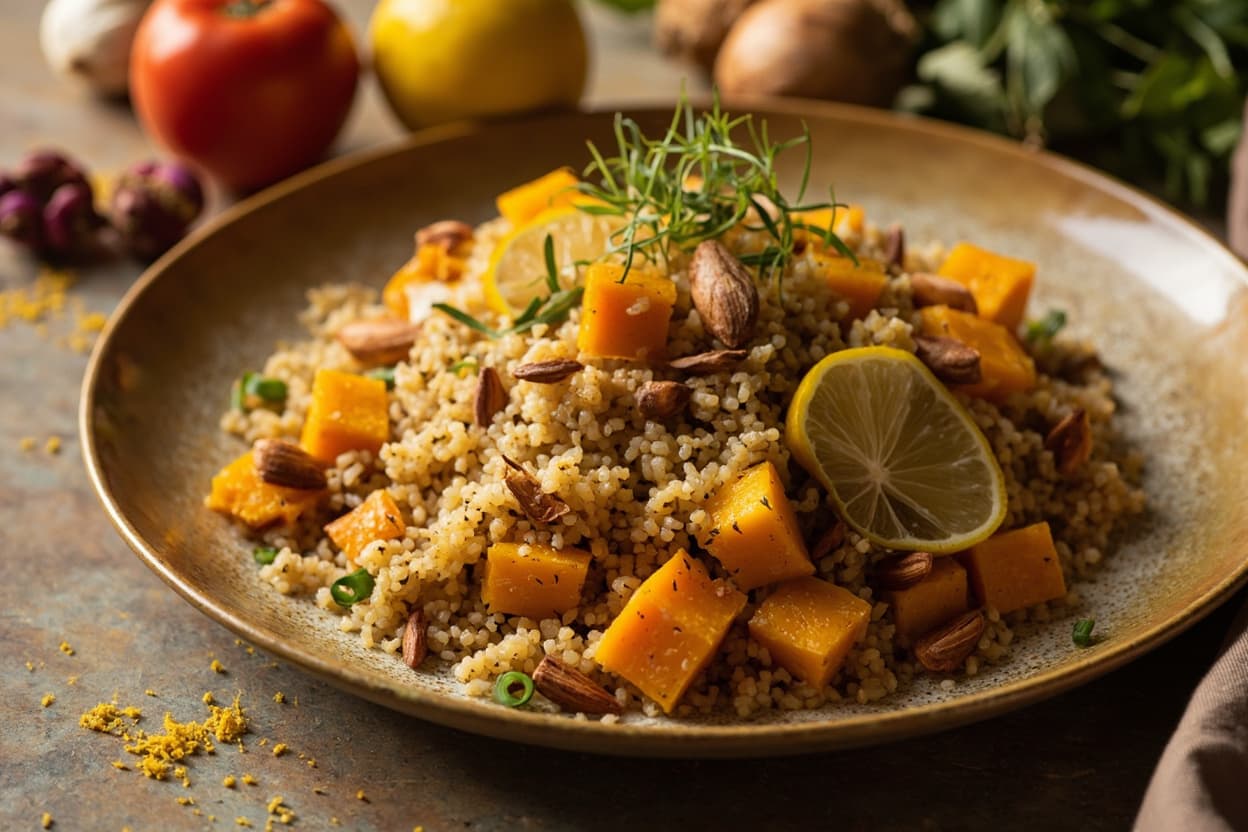
Saffron Quinoa with Roasted Squash and Almonds
Quinoa absorbs saffron-steeped water slowly, each grain tinged gold and carrying a delicate mineral warmth before roasted butternut squash is laid across the surface, its caramelized edges adding sweetness with a little smoke from the oven. Almonds provide the crunch the dish needs, and parsley and lemon close with a brightness that keeps the whole thing grounded in the present. A detour from couscous that still knows where it came from.
Prep
15 min
Cook
30 min
Rest
5 min
Total
50 min
Method
Toast the Saffron and Prepare the Quinoa
1
Crumble the saffron threads into a small bowl and pour in 3 tablespoons of warm water. Let steep for 5 minutes until the liquid turns a deep amber-gold and smells fragrant.
2
Roast the Butternut Squash
4
Preheat the oven to 400°F (200°C). Toss the cubed butternut squash with olive oil, ground cumin, smoked paprika, and salt on a baking sheet until evenly coated.
5
Spread in a single layer and roast for 25-30 minutes, turning halfway through, until the squash is golden at the edges and tender when pierced with a knife.
Toast the Almonds
6
While the squash roasts, place the sliced almonds in a dry skillet over medium-low heat. Toast, stirring frequently, for 3-4 minutes until they turn a warm nutty brown and smell toasted. Watch carefully to avoid burning. Transfer to a plate to cool.
Build the Dish and Finish
7
In a large skillet, warm 2 tablespoons of olive oil over medium heat. Add the diced yellow onion and cook for 4-5 minutes until softened and translucent.
8
9
Fold the roasted butternut squash into the aromatic pan and toss gently to combine. Let it warm through for 2 minutes.
10
A
Nutri-Score
Excellent balance
A–E · lower is better · score -6
Calories
1439
per serving
Source of protein · 48gSource of fibre · 32gLow sugar · 18gLow salt · 636mg
Protein
48g
Carbs
210g
Fat
49g
Sat. fat
12g
Fiber
32g
Sugar
18g
Sodium
636mg
VeganDairy FreeGluten FreeWhole30 CompatibleHeart HealthyDiabetes FriendlyAnti InflammatoryLow InflammatoryHigh FiberBalanced MacrosPlant Forward
Nutri-Score is a general nutritional-balance guide, not medical or dietary advice.
B
Environmental impact
Low impact
A–E · lower is better · includes estimates
kg CO2e
0.6
per serving
BCarbonAEU all-round· carbon sets the grade
Water
7.3m³
Land
55Pt
Runoff
0.1g P
water or light broth drives 36% of this recipe’s estimated footprint.
Carbon from Poore & Nemecek 2018; water, land & runoff from Agribalyse — modelled averages for comparing recipes, not a measurement of your groceries.
Flavor Profile
6
Umami
5
Sweet
4
Salty
3
Sour
1
Bitter
1
Spicy
Textures
TenderCrispyFluffyCrunchy
Aromas
NuttyHerbalSmokyEarthyFloral
Kitchen Equipment
Primary Tool
Large SkilletBaking SheetSaucepanLarge SkilletDry SkilletFine Mesh SieveChef KnifeCutting BoardMixing BowlPlastic WrapMeasuring Cups
Counter FootprintMedium
Safety & Storage
Allergen Warning
This recipe contains tree nuts (almonds). Do not serve to individuals with tree nut allergies. Clearly label dish when serving at events.
Cross Contamination
Use dedicated equipment and utensils when handling almonds if preparing for allergen-sensitive individuals. Clean all surfaces and tools thoroughly between uses.
Cooking Temperature
Roast butternut squash at 400°F (200°C) for 25-30 minutes until golden and tender. Almonds must be toasted over medium-low heat, watched continuously to prevent burning and smoke.
Storage
Cool and refrigerate leftover quinoa dish within 2 hours. Store in airtight container for up to 3-4 days. Reheat thoroughly to 165°F before consuming.
Handling
Saffron threads must be bloomed in warm water for at least 5 minutes to properly release flavor and color. Quinoa must be rinsed thoroughly before cooking to remove bitter saponins.
High Risk Population
Young children, elderly individuals, and immunocompromised persons should ensure almonds are finely chopped to prevent choking hazards and that all components are cooked to safe temperatures.
Pro Tips
Technique
Never rush the saffron—let it steep in warm water until the liquid turns the color of amber honey before it touches your grain. That bloom is where the magic begins.
Substitution
If butternut squash is out of season, sweet potato or even roasted carrots will carry that sweet-savory tension just as well; the warmth of cumin and smoked paprika will guide them home.
From the chef
Saffron steeps in warm water until the liquid turns a deep amber-gold, and that color is the first thing quinoa absorbs as it simmers — each grain finishing pale gold and carrying a faint mineral warmth. Butternut squash roasts separately with cumin and smoked paprika until its edges catch and caramelize, adding sweetness that pulls against the earthy spice base. The two come together over bloomed garlic and turmeric, almonds toasted in a dry pan until nutty and fragrant scattered across the top. Lemon juice goes in last, pulling everything into focus the way a bright finish always does.
TagsSaffronRoasted SquashToasted AlmondsWarm SpicesLemon FinishMediterranean InspiredGluten FreePlant BasedWeeknight Dinner
AllergensTree Nuts
Source: generated · May 30, 2026