 Brazilian
Medium · Hot
Sunday Feijoada with Pork Belly and Smoky Sausage
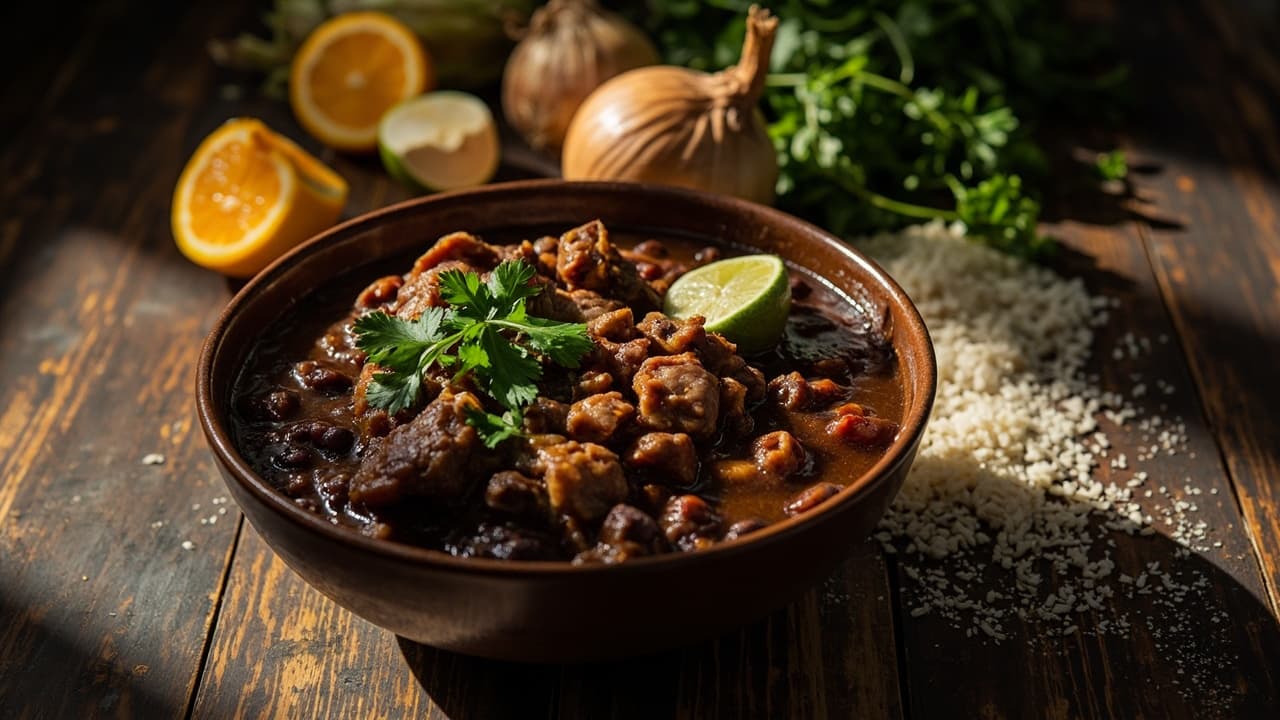
A rich, slow-simmered Brazilian black bean stew loaded with smoky sausage and tender pork belly, served over fluffy white rice with a bright squeeze of lime. Beatriz's Sunday table classic, the way Minas Gerais taught her.

Prep
20 min
Cook
2h
Rest
10 min
Total
2h 30m
Method
Prep the Ingredients
1
Dice the yellow onion and bell pepper. Roughly chop the tomatoes. Mince the garlic cloves finely.
2
Cut the pork belly into 2-centimeter cubes. Slice the smoky sausage into thick rounds.
3
If using dried black beans, rinse them well and soak overnight in plenty of cold water. Drain before using.
4
Rinse the white rice under cold water until the water runs clear. Set aside.
Brown the Pork and Sausage
5
In a large Dutch oven over medium-high heat, add a splash of oil. Brown the pork belly cubes on all sides, about 5 minutes. Remove and set aside.
6
In the same pot, brown the smoky sausage rounds until they release their oils and develop a deep color, about 4 minutes. Remove and set aside with the pork.
Build the Sofrito Base
7
Reduce heat to medium. Add the diced onion to the pot and cook until soft and translucent, about 5 minutes.
8
Add the minced garlic, diced bell pepper, and smoked paprika. Cook for 2 minutes, stirring constantly, until fragrant.
Simmer the Feijoada
10
Return the browned pork belly and sausage to the pot. Stir to coat everything in the sofrito base.
11
Add the drained black beans and chicken broth. Season with salt and black pepper. Stir well.
12
Bring to a gentle boil, then reduce heat to low. Cover and simmer for 1 hour 30 minutes, stirring occasionally, until the beans are creamy and the pork is tender.
13
If the stew thickens too much, add a splash of broth or water. Taste and adjust seasoning.
Cook the Rice
14
While the feijoada simmers, cook the white rice. Use a rice cooker or bring 4 cups of water to boil, add the rinsed rice, reduce heat to low, cover and cook for 18 minutes. Fluff with a fork.
A
Nutri-Score
Excellent balance
A–E · lower is better · score -1
Calories
1239
per serving
Calorie-dense · 1239 kcalSource of protein · 44gSource of fibre · 25gLow sugar · 8g
Protein
44g
Carbs
149g
Fat
52g
Sat. fat
15g
Fiber
25g
Sugar
8g
Sodium
1577mg
Gluten FreeDairy FreeLow FodmapHigh ProteinMuscle RecoverySustained Energy
Nutri-Score is a general nutritional-balance guide, not medical or dietary advice.
D
Environmental impact
High impact
A–E · lower is better · includes estimates
kg CO2e
2.0
per serving
DCarbonAEU all-round· carbon sets the grade
Water
1.5m³
Runoff
0.1g P
Pork Belly drives 41% of this recipe’s estimated footprint.
Carbon from Poore & Nemecek 2018; water, land & runoff from Agribalyse — modelled averages for comparing recipes, not a measurement of your groceries.
Flavor Profile
9
Umami
4
Sweet
6
Salty
3
Sour
1
Bitter
4
Spicy
Textures
TenderCreamySilkyFluffy
Aromas
SmokySavoryHerbalGarlickyPorky
Kitchen Equipment
Primary Tool
Dutch OvenDutch OvenRice CookerChef KnifeCutting BoardMeasuring CupsMeasuring SpoonsWooden SpoonCooking OilPlastic Wrap
Counter FootprintMedium
Safety & Storage
Cooking Temperature
Brown pork belly and sausage at medium-high heat. Simmer feijoada at low heat for 1 hour 30 minutes until pork reaches tender consistency. Internal temperature of pork should reach 145°F minimum.
Verify pork belly reaches minimum internal temperature of 145°F (63°C) using a calibrated food thermometer inserted into the thickest part of the largest cube. For ground pork products (if sausage is casings removed), internal temperature should reach 160°F (71°C).
Cross Contamination
Use separate cutting boards and utensils for raw pork belly and sausage versus fresh vegetables and garnishes like cilantro and lime. Never place cooked meat back on plates that held raw product.
Storage
Refrigerate leftover feijoada within 2 hours of cooking in airtight containers. Store for up to 4 days refrigerated or freeze for up to 3 months. Reheat to 165°F before consuming.
High Risk Population
Pork and sausage dishes pose higher risk for young children, elderly individuals, pregnant women, and immunocompromised persons. Ensure thorough cooking and avoid any cross-contamination during preparation.
Handling
Wash hands thoroughly with soap for at least 20 seconds after handling raw pork belly and sausage. Sanitize all surfaces, knives, and cutting boards that contacted raw meat.
Allergen Warning
Verify all packaged ingredients including chicken broth and sausage for allergen statements. Gluten and soy are commonly hidden in these products. Contact manufacturers if ingredient lists are unclear.
Pro Tips
Technique
Don't rush the browning! Let your pork belly and sausage develop real color in the pot — that caramelization is where all the depth lives. A pale sear means a pale stew.
Substitution
If you can't find pork belly, use boneless short ribs or even thick-cut bacon — anything with fat that can render slowly will give you that rich, unctuous base.
From the chef
A good feijoada cannot be rushed — that is the first rule. The pork belly needs time to go truly tender, the sausage needs to release its smoke into the beans, and the beans themselves need to absorb all of it until the broth turns thick and deep. Brown the meats first in a hot Dutch oven before anything else; that color is flavor you cannot get back later. Build the sofrito in the same pot, let the tomatoes break down, then return everything together for a long, low simmer. Serve over fluffy white rice, scatter fresh cilantro, and squeeze lime over the top — that bright finish is what makes the richness sing.
TagsSlow SimmeredComfort FoodOne PotPorkSunday DinnerTraditional
AllergensGlutenSoySulfites
Source: generated · June 10, 2026