 Indonesian
Medium · Hot
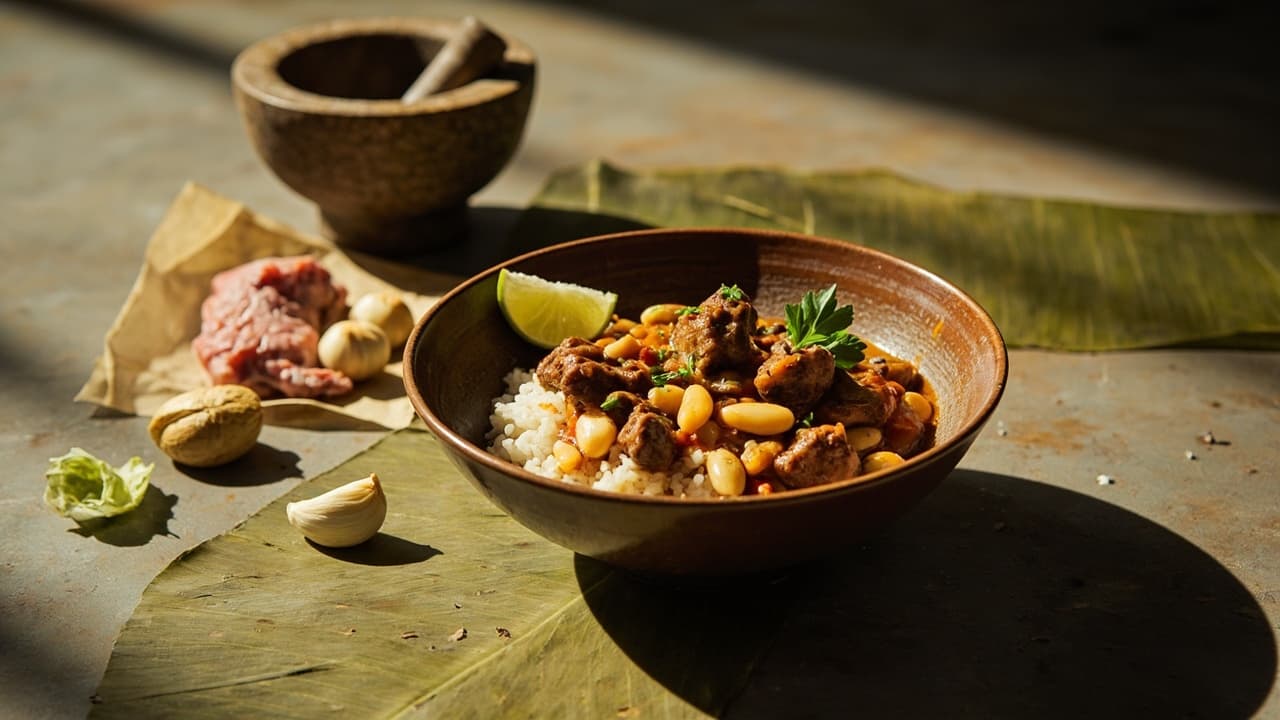
Spiced Beef and White Bean Coconut Stew
A rich, soul-warming Indonesian-inspired stew with tender ground beef, creamy white beans, and aromatic spice paste simmered in a luscious coconut-infused broth. This is the kind of dish where the bumbu makes all the difference — do not skip it!

Prep
15 min
Cook
30 min
Total
45 min
Method
Build the Bumbu
1
Peel the shallots and cut into quarters. Add to a mortar along with the garlic cloves, fresh ginger, cayenne, turmeric, and cumin.
2
Grind everything together into a fragrant paste, scraping down the sides as needed. This is your bumbu — the soul of your stew. It should be vibrant and slightly chunky, not a smooth paste. Set aside.
Brown the Beef in Aromatic Oil
3
Heat coconut oil in a large wok or heavy-bottomed pot over medium-high heat. The oil should shimmer and be fragrant.
4
Add the ground beef in one layer. Let it sear undisturbed for 2 minutes, then break it apart with your spatula. Cook until nicely browned, about 5-7 minutes total.
5
Pour off any excess fat if desired, leaving the beef in the pot with the oils.
Bloom the Bumbu and Build the Stew
6
7
Mix the bumbu into the beef, stirring everything together thoroughly.
8
Add soy sauce and stir to coat the meat. The color should deepen beautifully.
Add Liquids and Beans, Then Simmer
9
Pour in the tomato sauce and chicken broth. Stir everything together, scraping up any browned bits from the bottom of the wok.
10
Add the white beans (drained and rinsed if using canned). Stir them into the stew.
11
Bring the stew to a gentle boil, then reduce heat to low. Simmer uncovered for 15-20 minutes, stirring occasionally, until the sauce thickens and the flavors meld together.
Season and Finish
12
Taste and season with salt and black pepper. Adjust to your preference.
13
Cut the lime in half and squeeze in the juice from one half, stirring to brighten the stew. Taste again — it should have that beautiful sweet-spicy-umami balance that makes Indonesian food so addictive.
14
Remove from heat. Finish with fresh parsley and a final drizzle of coconut oil if desired. Serve hot over steamed white rice.
A
Nutri-Score
Excellent balance
A–E · lower is better · score -3
Calories
822
per serving
High in protein · 60gLow sugar · 14g
Protein
60g
Carbs
86g
Fat
28g
Sat. fat
12g
Fiber
12g
Sugar
14g
Sodium
1035mg
Gluten FreeDairy FreeEgg FreeNut FreeWeight ManagementMuscle BuildingAnti InflammatoryHigh ProteinHigh Fiber
Nutri-Score is a general nutritional-balance guide, not medical or dietary advice.
E
Environmental impact
Very high impact
A–E · lower is better · includes estimates
kg CO2e
13
per serving
ECarbonBEU all-round· carbon sets the grade
Water
1.0m³
Runoff
0.3g P
Ground Beef drives 96% of this recipe’s estimated footprint.
Carbon from Poore & Nemecek 2018; water, land & runoff from Agribalyse — modelled averages for comparing recipes, not a measurement of your groceries.
Flavor Profile
7
Umami
4
Sweet
5
Salty
2
Sour
1
Bitter
5
Spicy
Textures
TenderCreamySilkySaucy
Aromas
HerbalEarthyNuttySmokyCitrus
Kitchen Equipment
Techniques
Safety & Storage
Cooking Temperature
Ground beef must reach an internal temperature of 160°F (71°C) throughout. Use a meat thermometer to verify doneness before consuming.
Bring stew to a rolling boil for at least 1 minute when adding liquids to ensure food safety.
Verify the final stew has reached 165°F (74°C) throughout using a food thermometer before serving, especially when adding pre-cooked or canned ingredients like beans and broth.
High Risk Population
Ground beef is a high-risk food item. Immunocompromised individuals, pregnant women, young children, and elderly should ensure beef is cooked to well-done (165°F/74°C).
Cross Contamination
Use separate cutting boards and utensils for raw ground beef. Never place cooked beef on plates or surfaces that held raw meat without sanitizing.
Handling
Wash hands thoroughly with soap for at least 20 seconds after handling raw ground beef before touching other ingredients or surfaces.
Storage
Cool stew to room temperature within 2 hours of cooking, then refrigerate in airtight containers. Consume within 3-4 days.
For longer storage, freeze in portioned containers for up to 2-3 months. Thaw overnight in refrigerator before reheating.
Shelf Life
Reheat leftover stew to 165°F (74°C) throughout before consuming. Discard any stew left at room temperature for more than 2 hours.
Allergen Warning
Verify chicken broth ingredients — some brands include celery, which is a hidden allergen. Choose an allergen-free certified broth if cooking for individuals with celery sensitivity.
Pro Tips
Technique
Do not rush the bumbu—grinding in a mortar and pestle gives you a rough, textured paste that melts into the stew rather than a smooth commercial blend that never quite releases its flavor. You'll know it's ready when the kitchen fills with that unmistakable ginger-turmeric aroma.
Substitution
While I always encourage making your own bumbu, if you're in a hurry, a quality rendang paste can work in a pinch—but please, never substitute real Indonesian cuisine with generic curry paste.
Flavor Boost
For an extra layer of complexity, stir in a teaspoon of shrimp paste (terasi) when you bloom your bumbu—it adds that deep umami that makes Indonesian food so addictive.
From the chef
The bumbu is the soul of this stew — shallots, garlic, ginger, cayenne, turmeric, and cumin ground together in the cobek until vibrant and fragrant, then fried in coconut oil until the rawness cooks out and the kitchen fills with something genuinely exciting. Ground beef sears first, then the bumbu folds in along with shrimp paste, tomato sauce, and white beans that soak up the spiced broth as everything simmers down. Turmeric gives the whole pot a deep golden color. White beans add creaminess without any dairy. This is what Indonesian home cooking does best: bold spicing, simple technique, deeply satisfying result.
TagsSpicyCoconutIndonesian InspiredOne PotWeeknight DinnerProtein RichBumbu
AllergensSoyGlutenCeleryShellfish
Source: generated · June 10, 2026