East Africa / Indian Ocean
Tanzanian Coastal & Zanzibar
Also: Zanzibari Cuisine, Swahili Coast Tanzania, Spice Island Cooking
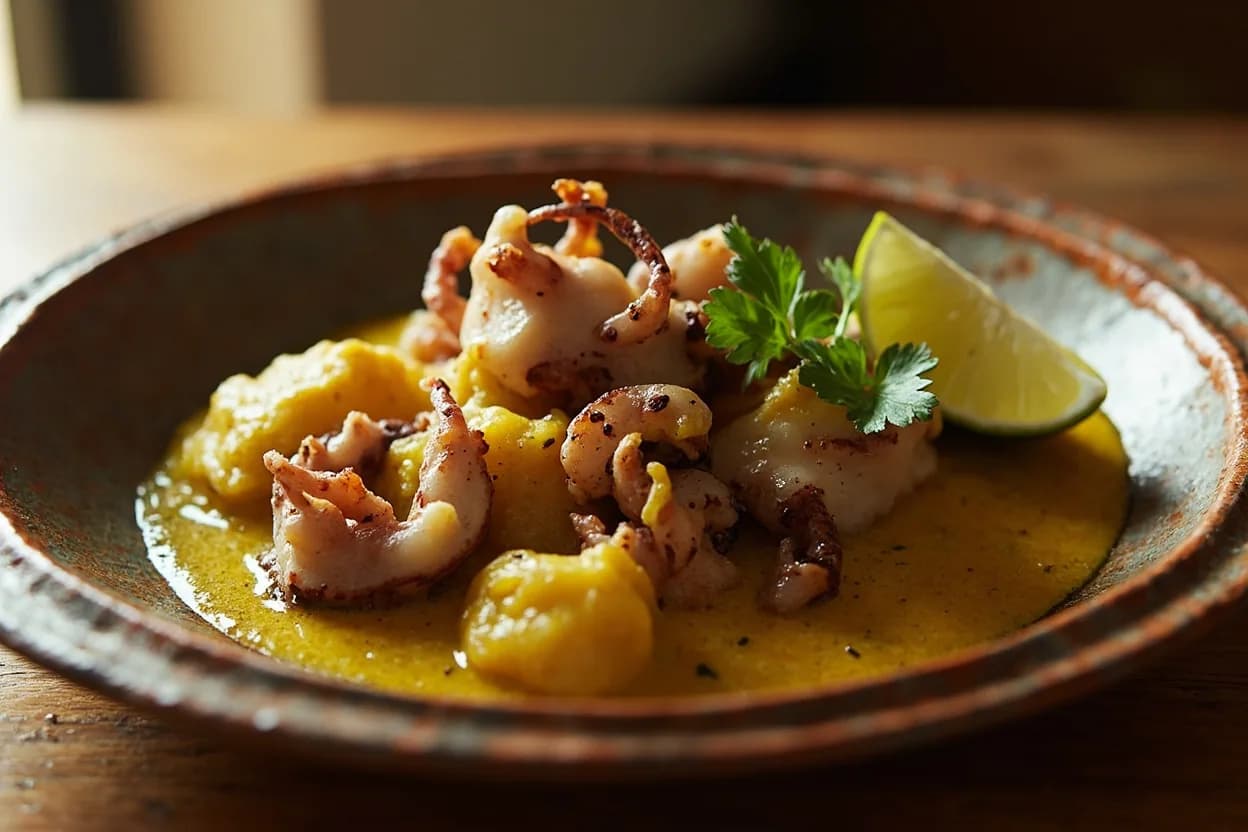
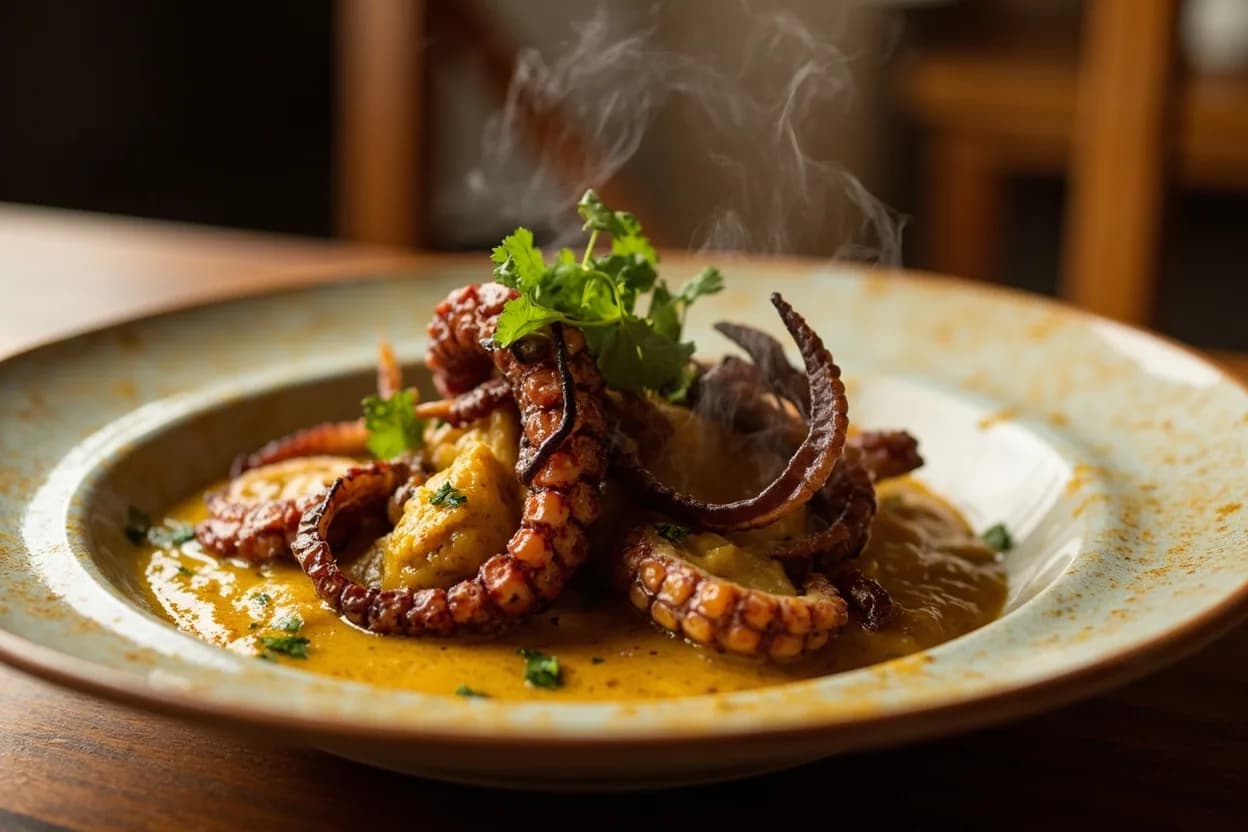
A Swahili spice-island cuisine where Indian Ocean trading history pours into fragrant pilau, coconut octopus curry, and the city of Stone Town's legendary urojo mix soup.
Tanzania's culinary identity splits dramatically at the coastline. The mainland (Tanganyika) runs on ugali, beans, grilled meat, and greens in a pattern shared with inland East Africa. But the Zanzibar Archipelago and the coastal strip from Tanga to Mtwara constitute one of the Indian Ocean world's great culinary crossroads: Arab, Indian, Persian, Portuguese, and Swahili African traditions have fused over a thousand years of trade into a cuisine defined by spice complexity, coconut milk richness, and seafood abundance. Zanzibar was the world's dominant clove producer by the 19th century, and that history pervades every spiced dish.
The flavour base
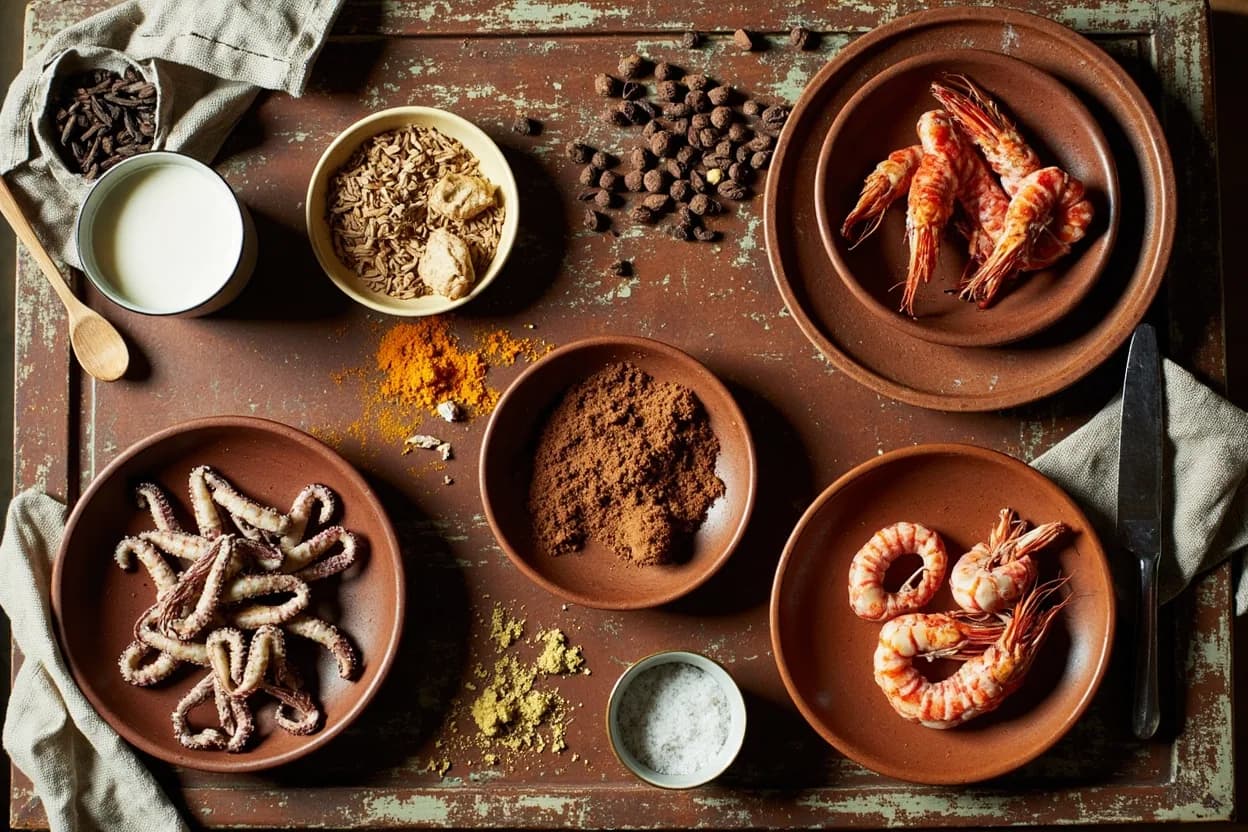
Coconut milk and a fresh spice paste (garlic, ginger, turmeric, green chili) form the base for most curries; tamarind and lime provide the acid; clove, cardamom, and cinnamon arrive as aromatic top notes.
Pantry staples
Key ingredients
Signature techniques
Signature dishes
Tanzanian Coastal & Zanzibar on the table
At the table
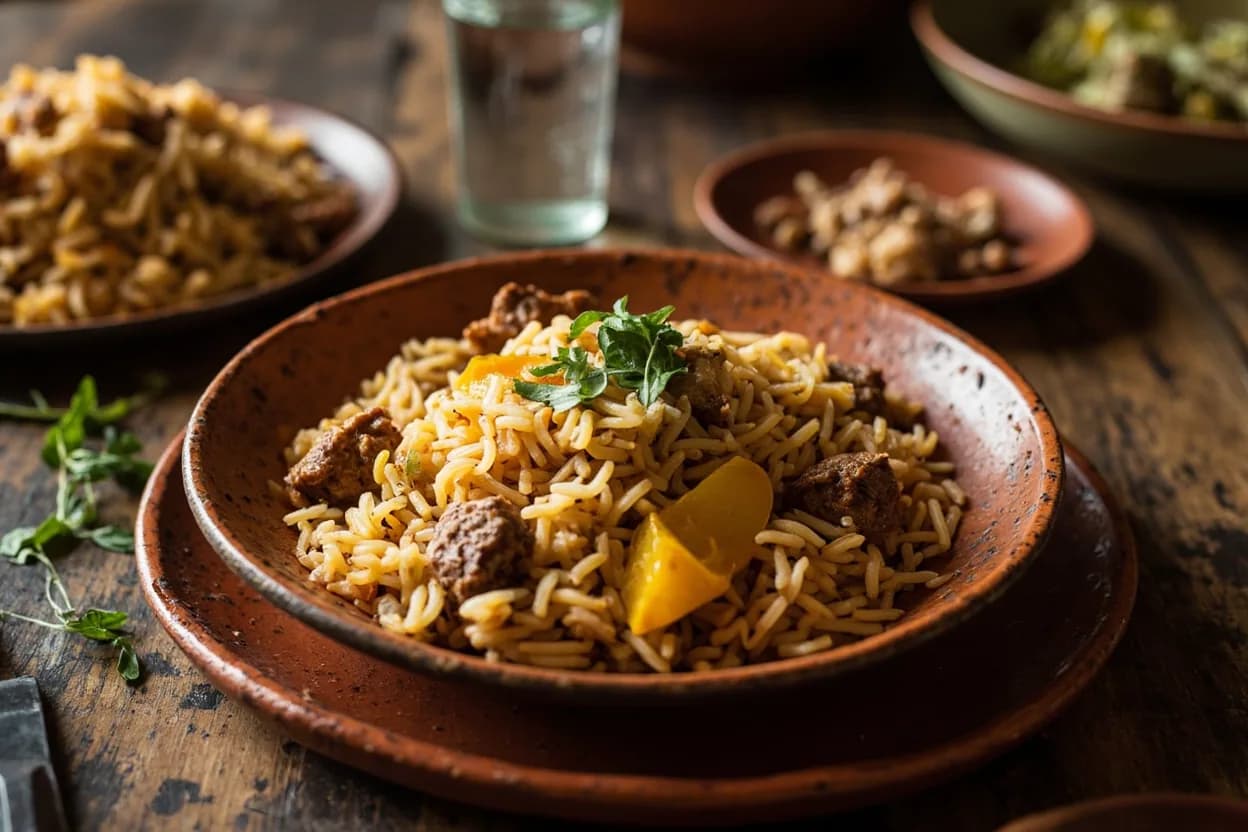
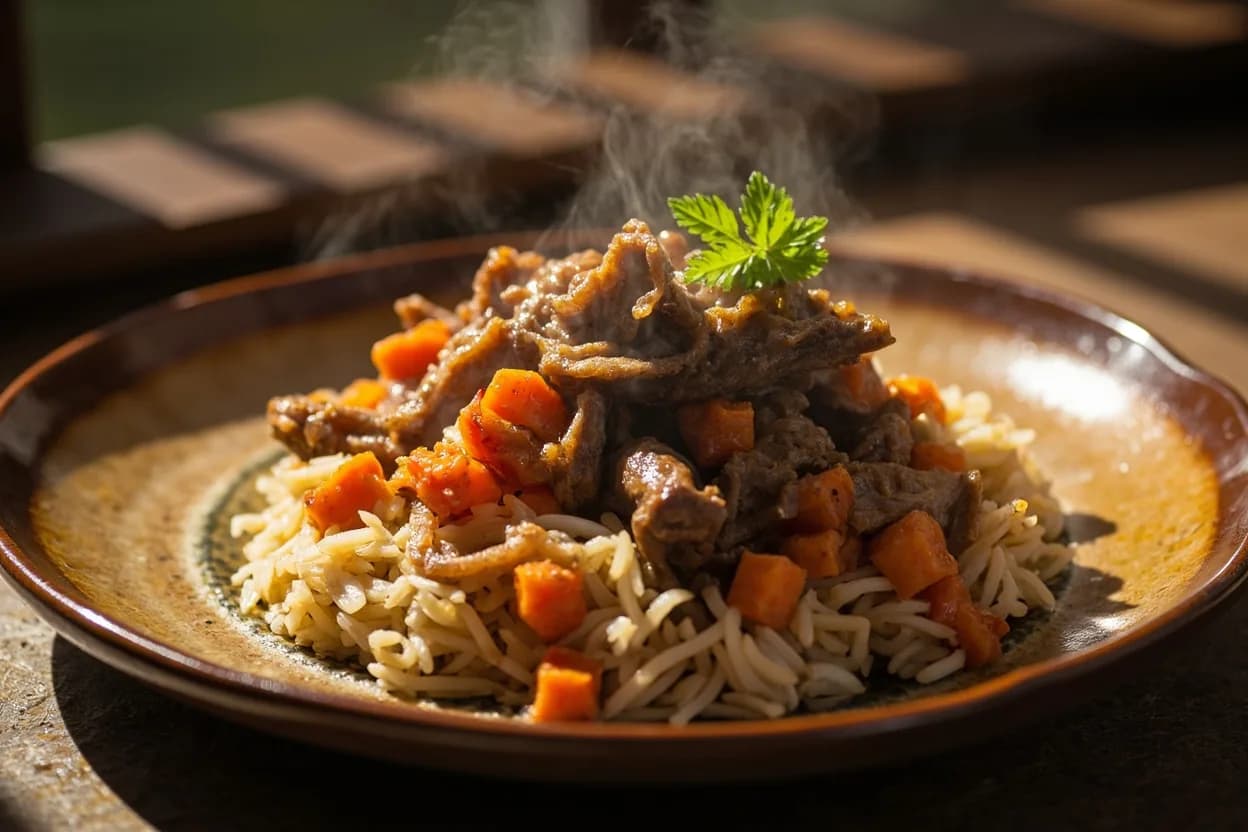
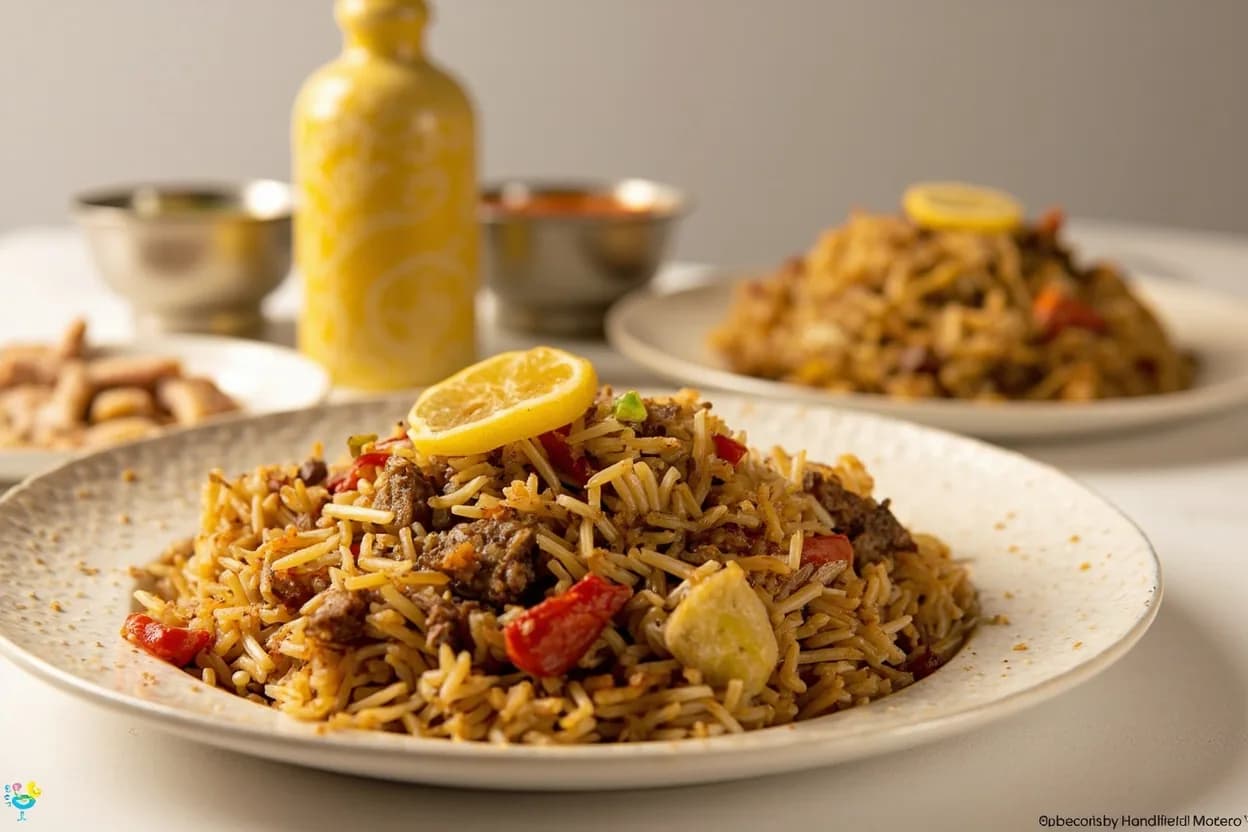
Coastal and Zanzibari meals center on rice (pilau, plain white rice, or biryani) rather than ugali, pairing it with a coconut-based curry or grilled seafood. A mezze spread of chutneys, pickles, and kachumbari accompanies main dishes. Street food culture is extremely vibrant, especially at Zanzibar's Forodhani Night Market, where grilled seafood, Zanzibar pizza, and urojo soup are eaten communally after dark. Ramadan transforms the food calendar: dates and coconut drinks break the fast before elaborate evening spreads.
History & context
Zanzibar's food history begins with Bantu-speaking farmers and fishers, then accelerates dramatically with the arrival of Arab traders (7th century onward) who established the Sultanate of Oman's commercial empire here by the 18th century. Sultan Seyyid Said moved his court from Muscat to Zanzibar in 1840, converting the islands into the world's leading clove exporter and a major hub of Indian Ocean trade. Indian and Gujarati merchants settled in Stone Town in large numbers, bringing their spice and rice expertise. The Portuguese (16th century) introduced cassava, corn, and New World chilies. British colonial administration (1890–1963) layered civil servant food habits and cemented Zanzibar as a spice export economy. The 1964 Zanzibar Revolution ended the Arab-led Sultanate, but the culinary legacy survived entirely.
Regional variations
- Stone Town / Zanzibar Town
The most Arab-influenced zone: pilau, biryani, urojo soup, and Forodhani street-food night market; Omani and Indian merchant food culture deeply embedded.
- Pemba Island
More agricultural than Zanzibar; clove estates dominate; cooking is simpler and uses more freshwater fish and local greens.
- Dar es Salaam Coast
Urban Swahili cooking blending upcountry Tanzanian staples with coastal spice use; street food heavy, including chipsi mayai (chips omelette) and nyama choma.
- Tanga / Northern Coast
Border zone with Kenya's Swahili coast; coconut fish curries and pilau indistinguishable from Mombasa equivalents.
- Southern Coast (Mtwara / Lindi)
Makonde and Yao culinary traditions: cassava dominant, simpler spicing, fresh coconut and freshwater fish prominent.
Related cuisines
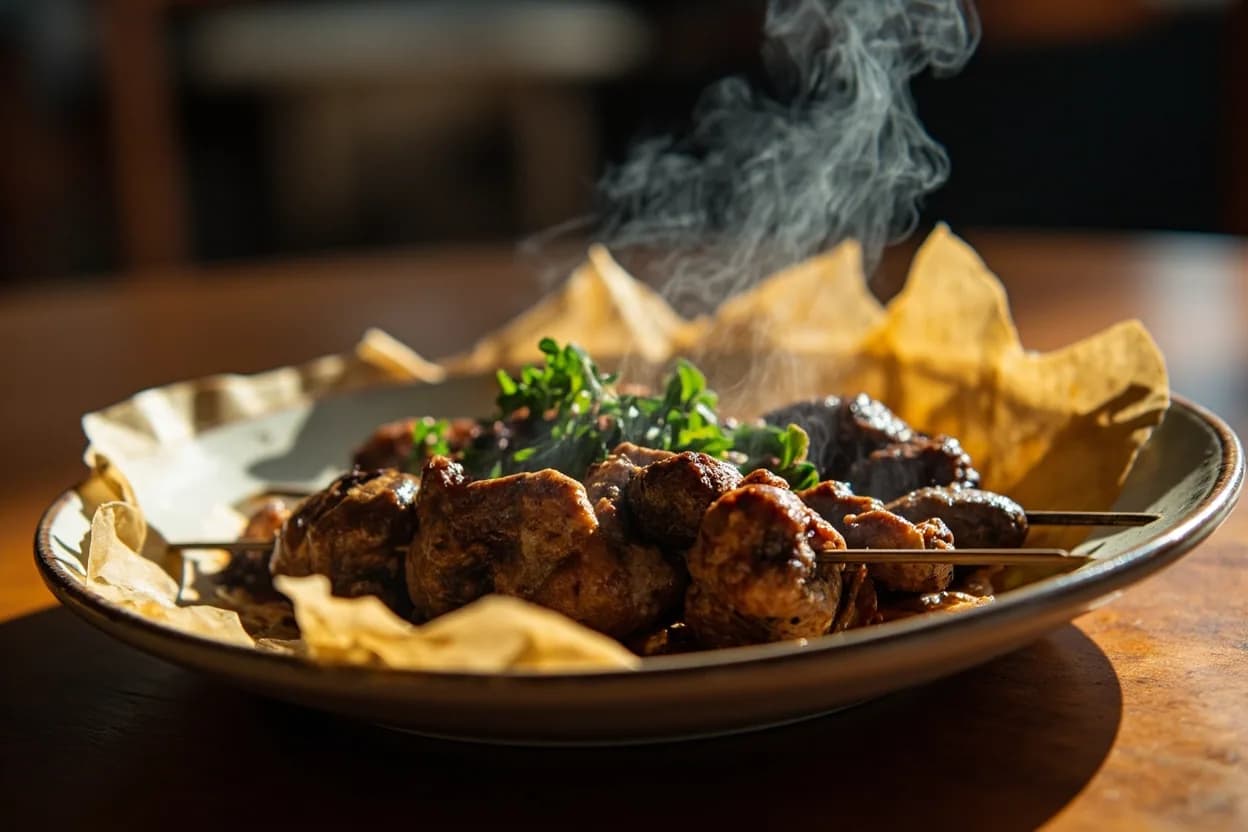
Swahili coast food culture is continuous across the Kenya-Tanzania border; pilau, samosas, and mishkaki are identical in Mombasa and Dar es Salaam.
- Omani
The Omani Sultanate's 200-year dominance over Zanzibar transferred rice, biryani, clove use, and slow-cooked lamb into the local culinary DNA.
- Indian (Gujarati)
Gujarati merchant communities shaped Zanzibar's bhajia, spice paste foundations, and dry masala techniques.
Indian Ocean trade route exchanges; vanilla, rice, and zebu cattle have symbolic and culinary crossover points.
Canonical recipes
The dishes that define Tanzanian Coastal & Zanzibar, documented in the Canon.
References
- 1.Linu Kahama, 'Zanzibar Flavors: The Spice Island Cookbook', self-published, 2018
- 2.Mark Horton & John Middleton, 'The Swahili: The Social Landscape of a Mercantile Society', Blackwell, 2000
- 3.Abdul Sheriff, 'Slaves, Spices and Ivory in Zanzibar', James Currey, 1987
Confidence: high
Notes
Urojo: Zanzibar's signature soup
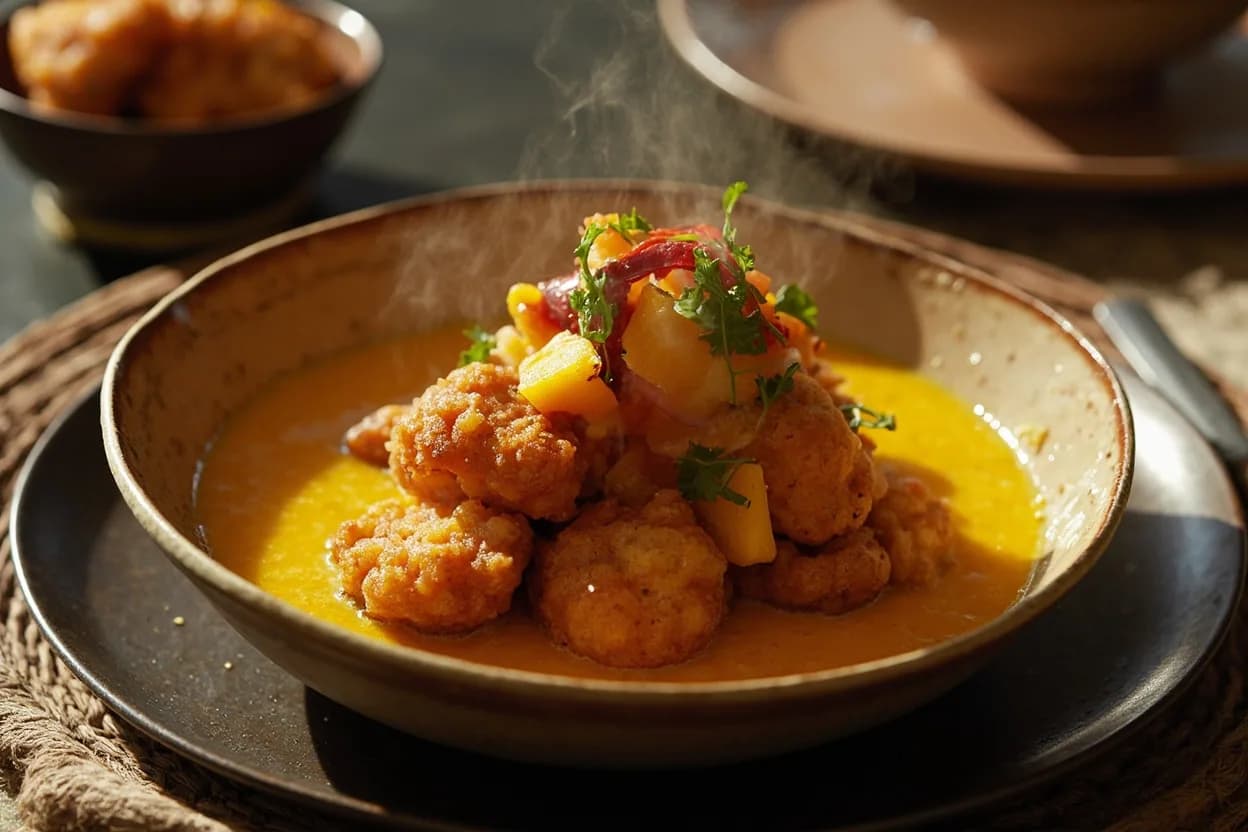
Urojo (also called 'Zanzibar mix') is the archipelago's most idiosyncratic dish: a thin tamarind-turmeric broth into which the vendor ladles crisp bhajia, boiled cassava chunks, potato, hard-boiled egg, coconut chutney, and chili. Each vendor's version differs slightly. It is eaten from a bowl with a spoon at the night market and is impossible to replicate exactly outside Zanzibar.
Zanzibar Pizza
Despite the name, Zanzibar pizza has no Italian connection. It is a thin wheat flour crepe folded around fillings (minced meat, egg, cheese, Nutella, banana) and cooked on a hot griddle. It is a 1970s–80s street invention, now Zanzibar's most photographed street food.