Proteins
Bacon Lardons
Short thick batons of bacon, rendered until crisp to flavor stews, salads, and eggs.
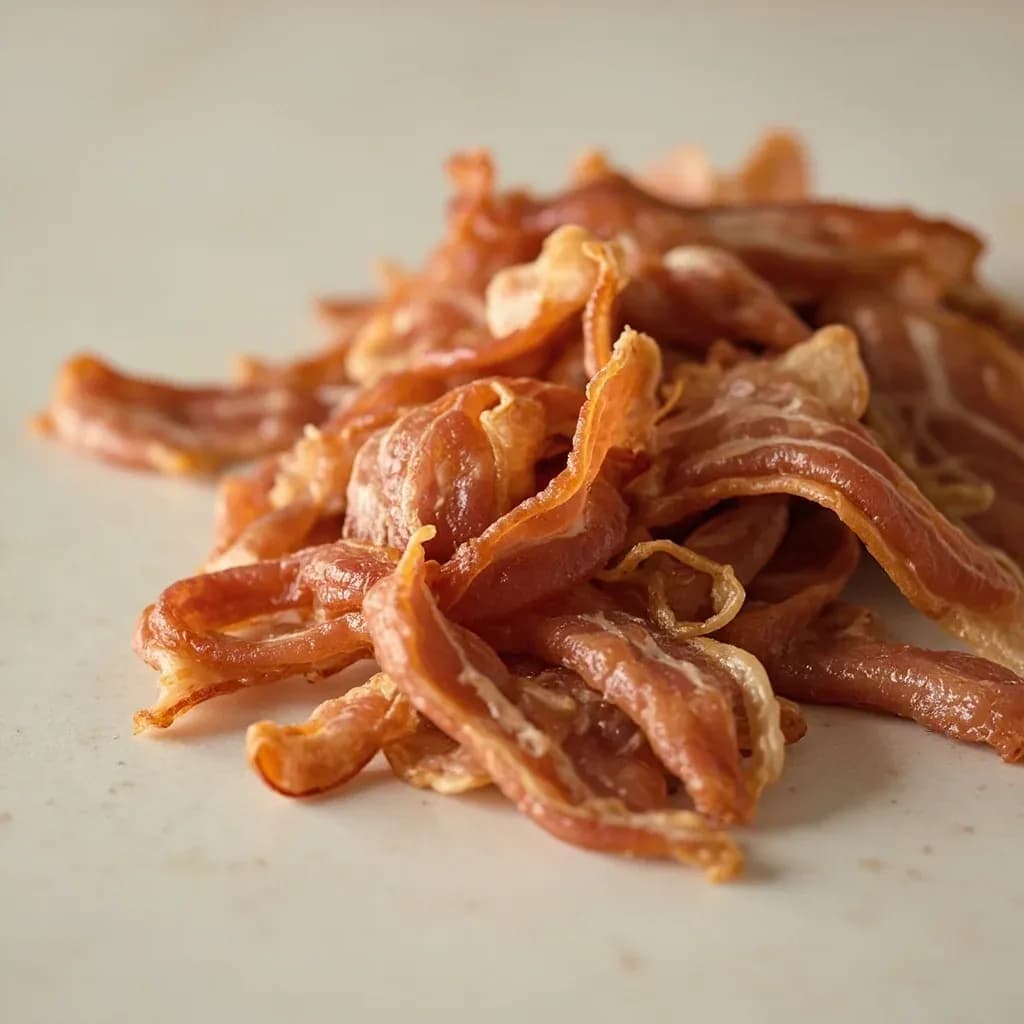
Bacon lardons are small rectangular strips or cubes cut from slab bacon or pork belly. A cornerstone of French cooking, they are rendered slowly to release their fat and crisp, then folded into dishes like coq au vin, quiche Lorraine, and frisée salad. The rendered fat is often used as a cooking medium for the rest of the dish.
Bacon lardons are thick-cut batons of cured pork belly, typically 1/4- to 1/2-inch thick and 1 to 2 inches long. The term derives from the French "lardon," itself rooted in "larde" (bacon fat), and originally referred to strips of fatback threaded into lean meats to add moisture—a technique called larding. Today, lardons serve a different purpose: they are a primary flavoring agent, meant to render slowly in their own fat until deeply crisp while simultaneously producing a substantial amount of bacon fat for building flavor in the pan. This two-in-one function—yielding both textural contrast and a rich cooking medium—is what distinguishes lardons from standard sliced bacon and makes them indispensable in French and modern cooking alike.
The size matters enormously in practice. Thinner retail bacon pieces cook too quickly and don't render the same volume of fat; proper lardons should spend 10 to 15 minutes over medium-low heat to achieve their signature deep golden crispness without burning. Professional kitchens routinely cut their own from slabs of pork belly or thick-sliced bacon for this reason. The rendered bacon fat left in the pan is never discarded—it's the backbone of dishes like coq au vin, French onion soup, and braised greens, adding a level of savory depth that butter or oil simply cannot replicate.
- Measured in
- g
- Storage
- Fridge
Types & varieties
Hickory, applewood, or maple smoked; most common in American kitchens; pronounced smoky flavor
Also called "green bacon"; milder, cleaner porky flavor; preferred for delicate dishes
Italian unsmoked cured belly; pure pork flavor without smoke; ideal for Italian pasta dishes and soups
Italian cured pork jowl; higher fat content, richer flavor; essential for authentic carbonara and amatriciana
Leaner cut from pork loin; lower fat; stays chewier after cooking; best for quick-crisp applications
Why Size and Thickness Matter
The thickness of a lardon is not a trivial detail—it fundamentally changes how the ingredient behaves in the pan. A lardon cut at 1/2 inch thick takes full advantage of pork belly's marbling: the exterior renders and crisps while the interior slowly heats through, and the fat inside melts and pools in the pan. A thin-cut piece burns before it renders. This is why pre-packaged bacon bits or thin-sliced retail bacon cannot replicate the technique: they go from raw to burned in moments, yielding neither proper crispness nor meaningful quantities of bacon fat. If you buy thin-sliced bacon and must improvise, stack 3 or 4 slices and cut through them together to approximate a thicker baton.
- Always cut thicker than a standard bacon slice for proper rendering
- Pre-chill bacon 15 minutes in the freezer before slicing for clean, uniform batons
- If buying pre-cut, check thickness—retail 'bacon bits' are not equivalent
Rendering Fat vs. Crisping Lardons
These are two distinct processes that happen simultaneously but require attention to timing. The fat rendering—melted pork fat pooling in the pan—is the cooking medium you will use; it happens as the lardons cook and the internal fat melts. The crisping—browning of the protein exterior—is what gives the lardons their texture and flavor compounds. Neither should be rushed. Medium-low heat (300–325°F) allows the fat to render gradually before the exterior burns. If the heat is too high, the exterior seizes and browns quickly while the interior remains cold and fatty, and you lose both the crisp and the fat.
- Render lardons in their own fat over medium-low heat—do not add oil or butter
- If the pan looks dry before lardons are golden, the heat is too high
- Remove from heat when deep golden brown; they continue crisping as they cool on paper towels
Common uses
Tips & pitfalls
- Render lardons slowly over medium-low heat (300–325°F) in their own fat—rushing the process burns the exterior before the interior crisps and the fat fully renders
- Stop cooking when lardons are deep golden brown; they continue to crisp as they cool on paper towels, so pull them just before you think they're done
- Cook lardons first, before adding any aromatics, starches, or vegetables, to maximize the rendered fat for building flavor
- For salad use, ensure lardons are completely cooled and dried on paper towels—any residual moisture destroys crispness in the finished dish
- Pre-chill bacon slightly (15 minutes in freezer) before cutting for cleaner, more uniform batons that hold together during cooking
- Save rendered bacon fat without exception—it is a flavor powerhouse for sautéing vegetables, frying eggs, or finishing sauces
- If lardons are to be added to a liquid dish (soup, stew, braise), add them in the final 15–20 minutes to maintain their crisp texture
- For a cleaner, leaner lardon, briefly blanch raw bacon in simmering water for 2 minutes before rendering—this removes excess surface nitrites and some salt
- Use kitchen shears for quick, uniform cutting directly into the skillet when working with pre-sliced bacon
- Reserve separately if different components of a dish need different cooking times—add crisp lardons at the very end
Nutrition
Nutrition
No USDA FoodData Central match for Bacon Lardons yet. We surface a per-100 g profile once a generic whole-food entry is matched and verified.
In the shops
Matched grocery products
 €1.48
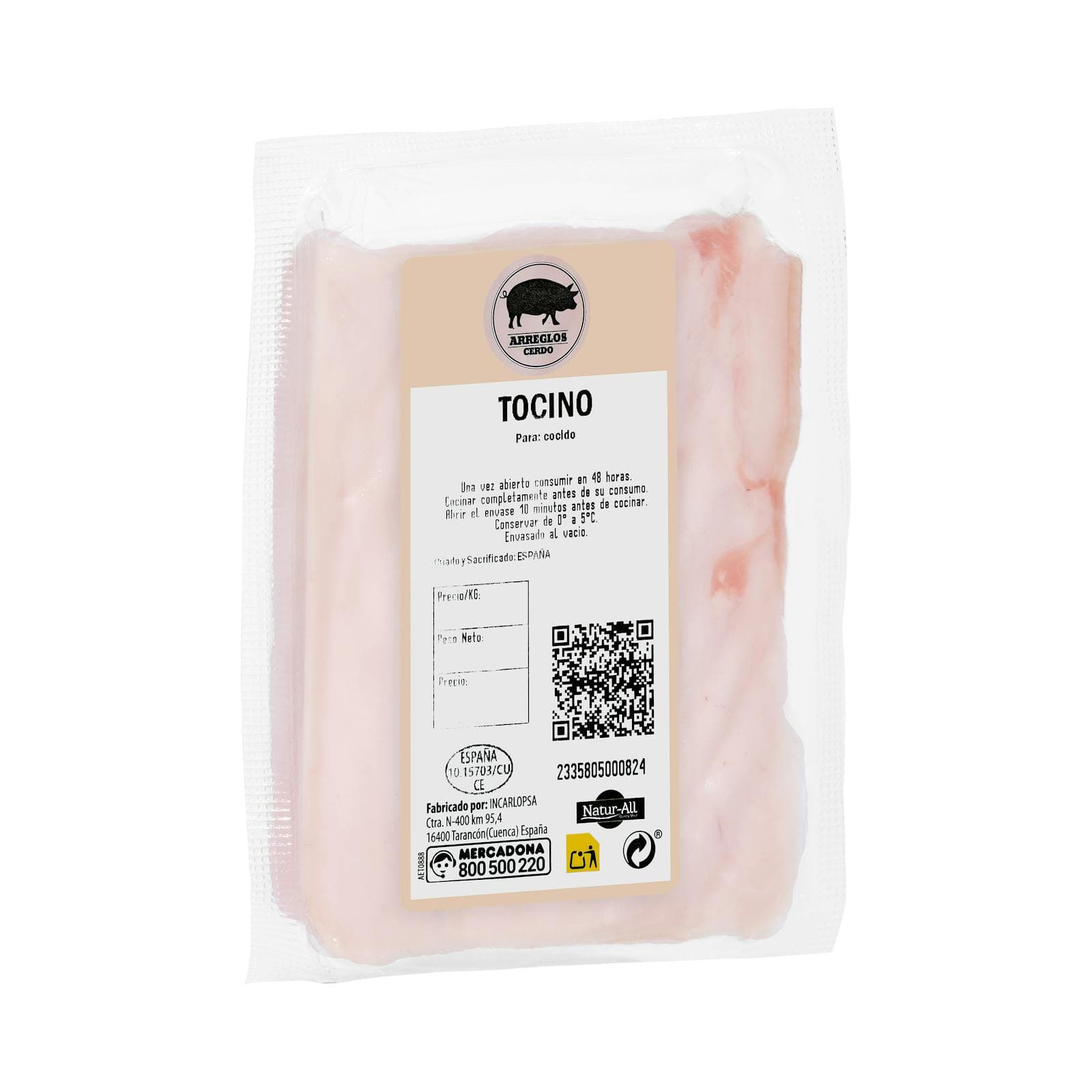
€1.48Pork Fatback
190 g · Mercadona
 €1.99
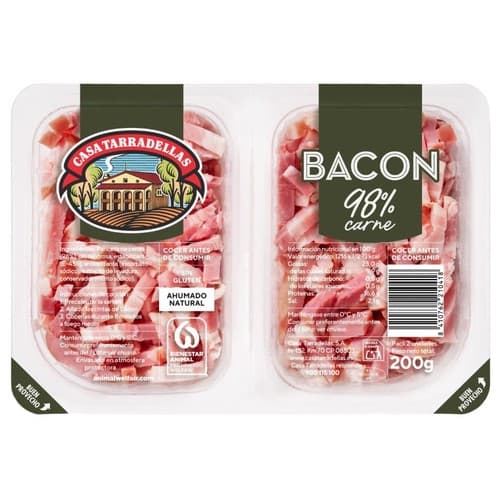
€1.99Pork Bacon Strips
CASA TARRADELLAS · kg · Bonpreu
 €1.85
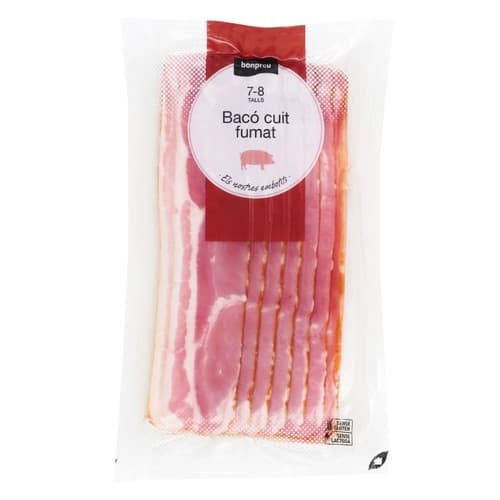
€1.85Smoked Cooked Bacon
BONPREU · kg · Bonpreu
 €2.20
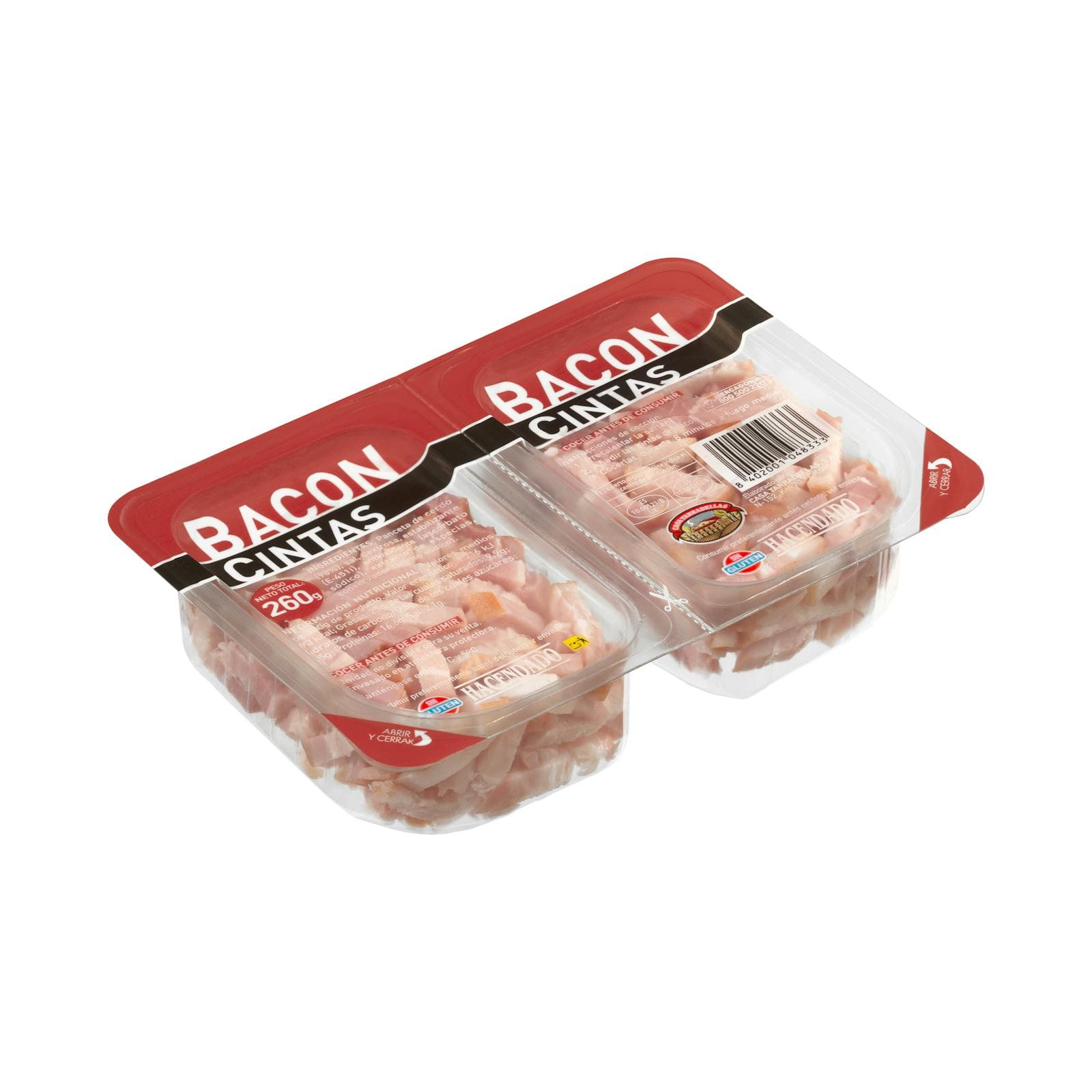
€2.20Bacon Strips
Hacendado · 260 g · Mercadona
 €2.35
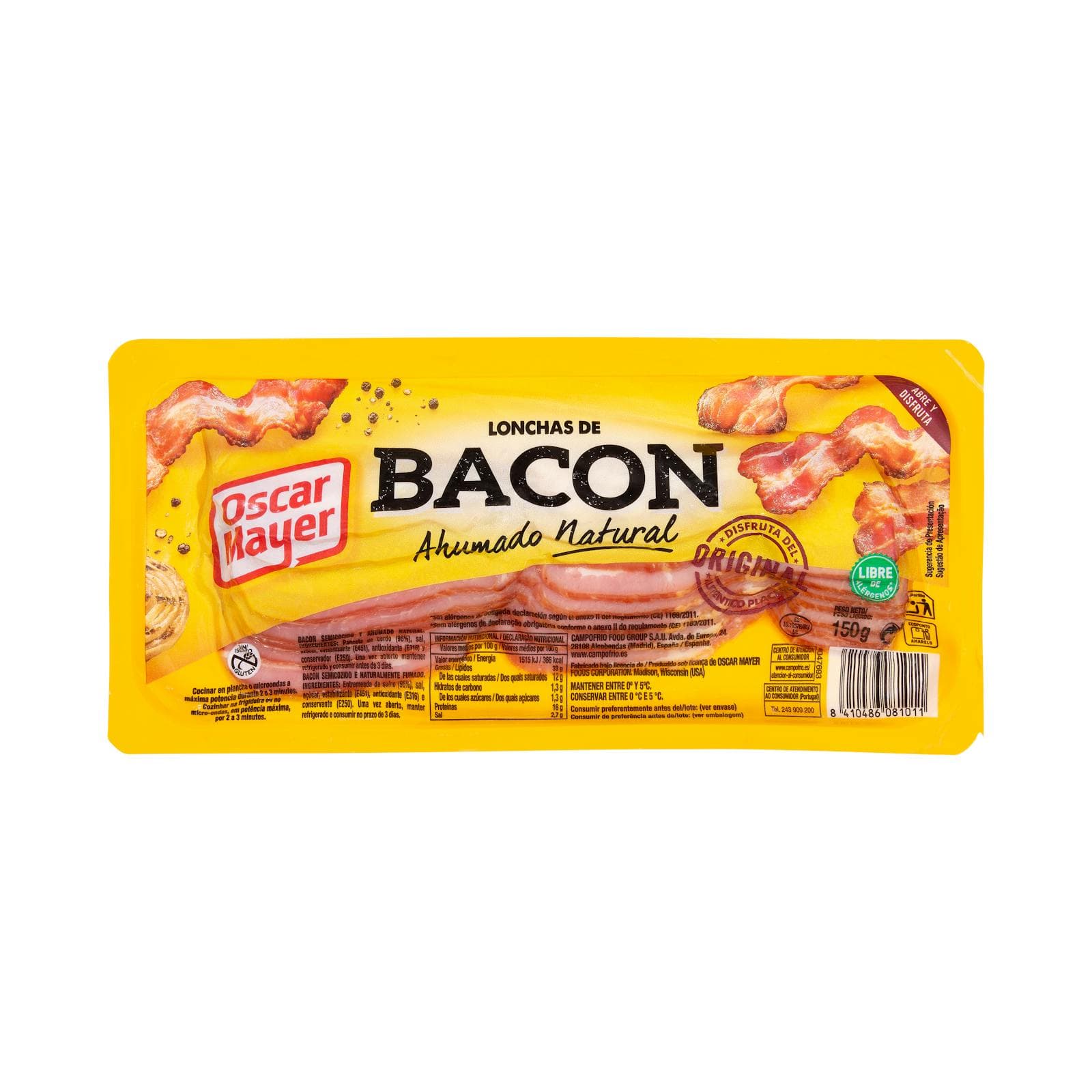
€2.35Oscar Mayer Bacon Slices
Oscar Mayer · 150 g · Mercadona
 €2.89
€2.89Smoked Cooked Bacon Bonpreu
BONPREU · kg · Bonpreu
Good to know
- Type
- Cured pork belly, cut into batons (1/4" to 1/2" thick)
- Origin
- French cuisine; term derives from "larde" (bacon fat)
- Curing
- Smoked (hickory, applewood, maple) or unsmoked; cured with salt, sugar, and sodium nitrite
- Fat Content
- Approximately 50–60% fat by weight
- Rendering Time
- 10–15 minutes over medium-low heat to achieve deep crispness
- Shelf Life
- 7–10 days refrigerated; freeze up to 1 month
- Yield
- Fat renders out as cooking medium; lardons shrink noticeably when fully rendered
Substitutes
- Pancetta — Italian unsmoked cured belly; swap 1:1; less smoky, purer pork flavor; ideal for Italian dishes
- Guanciale — Italian cured pork jowl; swap 1:1; higher fat content, richer flavor; essential for authentic Roman pasta dishes
- Thick-Cut Bacon (hand-cut) — Cut thick-sliced bacon into batons yourself; most equivalent substitute; any variety works
- Prosciutto (diced small) — Leaner substitute; does not render and crisp the same way; add at end of cooking to preserve texture
- Smoked Ham Hock (small dice) — Adds smokiness and pork flavor but different texture; better for braising than crisp applications
- Chorizo (diced small) — Spanish cured sausage; swap 1:1; adds paprika and spice; different but complementary flavor
Pairs with
Also called
Lardons · Bacon Cubes
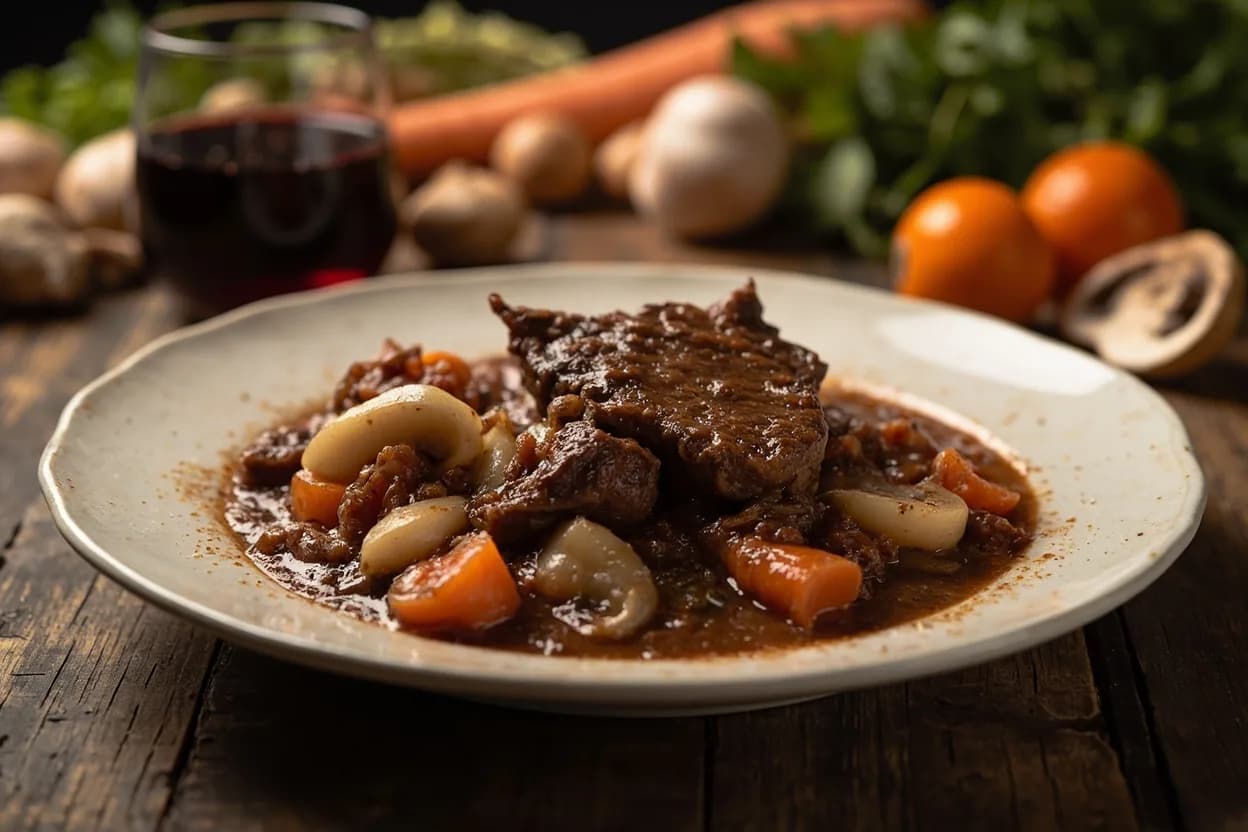
Appears in these dishes

Related
Egg
The kitchen's everything ingredient — bind, leaven, enrich, or fry
Chicken Breast
Lean, quick-cooking white meat for everyday dinners

Ground Beef
Versatile minced beef for burgers, ragù, tacos, and meatballs
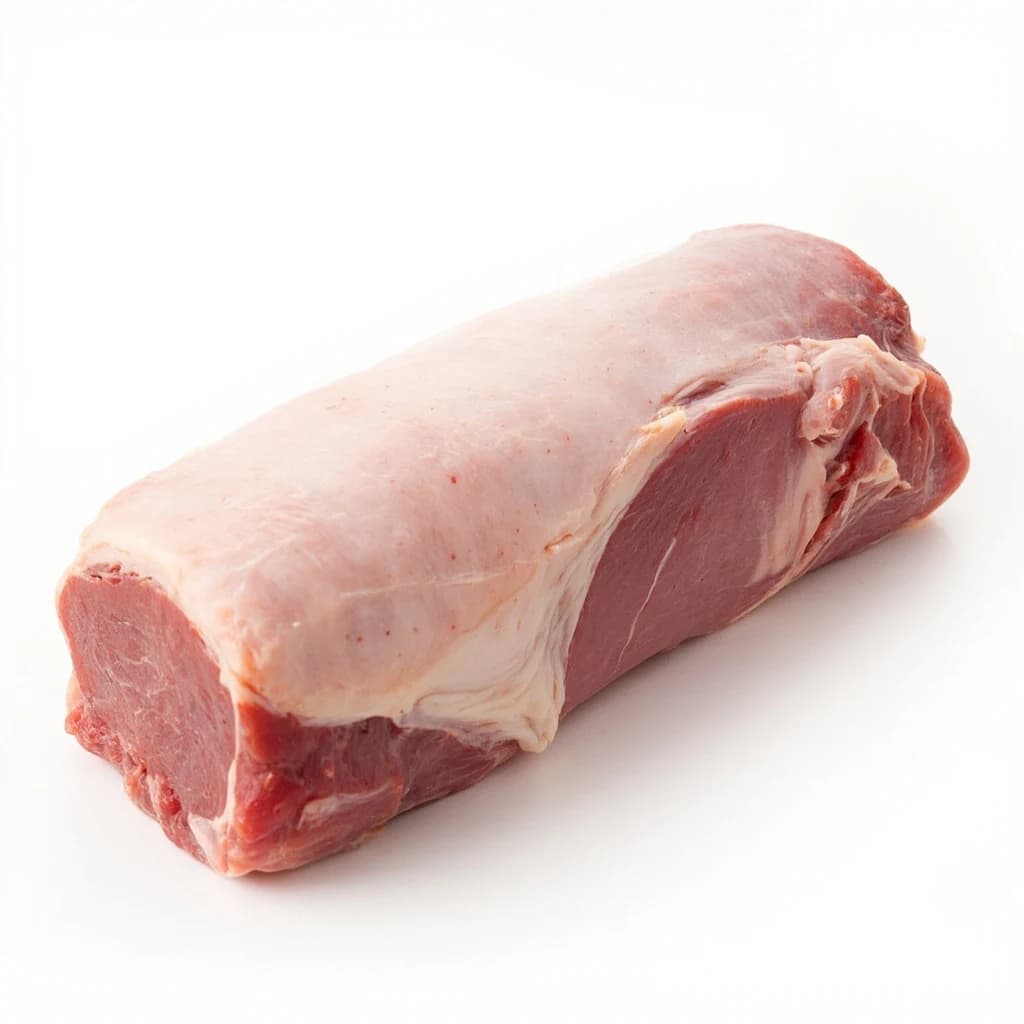
Pork Loin
Lean, tender roasting cut that stays juicy with care
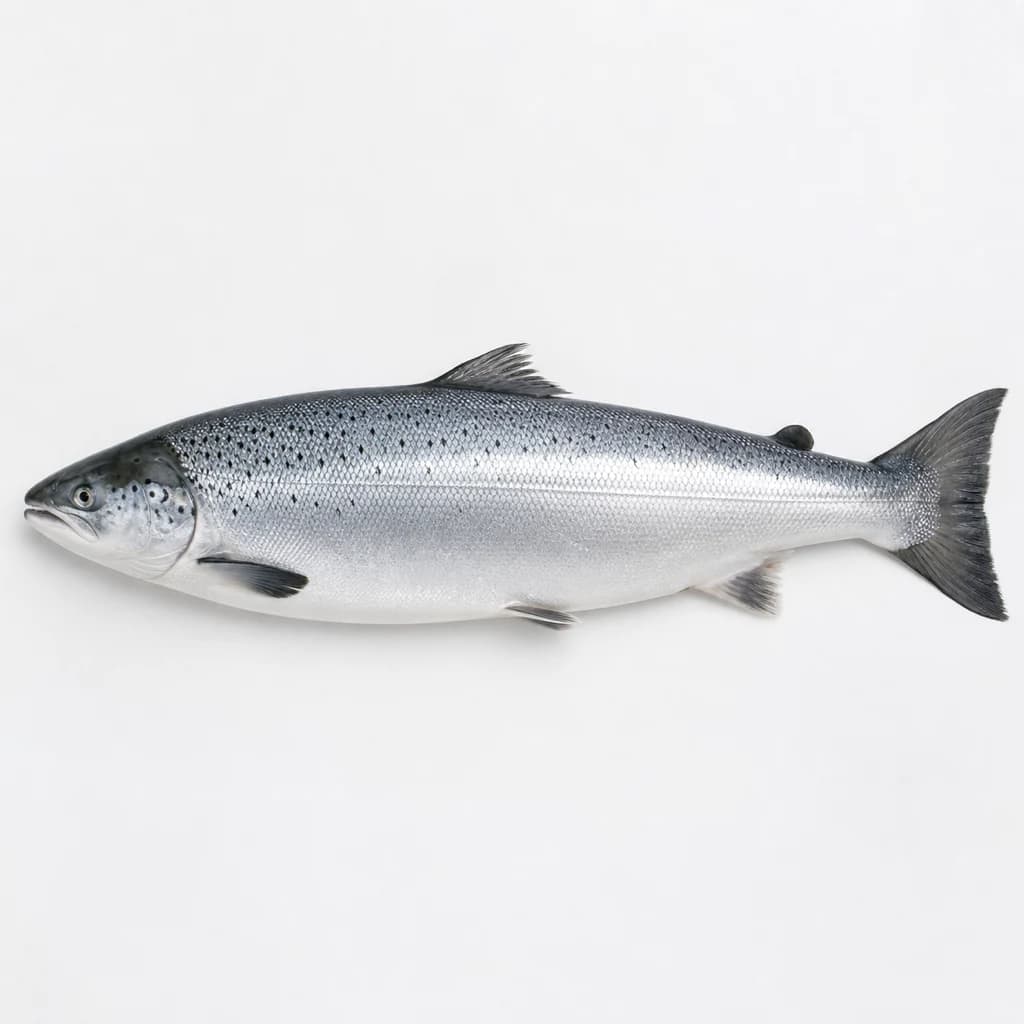
Salmon
Rich, rosy fish that roasts, grills, or cures beautifully

Egg White
Pure protein that whips to airy peaks for meringue and more
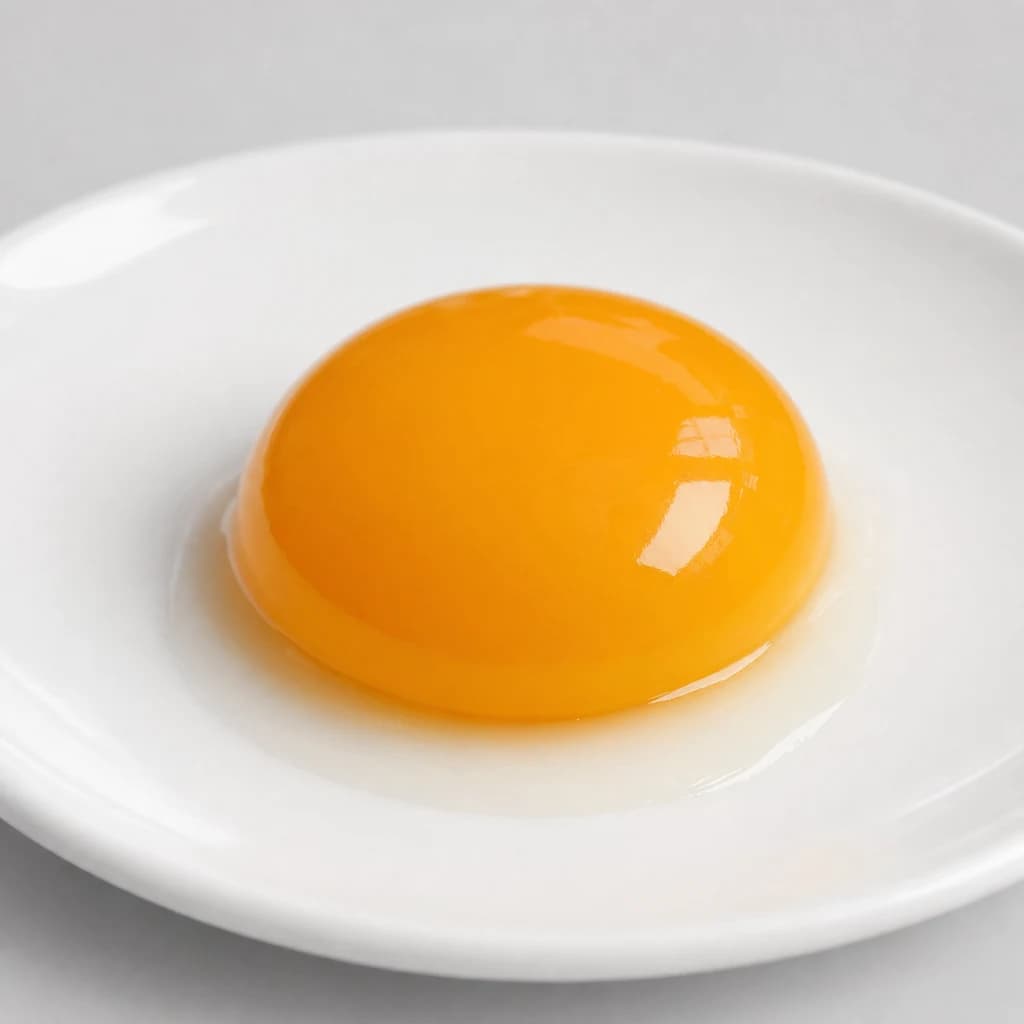
Egg Yolk
Rich, golden yolk for custards, mayonnaise, and pasta

Quail Egg
Tiny, speckled eggs for garnishing and elegant bites