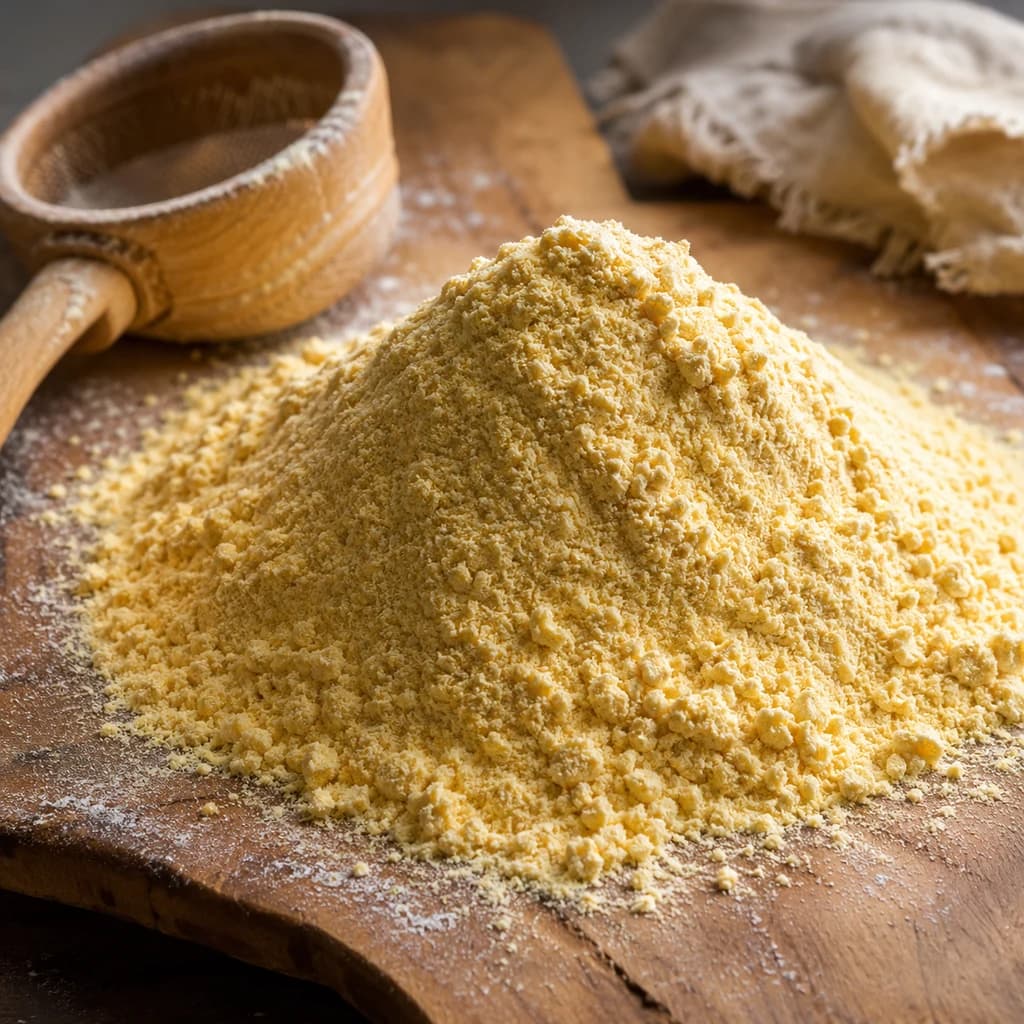
Natural form
Fine golden durum wheat flour mounded on a wooden board, showing its warm color and texture.
The flour's signature golden hue and fine-to-slightly-coarse texture are its primary identifying features; this facet establishes what the ingredient looks like before any use.
Baking
Durum Wheat Flour
High-protein golden flour from hard durum wheat, prized for pasta and breads.
Durum wheat flour is milled from hard durum wheat, giving a golden color and high protein and gluten content. It is the classic flour for dried pasta and many Mediterranean breads, valued because its strong gluten holds shape when shaped and dried. Coarser grinds are sold as semolina, while finer grinds (semola rimacinata) suit doughs.
Durum wheat (Triticum durum) is the hardest of all wheat species—a trait reflected in its Latin name, which means "hard." This hardness yields an exceptionally high milling yield and produces endosperm particles that remain intact during processing, giving durum flour its distinctive golden hue from carotenoid pigments, primarily lutein. The flour's protein content of 12–14% sits between all-purpose and high-gluten bread flour, but the gluten itself behaves differently. Rather than forming long, elastic networks like bread wheat, durum develops short, strong strands that resist stress without stretching. This is precisely why dried pasta holds its shape in boiling water instead of turning soft and mushy. The United States—particularly North Dakota—leads global production. In Italy, fine durum flour is called "farina di semola di grano duro," distinct from the coarser "semola rimacinata." The distinction between durum flour and semolina is purely a matter of granulometry: both mill from the same wheat, but flour is simply ground finer. Understanding this relationship unlocks the full range of what durum can do in the kitchen.
- Measured in
- g
- Storage
- Pantry
Allergens
Types & varieties
Refined and pale golden; the most common variety for fresh pasta and some breads
Contains germ and bran; earthier flavor, shorter shelf life, more fiber and nutrients
Medium-coarse grind; used for traditional Italian breads and baked goods
Coarser grind than flour; the traditional choice for dried pasta, pizza dough, and couscous
Why Durum Behaves Differently
The key to durum's performance lies in its gluten structure. When you hydrate and work bread wheat flour, gluten strands elongate and link together, creating an elastic network that traps gas and allows dough to rise. Durum's gluten, however, forms short, robust strands that lock together under stress without stretching. This gives pasta dough remarkable tolerance for rough handling and rolling, while the finished product resists overcooking and maintains al dente texture. This same property makes durum ideal for shaped doughs that need structural integrity—but it also means 100% durum breads can develop a dense, tight crumb unless you use prefermented flour or a poolish to introduce elasticity.
- Durum gluten resists stretching but tolerates compression and rolling
- The short gluten strands provide strength without elasticity
- Bread formulations need help achieving open crumb structure
Storing Durum Flour
Durum flour's higher fat content than bread wheat makes it more prone to rancidity, especially in whole-grain form. The germ contains oils that oxidize quickly when exposed to heat, light, or air. For whole-grain durum, transfer to an airtight container and store in the freezer; it will keep for months this way. Refined durum flour stores well in a cool, dark pantry for 6–12 months in a sealed container. Always let refrigerated or frozen flour return to room temperature before using to prevent condensation in your dough.
- Freeze whole-grain durum immediately upon purchase
- Room-temperature storage only for refined flour
- Let chilled flour warm before measuring to avoid moisture issues
Common uses
Tips & pitfalls
- Hydration needs are higher than expected: durum absorbs water slowly, so allow longer rest periods for the flour to fully hydrate before kneading.
- Do not overmix: unlike bread doughs, extended kneading develops toughness rather than strength. Mix until just combined for pasta; the dough should feel firm and slightly tacky.
- For pasta, add flour sparingly—overly dry dough produces cracked, brittle pasta that breaks during shaping and cooking.
- Durum-based doughs tolerate rough handling and long rests (up to 24 hours refrigerated) better than most wheat doughs due to their stress-resistant gluten structure.
- When blending with other flours for bread, start with a 50/50 ratio; 100% durum bread can produce a dense crumb unless formulated with prefermented flour or a poolish.
- Fresh durum pasta cooks faster than standard egg pasta—test at 2–3 minutes for thin cuts rather than relying on package times.
- Store whole-grain durum flour in the freezer to prevent rancidity; the germ oils oxidize faster than in refined flour.
Nutrition
Nutrition
No USDA FoodData Central match for Durum Wheat Flour yet. We surface a per-100 g profile once a generic whole-food entry is matched and verified.
In the shops
Matched grocery products
No matched grocery products for Durum Wheat Flour yet.
Good to know
- Scientific name
- Triticum durum
- Origin
- Mediterranean region, cultivated since antiquity
- Protein content
- 12–14% (higher than all-purpose, lower than high-gluten bread flour)
- Gluten character
- Short, inelastic strands; high stress tolerance but limited elasticity
- Color
- Golden yellow from carotenoid pigments (mainly lutein)
- Grind
- Finer than semolina; available as whole-grain or refined (white)
- Primary producers
- United States (North Dakota), Canada, Russia, Ukraine, Turkey
- Shelf life
- 6–12 months airtight; whole-grain spoils faster due to germ oils
- Ash content
- 0.8–1.2% refined; up to 1.6% whole-grain
Substitutes
- Fine semolina — Closest in flavor and texture; yields a slightly grittier dough but works well for pasta and breads
- Bread flour (12–14% protein) — Good elasticity for breads, but lacks the golden color and distinctive firm bite of durum; use in equal measure
- Spelt flour (whole or white) — Lower protein but more extensible gluten; produces softer doughs; acceptable for flatbreads and some pasta
- Einkorn flour — Ancient wheat with distinct flavor; higher moisture absorption; not a direct substitute for texture but works in rustic applications
- Mix of all-purpose and vital wheat gluten — Add 1–2 tablespoons gluten per 100g all-purpose to approximate durum's protein level; lacks the color and flavor
Pairs with
Also called
Durum Flour · Semolina Flour
Appears in these dishes

Related

All-Purpose Flour
The do-anything flour for bread, cakes, sauces, and dredging

Bread Flour
High-protein flour for chewy, well-risen breads
Whole Wheat Flour
Nutty, whole-grain flour for hearty breads and bakes
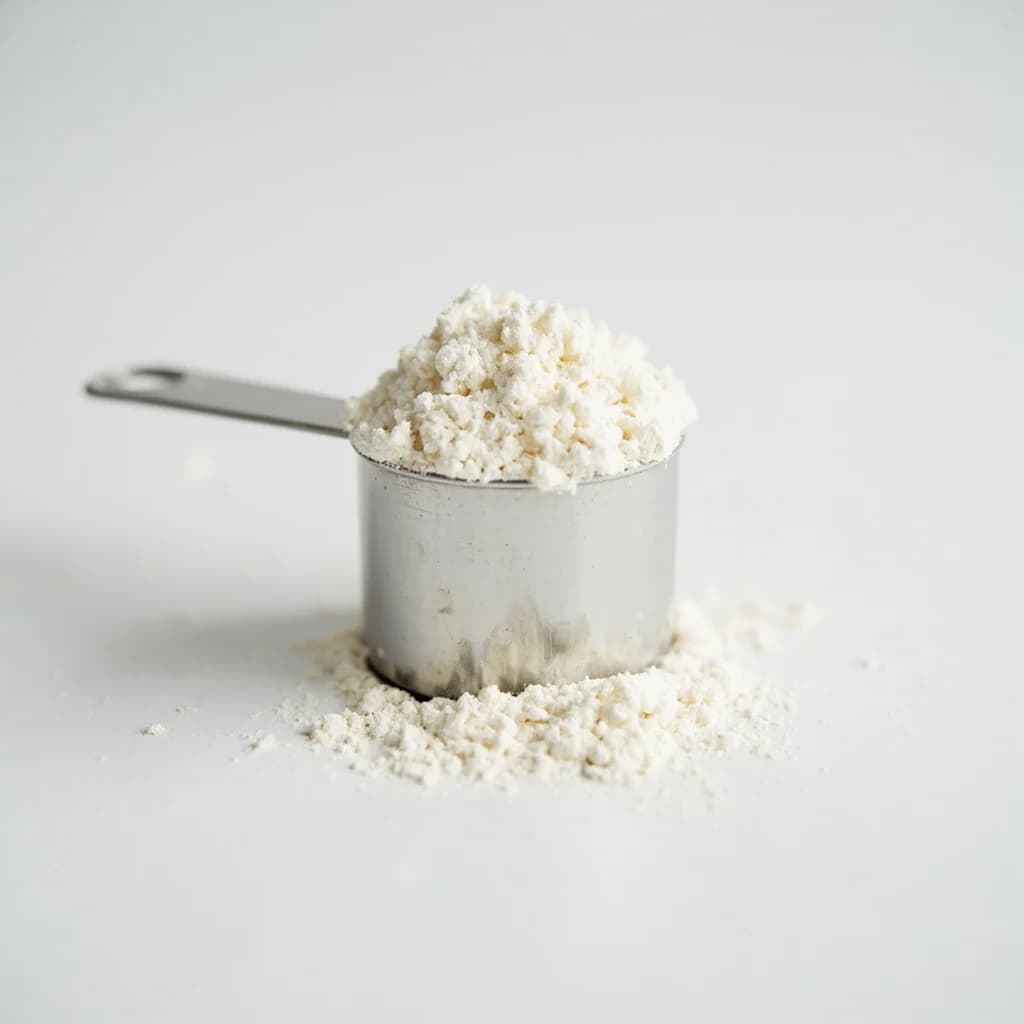
Cake Flour
Fine, low-protein flour for tender, delicate cakes
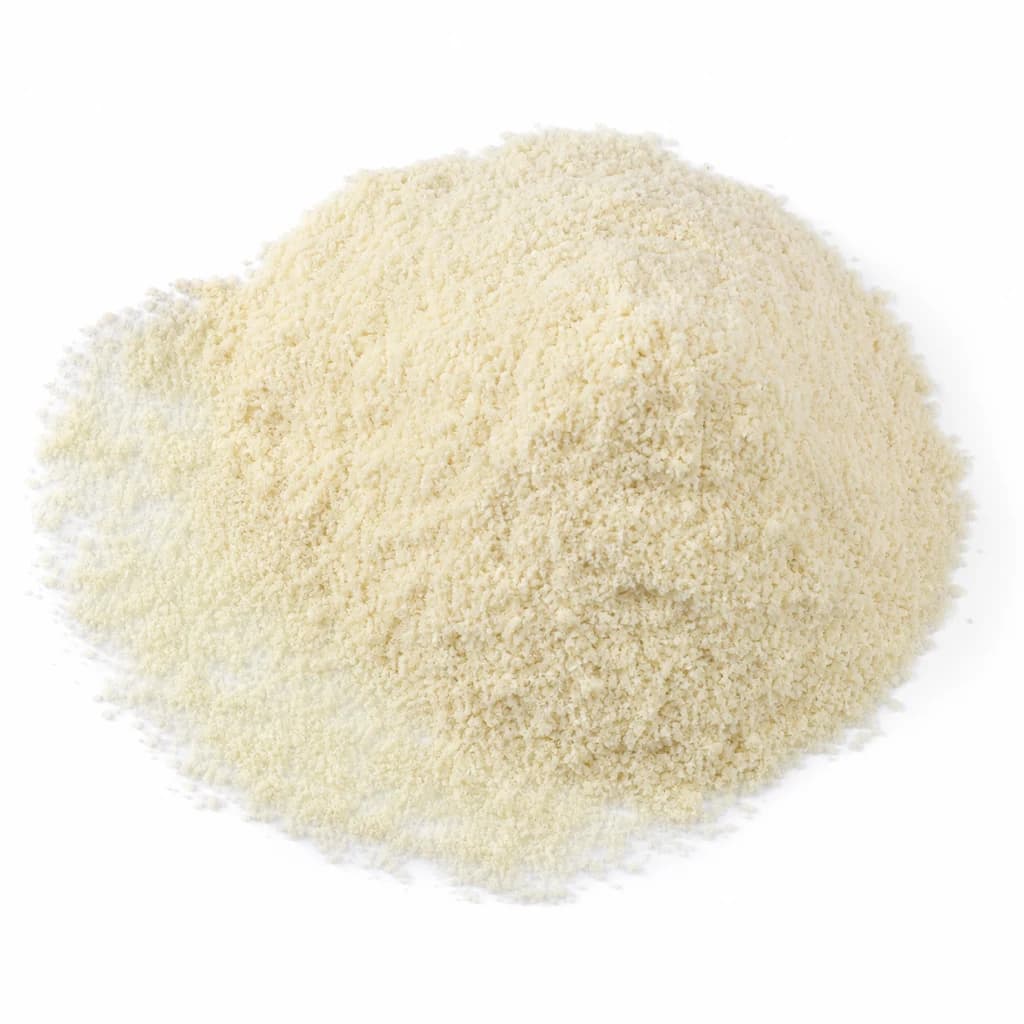
Almond Flour
Nutty, gluten-free flour for macarons and tender bakes

Baking Powder
All-in-one leavener for fluffy cakes, pancakes, and biscuits

Baking Soda
Pure leavener that needs acid to lift — and tenderize
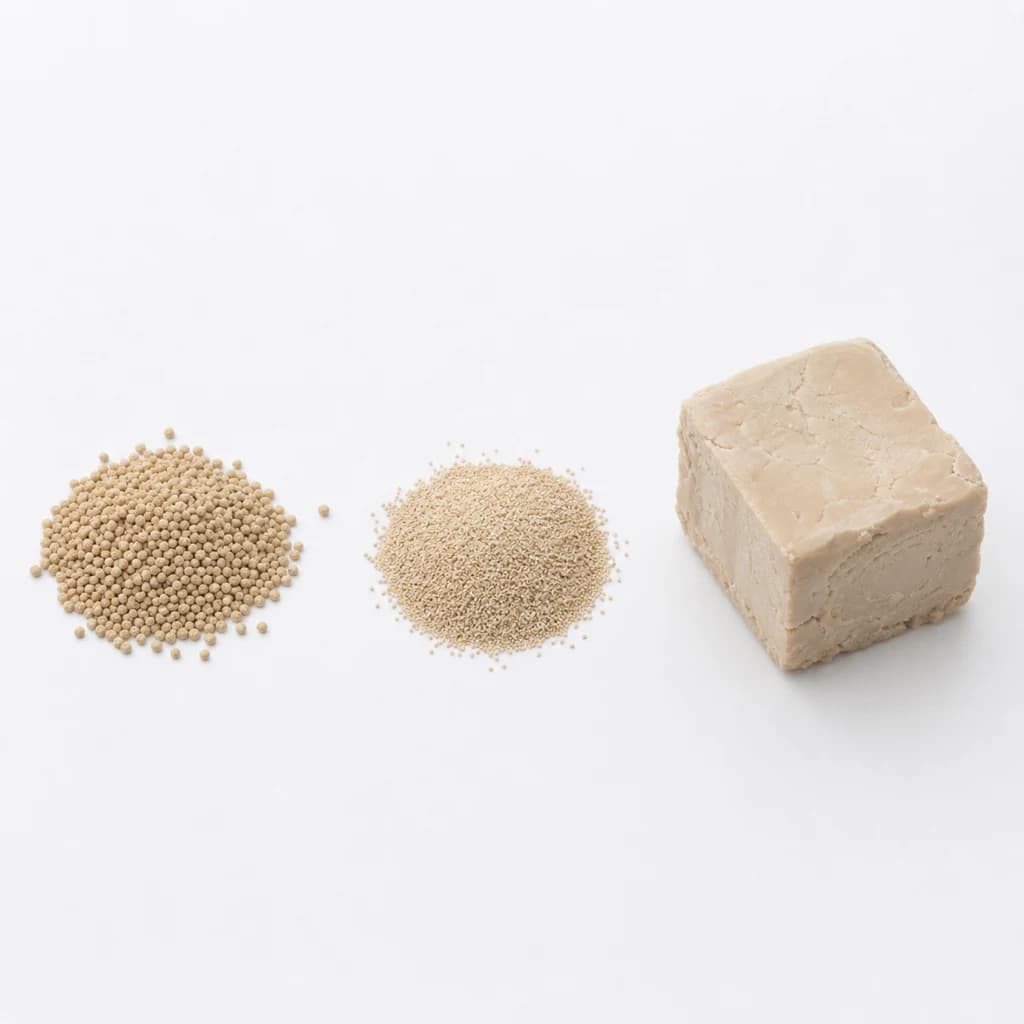
Yeast
Living leaven that makes bread rise and dough come alive