Proteins
Goat Liver
Tender, iron-rich organ meat fried or grilled in spiced dishes across South Asia and Africa.
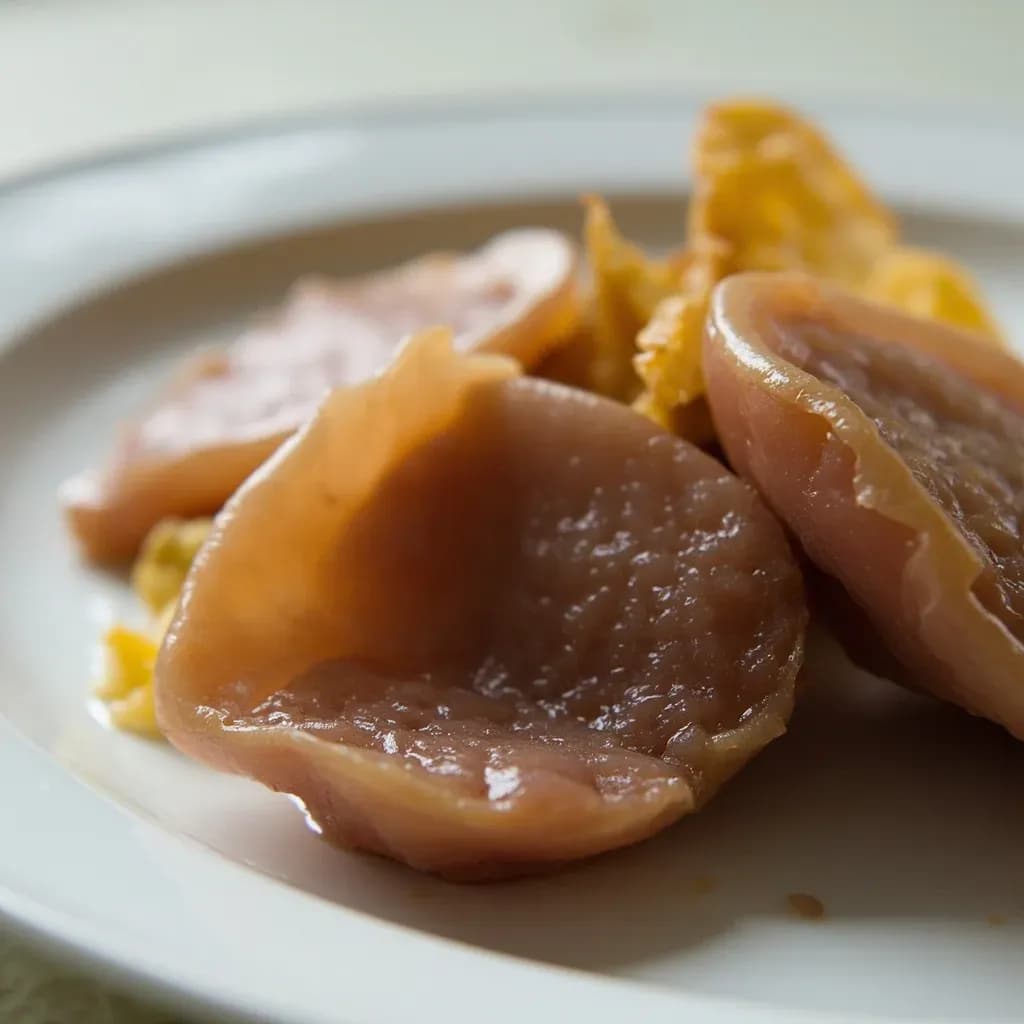
Goat liver is a soft, mineral-rich offal prized for its quick cooking and deep, faintly metallic flavor. It features in dishes like spiced bhuna kaleji, grilled skewers, and pepper-fried liver across South Asian, Middle Eastern and African kitchens. Because it toughens fast, it is usually cooked briefly over high heat with onions, ginger and chili.
Goat liver is an organ meat from domesticated goats (Capra hircus) that has anchored traditional diets across South Asia, Africa, the Middle East, and the Mediterranean for centuries. It is one of the most nutrient-dense foods available—extraordinarily rich in vitamin A (retinol), vitamin B12, heme iron, copper, folate, and zinc. A single 100-gram serving provides several times the daily recommended intake of B12 and vitamin A, making it a nutritional powerhouse that outperforms most fortified supplements.
The liver's behavior in cooking is unforgiving: it requires minutes, not hours. When cooked correctly—brief, high heat, stopped while still slightly pink inside—it achieves a buttery tenderness that rivals premium cuts. When overcooked, it becomes dry, chalky, and mealy with an unpleasant metallic aftertaste that gives offal a bad reputation it does not deserve. The strong, iron-forward flavor that many find off-putting is largely mitigated by proper soaking and confident, quick cooking.
Freshness is paramount. In South Asian and African butcher shops, goat liver is typically sold the same day the animal is slaughtered, often with the gall bladder still attached. Always inspect for complete gall bladder removal before purchasing or cooking; even trace bile renders the entire liver bitter and inedible. When sourced from young animals (kids) and prepared with technique, goat liver transforms from an intimidating ingredient into one of the most rewarding proteins in the kitchen.
- Measured in
- g
- Storage
- Fridge
Types & varieties
Most common in South Asian and African markets; use within 24-48 hours of purchase for best flavor and texture
Often preferred in Western markets; freezing improves texture by breaking down cell walls slightly. Thaw overnight in refrigerator.
Smaller, more delicate flavor, more tender texture. Preferred in most traditional preparations and ideal for first-time cooks.
Larger, more robust flavor; may require longer soaking and slightly shorter cooking to prevent toughness.
The Milk-Soak Method
The most reliable technique for taming goat liver's intensity involves soaking in cold whole milk for 1-2 hours before cooking. The milk draws out blood and bitter compounds through osmosis, resulting in a noticeably milder flavor and silkier texture. After soaking, rinse the liver under cold water and pat completely dry before cooking. This step is not optional for first-time cooks—it is the difference between a dish that converts skeptics and one that reinforces offal fears.
- Use enough cold whole milk to submerge the liver completely
- Change the milk once if soaking longer than 90 minutes
- Alternative: salted cold water (1 tbsp per quart) for 30-60 minutes, then rinse thoroughly
- Alternative: raw papaya juice or paste for 20-30 minutes—the papain enzyme tenderizes while mellowing flavor
Reading the Liver While Cooking
Goat liver cooks in minutes and demands your full attention. Here is how to read it at each stage:
- Raw: deep reddish-brown throughout, cool to the touch
- Rare: seared exterior, deep red interior with slight warmth
- Medium-rare (target): seared exterior, pink interior with a warm red center—this is ideal
- Medium: grayish-pink throughout, interior no longer red—texture begins to suffer
- Well-done: uniformly grayish-tan, firm and dry—overcooked, do not serve
Common uses
Tips & pitfalls
- Soak in cold whole milk for 1-2 hours before cooking—this draws out blood and bitter compounds for a milder flavor and silkier texture
- Alternatively, soak in salted cold water (1 tbsp salt per quart) for 30-60 minutes, then rinse thoroughly
- Always remove the gall bladder completely if attached; even trace bile makes the liver bitter and inedible
- Pat completely dry before cooking—surface moisture causes steaming rather than searing
- Cut into uniform thickness (1/2 to 3/4 inch) for even cooking; thicker pieces can be pounded gently to uniform size
- Cook over high heat for a short duration only: 2-3 minutes per side for sliced liver; 5-7 minutes for diced pieces
- Remove from heat when the interior still shows a slight pinkish tinge—carryover cooking will complete the process
- Never crowd the pan; cook in batches if necessary to maintain a proper sear rather than a steam
- Common mistake: overcooking—this produces a dry, chalky, crumbly texture with an unpleasant metallic aftertaste
- For a cleaner taste, soak sliced liver in raw papaya juice or papaya paste for 20-30 minutes; the papain enzyme tenderizes the meat
- When grinding raw for kebabs, work quickly and keep everything cold to prevent the liver from becoming mushy from heat friction
- Season immediately after cooking; goat liver holds seasonings better than beef or pork liver
Nutrition
Energy
1272 kJ · per 100 g
Where the calories come from
Protein
15.2g
30% DV
Carbs
2.1g
1% DV
Fat
25.6g
33% DV
Fiber
0g
0% DV
Sodium
1225mg
53% DV
Source · USDA FoodData Central · approx. Liver cheese, pork
View on FDC →In the shops
Matched grocery products
No matched grocery products for Goat Liver yet.
Good to know
- Type
- Organ meat / offal from domesticated goats (Capra hircus)
- Primary Regions
- South Asia, Africa, Middle East, Mediterranean, Latin America, Caribbean
- Flavor Profile
- Rich, intense, slightly metallic; earthy and mineral-forward with a distinctive mineral tang
- Texture
- Tender when cooked correctly; chalky, dry, and mealy when overcooked
- Color
- Deep reddish-brown raw; grayish-tan when fully cooked (avoid this)
- Nutritional Highlight
- Extremely high in vitamin A, B12, iron (heme), copper, folate, and zinc. One 100g serving provides several times the daily recommended intake of B12 and vitamin A
- Yield
- Minimal loss; approximately 10-15% volume reduction when cooked
- Shelf Life
- 1-2 days fresh refrigerated at 32-40°F; 3-4 months frozen at 0°F or below
Substitutes
- Lamb Liver — Very similar flavor profile and texture; excellent 1:1 substitute in most preparations.
- Beef Liver — Milder flavor, slightly coarser texture; most readily available alternative in Western markets. Adjust cooking time slightly longer.
- Chicken Liver — Smaller, more delicate; requires much shorter cooking time (1-2 minutes per side). Better for quick-fry preparations than slow-cooked dishes.
- Pork Liver — Stronger, more pronounced flavor; soak longer in milk. Use as a last resort in non-pork cuisines.
Pairs with
Also called
Kaleji
Related

Egg
The kitchen's everything ingredient — bind, leaven, enrich, or fry

Chicken Breast
Lean, quick-cooking white meat for everyday dinners

Ground Beef
Versatile minced beef for burgers, ragù, tacos, and meatballs

Pork Loin
Lean, tender roasting cut that stays juicy with care

Salmon
Rich, rosy fish that roasts, grills, or cures beautifully

Egg White
Pure protein that whips to airy peaks for meringue and more

Egg Yolk
Rich, golden yolk for custards, mayonnaise, and pasta

Quail Egg
Tiny, speckled eggs for garnishing and elegant bites