 Jamaican
Medium · Hot
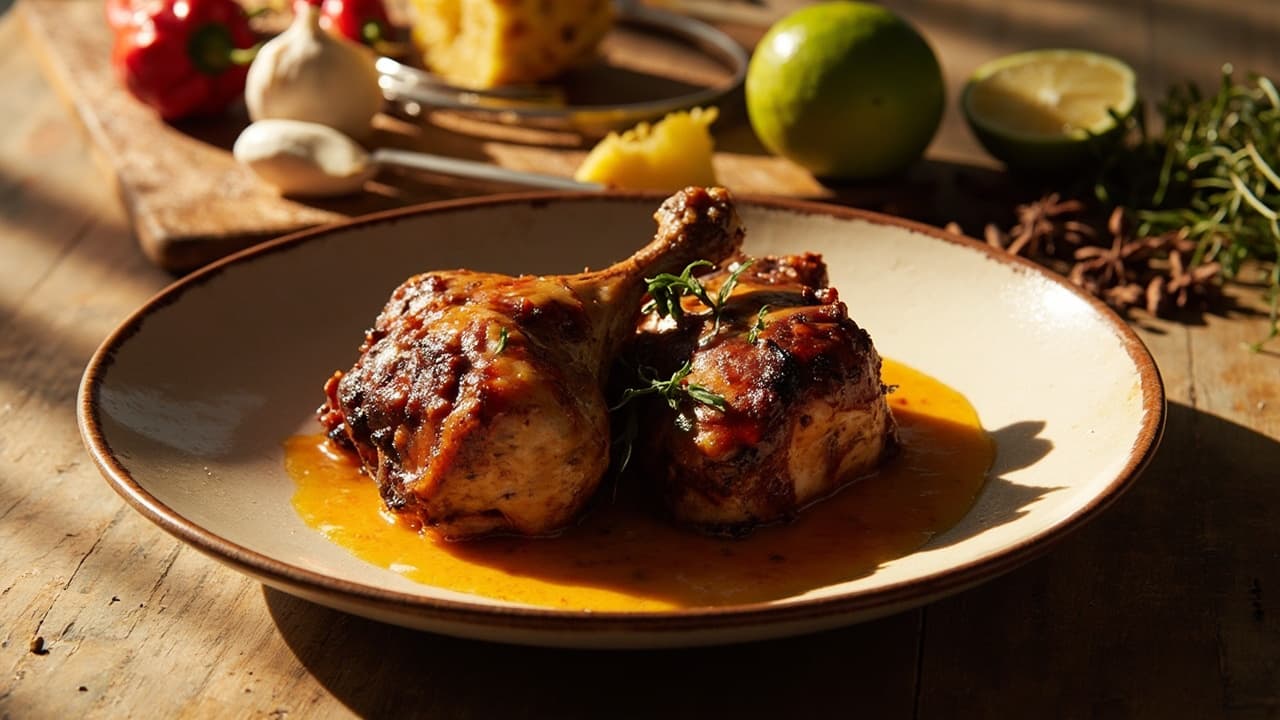
Pit-Style Jerk Chicken with Pineapple and Thyme
Slow-smoked chicken coated in a fiery scotch bonnet and allspice jerk paste, finished with a bright pineapple-thyme glaze that cuts through the smoky char. This is the kind of dish that calls you outside to the fire.

Prep
30 min
Cook
2h 30m
Total
3h
Method
1
Seed and roughly chop the scotch bonnets. Combine with garlic, thyme leaves, scallions, allspice, and black peppercorns. Pound in a mortar and pestle (or pulse in a food processor) until a rough paste forms, about 3 minutes of steady pounding.
2
3
Score the chicken thighs deeply on both sides with a sharp knife — three cuts per side, penetrating to the bone. This lets the jerk paste sink deep into the flesh.
4
Coat chicken thighs thoroughly in jerk paste, pressing it into every slash and crevice. Place in a glass dish, cover tightly, and refrigerate for at least 24 hours, ideally 48–72 hours. The longer it sits, the deeper the flavor.
5
Set up your smoker or kettle grill for indirect heat at 130–150°C. Add pimento wood chips or pimento wood chunks to the coals if available. Let the smoke roll for 10 minutes before cooking.
6
Place chicken thighs skin-side up on the grill over indirect heat. Smoke for 1 hour 15 minutes, resisting the urge to open the lid often — smoke is patient work.
7
Flip thighs skin-side down and continue smoking 45 minutes to 1 hour more, until the skin renders and crisps slightly at the edges and internal temp reaches 74°C at the thickest point.
8
While chicken finishes, dice pineapple into 1cm cubes. Strip thyme leaves from 3 sprigs. Heat a cast iron pan over medium-high heat with no oil.
9
10
11
Transfer smoked chicken to a clean plate. Rest uncovered for 5 minutes — this lets the juices settle back into the meat.
C
Nutri-Score
Fair balance
A–E · lower is better · score 4
Calories
439
per serving
High in salt · 1740mgHigh in protein · 34g
Protein
34g
Carbs
29g
Fat
23g
Sat. fat
4g
Fiber
4g
Sugar
19g
Sodium
1740mg
Nutri-Score is a general nutritional-balance guide, not medical or dietary advice.
C
Environmental impact
Moderate impact
A–E · lower is better · includes estimates
kg CO2e
1.3
per serving
CCarbonAEU all-round· carbon sets the grade
Water
1.1m³
Land
49Pt
Runoff
0.1g P
Chicken Thigh drives 84% of this recipe’s estimated footprint.
Carbon from Poore & Nemecek 2018; water, land & runoff from Agribalyse — modelled averages for comparing recipes, not a measurement of your groceries.
Flavor Profile
6
Umami
3
Sweet
5
Salty
2
Sour
1
Bitter
4
Spicy
Textures
CrispyJuicyTender
Aromas
CitrusFruityHerbalSmokySpice
Kitchen Equipment
Primary Tool
Smoker Or Kettle GrillSafety & Storage
Cooking Temperature
Smoke chicken until internal temperature reaches 74°C at thickest point to ensure safe consumption.
Maintain smoker temperature between 130-150°C throughout cooking process.
Cross Contamination
Do not reuse marinade that has contacted raw chicken unless it is boiled for at least 1 minute.
Use separate cutting boards and utensils for raw chicken and ready-to-eat ingredients.
Storage
Refrigerate marinated chicken at 4°C or below during 24-72 hour marination period.
Store leftover pineapple-thyme sauce in airtight container and refrigerate within 2 hours of preparation.
Shelf Life
Unused jerk paste keeps refrigerated up to 2 weeks; discard if mold appears or fermentation becomes off.
Handling
Wear gloves when seeding and chopping scotch bonnet peppers; avoid touching eyes, nose, or face during handling.
Allergen Warning
This recipe contains soy; verify all soy sauce ingredients are wheat-free for gluten-free dietary needs.
High Risk Population
Serve chicken promptly after smoking; individuals with compromised immune systems should ensure chicken is cooked to 74°C throughout.
Pro Tips
Technique
When scoring the chicken thighs, cut deep enough to reach the bone—those slashes are highways for the jerk paste to travel, and the deeper they go, the more the flavor becomes one with the meat.
Substitution
If scotch bonnets prove hard to find, habaneros will serve you well—they bring similar fruity heat and floral sweetness, just dial back the quantity by half if you want to honor the original intensity.
From the chef
Real jerk patience lives in days, not hours — scotch bonnets, allspice, and thyme pounded into paste and pressed into every scored cut of the chicken thighs, then left to work in the cold for up to three days before the smoke ever starts. The pit runs low and slow, pimento wood chips whispering through the coals for two hours until the skin renders and crisps at the edges. A bright pineapple-thyme glaze goes on at the last moment, cutting through the char like morning light. Every bite is what fire and time were made to build.
TagsSpicySmokedJamaicanGrilledChickenPineapplePoultryCitrusSlow CookedWeekend CookingWood FiredAromatic Spice
AllergensSoyGluten
Source: generated · June 12, 2026