 Fusion
Medium · Hot
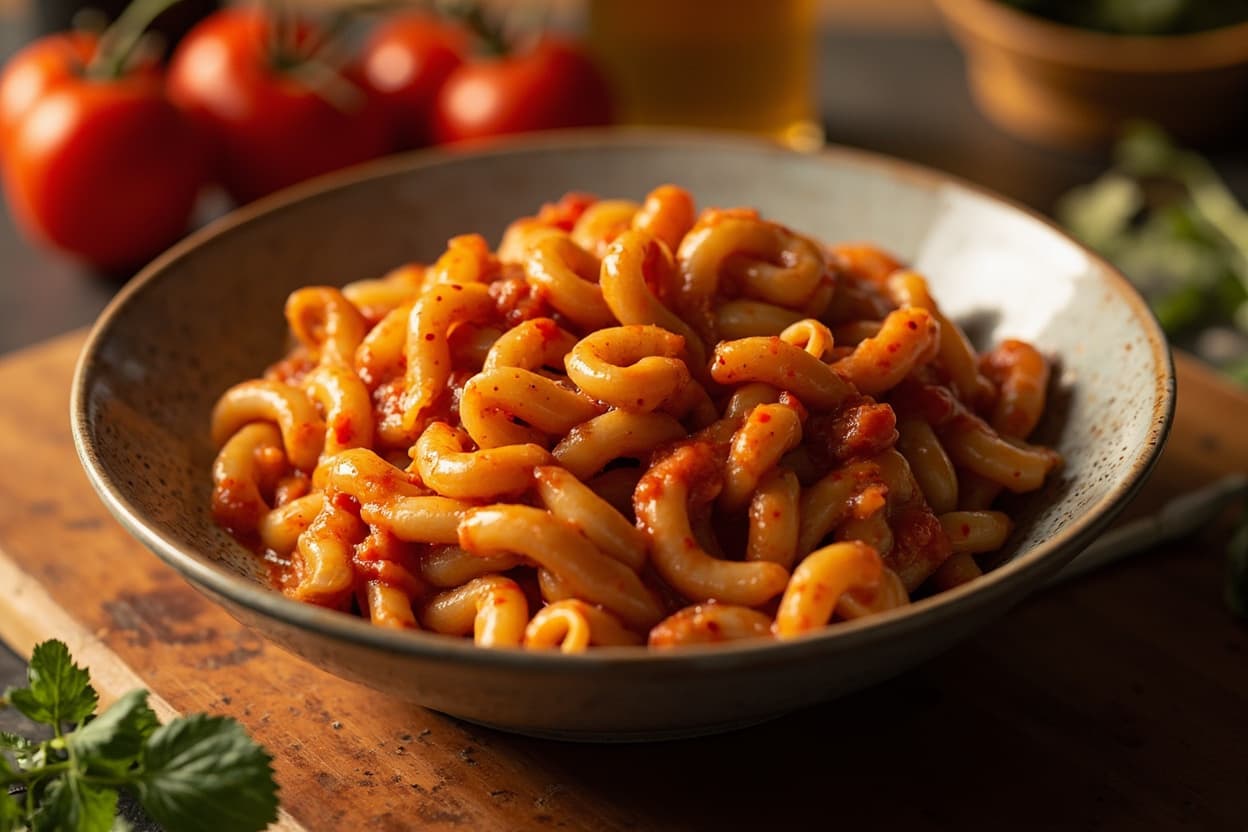
Fermented Heat Tomato Macaroni
Macaroni bathed in a glossy tomato sauce with a fermented soy glaze and a whisper of cayenne heat — Viola's rebellion against bland tomato pasta.

Prep
10 min
Cook
25 min
Total
35 min
Method
Soffritto — Build the Aromatic Foundation
1
2
Add the sliced garlic and cook for 2 minutes until fragrant and barely golden. This is your flavor base — don't rush it.
Tomato Mushroom Sauce — Deepen and Simmer
3
Add the mushrooms and a fresh pinch of salt. Cook for 5 minutes, letting them release their moisture and brown slightly in the fat.
4
5
Add the crushed tomatoes, cayenne, black pepper, and remaining salt. Stir well and bring to a gentle simmer. Cook for 15 minutes, stirring occasionally, until the sauce thickens and the tomatoes deepen in color. Taste — adjust salt and cayenne as you like.
Cook the Macaroni — Al Dente and Starchy
6
While the sauce simmers, bring a large pot of generously salted water to a boil. Cook the macaroni according to package directions until just al dente (usually 1 minute less than the full time). Reserve 1 cup of the cloudy, starchy pasta water before draining.
Marry the Pasta and Sauce — The Emulsion
7
8
Remove from heat and fold in the remaining butter and torn mozzarella. The residual heat will melt the cheese and the butter will sheen the whole thing into silkiness. Add more pasta water if needed — you want it saucy, not dry.
Plate Like You Mean It
9
Divide into warm bowls. Serve immediately, because cold macaroni is a crime in any kitchen, heretical or otherwise.
B
Nutri-Score
Good balance
A–E · lower is better · score 0
Calories
632
per serving
Source of protein · 23gLow sugar · 9g
Protein
23g
Carbs
87g
Fat
23g
Sat. fat
10g
Fiber
6g
Sugar
9g
Sodium
1178mg
VegetarianWeight ManagementDiabetes FriendlyHeart HealthyBalanced MacrosModerate Sodium
Nutri-Score is a general nutritional-balance guide, not medical or dietary advice.
B
Environmental impact
Low impact
A–E · lower is better · includes estimates
kg CO2e
0.9
per serving
BCarbon
Mozzarella, torn into pieces drives 35% of this recipe’s estimated footprint.
Carbon from Poore & Nemecek 2018; water, land & runoff from Agribalyse — modelled averages for comparing recipes, not a measurement of your groceries.
Flavor Profile
8
Umami
4
Sweet
6
Salty
3
Sour
1
Bitter
5
Spicy
Textures
SilkyChewyTenderCreamy
Aromas
SavoryFermentedAromaticSpicySmoky
Kitchen Equipment
Primary Tool
Frying PanCounter FootprintMedium
Techniques
Safety & Storage
High Risk Population
Immuno-compromised individuals should ensure all ingredients are sourced from reputable suppliers with clear allergen labeling. Fermented products like soy sauce may pose additional microbial risk if not properly processed.
Temperature
Sauce must reach a full simmer (203°F/95°C) for the 15-minute cooking phase to ensure safe reduction and proper texture development.
Handling
When folding in butter and mozzarella at the end, ensure pasta is at safe serving temperature (140°F/60°C minimum). The emulsification step requires vigorous tossing over medium heat to maintain food-safe temperatures.
Cross Contamination
Pasta water reserved for emulsification must be handled with sanitized utensils. If separating portions for allergen-sensitive individuals, prepare those servings before adding cheese and butter.
Storage
Leftover pasta must be refrigerated within 2 hours of cooking. Store in airtight containers at 40°F/4°C or below for up to 3 days. Reheat to 165°F/74°C before consumption.
Allergen Warning
This dish contains milk, gluten/wheat, and soy. Verify soy sauce is wheat-free if cooking for individuals with celiac disease or severe gluten sensitivity. Cross-contact with other allergens (nuts, eggs, shellfish) should be avoided during preparation.
Equipment Safety
Use oven-safe or heat-stable bowls when plating. Avoid plastic servingware that may warp or leach at high temperatures.
Pro Tips
Technique
When you add pasta water, add it like you're coaxing a cat — a splash at a time, patient and deliberate. The starch is your emulsifier; it's what makes the sauce cling to every ridge and nook instead of pooling sadly at the bottom of the bowl.
Substitution
No soy sauce? Reach for Worcestershire, white miso paste thinned with water, or even a splash of fish sauce. The goal is fermented depth, that background hum that makes people ask 'what is that?' and you get to smile mysteriously.
Equipment
Use a wide, heavy-bottomed pan — you need surface area for the sauce to reduce and evaporate. A stockpot works, but a skillet is better for the soffritto phase where you want contact browning, not steaming.
From the chef
Soy sauce in tomato pasta is not a mistake — it is a sweet-salty collision that makes the tomato taste more like itself than any amount of extra salt ever could. The fermented depth slips into the background while crushed tomatoes and caramelized mushrooms build the body, and cayenne keeps everything alert. Starchy pasta water and a cold butter finish pull the sauce into glossy, clingy silk around every macaroni curve. Torn mozzarella melts in at the end, soft pockets of cream in a sauce that knows exactly what it is doing and refuses to apologize.
TagsPastaTomato SauceFermentedSpicyComfort FoodWeeknight DinnerFusionCheeseButterMushroom
AllergensMilkGlutenWheatSoy
Source: generated · June 9, 2026