 West African
Medium · Hot
Pinto Bean and Butternut Squash Yassa Croquettes with Smoked Paprika
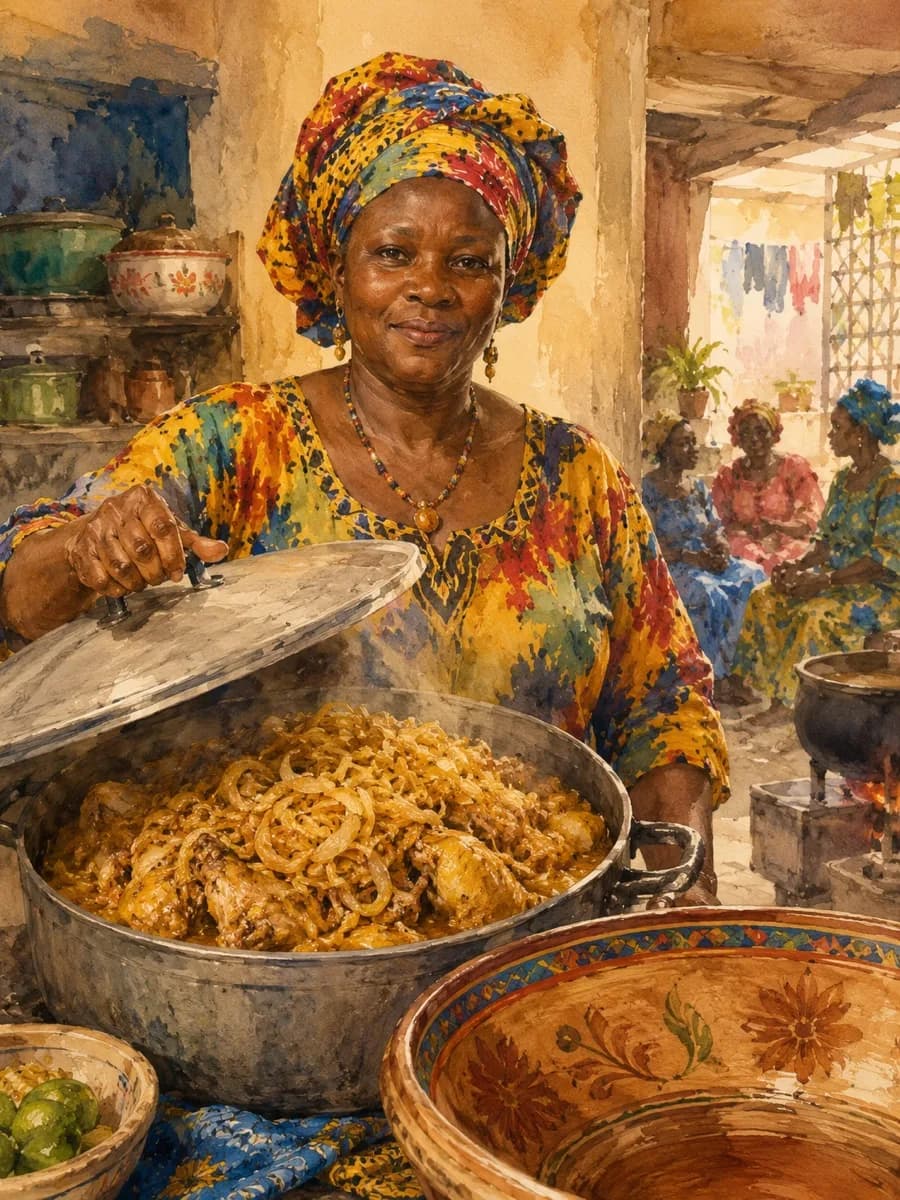
Crispy golden croquettes born from two of West Africa's most generous ingredients — pinto beans and butternut squash — bathed in the bright, deeply caramelized yassa of lemon, mustard, and smoked paprika. Served from one shared bowl, made to feed a crowd.
Prep
25 min
Cook
50 min
Total
1h 15m
Method
1
Preheat oven to 200°C. Toss the butternut-squash cubes with 1 tbsp olive-oil and half the salt. Spread in a single layer on a baking sheet. Roast 18-20 minutes, turning once, until tender and lightly caramelized at the edges. Set aside to cool slightly.
2
While the squash roasts, heat 2 tbsp olive-oil in a wide Dutch oven or skillet over medium heat. Add the yellow-onion sliced into thin half-moons with the remaining salt. Cook, stirring occasionally with a WoodenSpoon, for 25-30 minutes until deeply golden, sweet, and jammy — not just soft. This slow caramelization is the soul of the yassa.
3
Reduce heat to medium-low. Stir the mustard, smoked-paprika, and cayenne directly into the caramelized onion. Cook 2 minutes, stirring constantly, until fragrant and unified. Squeeze in the juice of both lemon. Cook 2 more minutes — the mixture should be glossy, bold, and bright. Remove from heat.
4
In a large bowl, roughly mash the pinto-beans with a fork, leaving some texture. Add the roasted butternut-squash and the yassa onion mixture. Stir together until well combined. Fold in the 2 eggs, 80g breadcrumbs, and chopped parsley. Taste and adjust salt. Let the mixture cool to room temperature — it will firm up and be easier to shape. If it seems wet, add extra breadcrumbs a tablespoon at a time.
5
Beat the 2 eggs for the egg wash in a shallow bowl. Spread the remaining 100g breadcrumbs on a plate. Scoop about 2 tablespoons of mixture per croquette and roll into oval shapes about 5cm long. Dip each in egg wash, then roll in breadcrumbs, pressing firmly to coat. Place on a lined tray. You should get roughly 16 croquettes.
6
Heat 2 tbsp olive-oil in a large non-stick or cast-iron skillet over medium heat until shimmering. Add croquettes in a single layer — work in batches if needed. Fry 3-4 minutes per side, until deep golden-brown and crisp on all sides. Add remaining oil as needed between batches. Internal temperature is not critical for plant-based croquettes; visual doneness is your guide.
7
Let croquettes drain briefly on a paper towel. Arrange on a wide communal platter or in one large bowl. Finish with a light dusting of smoked-paprika and a final squeeze of lemon over the top. Serve immediately while hot and crispy, with extra lemon wedges on the side.
A
Nutri-Score
Excellent balance
A–E · lower is better · score -6
Calories
1029
per serving
Source of protein · 42gSource of fibre · 31gLow sugar · 15g
Protein
42g
Carbs
145g
Fat
33g
Sat. fat
10g
Fiber
31g
Sugar
15g
Sodium
1447mg
DiabetesHeart HealthyHigh FiberPlant ForwardWeight ManagementBalanced MacrosHigh Protein
Nutri-Score is a general nutritional-balance guide, not medical or dietary advice.
B
Environmental impact
Low impact
A–E · lower is better · includes estimates
kg CO2e
0.8
per serving
BCarbonAEU all-round· carbon sets the grade
Water
1.2m³
Runoff
0.1g P
pinto-beans drives 27% of this recipe’s estimated footprint.
Carbon from Poore & Nemecek 2018; water, land & runoff from Agribalyse — modelled averages for comparing recipes, not a measurement of your groceries.
Flavor Profile
6
Umami
4
Sweet
5
Salty
6
Sour
2
Bitter
4
Spicy
Textures
CrispySaucyTender
Aromas
CaramelCitrusHerbalSmoky
Kitchen Equipment
Primary Tool
SkilletTechniques
Safety & Storage
Cooking Temperature
Pan-fry croquettes at medium heat until deep golden-brown and crisp on all sides, 3-4 minutes per side. While visual doneness is the guide, ensure oil is shimmering before adding croquettes to achieve proper heat penetration.
High Risk Population
Eggs used in both the mixture and egg wash are consumed but must be fully cooked through. Ensure internal temperature reaches 165°F (74°C) throughout each croquette. Use a thermometer to check center temperature before serving.
Cross Contamination
Use separate utensils and work surfaces for allergen-containing ingredients (eggs, mustard, breadcrumbs) if preparing multiple dishes. Clean thoroughly between batches.
Allergen Warning
Contains mustard, eggs, wheat/gluten. Warn consumers with allergies to these ingredients. Cross-contact with tree nuts or peanuts may occur if fried in shared oil.
Storage
Store leftover croquettes in airtight container in refrigerator for up to 3 days. Reheat in oven at 180°C until heated through and crispy to maintain food safety.
Handling
Drain croquettes briefly on paper towels after frying. Handle hot oil carefully—add croquettes gently to avoid splashing. Use tongs, not utensils, to turn croquettes.
Equipment Safety
Use thermometer to verify oil temperature remains consistent (180-190°C ideal for frying). Never leave hot oil unattended on stovetop.
Pro Tips
Technique
Never rush the onion. When building the yassa base, cook those sliced half-moons for the full 25-30 minutes until they turn deep golden and jammy — this is not just softening, this is transformation. Awa's grandmother called it 'cooking out the sharpness,' and it is the difference between yassa and ordinary caramelized onion.
Substitution
If you cannot find pinto beans, cannellini or Great Northern beans work beautifully — they have the same creamy texture and mild flavor that lets the yassa seasoning shine through.
Reheating
These croquettes are best eaten the moment they come off the pan, but if you have leftovers, reheat them in a 180°C oven for 8-10 minutes to restore their crispy exterior. The microwave will make them soft, and that is a sadness I cannot allow.
From the chef
The onion is the soul of yassa — you cannot rush a soul, and these croquettes prove it. Twenty-five minutes of slow caramelization turns a mountain of yellow onion jammy and golden, then mustard, smoked paprika, and a hard squeeze of lemon pull everything into a bright, bold sauce that binds the roasted butternut squash and pinto beans together. Each croquette comes out crispy outside, warm and fragrant inside, and the smoked paprika dusting at the end is non-negotiable. Serve them from one wide platter and watch the table lean in together.
TagsPan Frying
AllergensMustardEggsWheatGluten
Source: generated · June 13, 2026