 Moroccan
Medium · Hot
Honeyed Turkey and Apple Couscous Skillet
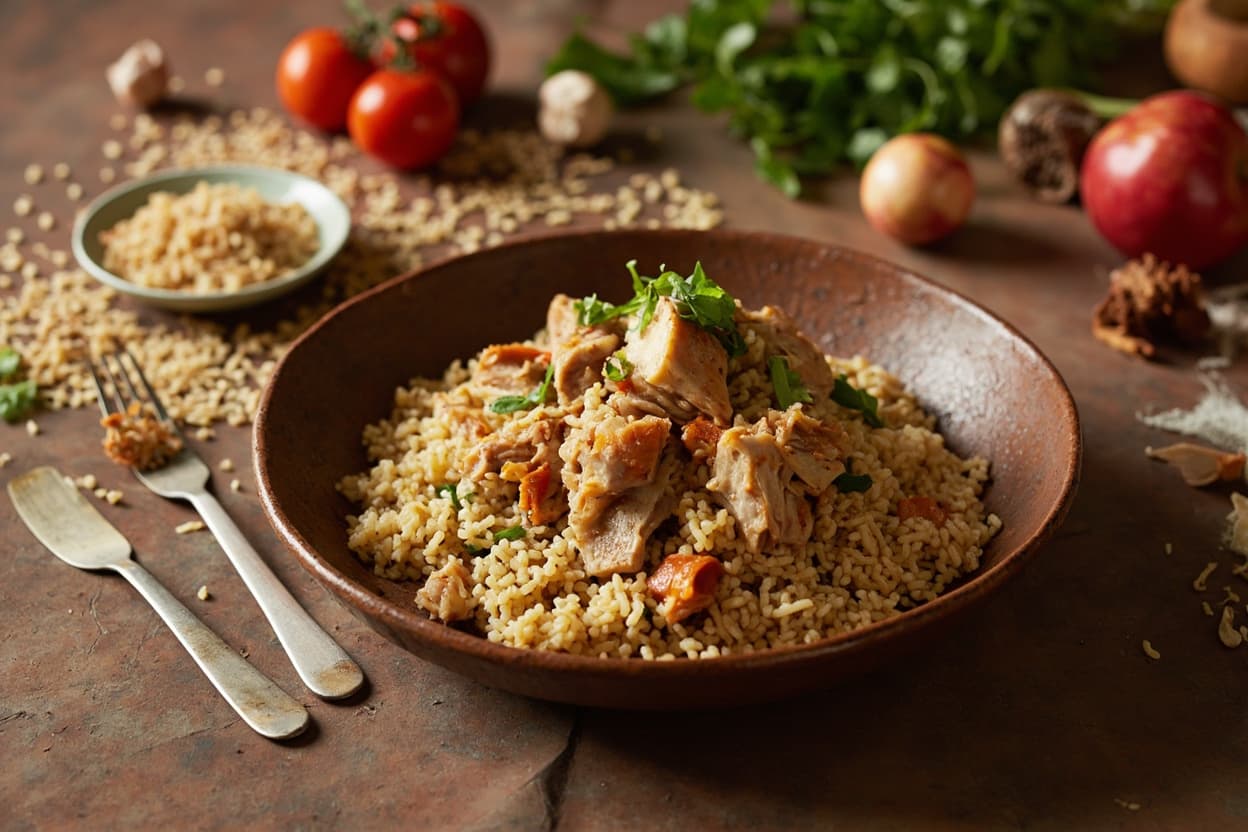
Turkey takes on warmth from cinnamon and the caramel sweetness of apple, while couscous steams alongside and absorbs everything in the pan — the juices, the spice, the gentle perfume of honey. Slivered almonds and tender carrot give the dish contrasting textures and quiet color. It moves fast for a one-pan meal, but it tastes as though it had all the time in the world.

Prep
15 min
Cook
25 min
Rest
5 min
Total
45 min
Method
Prepare the Aromatics
1
Peel and dice the yellow onion into small pieces. Core and dice the apples into bite-sized chunks, leaving the skin on for texture and color.
2
Mince the garlic cloves finely. Roughly chop the fresh parsley. Cut the lemon in half — one half for juicing, one half for serving wedges.
Brown the Turkey
3
Heat the olive oil in a large, deep skillet or Dutch oven over medium-high heat. Add the ground turkey, breaking it apart with a wooden spoon.
4
Cook the turkey until it loses its pink color and begins to brown, about 5-6 minutes. Season with salt and black pepper.
Build the Flavor Foundation
5
6
7
Toss the turkey and onions together with the spices, ensuring even distribution.
Add Fruit and Deglaze
8
9
Pour in the chicken broth and water, scraping up any browned bits from the bottom of the pan. Bring the mixture to a gentle boil.
Cook the Couscous
10
11
Uncover and fluff the couscous gently with a fork, breaking up any clumps. The couscous should be tender and have absorbed the aromatic cooking liquid.
Finish and Serve
12
A
Nutri-Score
Excellent balance
A–E · lower is better · score -1
Calories
849
per serving
High in protein · 74gLow sugar · 19gLow saturated fat · 5g
Protein
74g
Carbs
71g
Fat
29g
Sat. fat
5g
Fiber
7g
Sugar
19g
Sodium
1532mg
Dairy FreeHeart HealthyLow FatHigh ProteinBalanced MacrosWeight Management
Nutri-Score is a general nutritional-balance guide, not medical or dietary advice.
D
Environmental impact
High impact
A–E · lower is better · includes estimates
kg CO2e
2.5
per serving
DCarbonBEU all-round· carbon sets the grade
Water
1.2m³
Land
93Pt
Runoff
0.3g P
Ground Turkey drives 44% of this recipe’s estimated footprint.
Carbon from Poore & Nemecek 2018; water, land & runoff from Agribalyse — modelled averages for comparing recipes, not a measurement of your groceries.
Flavor Profile
6
Umami
5
Sweet
4
Salty
3
Sour
2
Bitter
2
Spicy
Textures
TenderFluffyJuicy
Aromas
Warm SpicesHerbalSweetSmoky
Kitchen Equipment
Primary Tool
SkilletCounter FootprintMedium
Safety & Storage
Cooking Temperature
Ground turkey must reach an internal temperature of 165°F for food safety. Verify with a meat thermometer during the browning step.
High Risk Population
Ground poultry is a high-risk food for foodborne illness. Pregnant individuals, elderly, and immunocompromised persons should ensure thorough cooking.
Cross Contamination
Use separate cutting boards and utensils for raw turkey to prevent cross-contamination with ready-to-eat items like fresh parsley and lemon. These garnishes are added after cooking and must remain uncontaminated.
Handling
Wash hands thoroughly with soap after handling raw ground turkey before touching other ingredients or cookware.
Storage
Refrigerate leftovers within 2 hours in airtight containers. Consume within 3-4 days or freeze for up to 3 months.
Allergen Warning
Contains wheat from couscous. Couscous is not gluten-free; use GF pasta or quinoa as a safe substitute if needed.
Pro Tips
Technique
Never rush the spice bloom. When you add cumin, cinnamon, turmeric, and ginger to the hot oil, let them dance for a full 60 seconds. This releases their essential oils and transforms the entire flavor profile of your dish.
Substitution
If you have preserved lemons on hand, add two teaspoons of the finely minced rind along with the honey — it adds an authentic depth that brightens the sweetness beautifully.
Equipment
A Dutch oven or deep skillet with a tight-fitting lid is essential here. The steam trapped inside is what transforms the couscous from hard pellets into fluffy perfection.
Flavor Boost
For an even more aromatic finish, stir in a pinch of saffron dissolved in a tablespoon of warm water just before you add the couscous to the broth.
From the chef
This skillet moves with the confidence of a tagine but comes together in one pan on a weeknight. Ground turkey takes on cinnamon, cumin, turmeric, and ginger while diced apple softens at the edges and adds a caramel sweetness no spice alone can give. Couscous steams right in the pan, absorbing the spiced cooking liquid until each grain is plump and aromatic. The honey goes in at the end — folded gently, never stirred hard — and it rounds the whole dish in a way that makes you understand why sweet and savory have always belonged together in Moroccan cooking. One pan, ten minutes of your attention, and it tastes as though it had all afternoon.
TagsTurkeyCouscousAppleHoneyMoroccan SpicesOne PanSweet SavoryWeeknight Friendly
AllergensWheat
Source: generated · May 30, 2026