 French
Medium · Hot
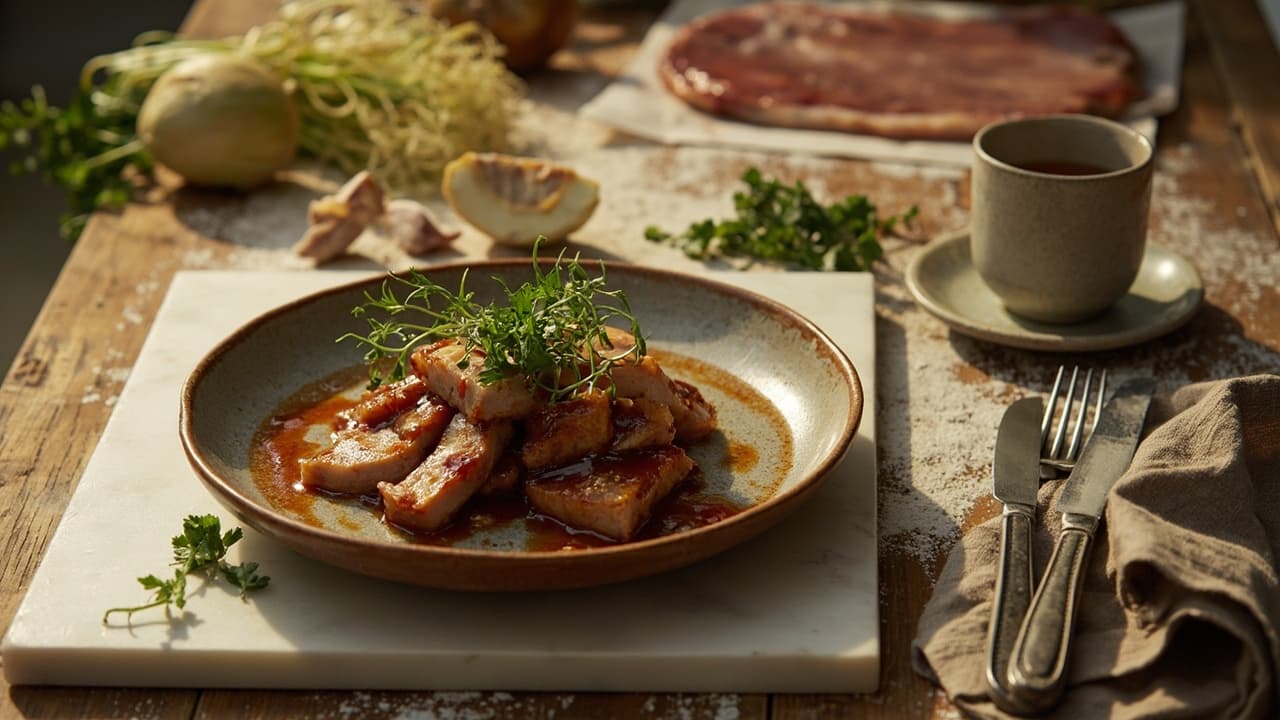
Pork Belly Confit with Garlic, Fennel, and Apple Cider Glaze
A meditative, slow-crafted pork belly confit where the meat transforms into silky, deeply flavored perfection through patience and time. Crowned with a glossy apple cider glaze and fragrant fennel.

Prep
30 min
Cook
3h 30m
Rest
1h
Total
5h
Method
Curing the Pork Belly
1
In a small bowl, combine salt, black pepper, and fennel seed. Crush the fennel seed slightly to release their oils.
2
Pat the pork belly dry with paper towels, then rub the cure mixture generously all over the meat and into the scores. Place in a shallow dish.
3
Cover loosely and refrigerate for at least 4 hours, preferably overnight. The salt will draw out moisture and begin the transformation.
Preparing the Confit
4
Preheat your oven to 135C (275F). This low temperature is essential for the slow transformation of the collagen into silky gelatin.
5
Slice the fennel bulb, quarter the onion, and roughly chop the carrots. bruise the garlic cloves by crushing them slightly.
6
In a deep oven-safe vessel or Dutch oven, pour in the olive oil and add all the aromatics. Nestle the pork belly into the oil, ensuring it is mostly submerged.
7
Place in the oven, uncovered. After 30 minutes, baste the exposed top with the oil. Continue cooking for 2.5 to 3 hours until the pork is completely tender and a skewer meets no resistance.
8
Remove from oven. Using a slotted spoon or tongs, carefully transfer the pork to a plate. Strain the cooking oil through a fine mesh strainer, reserving the aromatic liquid. Discard the spent vegetables.
Crafting the Glaze
9
In a small saucepan, combine apple cider vinegar, honey, and garlic cloves. Bring to a gentle simmer over medium heat, stirring occasionally.
10
Continue simmering until the mixture reduces by half and coats the back of a spoon, approximately 15-20 minutes. Remove from heat and let cool slightly. It will thicken further as it rests.
Resting and Finishing
11
Allow the pork belly to rest in the strained cooking oil for at least 20 minutes. This allows the flavors to marry and the exterior to firm slightly for better searing.
12
Heat a heavy skillet over high heat. Remove pork from oil, pat dry. Sear the skin side down until crackling and golden, 2-3 minutes. Watch carefully as the natural sugars caramelize quickly.
13
Slice the pork belly into thick medallions. Arrange on a serving platter.
E
Nutri-Score
Least favorable
A–E · lower is better · score 20
Calories
1971
per serving
High in saturated fat · 45gHigh in salt · 4199mgCalorie-dense · 1971 kcalLow sugar · 19g
Protein
21g
Carbs
30g
Fat
197g
Sat. fat
45g
Fiber
4g
Sugar
19g
Sodium
4199mg
Gluten FreeDairy FreeLow Sodium CautionCardiovascular CautionWeight Management CautionHigh ProteinLow Carb Compatible
Nutri-Score is a general nutritional-balance guide, not medical or dietary advice.
E
Environmental impact
Very high impact
A–E · lower is better · includes estimates
kg CO2e
3.2
per serving
ECarbonBEU all-round· carbon sets the grade
Water
2.8m³
Land
132Pt
Runoff
0.3g P
Pork Belly drives 78% of this recipe’s estimated footprint.
Carbon from Poore & Nemecek 2018; water, land & runoff from Agribalyse — modelled averages for comparing recipes, not a measurement of your groceries.
Flavor Profile
8
Umami
4
Sweet
5
Salty
3
Sour
1
Bitter
2
Spicy
Textures
SilkyTenderCrispyGlossy
Aromas
HerbalFennelGarlickySweet Savory
Kitchen Equipment
Primary Tool
Dutch OvenDutch OvenSaucepanHeavy SkilletChef KnifeCutting BoardFine Mesh StrainerSlotted SpoonMeasuring SpoonsMeasuring CupsTongsPlastic WrapPaper TowelsAluminum Foil
Counter FootprintMedium
Safety & Storage
Cooking Temperature
Maintain oven at 135C (275F) during confit process. Ensure proper temperature is reached before searing at high heat to achieve caramelization without burning.
Cross Contamination
Use separate cutting boards and utensils for raw pork belly during curing and preparation phases to prevent cross-contamination with ready-to-eat vegetables and garnishes.
Storage
Refrigerate cured pork belly at 4C (40F) or below during the curing phase. Store finished confit in the cooking oil, refrigerated, for up to 5 days. Reheat thoroughly before service.
Handling
Pat pork belly completely dry before searing to ensure proper skin crackling and prevent splattering from residual moisture meeting hot pan.
Shelf Life
Consume refrigerated pork belly confit within 5 days. The cooking oil can be strained, cooled, and reused within 2 weeks when stored properly in the refrigerator.
High Risk Population
Pork should be cooked to an internal temperature of at least 63C (145F) for medium doneness. Vulnerable populations may require higher temperatures.
Pro Tips
Technique
The cure is not merely a step—it is the beginning of transformation. That overnight rest with salt and fennel seed does not just season the meat; it begins drawing out moisture and denaturing proteins, creating channels for flavor to nested deeper into the flesh.
Substitution
While olive oil serves beautifully here, for a more traditional Southwest French interpretation, replace half the olive oil with rendered duck fat. The result carries a deeper, more rustic richness that complements the fennel beautifully.
Make Ahead
This dish genuinely improves with planning. Cure the pork one day, confit the next, then store it submerged in its strained cooking fat. When you are ready to serve, a quick sear brings it back to life with almost no effort.
From the chef
There is something almost spiritual about watching pork belly transform in the gentle warmth of the oven. Over those slow hours, time becomes the primary ingredient, breaking down collagen into silk while the aromatics weave their quiet magic into every fiber. This is not a dish for those who seek instant gratification; it is a meditation on patience, rewarding you with meat so tender it barely needs a knife, crowned with a glaze that tastes of autumn orchards and golden afternoons.
TagsConfitSlow CookedGourmetElegantWeekend Cooking
Source: generated · June 10, 2026