 Indonesian
Medium · Hot
Grilled Satay Ayam with Kecap Manis Glaze
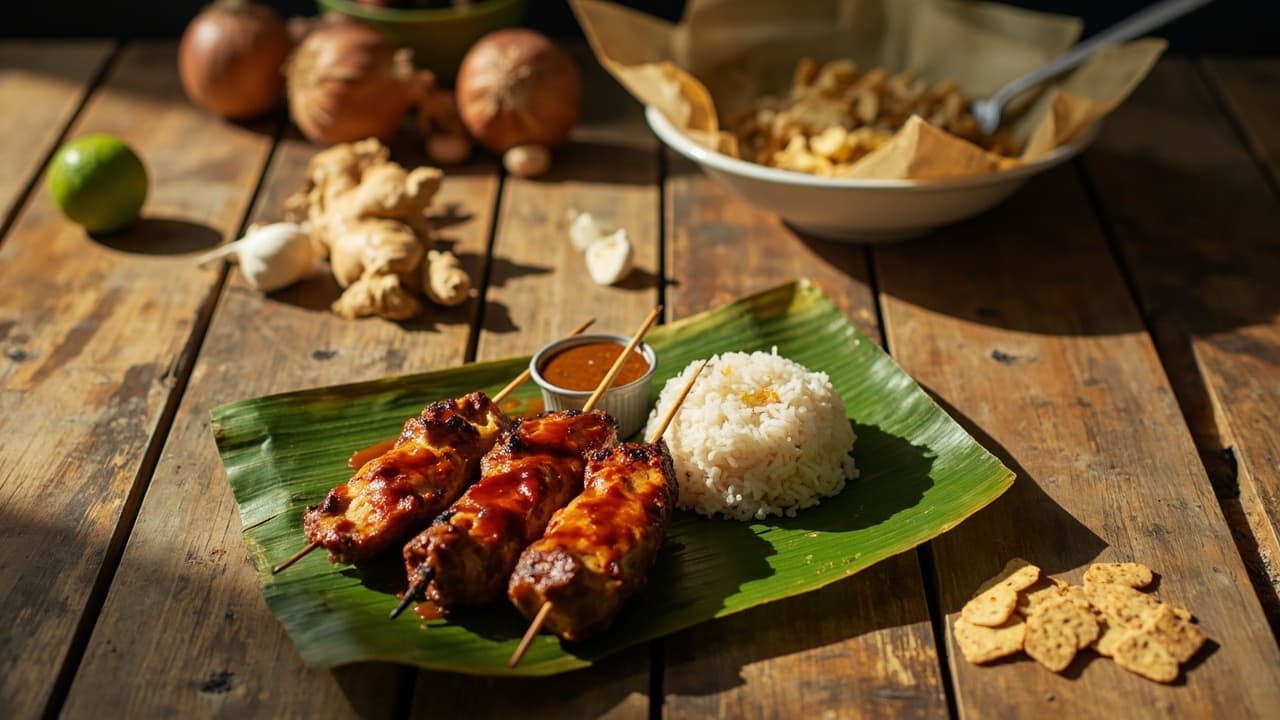
Succulent grilled chicken skewers marinated in aromatic bumbu and glazed with sweet kecap manis. Served with rich peanut sauce — a true celebration of Indonesian street food flavors.

Prep
20 min
Cook
25 min
Rest
30 min
Total
1h 15m
Method
Build the Bumbu Spice Paste
1
Peel shallots, garlic, and ginger. Using a mortar and pestle (or a food processor), grind shallots and garlic into a fine paste first — this is the heart of your bumbu.
2
Add fresh ginger, cayenne, and salt to the mortar. Continue grinding until you have a fragrant, cohesive spice paste. The aroma should be bold and slightly spicy.
Marinate the Chicken
3
Cut chicken breast into 2–3 cm cubes. Place in a large bowl.
4
Add the bumbu paste, soy sauce, honey, coconut oil, and juice of one lime. Toss everything together until every piece of chicken is evenly coated.
5
Cover and refrigerate for at least 30 minutes, or ideally 2 hours. The longer it marinates, the more the flavors penetrate — don't rush this!
Make the Peanut Sauce
6
If using raw peanuts, toast them in a dry pan over medium heat until golden and fragrant, about 5 minutes. Let cool slightly.
7
Make the Kecap Manis Glaze
9
In a small saucepan, combine soy sauce, honey, lime juice, and coconut oil. Stir well and warm over low heat for 2–3 minutes until slightly thickened and glossy. Remove from heat and set aside.
Skewer and Grill the Satay
10
Thread marinated chicken pieces onto bamboo skewers (soaked in water 20 minutes prior to prevent burning). Pack the pieces snugly but not too tightly.
11
Preheat your grill or a grill pan over high heat. Brush lightly with a little coconut oil.
12
Place skewers on the grill. Cook for 3–4 minutes per side, turning once. Use a calibrated meat thermometer to verify chicken reaches 165°F (74°C) in the thickest part before removing. Baste with the kecap manis glaze during the last 2 minutes of cooking on each side.
Serve
13
Transfer grilled satay to a serving platter. Drizzle with remaining kecap manis glaze.
14
Sprinkle with sesame seeds and thinly sliced scallion for garnish.
15
Serve immediately alongside the peanut sauce for dipping. Enjoy with steamed jasmine rice if desired.
A
Nutri-Score
Excellent balance
A–E · lower is better · score -1
Calories
646
per serving
High in protein · 57g
Protein
57g
Carbs
54g
Fat
25g
Sat. fat
8g
Fiber
9g
Sugar
36g
Sodium
712mg
Gluten FreeDairy FreeHigh SodiumHeart HealthyHigh Blood Pressure CautionDiabetes FriendlyLow CarbHigh ProteinBalanced MealMuscle Recovery
Nutri-Score is a general nutritional-balance guide, not medical or dietary advice.
C
Environmental impact
Moderate impact
A–E · lower is better · includes estimates
kg CO2e
1.7
per serving
CCarbonAEU all-round· carbon sets the grade
Water
1.3m³
Land
72Pt
Runoff
0.2g P
Chicken Breast drives 87% of this recipe’s estimated footprint.
Carbon from Poore & Nemecek 2018; water, land & runoff from Agribalyse — modelled averages for comparing recipes, not a measurement of your groceries.
Flavor Profile
8
Umami
7
Sweet
6
Salty
4
Sour
2
Bitter
5
Spicy
Textures
CrispyTenderCreamyNutty
Aromas
SmokyGarlickyNuttyHerbalCaramelized
Kitchen Equipment
Primary Tool
GrillGrillWokRice CookerBlenderChef KnifeCutting BoardMortar And PestlePlastic WrapBamboo SkewersPaper Towels
Counter FootprintMedium
Safety & Storage
Cooking Temperature
Chicken must reach internal temperature of 165°F (74°C) throughout. Use a calibrated meat thermometer inserted into the thickest part of the largest piece. Undercooked poultry poses serious salmonella risk.
Cross Contamination
Raw chicken cubed in step 2 of Marinate section creates high contamination risk. Use separate cutting boards, utensils, and bowls for raw meat. Never reuse marinade that has touched raw chicken without boiling.
Bamboo skewers soaked in step 1 of Skewer section must be dedicated to cooked product only. Do not use skewers that have contacted raw chicken for handling other ingredients.
High Risk Population
Children under 5, elderly, pregnant individuals, and immunocompromised persons face elevated risk from undercooked poultry. Ensure thorough cooking and avoid raw marinade consumption.
Handling
When grinding bumbu spice paste in step 1 of Build Bumbu section, ensure all equipment is thoroughly cleaned before processing peanut sauce in step 2 of Make Peanut Sauce section to prevent allergen cross-contact.
Storage
Marinated chicken must refrigerate at 40°F (4°C) or below. Do not marinate at room temperature. Maximum marination time is 24 hours. Discard used marinade or boil for 1 minute before using as sauce.
Leftover satay must be refrigerated within 2 hours of cooking. Store in airtight containers at 40°F (4°C) or below. Consume within 3-4 days or freeze for up to 4 months.
Allergen Warning
This dish contains peanuts, soy, and sesame. These allergens are present across multiple components and may transfer during preparation. Clean all surfaces and utensils between uses when preparing allergen-free meals alongside this recipe.
Peanut sauce and sesame garnish contain separate allergen components. Never use the same serving utensils for peanut sauce and other dishes unless allergen-free protocols are verified.
Equipment Safety
Toasting peanuts in step 1 of Make Peanut Sauce section requires constant stirring over dry heat.nuts can burn quickly and cause burns. Remove from heat immediately when golden and fragrant.
Shelf Life
Fresh peanut sauce contains no preservatives and contains moisture from added water. Refrigerate and consume within 5-7 days. Look for signs of mold, off-odor, or separation as spoilage indicators before serving.
Pro Tips
Technique
Never rush the bumbu! Grind your shallots and garlic into a fine paste first—this is the heart of your satay. The aroma should be bold and slightly spicy before you add anything else.
Substitution
If you cannot find candlenuts, macadamia nuts work beautifully in the bumbu—they have that same subtle buttery richness. And for kecap manis, never substitute regular soy sauce; it will not give you that caramelized sweetness that makes this dish sing.
From the chef
Satay ayam lives and dies by two things: the bumbu you grind fresh and the kecap manis glaze you brush on at the very end. The shallots, garlic, ginger, and cayenne need to be worked down to a proper paste — that is what soaks into the chicken during the marinade and survives the grill. When the skewers hit high heat, the exterior chars and caramelizes while the inside stays juicy, and that final baste of sweet soy creates a sticky, glossy coat that smells incredible. Serve alongside the peanut sauce and do not skip the lime — it ties everything together.
TagsGrilledSpicySweet And SavorySkewersPeanut SauceAromatic SpicesKecap ManisBumbu
AllergensPeanutsSoySesameGluten
Source: generated · June 10, 2026