 Persian
Medium · Hot
Shirin Polo: Jeweled Orange and Saffron Rice
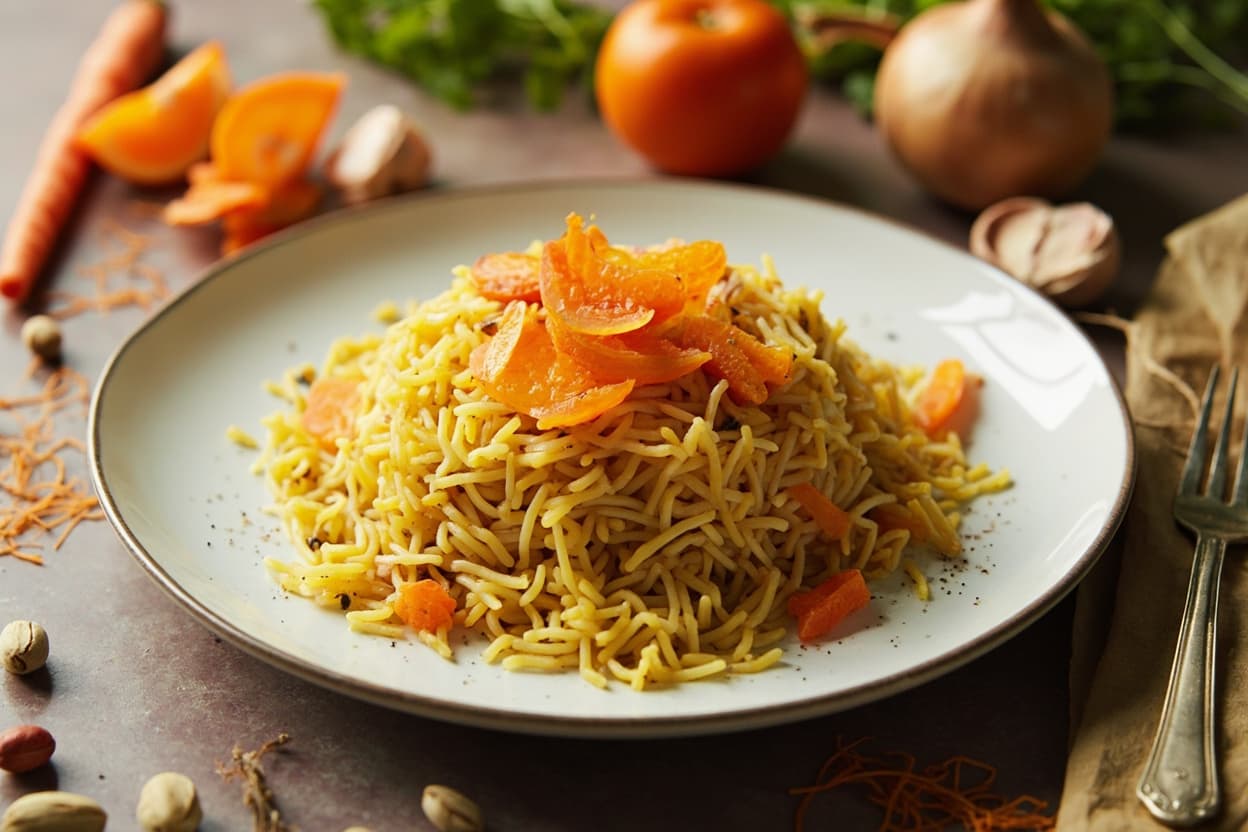
Orange peel and carrot are cooked in their own sweetness before being layered through basmati rice with a bloom of saffron that dyes the top grains a deep, glowing amber. Pistachios scattered through the pile catch the light like scattered stones, and the whole dish steams slowly into something that feels more ceremony than supper. To eat it is to understand why Persian rice is described as poetry.

Prep
20 min
Cook
55 min
Rest
5 min
Total
1h 20m
Method
Awakening the Saffron
1
Crumble the saffron threads into a small heatproof bowl. Pour the hot water over them and let steep for 10 minutes until the water blooms a deep amber-gold. Set aside to cool slightly.
Preparing the Vegetables
2
Parboiling the Rice
4
Rinse the basmati rice in cold water until the water runs clear. In a large pot, bring 6 cups of water to a rolling boil. Add the salt and rice, cooking for exactly 7 minutes until the grains are just tender but still have a firm white center when pressed.
5
Drain the parboiled rice immediately and rinse briefly with cool water to stop the cooking. Shake gently to remove excess water.
Building the Tahdig Crown
Layering and Steaming the Polo
7
8
9
Cover the pot with a clean kitchen towel and seal with the lid, twisting the corners of the cloth outward. This humble cloth will coax the steam into dreaming.
The Grand Reveal
11
Remove from heat and let rest, covered, for 5 minutes. This patience allows the tahdig to release from the pot.
12
Have a large serving platter ready. Place the platter over the pot, grip firmly, and flip with one confident motion. Lift the pot slowly like a curtain to reveal the golden tahdig crown crowned with jeweled carrots and citrus.
Garnishing with Generosity
13
While the rice rests, toast the slivered almonds and chopped walnuts in a dry pan until fragrant and golden. Scatter them over the revealed rice along with the fresh grape halves, creating a mosaic of jewels.
A
Nutri-Score
Excellent balance
A–E · lower is better · score -1
Calories
821
per serving
Low sugar · 15g
Protein
23g
Carbs
124g
Fat
28g
Sat. fat
9g
Fiber
8g
Sugar
15g
Sodium
667mg
Gluten FreeDairy FreeVegetarianAnti InflammatoryHeart HealthyDiabetes FriendlyHigh ProteinHigh FiberBalanced Macros
Nutri-Score is a general nutritional-balance guide, not medical or dietary advice.
B
Environmental impact
Low impact
A–E · lower is better · includes estimates
kg CO2e
0.9
per serving
BCarbonAEU all-round· carbon sets the grade
Water
2.7m³
Land
27Pt
Runoff
0.09g P
Basmati rice drives 51% of this recipe’s estimated footprint.
Carbon from Poore & Nemecek 2018; water, land & runoff from Agribalyse — modelled averages for comparing recipes, not a measurement of your groceries.
Flavor Profile
5
Umami
7
Sweet
5
Salty
4
Sour
2
Bitter
4
Spicy
Textures
CrispyTenderFluffyCreamy
Aromas
FloralCitrusWarm SpiceNutty
Kitchen Equipment
Primary Tool
StockpotCounter FootprintMedium
Safety & Storage
Cooking Temperature
Ensure tahdig potato slices are cooked through until golden brown at medium heat before adding rice layers. The 45-minute steam at low flame should reach internal rice temperature of 165°F minimum for food safety.
Cross Contamination
Toast almonds and walnuts separately on dry pan to prevent cross-contact. Use clean utensils when serving yogurt if handling nut garnishes.
Handling
The pot will be extremely hot during the grand reveal flip. Use dry pot holders or kitchen towels and ensure secure grip before inverting to prevent burns or spillage.
Storage
Refrigerate leftover Shirin Polo within 2 hours in airtight container. Consume within 3 days. Reheat thoroughly to 165°F (not the lower temperature stated elsewhere) before serving.
Allergen Warning
This dish contains tree nuts (almonds, walnuts) and dairy (butter, yogurt). Not suitable for individuals with tree nut allergies or lactose intolerance.
High Risk Population
Young children, elderly, pregnant individuals, and immunocompromised persons should ensure yogurt is fresh and properly refrigerated to avoid bacterial growth.
Pro Tips
Technique
To achieve the most shatteringly crisp tahdig, resist any temptation to lift the lid during steaming—the steam beneath that cloth is doing sacred work, and disturbing it will only rob you of the golden crown you deserve.
Substitution
If fresh oranges are out of reach, dried barberries scattered over the rice provide the same jeweled brightness and a pleasing sour note that perfectly balances the saffron's earthiness.
From the chef
Shirin Polo is Persian rice at its most ceremonial — saffron bloomed in hot water until it turns a deep amber-gold, then drizzled across basmati so the grains drink the color unevenly, some burning bright, others holding pale. Orange segments and spiced carrots are layered through the mound like scattered stones, and potato slices at the bottom of the pot begin their slow transformation into tahdig. Forty-five minutes of patient steaming does the rest. When you flip the pot and lift it slowly, the golden crust arrives whole, crowned with jeweled fruit and saffron-streaked grain — sweet, fragrant, and completely worth the wait.
TagsSaffronTahdigCitrusNutsSteamedCeremonialPersian Cuisine
AllergensMilkTree Nuts
Source: generated · May 30, 2026