 French
Medium · Room Temp
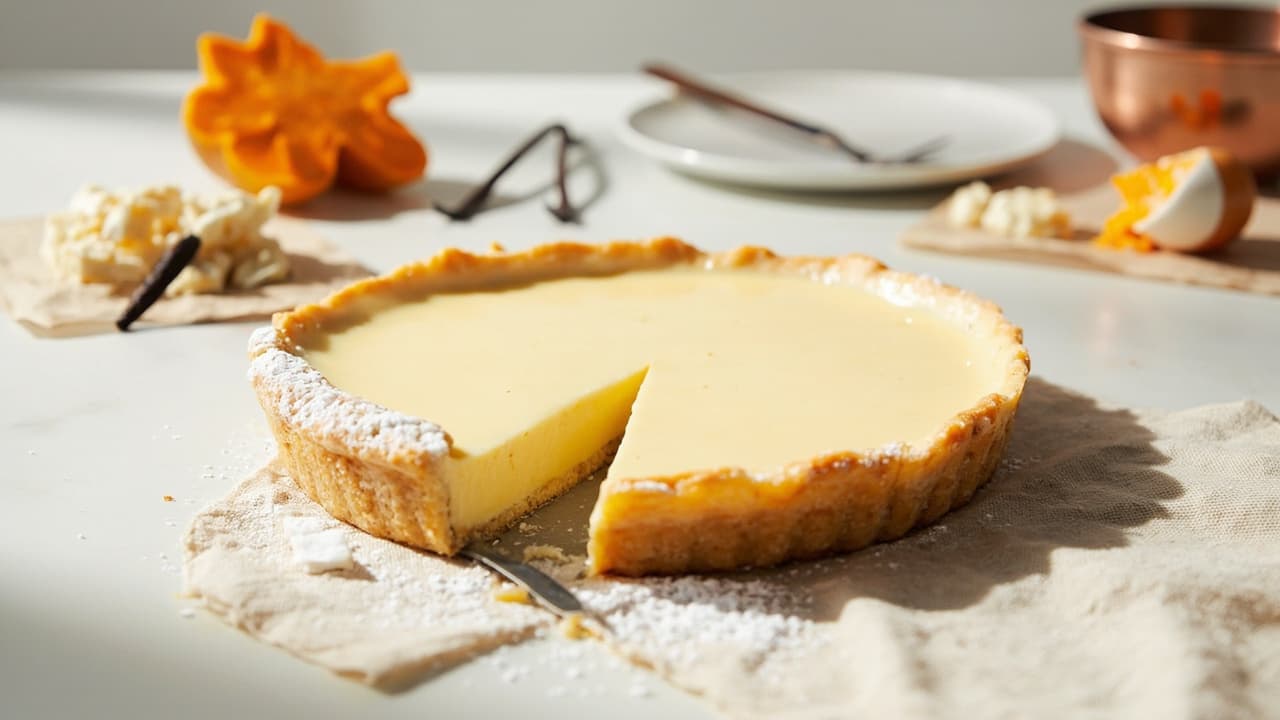
Classic Vanilla Bean Tart with Butternut Squash Glaze
An elegant French tart featuring a buttery pâte sucrée shell filled with silky vanilla custard and finished with a velvety butternut squash glaze. The gentle sweetness of roasted squash complements the pure vanilla notes, creating a refined autumn dessert.
Prep
45 min
Cook
55 min
Total
1h 40m
Method
1
In a stand mixer with paddle attachment, combine 200g flour, 60g powdered sugar, and 1 pinch salt. Add 120g cold cubed butter and mix on low until the mixture resembles coarse breadcrumbs with no visible butter chunks larger than a pea, about 2-3 minutes.
2
Add 1 whole egg and 1 tsp vanilla extract. Mix just until the dough comes together. Do not overwork. Flatten into a disc, wrap in plastic, and refrigerate for at least 30 minutes.
3
4
Line the shell with parchment paper and fill with pie weights or dried beans. Blind bake for 15 minutes until edges are set and lightly golden.
5
6
In a medium saucepan, combine 250ml whole milk and 100ml heavy cream. Heat over medium until the mixture just begins to steam and small bubbles appear at the edges, about 5 minutes. Remove from heat and stir in 2 tsp vanilla extract.
7
In a large bowl, whisk together 3 whole eggs, 80g white sugar, 25g cornstarch, and 1 pinch salt until smooth and pale, about 2 minutes.
8
9
Cook over medium-low heat, whisking continuously, until the custard thickens dramatically and comes to a gentle boil, about 4-5 minutes. Boil gently for 1 minute to cook out the cornstarch fully.
10
Remove from heat. Strain through a fine-mesh sieve into a clean bowl. Stir in 30g butter and 1 pinch salt until melted and incorporated. Press plastic wrap directly onto the surface to prevent skin formation. Let cool to room temperature, about 20 minutes.
11
Preheat oven to 200°C. Arrange 300g peeled, cubed butternut squash on a baking sheet. Toss with 20g melted butter, 30g white sugar, and 1 pinch salt. Roast for 25-30 minutes until very tender and caramelized at the edges, turning once halfway.
12
13
Pour cooled vanilla custard into the prepared tart shell. Smooth the surface with an offset spatula, ensuring even distribution. Tap the pan gently on the counter to release any air bubbles.
14
Spoon the lukewarm butternut squash glaze over the custard layer. Starting from the center, spread gently toward the edges with an offset spatula, creating a smooth, even layer that pools slightly at the rim.
15
Use a small spoon or piping bag to create subtle decorative swirls in the glaze if desired. Work quickly before the glaze sets.
16
Refrigerate the assembled tart for at least 2 hours to set the custard and glaze completely. Before serving, dust with 2 tbsp powdered sugar through a fine sieve for an elegant finish. Slice with a hot, clean knife, wiping between cuts.
D
Nutri-Score
Needs balance
A–E · lower is better · score 13
Calories
631
per serving
High in saturated fat · 22gCalorie-dense · 631 kcalLow salt · 160mg
Protein
10g
Carbs
72g
Fat
34g
Sat. fat
22g
Fiber
3g
Sugar
38g
Sodium
160mg
Vegetarian
Nutri-Score is a general nutritional-balance guide, not medical or dietary advice.
B
Environmental impact
Low impact
A–E · lower is better · includes estimates
kg CO2e
0.8
per serving
BCarbonAEU all-round· carbon sets the grade
Water
0.2m³
Land
31Pt
Runoff
0.07g P
Carbon from Poore & Nemecek 2018; water, land & runoff from Agribalyse — modelled averages for comparing recipes, not a measurement of your groceries.
Flavor Profile
5
Umami
7
Sweet
3
Salty
1
Sour
1
Bitter
2
Spicy
Textures
FlakySilkyTender
Aromas
DairyEarthyFloralWarm Spice
Kitchen Equipment
Primary Tool
OvenTechniques
Safety & Storage
Cooking Temperature
Custard filling must reach a rolling boil and hold for 1 minute to fully cook cornstarch and ensure food-safe temperature. Use instant-read thermometer to confirm 185°F (85°C) minimum.
High Risk Population
This recipe contains raw eggs in the custard. For pregnant women, children under 5, elderly, or immunocompromised individuals, use pasteurized eggs or a cooked egg base alternative.
Cross Contamination
Keep raw egg shells and shells from other allergens away from work surfaces. Use separate bowls and utensils when tempering eggs to prevent shell fragments from entering the custard.
Handling
When tempering eggs with hot milk mixture, pour in a thin steady stream while whisking constantly to prevent scrambling. If eggs begin to cook, the custard is ruined.
Cool roasted butternut squash slightly before blending. Hot contents in a blender create pressure that can cause the lid to blow off. Hold lid down with a towel and vent steam.
Storage
Assembled tart must be refrigerated at or below 40°F (4°C) within 2 hours of assembly. Do not leave at room temperature for more than 2 hours total (1 hour if ambient temperature exceeds 90°F).
Press plastic wrap directly onto custard surface while cooling to prevent skin formation and bacterial contamination. Ensure no wrinkles or gaps expose the surface to air.
Shelf Life
Refrigerated tart with dairy and egg custard has a maximum shelf life of 2-3 days. Freeze only the baked unfilled tart shell separately; do not freeze the completed tart.
Allergen Warning
This tart contains major allergens: milk, eggs, wheat, and gluten. Always inform guests of allergen content before serving and store separately from allergen-free desserts.
Equipment Safety
Slice tart with a hot, clean knife wiped between cuts. Run knife under hot water, dry completely, and make single decisive strokes to achieve clean professional slices without crumbling the delicate custard.
Pro Tips
Technique
When tempering your custard, pour the hot milk in a thin, steady stream while whisking vigorously. Pour too fast and you will have scrambled eggs. I have seen this catastrophe more times than I wish to recall.
Your tart shell must be completely cool before filling. A warm shell will cause the custard to set unevenly, creating that wretched rubbery layer at the bottom that no amount of powdered sugar can disguise.
Substitution
If butternut squash is unavailable, roasted pumpkin makes an acceptable substitute for the glaze — though I would argue the nutmeg ratio requires adjustment, as pumpkin is less sweet and needs careful compensation.
From the chef
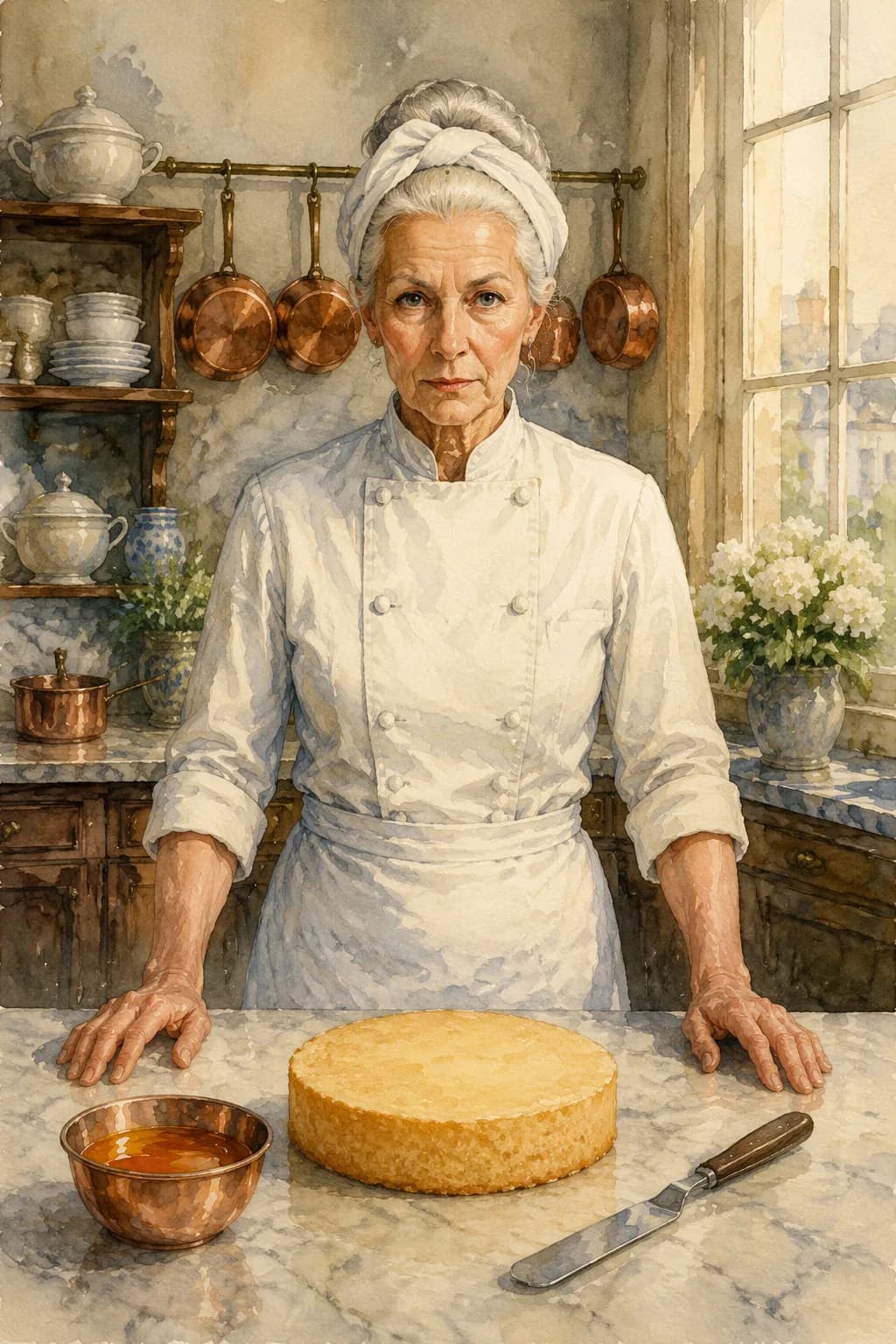
In four decades of Parisian service, I have made this vanilla tart more times than I care to count. But this version with butternut squash glaze — this is what happens when you stop merely following tradition and start listening to the seasons. The squash does not compete with the vanilla; it elevates it, rounds out its edges, and creates something worth remembering.
TagsFrench PastryDessertTartVanillaAutumnSeasonalButternut SquashElegantClassicVegetarianCustardGlazedButterySophisticated
AllergensMilkEggsWheatGluten
Source: generated · June 13, 2026