 Spanish
Medium · Hot
Shrimp and Sausage Mar i Muntanya
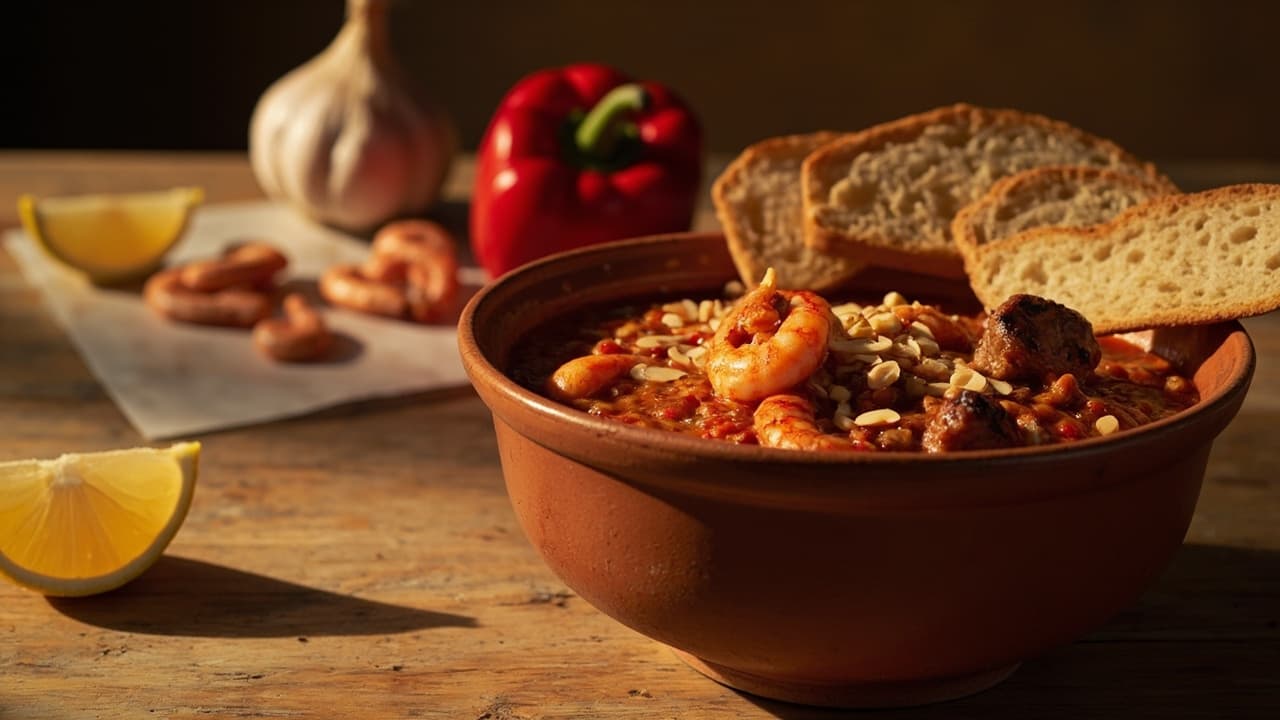
A proud Catalan surf-and-turf where plump shrimp meet crumbled sausage in a deep sofregit, finished with a nutty almond picada — the marriage of mountain and sea on one generous plate.
Prep
20 min
Cook
40 min
Rest
5 min
Total
1h 5m
Method
Build the sofregit
1
Warm 4 tablespoons of olive oil in a heavy Dutch oven over medium-low heat. Add the diced onion and a generous pinch of salt. Cook slowly, stirring with a wooden spoon, until the onion is soft, golden and sweet — about 15 minutes. Do not rush this.
2
Add the sliced bell pepper and cook another 5 minutes until it softens.
3
Make a space in the pot and add the minced garlic. Let it bloom in the oil for 30 seconds until fragrant, then stir it into the sofregit.
4
Add the grated tomatoes and raise heat slightly. Cook, stirring often, until the tomato darkens and the oil separates — another 10 to 12 minutes. This deep sofregit is the backbone of the dish.
Cook the mountain
Bring the sea
6
Nestle the whole shrimp into the sofregit and sausage. Season with salt and black pepper. Cook for 2 to 3 minutes per side until the shrimp turn pink and curl. Do not overcook — they finish in the stew.
7
Pour in a splash of water to create a light sauce. Simmer gently for 2 minutes to marry the flavors.
Finish with picada
8
9
Swirl the picada into the stew. Let everything bubble together for 2 minutes — the picada thickens the sauce and gives it that unmistakable Catalan nuttiness. Taste and adjust salt.
B
Nutri-Score
Good balance
A–E · lower is better · score 2
Calories
636
per serving
High in protein · 38gLow sugar · 6g
Protein
38g
Carbs
17g
Fat
48g
Sat. fat
10g
Fiber
5g
Sugar
6g
Sodium
1726mg
Gluten FreePescatarianDairy FreeLow CarbHeart HealthyAnti InflammatoryDiabetes FriendlyHigh ProteinBalanced Fat
Nutri-Score is a general nutritional-balance guide, not medical or dietary advice.
E
Environmental impact
Very high impact
A–E · lower is better · includes estimates
kg CO2e
3.9
per serving
ECarbonBEU all-round· carbon sets the grade
Water
19m³
Land
66Pt
Runoff
0.9g P
Shrimp drives 69% of this recipe’s estimated footprint.
Carbon from Poore & Nemecek 2018; water, land & runoff from Agribalyse — modelled averages for comparing recipes, not a measurement of your groceries.
Flavor Profile
8
Umami
6
Sweet
5
Salty
2
Sour
2
Bitter
2
Spicy
Textures
TenderSaucyChewySilky
Aromas
SmokyHerbalNuttyTomatoey
Kitchen Equipment
Primary Tool
Dutch OvenDutch OvenMortar And PestleChef KnifeCutting BoardWooden SpoonCitrus SqueezerMeasuring SpoonsMeasuring CupPaper TowelsAluminum Foil
Counter FootprintMedium
Techniques
Safety & Storage
Cooking Temperature
Cook shrimp until they turn pink and curl (internal temperature 145°F/63°C). Ensure sausage reaches minimum 160°F/71°C. Undercooked seafood and meat pose foodborne illness risk.
Cross Contamination
Use separate cutting boards and utensils for raw shrimp and sausage. Prevent tree-nut cross-contact if preparing other dishes simultaneously. Wash hands thoroughly after handling raw shellfish.
Storage
Refrigerate leftovers within 2 hours. Store cooked dish up to 3-4 days in airtight container at 40°F/4°C or below. Reheat to 165°F/74°C throughout.
High Risk Population
Pregnant individuals, elderly, young children, and immunocompromised persons should only consume fully cooked shellfish. Shellfish allergies can cause severe anaphylactic reactions - even vapors from cooking can trigger reactions in highly sensitive individuals.
Allergen Warning
This dish contains shrimp (shellfish) and almonds (tree-nuts). These allergens can be life-threatening. Inform guests of allergen content before serving. When using shared equipment like the mortar for picada, clean thoroughly to prevent cross-contact.
Handling
Use caution when adding ingredients to hot oil - oil splatter from the Dutch oven can cause burns. Pat shrimp dry before cooking to minimize splatter. Allow dish to rest 5 minutes before serving.
Pro Tips
Technique
Never rush the sofregit — that slow cook of onion, pepper, and tomato until it darkens and the oil separates is not optional, it is the backbone of the dish. You can smell when it is ready, and my grandmother would say the kitchen will tell you when it is done.
Substitution
If butifarra is hard to find, use a good Spanish chorizo or even a quality Italian sausage. The key is the quality of the meat and that it browns properly before the shrimp go in — that caramelization is everything.
From the chef
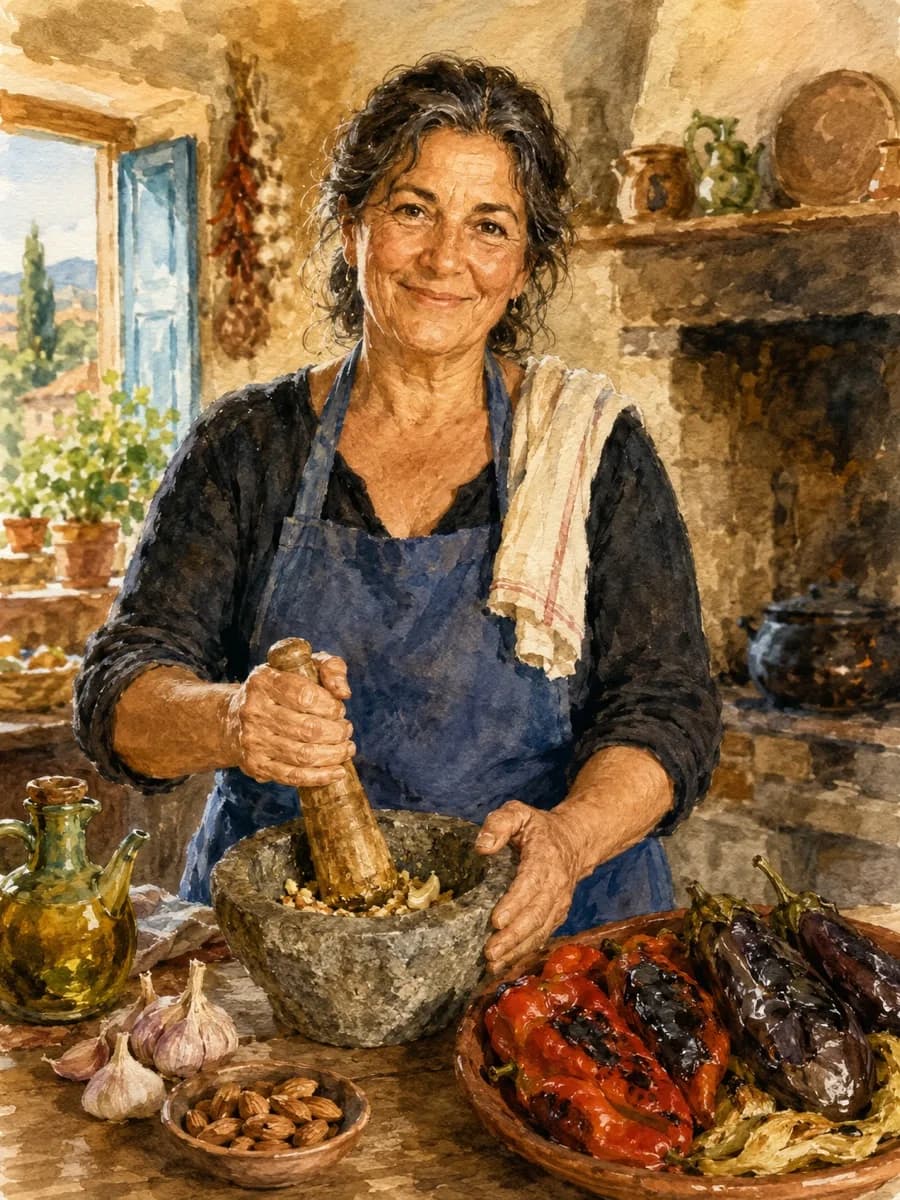
Mar i muntanya is Catalan for mountain and sea together, and this dish is exactly that: crumbled sausage crisped in a deep sofregit of onion, garlic, and tomato, and then plump whole shrimp nestled into the same pot to finish in the sauce. The sofregit needs time — fifteen minutes for the onion alone, then another stretch for the tomato to concentrate and darken until the oil starts to separate. The picada of almonds, garlic, and parsley stirred through at the end thickens everything and adds that unmistakable nutty note. Serve with crusty bread and a squeeze of lemon over the shrimp. This is the flavour of the coast meeting the farmhouse in one generous bowl.
TagsCatalan CuisineSpanish CuisineSurf And TurfSeafoodShellfishMediterraneanTraditionalOne Pot
AllergensShellfishTree NutsGluten
Source: generated · June 10, 2026