 Spanish
Medium · Hot
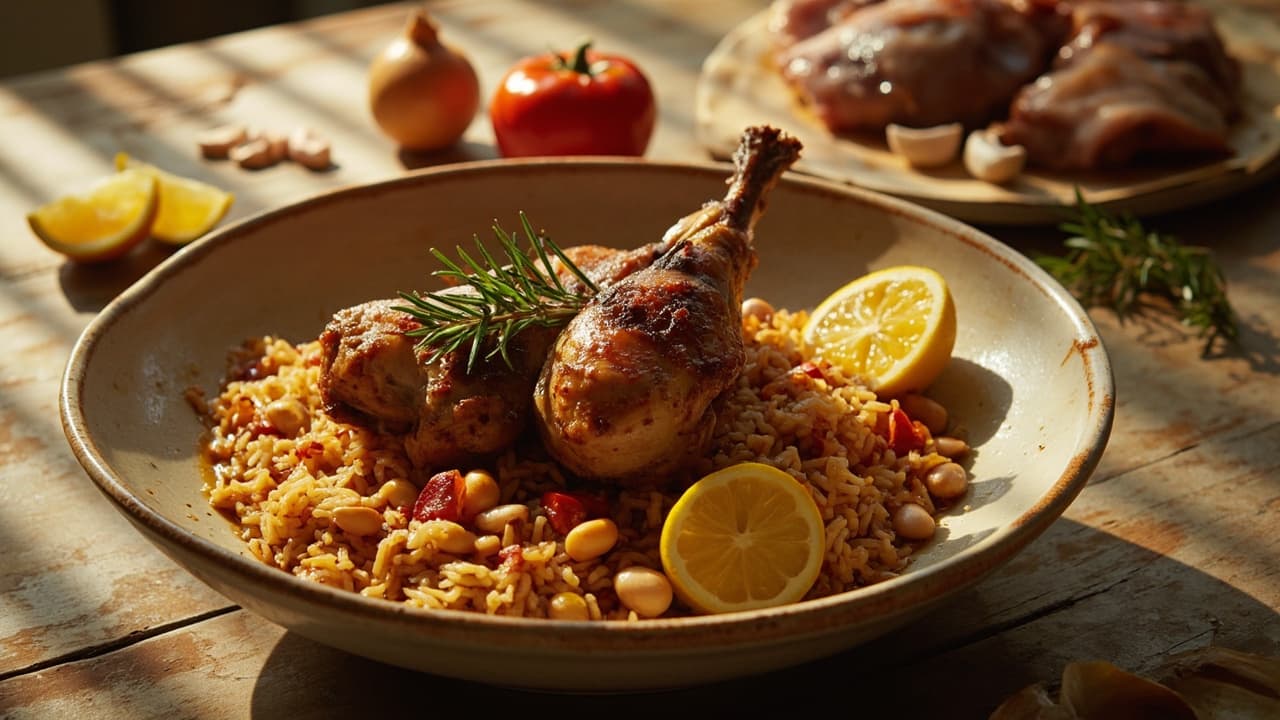
Saffron and Paprika Duck with White Beans over Rice
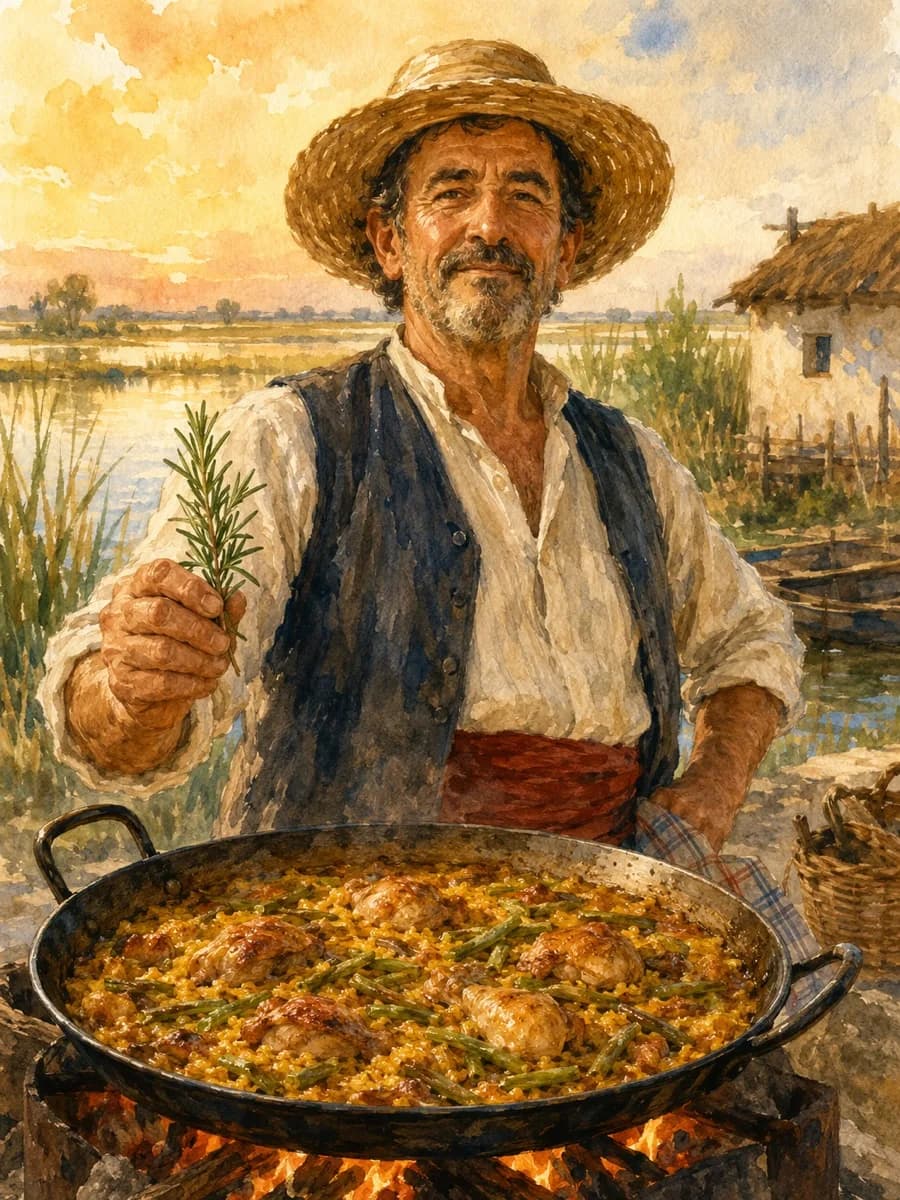
A proud Valencian Sunday feast: duck legs slow-braised with butter beans in a rich saffron and paprika-infused broth, served atop perfectly cooked rice with a golden socarrat. Vicent would insist this is the way his grandfather made it.
Prep
20 min
Cook
1h 35m
Rest
5 min
Total
2h
Method
Duck Preparation
1
Pat duck legs dry and season generously with paprika, salt, and black pepper. Let rest at room temperature for 20 minutes.
Sofrito
2
Dice yellow onion and tomatoes. Mince 2 garlic cloves. Heat 2 tbsp olive oil in a wide skillet over medium heat.
3
Add onion and cook slowly, stirring with a wooden spoon, until golden and soft, about 15 minutes. Do not rush this.
Searing and Braising
5
6
Bean Stew
8
Add white beans to the braising liquid. Simmer uncovered for 20 minutes until beans are tender and flavors meld, ensuring liquid maintains a gentle simmer (180-200°F/82-93°C). Season with salt. Keep warm above 140°F (60°C).
Saffron Rice
9
Bloom saffron in 100ml warm chicken broth for 5 minutes until vibrant and fragrant.
10
11
Add white rice, stir once gently, then spread in an even thin layer. Cook on medium-low, never stirring, until liquid is absorbed and small holes appear on surface, about 18 minutes.
12
Let rest 5 minutes covered, then uncover to release steam and let any socarrat form on the bottom.
Plating
13
Spoon saffron rice onto a wide serving platter or individual plates. Arrange white bean stew alongside or spoon over. Serve immediately while food is above 140°F (60°C) to prevent bacterial growth.
C
Nutri-Score
Fair balance
A–E · lower is better · score 8
Calories
1310
per serving
Calorie-dense · 1310 kcalSource of protein · 55gLow sugar · 7g
Protein
55g
Carbs
153g
Fat
53g
Sat. fat
22g
Fiber
11g
Sugar
7g
Sodium
2327mg
Gluten FreeDairy FreeMediterraneanHeart HealthyAnti InflammatoryDiabetes FriendlyHigh ProteinLow Processed SugarBalanced Macros
Nutri-Score is a general nutritional-balance guide, not medical or dietary advice.
D
Environmental impact
High impact
A–E · lower is better · includes estimates
kg CO2e
2.1
per serving
DCarbonAEU all-round· carbon sets the grade
Water
2.7m³
Runoff
0.2g P
Duck legs drives 57% of this recipe’s estimated footprint.
Carbon from Poore & Nemecek 2018; water, land & runoff from Agribalyse — modelled averages for comparing recipes, not a measurement of your groceries.
Flavor Profile
7
Umami
4
Sweet
5
Salty
2
Sour
1
Bitter
5
Spicy
Textures
CrispyTenderSilkyChewy
Aromas
HerbalSmokyEarthyFloralNutty
Kitchen Equipment
Primary Tool
Cast Iron Dutch OvenCast Iron Dutch OvenHeavy Bottomed SkilletMedium SaucepanPaella PanChef KnifeCutting BoardWooden SpoonTongsMeasuring SpoonsMeasuring CupsSieveServing PlatterKitchen TimerAluminum FoilPaper TowelsButcher String
Counter FootprintLarge
Safety & Storage
Cooking Temperature
Duck legs must reach safe internal temperature of 165°F (74°C) when braised. Verify with meat thermometer before serving.
Maintain braising liquid at gentle simmer (180-200°F/82-93°C) throughout the 45-minute braise to ensure even cooking and food safety.
Handling
Do not leave seasoned duck legs at room temperature for more than 20 minutes before cooking. Pat dry if moisture accumulates during rest period.
Cross Contamination
Use separate cutting boards and utensils for raw duck and prepared vegetables to prevent cross-contamination. Sanitize all surfaces after handling raw poultry.
After searing raw duck in the heavy pan, do not use the same pan or utensils for the sofrito or bean addition without thorough sanitization (wash in hot soapy water, rinse, and sanitize). Transfer duck using tongs, not by pouring braising liquid over vegetables.
Storage
Cool and refrigerate leftover bean stew and rice within 2 hours. Rice left at room temperature for more than 2 hours may develop Bacillus cereus bacteria and should be discarded.
Store duck legs separately from beans and rice. Consume refrigerated leftovers within 3 days or freeze for up to 3 months.
Allergen Warning
Verify chicken broth is gluten-free and allergen-free if preparing for individuals with celiac disease or gluten sensitivity, as commercial broths may contain wheat-based thickeners.
High Risk Population
This dish contains no dairy, eggs, or shellfish, making it suitable for many allergen-sensitive individuals, but always verify all ingredient sources for hidden allergens.
Pro Tips
Technique
Never stir the rice once you have spread it in the pan — this is the cardinal sin. Let it cook undisturbed over medium-low heat until you see small holes appear on the surface, and the bottom will transform into that golden socarrat we all chase.
Substitution
If duck is difficult to find, chicken thighs work beautifully in this braise. The dark meat stays just as tender and absorbs the paprika and saffron wonderfully.
Reheating
To preserve the socarrat when reheating leftovers, add a few drops of water to the pan, cover tightly, and heat on the lowest flame for five minutes. The steam will gently warm the rice while the crust stays intact.
From the chef
Duck falling from the bone, white beans tender in a saffron-stained broth, and beneath the rice a socarrat crackling at the bottom of the pan — this is what Sundays are for, when time slows to the rhythm of the simmering pot. The braising liquid becomes the stock for the rice; nothing is wasted, nothing is rushed. A slow sofrito of onion, garlic, and tomato, paprika bloomed in olive oil, saffron steeped until the broth turns that magnificent gold — these are not shortcuts you can take. Spread the rice thin, do not stir it, and let the socarrat form on its own. This is not a weeknight dish. This is a proper Valencian feast.
TagsSocarratSlow BraisedDuckSaffronSunday FeastBraisedValencian
AllergensSulfites
Source: generated · June 10, 2026