 Korean
Medium · Hot
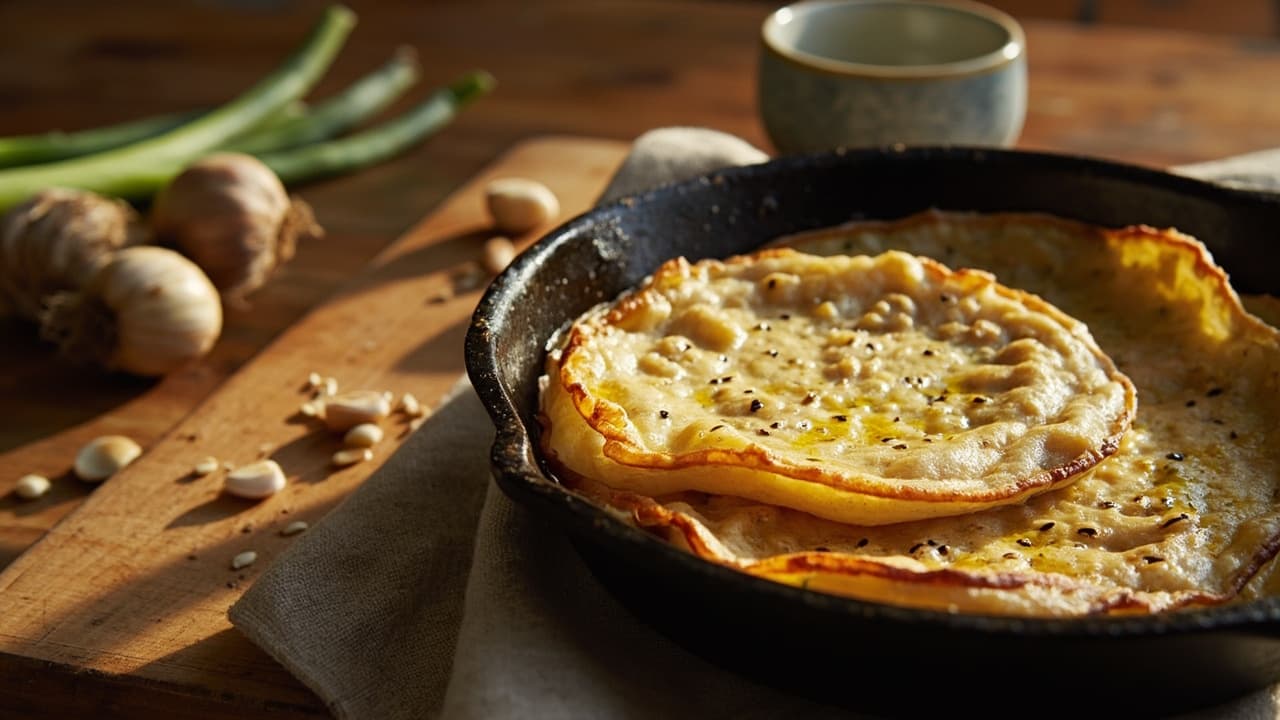
Pinto Bean Jeon with Scallion and Sesame
Crispy Korean-style bean pancakes loaded with fresh scallion and toasted sesame seeds. A hearty vegetarian jeon that comes together quickly once the beans are cooked.
Prep
15 min
Cook
30 min
Total
45 min
Method
1
Rinse pinto beans under cold water, picking out any debris. Transfer to a stockpot with 4 cups fresh water. Bring to a boil over high heat, then reduce to a gentle simmer.
2
Cook beans, partially covered, for 60-75 minutes until completely tender and creamy when pressed against the pot wall. Drain well and let cool to room temperature (about 20 minutes).
3
Mash the cooked beans in a large bowl with a potato masher or the back of a fork until about 80% smooth with some small chunks remaining. Do not use a food processor or it will become gluey.
4
5
Heat a large frying pan over medium heat. Add 1.5 tablespoons sunflower oil and swirl to coat the bottom.
6
Scoop heaping tablespoons of batter into the pan, spacing them 2 inches apart. Gently flatten each mound with the back of a spoon to form 2.5-inch rounds.
7
Fry for 3-4 minutes until the edges are deeply golden and crispy. Flip carefully and fry another 3-4 minutes until the second side is golden and the interior is cooked through. Adjust heat if browning too fast.
8
Transfer finished jeon to a wire rack. Add remaining oil to the pan and repeat with the second batch.
9
Brush or drizzle the warm jeon lightly with sesame oil. Serve immediately while crispy, accompanied by soy sauce or gochujang for dipping if desired.
A
Nutri-Score
Excellent balance
A–E · lower is better · score -6
Calories
580
per serving
Source of protein · 25gSource of fibre · 17gLow sugar · 2gLow saturated fat · 2g
Protein
25g
Carbs
80g
Fat
18g
Sat. fat
2g
Fiber
17g
Sugar
2g
Sodium
651mg
VegetarianDiabetesHeart HealthyHigh FiberPlant Protein
Nutri-Score is a general nutritional-balance guide, not medical or dietary advice.
A
Environmental impact
Very low impact
A–E · lower is better · includes estimates
kg CO2e
0.3
per serving
ACarbon
Pinto beans (dried) drives 42% of this recipe’s estimated footprint.
Carbon from Poore & Nemecek 2018; water, land & runoff from Agribalyse — modelled averages for comparing recipes, not a measurement of your groceries.
Flavor Profile
6
Umami
4
Sweet
5
Salty
1
Sour
1
Bitter
4
Spicy
Textures
CrispyHeartyTender
Aromas
EarthyHerbalNutty
Kitchen Equipment
Techniques
Safety & Storage
Cooking Temperature
Cook pinto beans for 60-75 minutes until completely tender. Undercooked beans contain harmful lectins that can cause food poisoning.
Pan-fry jeon at medium heat for 3-4 minutes per side until deeply golden. Reduce heat if browning too quickly to ensure even cooking through.
Storage
Cool cooked beans to room temperature within 2 hours, then refrigerate. Use refrigerated beans within 3-4 days or freeze for up to 3 months.
Shelf Life
Serve jeon immediately while crispy. These pancakes do not hold well and lose their crispy texture quickly after cooking.
Handling
Allow beans to cool for 20 minutes before mashing to prevent burns. Mash by hand only—do not use a food processor or the batter will become gluey.
High Risk Population
Eggs in this recipe should be cooked thoroughly. Vulnerable populations (pregnant individuals, elderly, immunocompromised) should ensure pancakes are cooked through with no runny center.
Allergen Warning
This recipe contains egg, sesame, wheat, and gluten. Use caution when serving to individuals with these food allergies or sensitivities.
Cross Contamination
Wash hands, utensils, and surfaces thoroughly after handling raw beans before working with other ingredients to prevent cross-contamination.
Pro Tips
Technique
When mashing your beans, stop at 80% smooth—those small chunks are what give the jeon its satisfying texture and help it hold together in the pan without becoming dense or gluey.
Substitution
Black beans or kidney beans work beautifully if pinto aren't available, and a dash of gochugaru can replace the cayenne to bring in that characteristic Korean chile warmth.
From the chef
Jeon is the kind of banchan that proves Korean cooking isn't just about fermentation—it's about transformation. My mother used to make these with leftover beans, turning simple ingredients into crispy, golden pancakes that disappeared within minutes. The sesame and scallion aren't just additions; they're the soul of the dish, the finishing touch that makes everything sing.
TagsVegetarianCrispyWeeknight DinnerPan FriedBeansSesameKorean
AllergensEggsSesameWheatGluten
Source: generated · June 13, 2026