Proteins
Barramundi
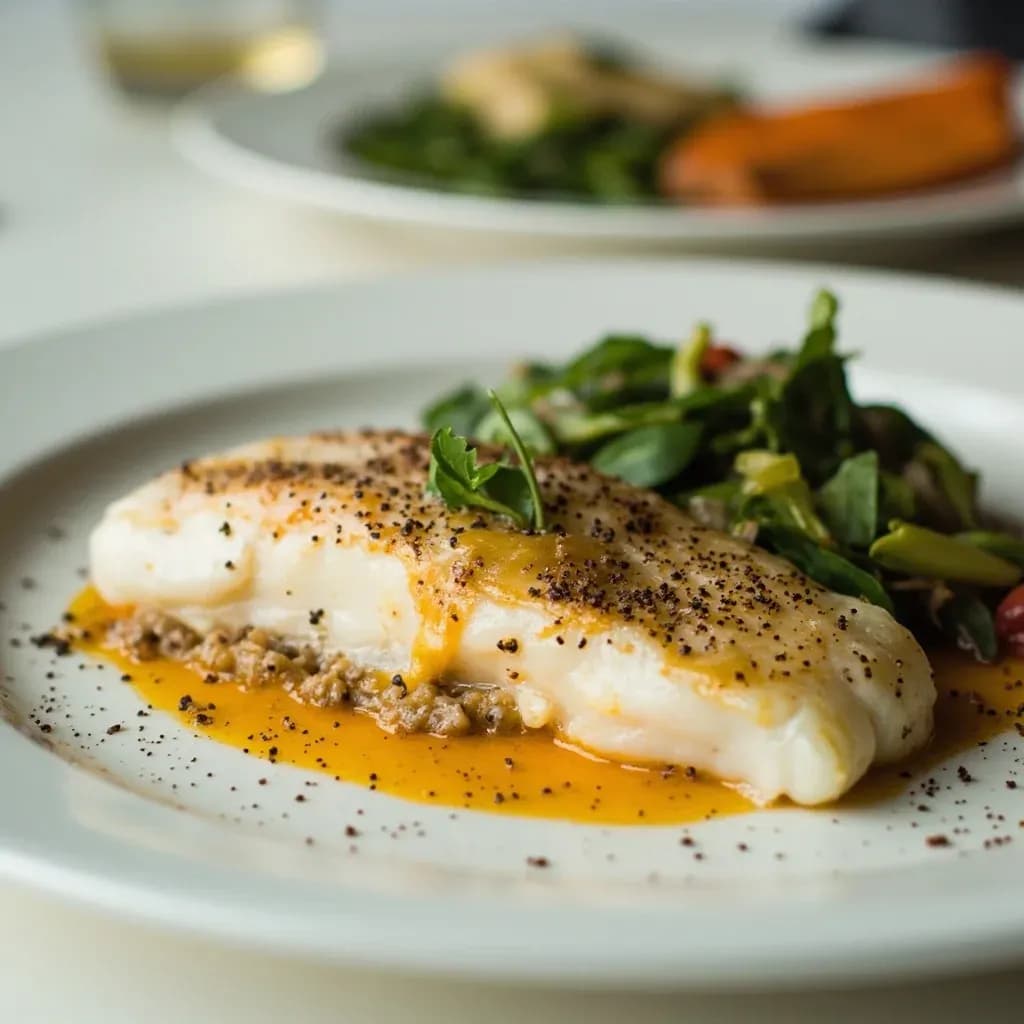
Mild, buttery Asian sea bass with firm white flesh — great pan-seared or grilled.
Barramundi is a sea bass native to Australia and the Indo-Pacific, valued for its clean, buttery flavor and firm, flaky white flesh. It holds up well to pan-searing skin-on, grilling, steaming, and curries, and is forgiving because it stays moist. It is widely farmed sustainably and sold as fillets or whole fish.
Barramundi (Lates calcarifer) is a large, predatory fish native to the Indo-Pacific region, found from the Persian Gulf through Southeast Asia to northern Australia. Known in Australia as 'barra,' it has become one of the most globally traded aquaculture species due to its rapid growth, resilience, and exceptional eating quality. The fish inhabits both fresh and saltwater environments, ascending rivers as juveniles and returning to estuaries to spawn — a life cycle that contributes to its nuanced, adaptable flavor profile. In the United States, barramundi has been marketed on restaurant menus as a sustainable alternative to the misleadingly labeled 'Chilean sea bass,' while remaining a staple of Australian pub cuisine and Southeast Asian cooking alike.
The flesh is pearl-white with a subtle iridescence and large, clean flakes that separate neatly when cooked. Barramundi holds moisture remarkably well and offers a firm, substantial texture — qualities that make it forgiving in the kitchen and versatile across cooking methods. The flavor is mild, clean, and buttery with a faint sweetness and slight nuttiness, placing it in the same neighborhood as true sea bass but without the pronounced oceanic intensity. This mildness is both its strength and its defining consideration: barramundi adapts readily to bold seasonings and cuisines from Cantonese steaming to Thai curries, but it will not dominate heavy sauces or overpower delicate preparations. The skin, when properly scored and seared, crisps to an exceptionally thin, shattering golden chip that rivals the best fish skin in any restaurant.
Wild-caught barramundi from Australian waters runs October through March and tends toward a stronger, leaner profile. Farmed barramundi — produced year-round in Australia, Southeast Asia, and increasingly in the United States — offers consistent quality with higher fat content and more uniform flavor distribution. Responsible sourcing matters: look for ASC certification on farmed products, which ensures environmental standards are met. The fish yields approximately 40–45% of whole weight as skin-on fillet, making it an efficient purchase even at premium prices.
- Measured in
- g
- Storage
- Fridge
Allergens
Types & varieties
Queensland and Northern Territory rivers and estuaries; stronger flavor, lower fat; seasonal October–March
Land-based and sea-cage operations; consistent quality, higher fat, year-round; seek ASC or MSC certification
Thailand, Vietnam, Indonesia; widely distributed frozen; quality varies by producer
Emerging industry in Hawaii and New England; fresh and frozen availability in North America; often labeled by farm
Wild specimens can exceed 60 lbs; coarser texture better suited for slow-braising or curry rather than quick cooking
Common uses
Tips & pitfalls
- Buy skin-on fillets whenever possible: the skin protects the flesh during cooking and yields an exceptionally crisp crust when seared in a hot pan.
- For pan-searing, start skin-side down in a smoking-hot pan (400°F+) with a thin film of high-smoke-point oil; press gently with a spatula to ensure full contact; resist moving the fish for at least 3–4 minutes.
- Score the skin with a sharp knife in 2-inch intervals before searing to prevent curling and ensure flat contact with the pan.
- Thick fillets over 1.5 inches benefit from a two-stage approach: sear skin-side down, then flip and finish in a 400°F oven to cook through without overbrowning the exterior.
- Bring fillets to room temperature 15–20 minutes before cooking to ensure even heat penetration throughout the flesh.
- Season simply — the mild flavor means it won't dominate heavy seasoning; salt, white pepper, and a touch of ginger are often sufficient for steamed preparations.
- Common mistake: overcooking. Pull from heat when the center reads 130°F; carryover will bring it to 140°F. The flesh should appear opaque at the surface but retain a translucent, just-cooked quality at the very center.
- When buying whole, look for clear eyes, bright red gills, and flesh that springs back when pressed — avoid fish with sunken eyes or flesh that stays indented.
- Farmed barramundi's consistent fat distribution makes it superior for high-heat searing; wild barra's lower fat makes it ideal for steaming or poaching where moisture retention matters more.
Nutrition
Nutrition
No USDA FoodData Central match for Barramundi yet. We surface a per-100 g profile once a generic whole-food entry is matched and verified.
In the shops
Matched grocery products
No matched grocery products for Barramundi yet.
Good to know
- Scientific name
- Lates calcarifer
- Origin
- Northern Australia and Indo-Pacific (Persian Gulf to China)
- Also called
- Asian sea bass, giant sea perch, cock-up, barra
- Flavor
- Mild, clean, buttery; sweet undertone; slightly nutty
- Texture
- Firm, moist, large flakes; flesh separates cleanly when cooked
- Fat content
- Moderate; farmed higher fat than wild, richer flavor
- Protein
- 20–25 g per 100 g raw serving
- Omega-3
- 250–400 mg per 100 g raw fillet
- Ideal serving temp
- 130–140°F (54–60°C) for medium doneness
- Shelf life
- 1–2 days refrigerated; up to 3 months frozen tightly wrapped
- Yield
- 40–45% whole-fish weight as skin-on fillet
- Purchasing forms
- Whole (4–12 lbs), skin-on/skinless fillets, steaks, IQF fillets
Substitutes
- Striped bass — Comparable texture and mild flavor; slightly more pronounced taste; excellent 1:1 substitute in any preparation
- Grouper — Firm texture, clean flavor; works well for grilling, baking, and steaming; may be slightly sweeter
- Chilean sea bass — Higher fat content, richer flavor; use for grilling and baking; not ideal for searing where a lighter touch is desired
- Mahi-mahi — Firm, dense texture; slightly sweeter and more flavorful; good for grilling and blackening; adjust cooking times as it cooks faster
- Snapper (red or mangrove) — Similar flake and mild flavor; slightly more delicate; reduce cooking time; works for steaming, baking, and pan-searing
- Pacific cod — Milder flavor, slightly softer texture; better for baking, poaching, and fish tacos; not ideal where crispy skin is the goal
Pairs with
Also called
Asian Sea Bass · Asian Seabass
Appears in these dishes
Related

Egg
The kitchen's everything ingredient — bind, leaven, enrich, or fry

Chicken Breast
Lean, quick-cooking white meat for everyday dinners

Ground Beef
Versatile minced beef for burgers, ragù, tacos, and meatballs

Pork Loin
Lean, tender roasting cut that stays juicy with care

Salmon
Rich, rosy fish that roasts, grills, or cures beautifully

Egg White
Pure protein that whips to airy peaks for meringue and more

Egg Yolk
Rich, golden yolk for custards, mayonnaise, and pasta

Quail Egg
Tiny, speckled eggs for garnishing and elegant bites