Proteins
Branzino (European Sea Bass)
Mild, delicate Mediterranean white fish with tender flaky flesh and thin crisp-able skin; classically roasted or grilled whole, or filleted for a quick sear.
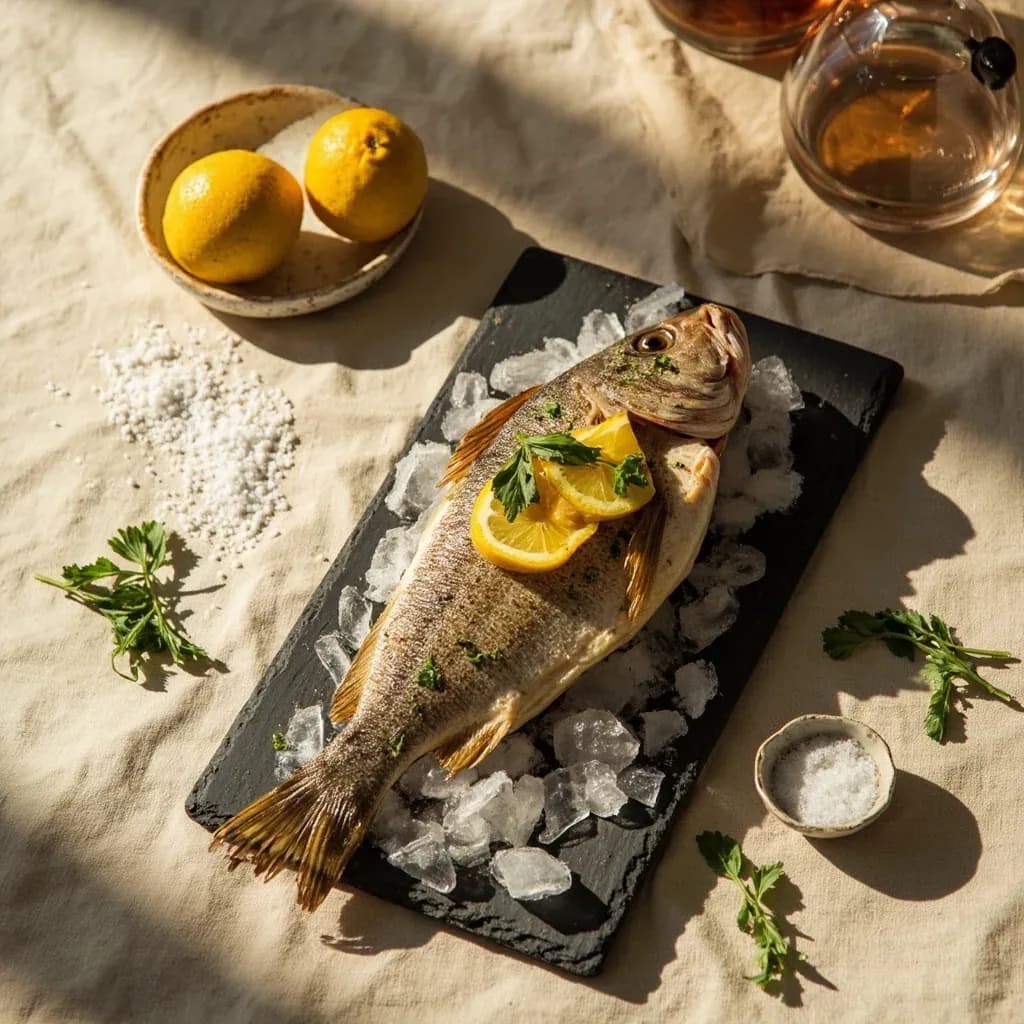
Branzino — Dicentrarchus labrax, also called European sea bass, loup de mer, or spigola — is the Mediterranean white fish that became the benchmark for whole-roasted fish in American dining and remains a default at Greek tavernas and Italian trattorias. Its appeal is structural as much as flavor: a manageable 1- to 1.5-pound pan size, a thin silvery skin that crisps like parchment, and firm, milky-white flesh that lifts cleanly off a single central bone structure. The flavor is clean and faintly sweet, never assertive, which makes it a vehicle for sauce, herb, and citrus rather than a dominant taste on its own.
Nearly all branzino sold in the United States is farmed, with Greece and Turkey as the dominant producers, which is why the fish is available year-round at a consistent size and price. Wild Mediterranean branzino are larger, seasonal, and slightly fuller-flavored, but aquaculture has effectively made this a 12-month ingredient. That consistency, combined with a forgiving cook's window, is what keeps branzino in regular rotation on fish-centric menus.
What separates branzino from other white fish is how its skin behaves and how the carcass lifts. Score the skin, dry it well, and blast it with heat and you get shatter-crisp skin over juicy flesh. Cook a whole fish gently to 135–140°F, rest it for a few minutes, and the top fillet peels off in one piece, exposing the clean bone structure that a diner can read at a glance. Few other fish give you that combination of presentation, flavor, and ease.
- Measured in
- g
- Storage
- Refrigerate
Allergens
Find it in
Types & varieties
Seasonal and less common in U.S. markets; fuller flavor, firmer flesh, often 1.5–3 lb or larger
The U.S. retail default; consistent 12 oz–1.5 lb size, clean mild flavor, available year-round
Also widely exported; similar to Greek farmed, occasionally a touch fattier
Single-serving size, ideal for grilling or roasting whole per person without leftovers
Better for stuffing and serving two; allow several extra minutes of cook time
Standard market form; head on, scaled or un-scaled — ask the fishmonger to scale without removing head or skin
Split open like a book with the backbone removed; lies flat on the grill for even, fast cooking
Less common and pricier; used for pan-searing when you want crisp skin and individual portions
Buying and assessing freshness
A whole branzino should look like it just came out of the water. The eyes are the first tell: bright, clear, slightly domed, never cloudy or sunken. Lift the gill flap — it should be wet and a saturated red, not gray or brown. The skin should be mirror-bright silver with intact scales; a dull, tacky surface means the fish has been sitting. Finally, smell the cavity. Branzino should smell like clean seawater or cold seaweed. Anything sour, ammoniated, or overtly 'fishy' means walk away. Wild fish tend to be leaner and firmer; farmed fish are slightly fatter and a touch more yielding, but both should feel cold, heavy for their size, and firm to the touch.
- Choose fish that are 12 oz–1.5 lb for individual portions; larger for two-person sharing or stuffing
- Ask the fishmonger to scale the fish and remove the gills but keep the head and skin intact — they hold moisture and look better on the plate
- If buying fillets, look for ones with the silvery skin still attached and a translucent, glossy flesh without brown edges or pooling liquid
- Farmed branzino is the practical default for year-round cooking; choose certified farmed (ASC, BAP, GlobalG.A.P.) when wild is unavailable
The whole-fish playbook
Cooking branzino whole rewards a short, repeatable routine more than fancy technique. Pat the fish dry inside and out, score the skin with three shallow diagonal cuts on each side, salt it lightly 10–15 minutes ahead, and stuff the cavity with aromatics. Preheat the oven (and the pan) to 450°F, lay the fish on an oiled rack or sheet, give it five minutes at high heat to set the skin, then drop to 400°F to finish gently. A 1-pound fish needs 12–15 minutes total; pull at 135°F internal. Rest for 3–5 minutes, then slide a spatula under the top fillet — it should lift away in one piece, leaving the spine and belly cavity exposed.
- Score only through the skin, into the flesh but not down to the bone — this prevents curling and lets heat move into the thickest part of the body
- Salt the surface 10–15 minutes ahead; the thin flesh turns mushy if salted for hours
- Always preheat the roasting surface — a screaming-hot pan or grill is the difference between crisp and rubbery skin
- Test doneness by tugging the dorsal fin near the head; when it releases without resistance the fish is ready
Common uses
Tips & pitfalls
- Score the skin with 3 shallow diagonal cuts on each side before cooking — it prevents curling and helps heat penetrate evenly to the spine
- Pat the fish completely dry, inside and out, before seasoning; surface moisture is the enemy of crisp skin and the most common cause of a flabby result
- Salt the fish 10–15 minutes before cooking, not the night before — branzino's delicate flesh turns mushy from prolonged salting
- Preheat both the oven and the pan or rack; start at 450°F for 5 minutes, then drop to 400°F to finish gently without drying the tail
- Pull the fish a few degrees early, around 135°F internal — carryover cooking and a short rest will land you at perfect, juicy doneness
- Let a cooked whole fish rest 3–5 minutes before lifting the top fillet; the flesh firms up and lifts cleanly off the central spine in one piece
- Use the dorsal-fin test alongside a thermometer — when the fin near the head releases with no resistance, the fish is ready
- Ask your fishmonger to scale the fish but leave the head and skin intact; head-on presentation holds moisture during cooking and looks better at the table
- Avoid overcooking — once the flesh turns opaque, the window between perfect and dry is only a couple of minutes
- Farmed branzino is more sustainable and predictable than wild; choose certified farmed when wild is unavailable or out of season
Nutrition
Nutrition
No USDA FoodData Central match for Branzino (European Sea Bass) yet. We surface a per-100 g profile once a generic whole-food entry is matched and verified.
In the shops
Matched grocery products
No matched grocery products for Branzino (European Sea Bass) yet.
Good to know
- Species
- Dicentrarchus labrax (family Moronidae), a temperate bass of the eastern Atlantic
- Other names
- Loup de mer (French), spigola or branzino (Italian), lubina (Spanish), levrek (Turkish)
- Range
- Eastern Atlantic from Norway to Senegal, the Mediterranean and Black Seas
- Typical market size
- 12 oz–1.5 lb (350–700 g) farmed; 1–3 lb wild, occasionally larger
- Yield
- A 1 lb whole fish yields roughly 5–6 oz of edible flesh (about 35–40%)
- Doneness target
- 135–140°F internal; flesh just opaque and starting to flake at the spine
- Storage
- Best used within 1–2 days of purchase on ice at 32–38°F; freezes well up to 3 months
- Freshness cues
- Clear bright eyes, red gills, shiny silver skin, briny or seaweedy smell (not sour or ammoniated)
- Sustainability
- Farmed branzino is a relatively low-impact, low-trophic aquaculture species; look for ASC, BAP, or GlobalG.A.P. certification
Substitutes
- Striped bass — Closest match in flesh texture and skin behavior; slightly stronger, sweeter flavor
- Black sea bass — Smaller fish with similar delicate, mildly sweet flesh; excellent for whole roasting at smaller scale
- Orata / gilt-head bream — The classic Mediterranean counterpart; nearly identical size, handling, and mild flavor, slightly sweeter flesh
- Red snapper — Firm white flesh and mild flavor that suits whole roasting; skin is thinner and crisps differently
- Arctic char — Available as fillet; rich, clean flavor that stands in well for branzino fillets, especially pan-seared
- Rainbow trout (whole) — Similar size and delicate flesh; slightly more oily and earthy, works for whole-roast preparations
- Tilapia — Budget option for everyday cooking; milder and softer, lacks the silky firmness and crisp-skin performance of true branzino
Pairs with
Also called
European sea bass · loup de mer · spigola · Dicentrarchus labrax
Related
Egg
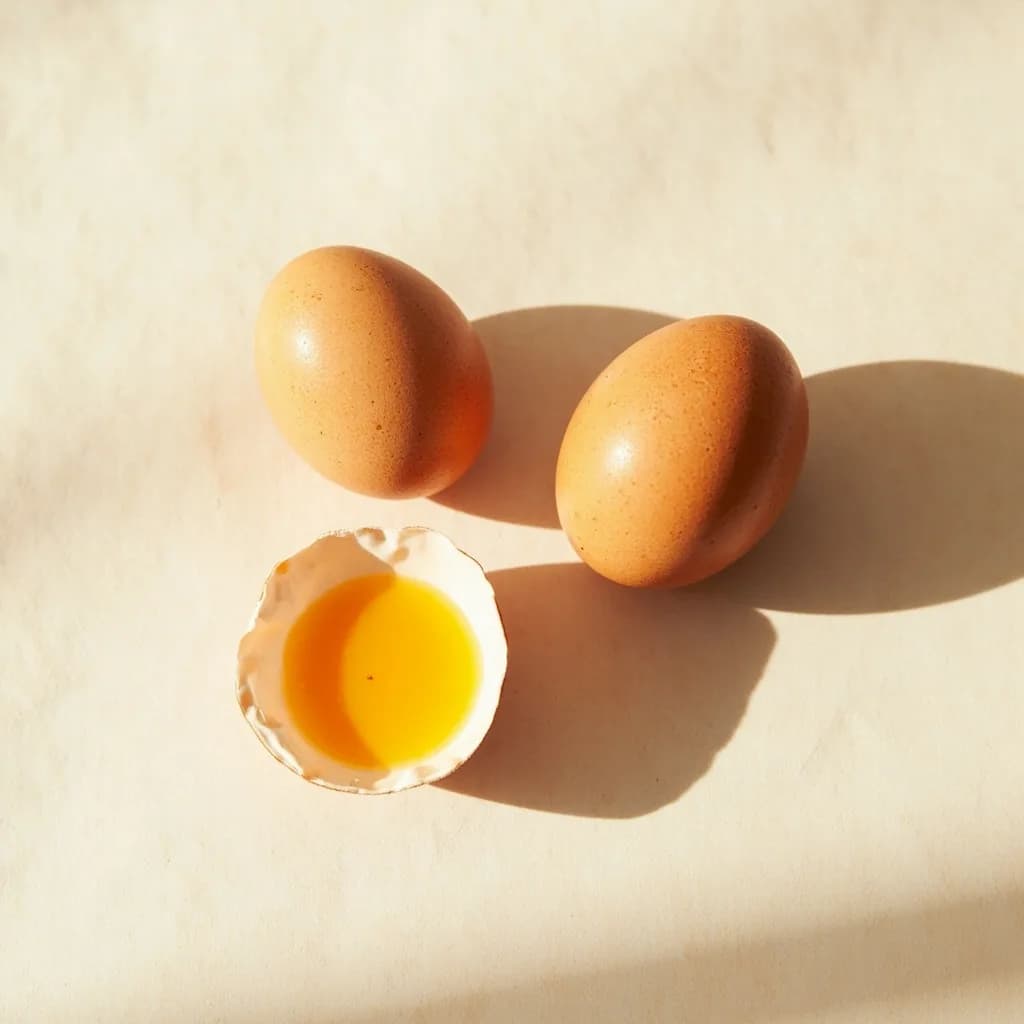
The kitchen's everything ingredient — bind, leaven, enrich, or fry
Chicken Breast
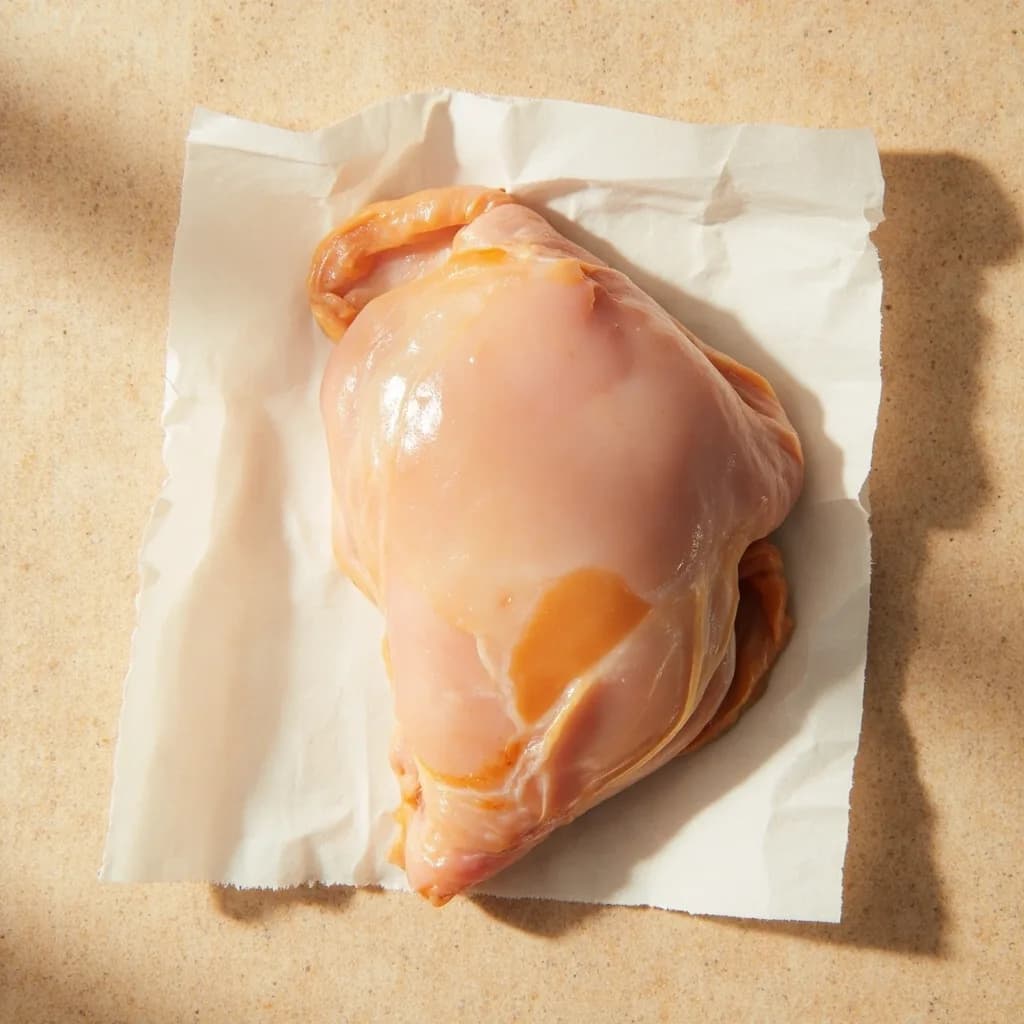
Lean, quick-cooking white meat for everyday dinners

Ground Beef
Versatile minced beef for burgers, ragù, tacos, and meatballs
Pork Loin
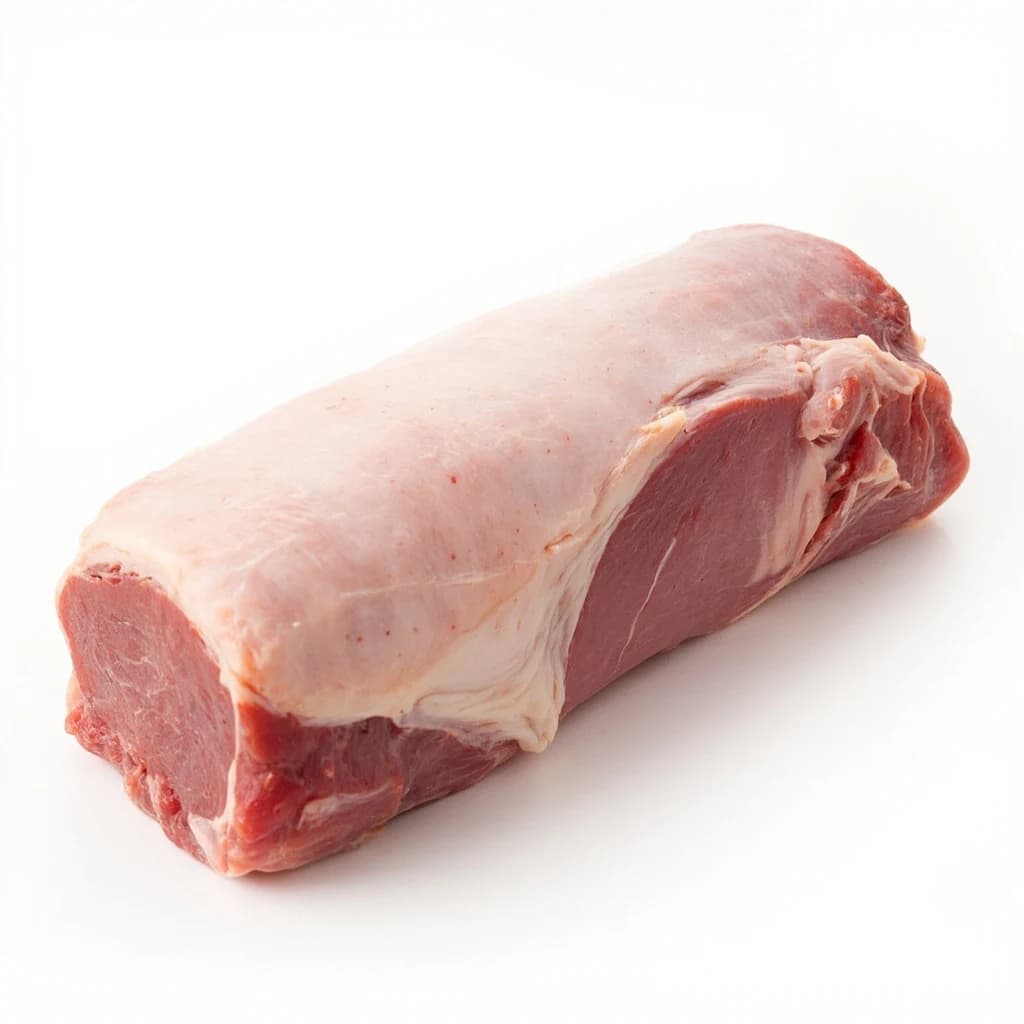
Lean, tender roasting cut that stays juicy with care
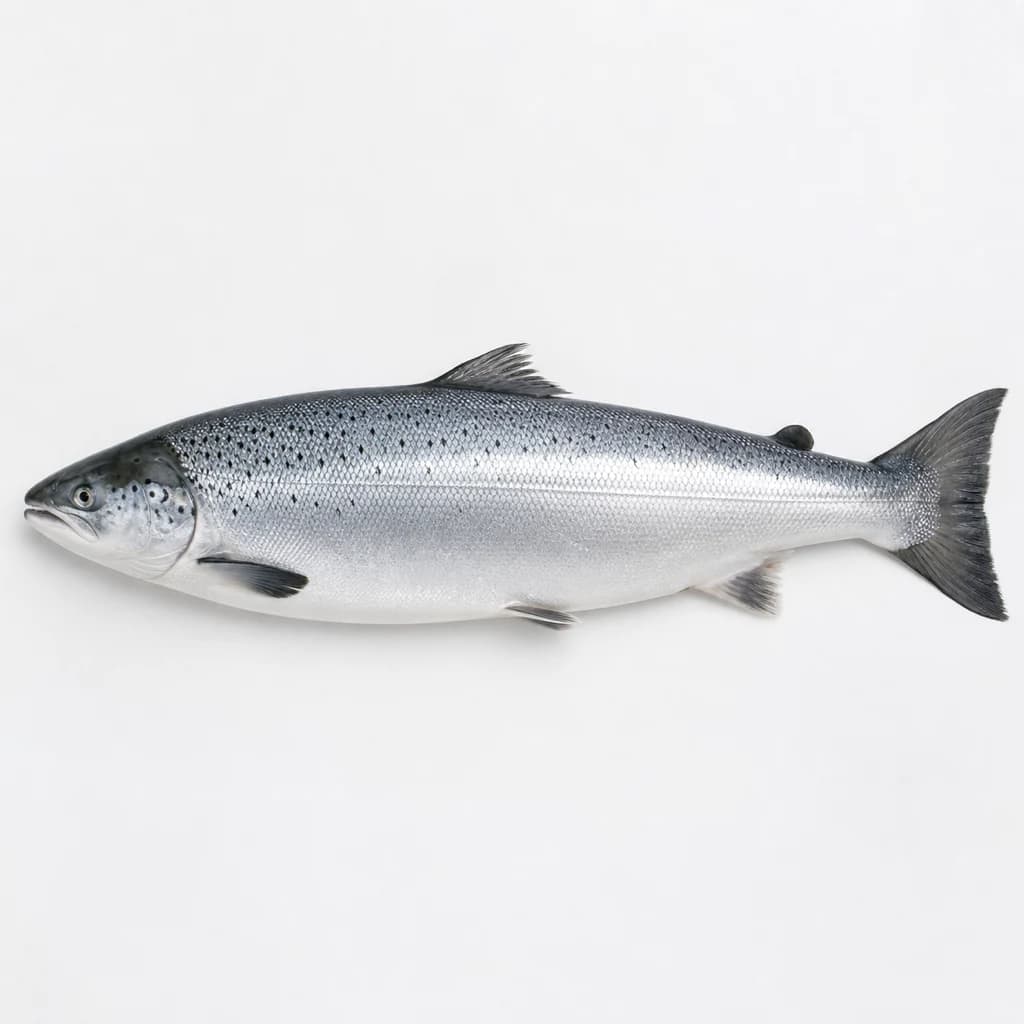
Salmon
Rich, rosy fish that roasts, grills, or cures beautifully

Egg White
Pure protein that whips to airy peaks for meringue and more

Egg Yolk
Rich, golden yolk for custards, mayonnaise, and pasta

Quail Egg
Tiny, speckled eggs for garnishing and elegant bites