Proteins
Chashu Pork
Rolled pork belly braised in soy and mirin, sliced to crown a bowl of ramen.
Chashu is Japanese braised pork, usually a rolled and tied pork belly slow-simmered in soy sauce, mirin, sake, and sugar until meltingly tender. It is chilled, sliced into rounds, and lightly seared before topping ramen. The savory-sweet braising liquid (tare) often flavors the soup itself.
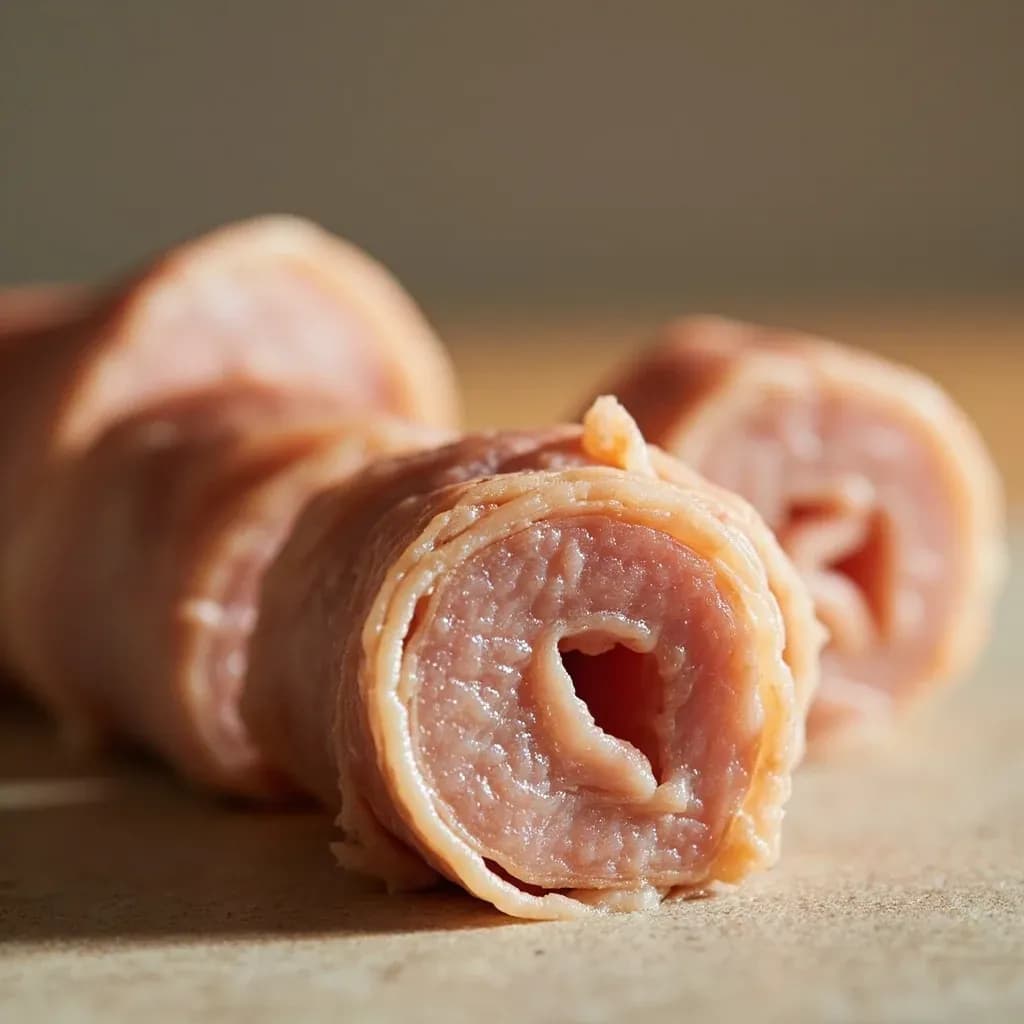
Chashu pork is pork belly transformed through a patient braise into one of Japanese cuisine's most satisfying proteins. The technique—derived from Cantonese char siu but entirely rethought—calls for rolling the belly with its fat cap facing outward, securing it with twine, searing it hard, then low-simmering it in a balanced mixture of soy sauce, mirin, sake, and sugar until the interior turns buttery-soft while the exterior develops a deep mahogany lacquer. The result is a structurally sound log of meat that holds its shape through slicing, revealing concentric rings of lean meat framed by a glossy collar of rendered fat.
What distinguishes Japanese chashu from its Chinese ancestor is the braising method and the deliberate preservation of fat-cap structure. Where char siu is roasted and glazed, chashu absorbs its seasoning from the inside out during a gentle simmer, creating more uniform flavor throughout. The fat cap, placed on the exterior of the roll, bastes the lean meat continuously as it cooks, keeping it succulent while rendering into a silken layer that slices cleanly. This construction is essential: it gives chashu the textural contrast—tender meat, yielding fat, a slight resistance from the collagen-rich skin—that makes it the defining topping for tonkotsu, shoyu, and shio ramen.
The braising liquid does double duty. Beyond seasoning the pork, it becomes a precious seasoning base when reduced—a glossy tare that anchors ramen broth or sauces for rice bowls. Making chashu is an exercise in planning ahead: the pork improves dramatically after resting overnight in its liquid, and the liquid itself concentrates with each use. Most ramen shops maintain a perpetual batch, adding fresh bellies to aging liquid that grows more complex over time.
- Measured in
- g
- Storage
- Fridge
Allergens
Types & varieties
Larger-diameter rolls sliced thick (3/4–1 inch) for textural impact; common in Hakata-style shops
Uses pork shoulder for leaner result; still braises successfully but yields firmer texture
Leanest option; rolls and braises but risks drying out; less common in ramen contexts
Roasted with honey glaze rather than braised; same flavor family, different technique
Pork loin wrapped around leeks before braising; more common in izakaya fare than ramen
The Rolled Structure
The rolling technique is what makes chashu chashu. Place the pork belly skin-side down, season the lean surface lightly, then roll tightly toward you, keeping the fat cap on the outside of the spiral. The fat will face outward in the finished roll, creating that characteristic ring of glossy rendered fat around each slice. Kitchen twine at 1-inch intervals prevents the roll from unwinding during cooking. A tight roll also ensures even cooking and clean slicing; a loose roll will gap and collapse. Some cooks dust the exterior with a little sugar before searing to jumpstart caramelization.
- Roll with fat cap facing out to create the signature concentric ring structure
- Tie at 1-inch intervals—no wider—or the roll will sag and separate
- A tight roll cooks more evenly and slices cleaner than a loose one
The Braising Liquid as Asset
The liquid is not disposable. After removing the chashu, strain the braising liquid and refrigerate it. Within a day, the fat will solidify on top and can be skimmed off, leaving a concentrated seasoning base beneath. Reduce this liquid until syrupy to create a glaze for rice bowls or a tare for ramen. The more you use and reuse this liquid—adding new aromatics each time—the more complex it becomes. Many ramen shops maintain the same braising liquid for months, treating it as a living seasoning agent that grows richer with each batch of chashu.
- Strain and refrigerate leftover liquid; fat solidifies and separates for easy removal
- Reduce to syrup consistency for a glossy chashu glaze or ramen tare
- Maintain a 'perpetual' braising liquid by reusing it across multiple batches
Common uses
Tips & pitfalls
- Roll pork belly tightly with the fat cap on the outside; tie with kitchen twine at 1-inch intervals to prevent unraveling during the long braise
- Sear the rolled pork hard in oil before adding braising liquid—the Maillard reaction develops essential flavor and creates the characteristic lacquered crust
- Submerge the roll in liquid only halfway; cooking it above the liquid level allows browning and prevents the exterior from over-rendering
- Simmer gently with small bubbles; vigorous boiling forces liquid into the protein and makes the pork tough
- Braise until a skewer meets zero resistance—typically 60–90 minutes stovetop or 2–3 hours in a 300°F oven; the meat should feel yielding when pressed
- Rest the cooked chashu in its refrigerated braising liquid overnight; this improves both seasoning penetration and slicing properties
- Chill the finished chashu completely before slicing—cold fat cuts cleanly, warm fat smears and sticks
- Reduce the leftover braising liquid to a syrupy glaze after removing the chashu; this becomes your tare or sauce
- Common mistake: skipping the sear—the crust is not cosmetic, it provides flavor depth and the signature lacquered appearance
- Common mistake: overcooking until dry—pork belly has fat to self-baste but will turn mealy and lose structure if simmered past tenderness
- Common mistake: slicing too thin for ramen—aim for 1/2-inch minimum slices; paper-thin cuts collapse and lack textural impact
- Common mistake: not seasoning the interior—braising liquid is salty but doesn't penetrate evenly; season the lean side before rolling
- Common mistake: storing chashu exposed to air—it dries out quickly; always keep it submerged in its braising liquid
Nutrition
Energy
3397 kJ · per 100 g
Where the calories come from
Protein
2.9g
6% DV
Carbs
0g
0% DV
Fat
88.7g
114% DV
Fiber
0g
0% DV
Sugars
0g
of which
Sodium
11mg
0% DV
Source · USDA FoodData Central · approx. Pork, fresh, backfat, raw
View on FDC →In the shops
Matched grocery products
 €2.20
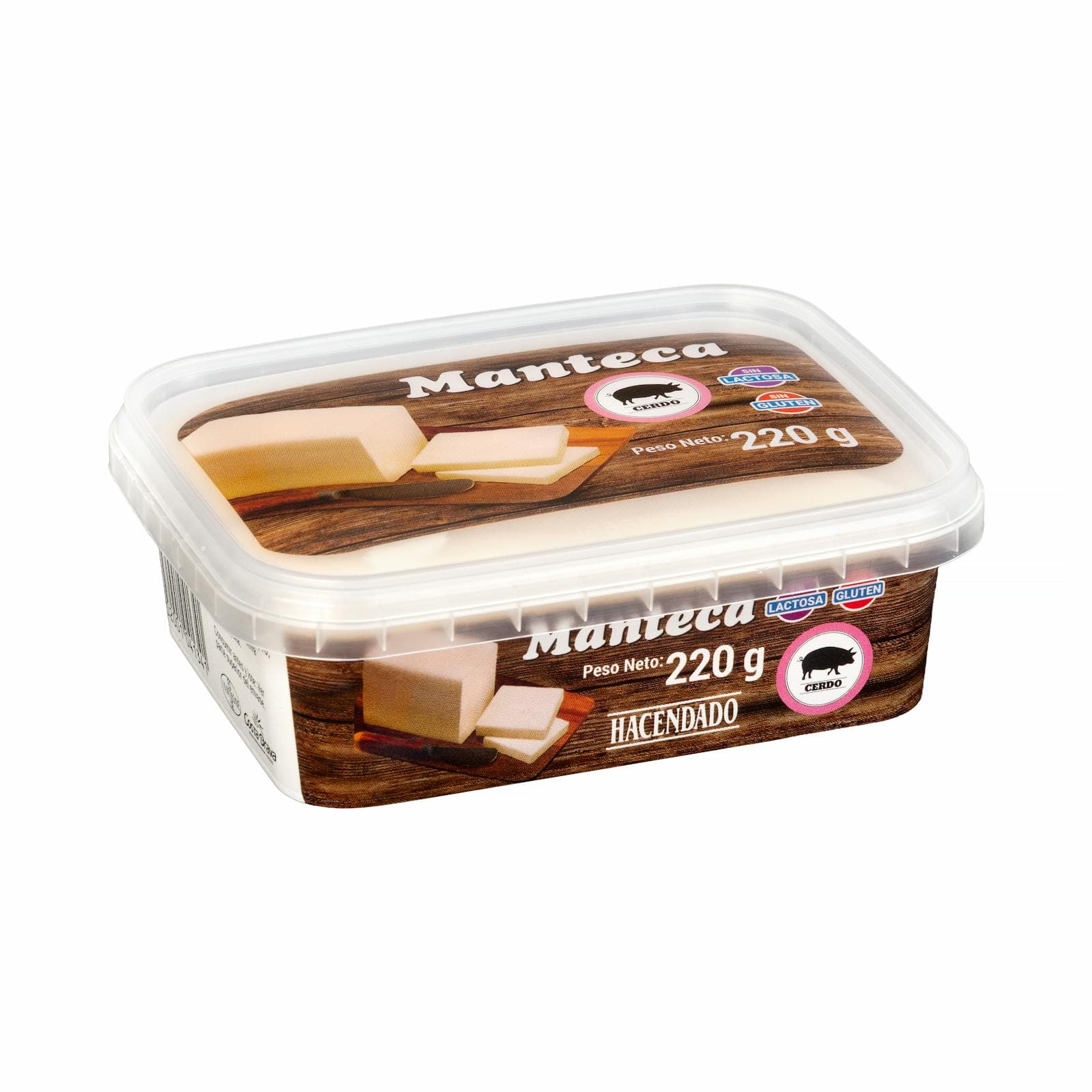
€2.20Pork Lard
Hacendado · 220 g · Mercadona
 €3.40
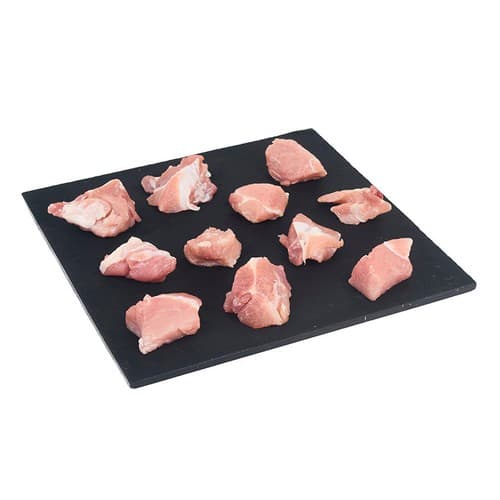
€3.40Pork Stew
BONPREU · ud · Bonpreu
 €3.45
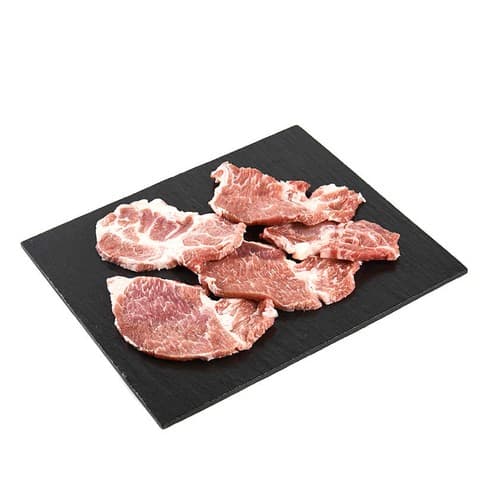
€3.45Lean Pork
BONPREU DE L'ERA · ud · Bonpreu
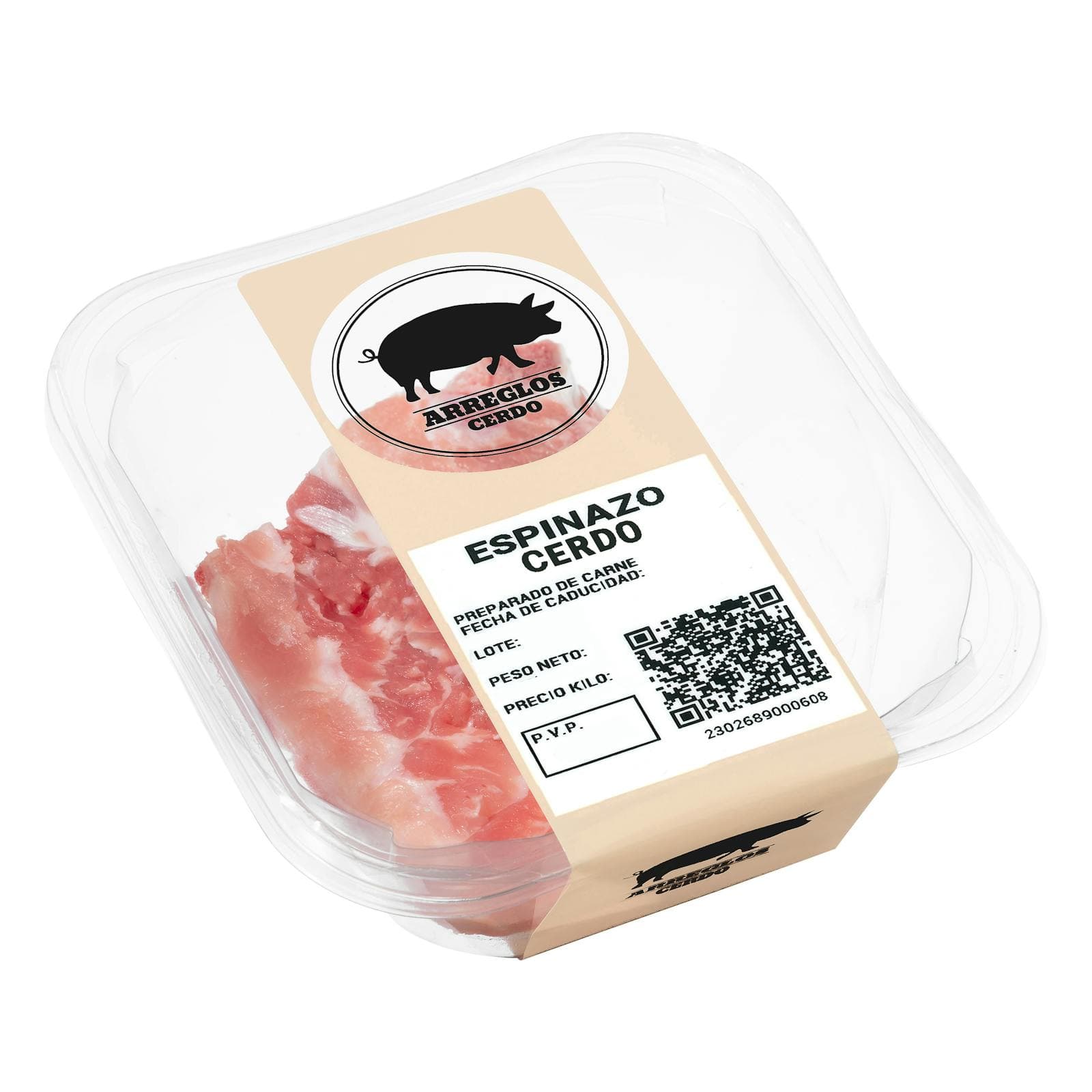 €2.10
€2.10Pork Spine
300 g · Mercadona
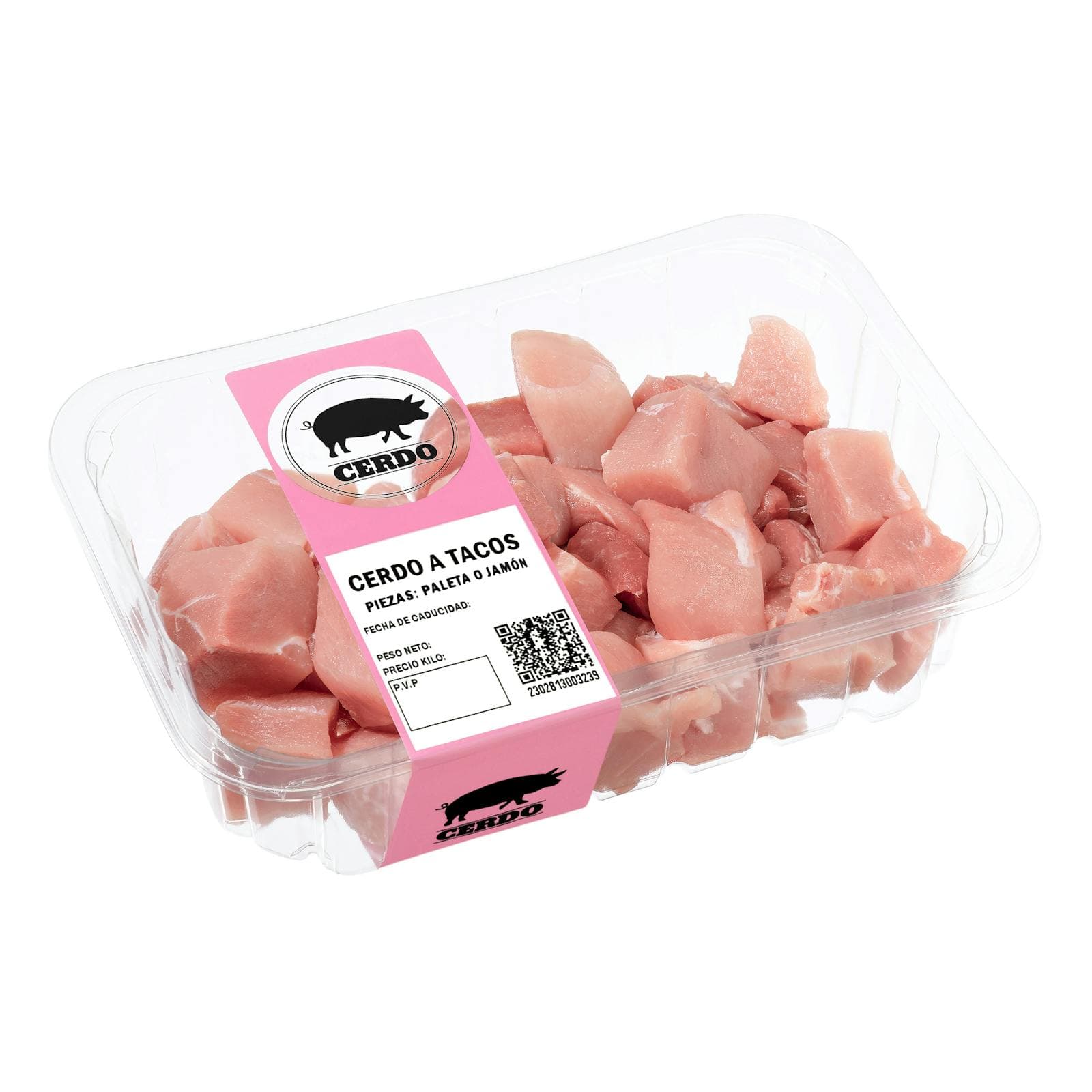 €3.22
€3.22Diced Pork
560 g · Mercadona
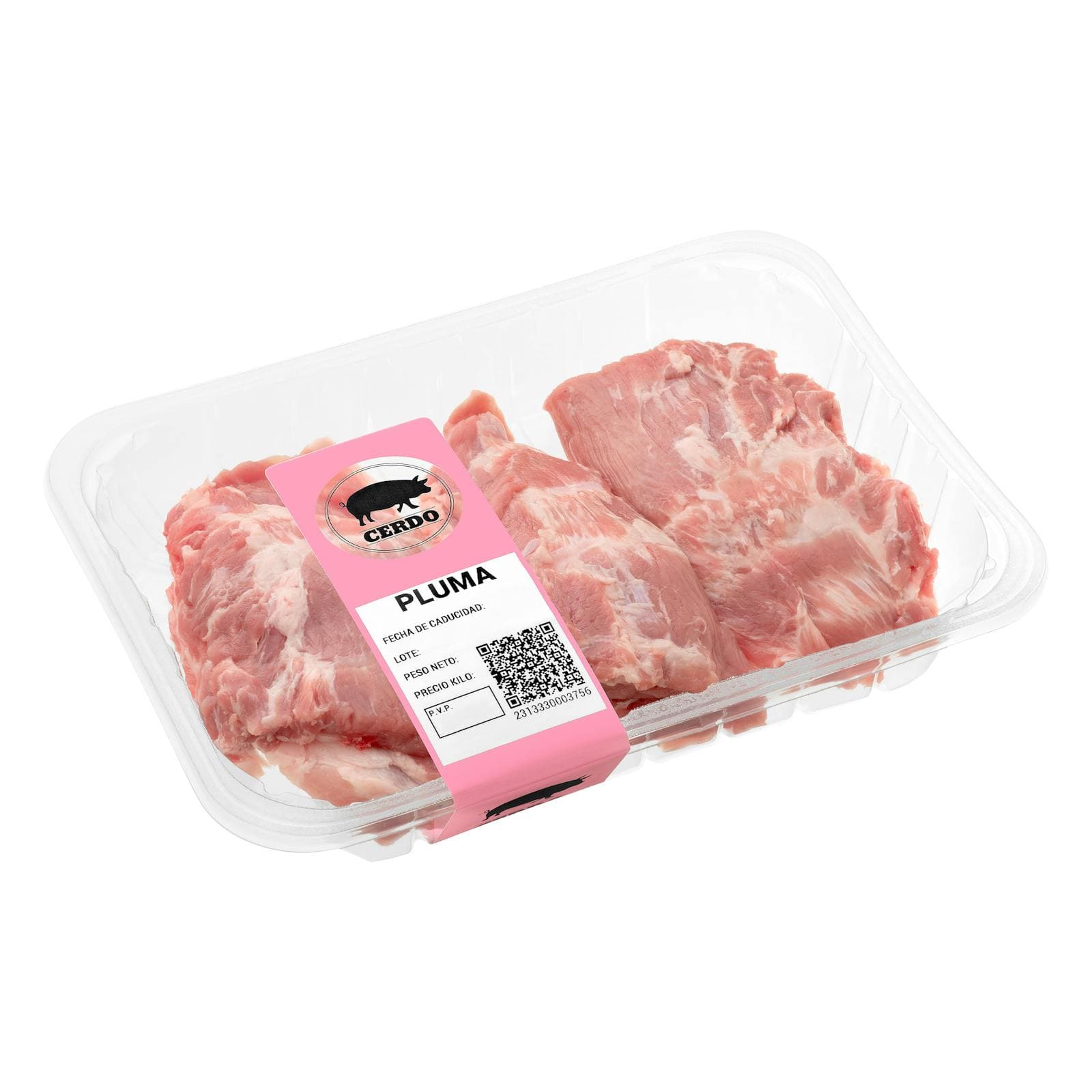 €3.75
€3.75Pork Pluma
300 g · Mercadona
Good to know
- Type
- Braised pork belly, rolled and tied before cooking
- Origin
- Japanese adaptation of Cantonese char siu
- Primary Cut
- Pork belly, skin-on; buttock section preferred for fat-to-meat balance
- Braising Components
- Soy sauce, mirin, sake, sugar; aromatics (ginger, garlic) optional
- Braise Time
- 60–90 minutes stovetop or 2–3 hours at 300°F (150°C)
- Internal Temperature
- 145°F (63°C) minimum for food safety
- Refrigerated Shelf Life
- 5–7 days, submerged in braising liquid
- Frozen Shelf Life
- Up to 3 months; thaw overnight in refrigerator
- Yield
- Approximately 70–75% after cooking and trimming (4 lb raw belly yields ~2.5–3 lb finished)
- Calories (per 100g)
- Approximately 290–330 kcal depending on fat content
- Difficulty
- Moderate; requires attention to rolling, tying, and monitoring braise
- Equipment
- Kitchen twine, large Dutch oven or heavy pot, instant-read thermometer
- Flavor Profile
- Savory, mildly sweet, rich umami; glossy lacquered exterior when properly glazed
Substitutes
- Slow-Braised Pork Shoulder — Less fatty but still tender; slice thin since it lacks the layered fat cap structure
- Roasted Pork Belly (Chinese Char Siu) — Different technique but similar flavor family; acceptable substitute for rice bowls or when braising is impractical
- Braised Pork Jowl — Even richer and more unctuous; higher fat content makes it excellent for authentic results
- Duck Breast (confit) — Different protein but comparable rich, fatty mouthfeel; suitable for non-pork ramen or dining variation
- Smoked Pork Shoulder — Adds smokiness that changes the profile; reduce the braising liquid for sauce but omit additional smoking
- Canned Corned Beef (emergency only) — Entirely different flavor; acceptable only when nothing else is available and authenticity is abandoned
Pairs with
Also called
Cha Shu · Ramen Pork
Appears in these dishes
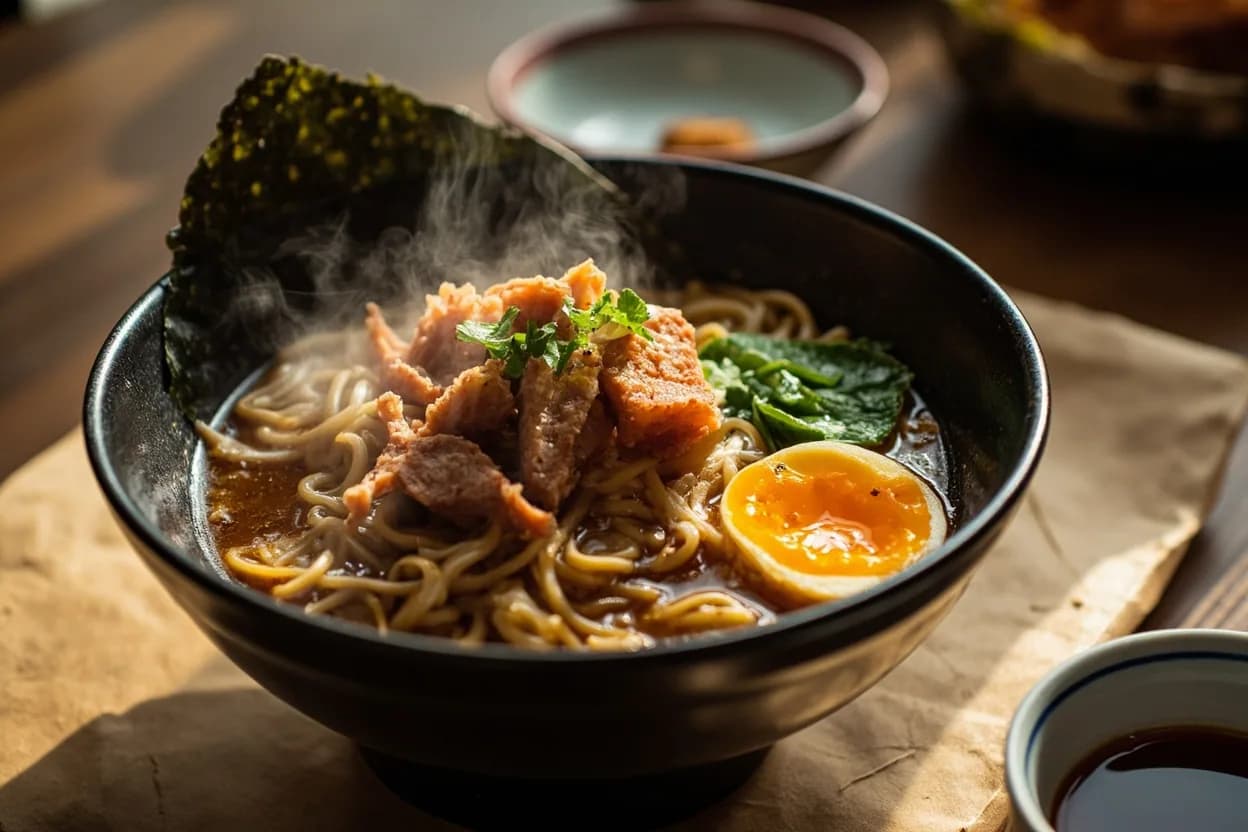
Related

Egg
The kitchen's everything ingredient — bind, leaven, enrich, or fry

Chicken Breast
Lean, quick-cooking white meat for everyday dinners

Ground Beef
Versatile minced beef for burgers, ragù, tacos, and meatballs

Pork Loin
Lean, tender roasting cut that stays juicy with care

Salmon
Rich, rosy fish that roasts, grills, or cures beautifully

Egg White
Pure protein that whips to airy peaks for meringue and more

Egg Yolk
Rich, golden yolk for custards, mayonnaise, and pasta

Quail Egg
Tiny, speckled eggs for garnishing and elegant bites