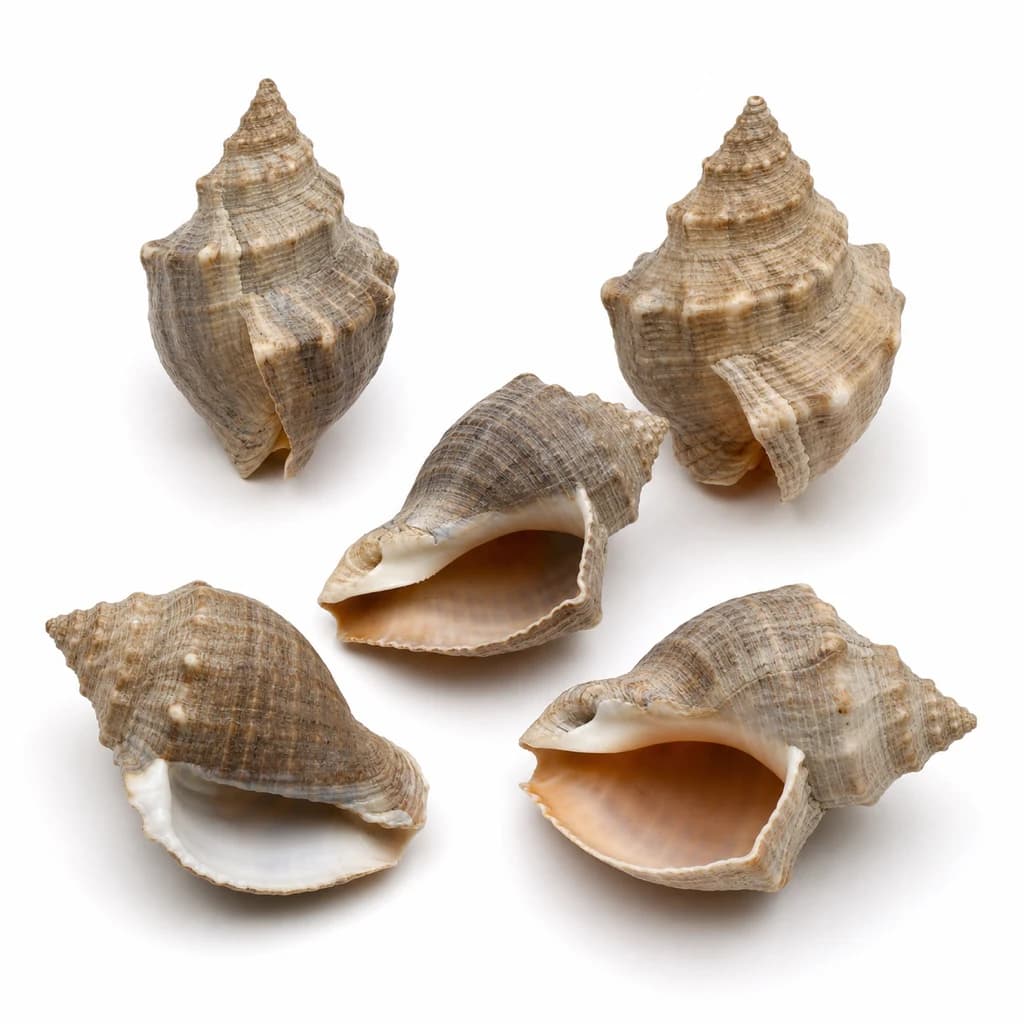
Natural form
Whole whelks showing pointed spiral shells with ridged whorls and cream-brown coloring.
Establishes the defining visual identity — the large, conical, ridged spiral shell that distinguishes whelks from other sea snails.
Proteins
Whelk
Chewy sea snail with spiral shell, boiled and served as seafood in Europe and Korea.
Whelks are large marine sea snails housed in pointed spiral shells, with firm, chewy, mildly briny meat. They are boiled and picked from the shell to eat with vinegar or mayonnaise in Britain and France (bulots), or tossed into spicy Korean golbaengi-muchim salads. Brief cooking keeps them tender; overcooking turns them rubbery.
Whelks are edible sea snails belonging to the family Buccinidae, prized across Northern Europe, East Asia, and the Americas for their firm, muscular foot meat that delivers a sweet, briny bite unlike any other shellfish. The spiral shells—often 6–10 cm long—are discarded after cooking, revealing pale cream to tan meat that ranges from tender-crisp when properly cooked to unpleasantly rubbery when overdone. Unlike true conchs (family Strombidae), whelks have a spiral shell and a muscular foot that contracts significantly during cooking; North American Busycon species are sometimes loosely called conch but differ in anatomy and texture. The meat constitutes only 30–40% of total weight after cleaning, making whelks a relatively expensive delicacy compared to their yield. Beyond the muscular foot, the visceral mass (dark green or brown) can be eaten but imparts a stronger mineral flavor; most preparations remove it for milder results. The operculum—a hard, horn-colored trap door at the shell's aperture—must always be removed before cooking or serving as it is inedible. Whelks have sustained coastal communities from Normandy to Korea for centuries, and their preparations reveal distinct culinary traditions: British and Belgian pinpickers dipping boiled whelks in vinegar, French chefs finishing them in cream and white wine, and Korean cooks serving blanched whelk in icy noodle broth with gochujang.
- Measured in
- g
- Storage
- Fridge
Allergens
Types & varieties
The most widely consumed species in Northern Europe; pale cream to tan meat, spiral shell with fine ridges
Larger than common whelk; reddish-brown shell, slightly sweeter flavor; common in Scandinavia and North Sea
Distinguished by horizontal bands on shell; found in deeper cold waters; firm, slightly sweeter meat
Left-handed spiral shell; common in US Southeast Atlantic and Gulf; larger specimen with thick foot muscle
North American Atlantic coast; heavy shell with bump-like knobs; similar flavor to lightning whelk
Cleaning and Preparation
Before cooking, live whelks must be purged to expel sand and grit from their gut. Submerge them in cold salted water—roughly 35g of salt per liter—and refrigerate for 4–6 hours. Change the water once midway through to ensure complete purging. After purging, the meat must be extracted from the spiral shell using a thin skewer or whelk pick inserted at the aperture. Twist to dislodge the operculum (the hard trap door), then pull the meat free with a steady, firm motion. Once extracted, rinse the meat under cold water and inspect for the dark visceral mass; pinch or slice this away if you prefer a milder, less mineral flavor. The pale foot muscle is the primary edible portion for most preparations.
- Purging is non-negotiable for any recipe where sand texture would be objectionable
- The operculum is inedible and must be removed before cooking or serving
- Slicing the meat against the grain at a 45-degree angle before cooking breaks muscle fibers for tenderness
Understanding Texture
The whelk's foot is pure muscle, and its behavior under heat determines the entire eating experience. Below 12 minutes of boiling, the collagen has not fully converted and the meat remains tough and chewy. Between 12 and 15 minutes, the texture reaches tender-crisp—resistant but yielding to the bite, with a slight snap. Beyond 15 minutes, the muscle fibers tighten and shrink, exuding liquid and becoming rubbery. This narrow window means timing is everything; start checking at 8 minutes for smaller specimens and trust the opaque, slightly firm-to-touch appearance rather than the clock.
- Undercooked: translucent center, excessive chewiness
- Properly cooked: opaque throughout, slight resistance with tender bite
- Overcooked: rubbery, shrunken, exudes liquid
Common uses
Tips & pitfalls
- Purge live whelks in clean, cold, salted water (35g salt per liter) for 4–6 hours to expel sand from the gut; change water once midway
- Boil in heavily salted water (use seawater-strength brine or roughly 3% salt) for 8–12 minutes until meat is just opaque throughout
- Do not overcook — beyond 15 minutes the meat becomes rubbery and shrinks dramatically; undercooking leaves it tough
- Extract meat using a thin skewer or whelk pick inserted at the shell's aperture; twist to dislodge the operculum (trap door) and pull meat free
- Remove the dark visceral mass (gut) before cooking if you prefer milder flavor; the gut imparts a stronger, more mineral taste
- Slice thick pieces against the grain before cooking to improve tenderness — a 45-degree angle cut breaks the muscle fibers
- If serving cold (Korean style), blanch briefly (3–4 minutes), then plunge into ice water immediately to set the color and texture
- Fresh live whelks should be alive when purchased: the operculum should be tight against the shell opening; discard any with cracked shells or foul odor
- Frozen whelk meat is a viable option; thaw slowly in refrigerator overnight and use within 24 hours of thawing
Nutrition
Energy
573 kJ · per 100 g
Where the calories come from
Protein
23.8g
48% DV
Carbs
7.8g
3% DV
Fat
0.4g
1% DV
Fiber
0g
0% DV
Sugars
0g
of which
Sodium
206mg
9% DV
Source · USDA FoodData Central · approx. Mollusks, whelk, unspecified, raw
View on FDC →In the shops
Matched grocery products
No matched grocery products for Whelk yet.
Good to know
- Origin
- Cold North Atlantic waters; common in UK, Scandinavia, France, Korea, Japan, and US East Coast
- Flavor
- Sweet, briny, oceanic; mild seafood taste with subtle mineral notes
- Texture
- Firm, chewy, rubbery when overcooked; tender-crisp when cooked properly
- Season
- Available year-round; peak quality typically autumn through early spring
- Shelf life
- Live whelks keep 1–2 days in cool, salted seawater; cooked meat lasts 1–2 days refrigerated
- Yield
- Meat constitutes roughly 30–40% of total weight after cleaning and cooking
- Equipment
- Large pot for boiling; sturdy tweezers or pick for extracting meat from shell
- Difficulty
- Moderate; requires purging, cleaning, and proper cooking time to avoid toughness
Substitutes
- Clam — Similar chewy texture and briny flavor; steam or sauté; Littleneck or mahogany clams work best for equivalent applications
- Conch — True queen conch has a similar firm texture; more expensive; excellent for Caribbean and Latin preparations
- Squid — Chewy texture, milder flavor; cook quickly (1–2 minutes) over high heat to avoid toughness; good for stir-fried applications
- Mussels — Briny seafood flavor but softer texture; not a direct substitute for texture but works in soups and stews
- Escargot (Burgundy snail) — Similar chewy bite when prepared correctly; richer, more buttery flavor; requires proper purging
Pairs with
Also called
Sea Snail · Bulot · Golbaengi
Related
Egg
The kitchen's everything ingredient — bind, leaven, enrich, or fry
Chicken Breast
Lean, quick-cooking white meat for everyday dinners

Ground Beef
Versatile minced beef for burgers, ragù, tacos, and meatballs
Pork Loin
Lean, tender roasting cut that stays juicy with care
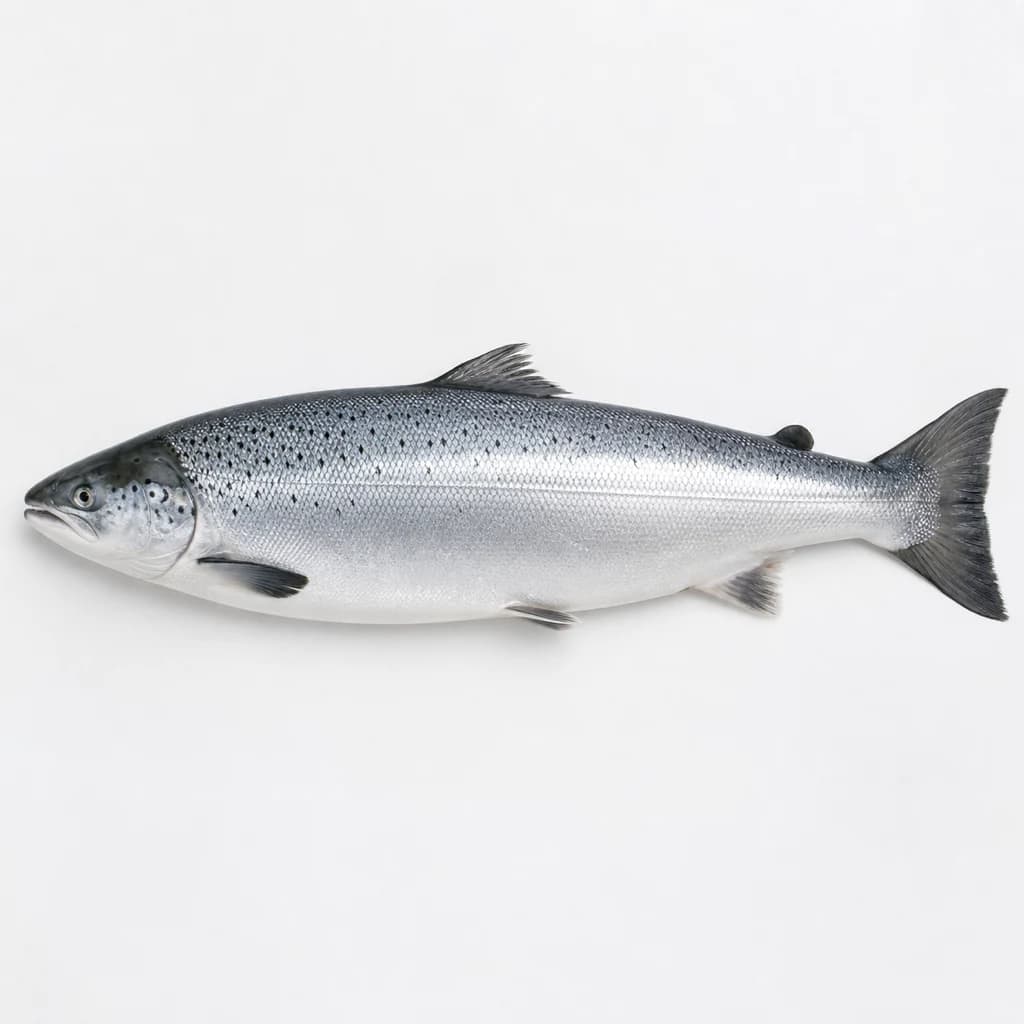
Salmon
Rich, rosy fish that roasts, grills, or cures beautifully

Egg White
Pure protein that whips to airy peaks for meringue and more
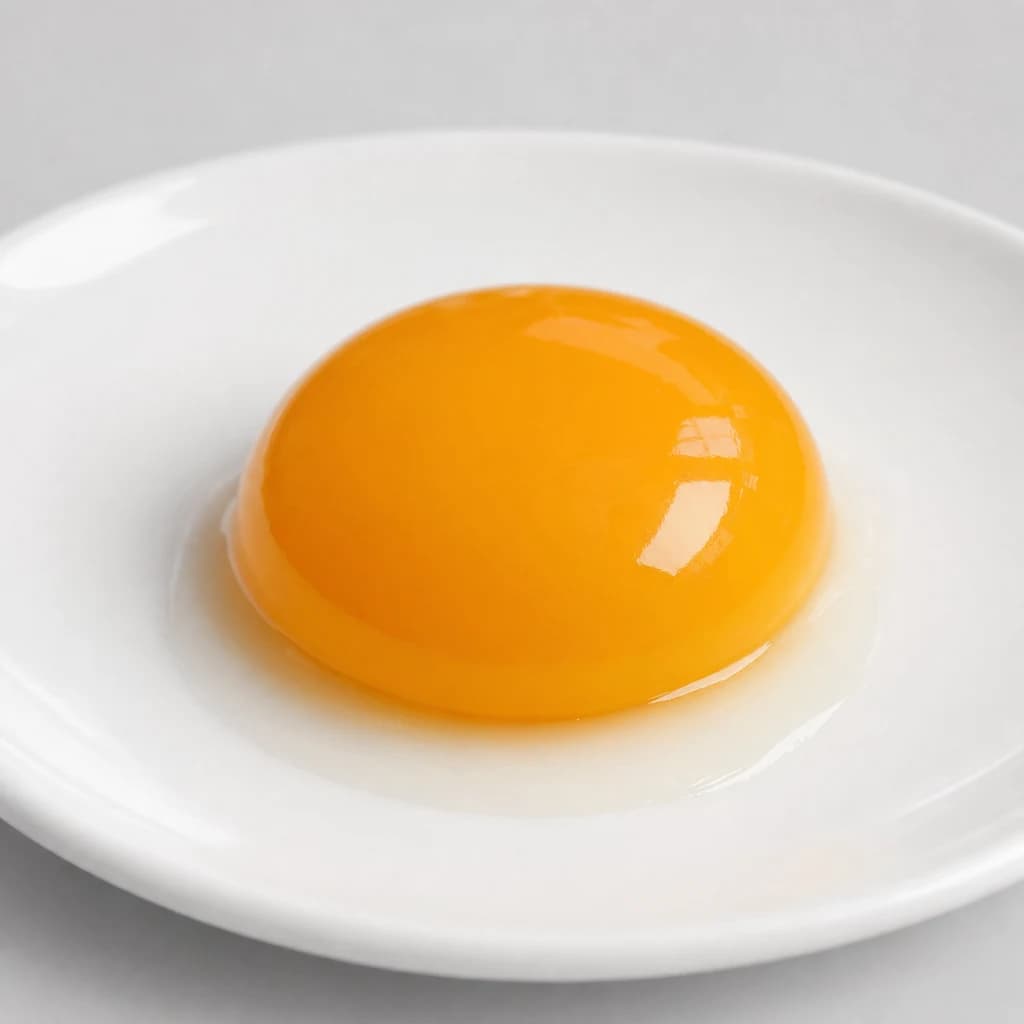
Egg Yolk
Rich, golden yolk for custards, mayonnaise, and pasta

Quail Egg
Tiny, speckled eggs for garnishing and elegant bites