 Cambodian
Medium · Hot
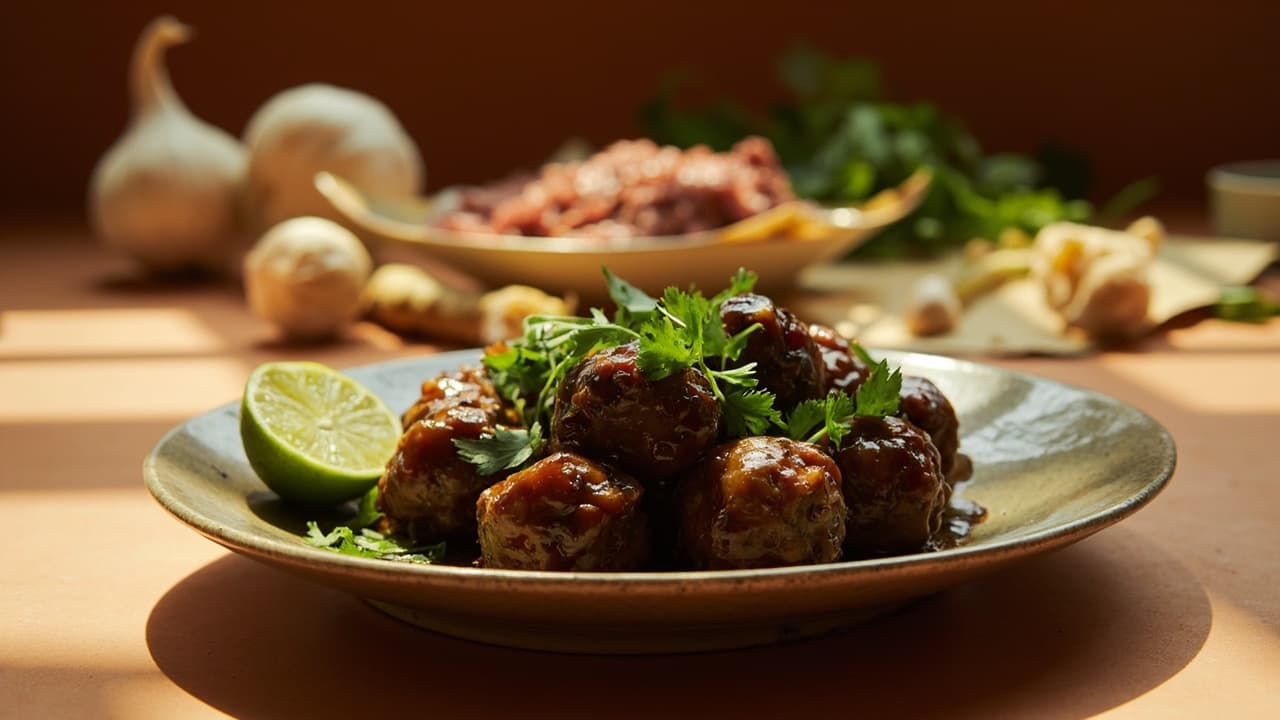
Kroeung-Inspired Beef Meatballs with Black Pepper and Fresh Herbs
Tender beef meatballs infused with a homemade kroeung-inspired paste of shallot, garlic, ginger, and turmeric, finished with a glossy soy-honey glaze and fresh herb scatter. Chef Anh Dao's approach brings the fragrance of a Cambodian kitchen to the comfort of a meatball.

Prep
20 min
Cook
22 min
Total
42 min
Method
1
Mince the shallot, garlic, and ginger together on a cutting board until very fine. Alternatively, use a mortar and pestle, pounding to a rough paste. Work the ingredients together for 2-3 minutes until fragrant and pasty.
2
Transfer to a small bowl and stir in the ground turmeric until evenly distributed. Set aside.
3
In a large bowl, combine the ground beef, egg, breadcrumbs, 1.5 tsp black pepper, salt, and 1/4 cup cilantro. Add the kroeung paste (about 2 tbsp) and mix gently with your hands until just combined — do not overwork or the meatballs will be dense.
4
Using wet hands, roll the mixture into 16 equal balls (about 35g each). Place on a parchment-lined plate and refrigerate for 10 minutes to firm up.
5
Preheat the oven to 200°C (390°F). Heat coconut oil in a large oven-safe skillet over medium-high heat until shimmering.
6
7
8
9
Pour the glaze over the meatballs in the skillet and toss gently to coat. Arrange on a serving platter.
10
Scatter the remaining fresh cilantro over the top, grind a little extra black pepper, and serve with lime wedges on the side. Suggest steamed white rice alongside.
B
Nutri-Score
Good balance
A–E · lower is better · score 2
Calories
515
per serving
High in protein · 39g
Protein
39g
Carbs
34g
Fat
25g
Sat. fat
8g
Fiber
5g
Sugar
16g
Sodium
1211mg
Dairy FreeHigh ProteinLow CarbDiabetesHeart HealthyInflammation ReducingBalanced MealLean BodyMuscle Recovery
Nutri-Score is a general nutritional-balance guide, not medical or dietary advice.
E
Environmental impact
Very high impact
A–E · lower is better · includes estimates
kg CO2e
13
per serving
ECarbonBEU all-round· carbon sets the grade
Water
0.7m³
Land
298Pt
Runoff
0.2g P
Ground Beef drives 98% of this recipe’s estimated footprint.
Carbon from Poore & Nemecek 2018; water, land & runoff from Agribalyse — modelled averages for comparing recipes, not a measurement of your groceries.
Flavor Profile
6
Umami
4
Sweet
5
Salty
2
Sour
1
Bitter
3
Spicy
Textures
CrispySaucyTender
Aromas
EarthyFragrantHerbalPungent
Kitchen Equipment
Primary Tool
Oven Safe SkilletOven Safe SkilletSmall SaucepanInstant Read ThermometerMixing BowlMortar And PestleTongsWhiskDamp TowelParchment Paper
Safety & Storage
Cooking Temperature
Ground beef meatballs must reach internal temperature of 71°C (160°F) throughout to ensure food safety. Use a calibrated meat thermometer inserted into the center of the largest meatball.
Cross Contamination
Keep raw ground beef separate from ready-to-eat ingredients like cilantro and lime. Use separate cutting boards for raw meat and fresh herbs. Wash hands thoroughly with soap after handling raw beef before touching other ingredients.
Storage
Refrigerate formed uncooked meatballs within 2 hours of preparation. Cooked meatballs can be stored in airtight container for up to 3-4 days in refrigerator. For longer storage, freeze cooked meatballs for up to 2-3 months.
Allergen Warning
This recipe contains egg, wheat/gluten, and soy. Verify all ingredients are free from cross-contact if serving to individuals with severe food allergies. Soy sauce and breadcrumbs are common allergen sources.
Handling
Do not overwork meatball mixture to prevent dense, tough texture. Keep hands wet when rolling to prevent sticking and ensure even sizing for uniform cooking.
High Risk Population
Pregnant individuals, young children, elderly, and immunocompromised persons should ensure meatballs are cooked to minimum internal temperature of 71°C (160°F) and consumed within safe storage timeframes.
Pro Tips
Technique
Never rush the kroeung paste — spend those 2-3 minutes working the shallot, garlic, and ginger together until the mixture becomes pasty and releases its oils. This patience is what gives Cambodian cooking its distinctive fragrance.
Substitution
If you don't have a mortar and pestle, a mincer works, but use the side of your blade to scrape and crush against the board in a rocking motion to bruise the oils before chopping fine — the goal is to create friction, not just cut.
From the chef
These meatballs carry the fragrance of a Cambodian kitchen in every bite — shallot, garlic, ginger, and turmeric pounded into a kroeung-inspired paste and folded into tender ground beef, then glazed with honey and soy until the surface turns glossy and caramelized. The black pepper is generous, not polite. My children call them Cambodian little bites, and the paste reminds me that patience at the mortar is never wasted — the fragrance that blooms when it hits the beef tells you exactly whose kitchen you are eating from.
TagsWeeknight DinnerAromaticSweet SavoryPepper ForwardOne Skillet
AllergensEggWheatGlutenSoy
Source: generated · June 13, 2026