 Moroccan
Medium · Hot
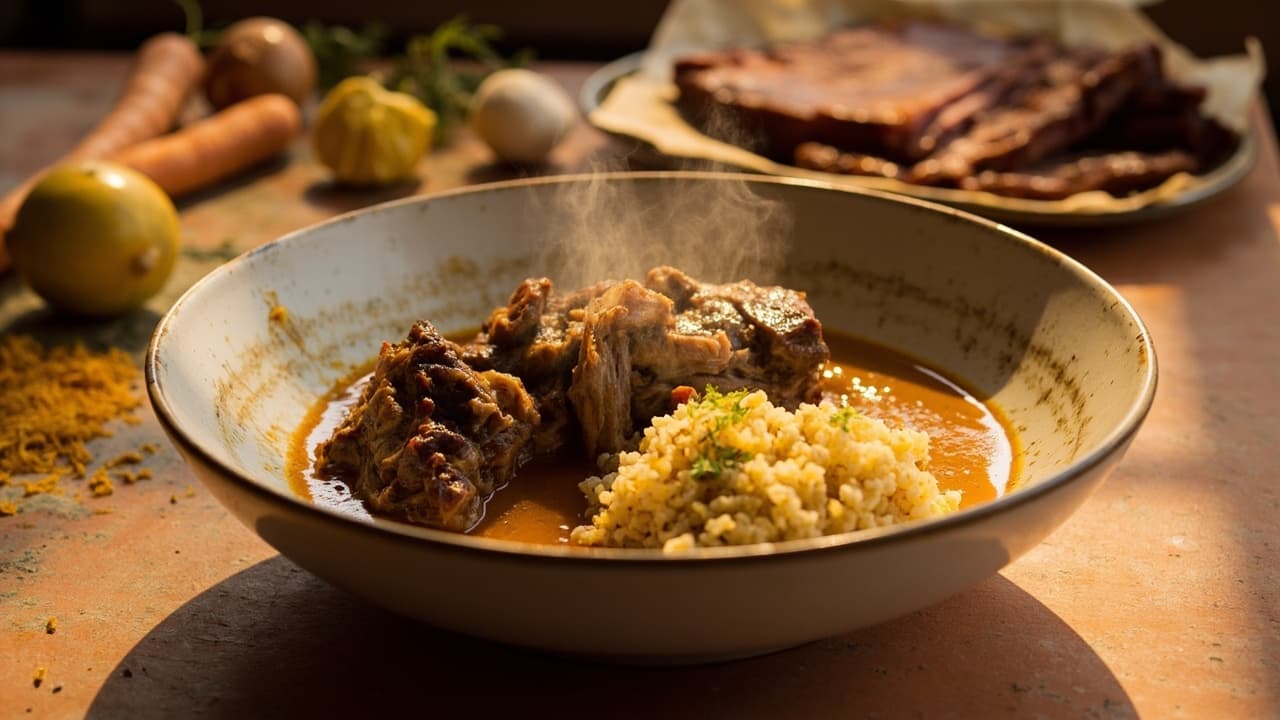
Slow-Cooked Beef Brisket with Saffron and Lemon
A tender, aromatic braised beef dish infused with saffron threads, bright lemon, and warming spices. The slow cooking transforms a humble cut into something magnificent—falling apart under the gentlest pressure and swimming in a honey-golden sauce that speaks of Moroccan tradition.
Prep
20 min
Cook
2h 30m
Rest
10 min
Total
3h
Method
Preparation
1
2
In a small bowl, combine the saffron threads with 2 tablespoons of warm water. Let bloom for 10 minutes until the water turns a brilliant gold—this is your saffron infusion.
Seasoning and Searing
3
Pat the beef steak dry with paper towels. In a small bowl, mix together salt, black pepper, cumin, cinnamon, turmeric, and ground ginger. Rub this spice blend generously over all sides of the beef.
4
Heat olive oil in a Dutch oven or heavy-bottomed pot over medium-high heat. When the oil shimmers, add the seasoned beef and sear for 4 minutes per side until deeply browned. Remove to a plate.
Building the Braise
5
6
7
Return the seared beef to the pot. The liquid should come halfway up the sides of the meat. Bring to a gentle simmer.
Slow Cooking
8
Finishing
10
Remove the beef to a cutting board. Using two forks, shred the meat into large pieces, discarding any excess fat. Remove and discard the lemon quarters.
11
Serving
13
Divide the saffron-braised beef among deep plates, spooning plenty of the glossy sauce over each portion. Serve alongside crusty bread or steamed couscous to capture every drop of that golden liquid.
A
Nutri-Score
Excellent balance
A–E · lower is better · score -2
Calories
779
per serving
High in protein · 53gLow sugar · 17g
Protein
53g
Carbs
35g
Fat
49g
Sat. fat
7g
Fiber
5g
Sugar
17g
Sodium
989mg
Gluten FreeDairy FreeHigh ProteinHeart HealthyLow Sodium AdaptableDiabetes FriendlyPaleoWhole30Balanced MacrosIron Rich
Nutri-Score is a general nutritional-balance guide, not medical or dietary advice.
E
Environmental impact
Very high impact
A–E · lower is better · includes estimates
kg CO2e
20
per serving
ECarbonCEU all-round· carbon sets the grade
Water
1.1m³
Land
391Pt
Runoff
0.3g P
beef steak drives 99% of this recipe’s estimated footprint.
Carbon from Poore & Nemecek 2018; water, land & runoff from Agribalyse — modelled averages for comparing recipes, not a measurement of your groceries.
Flavor Profile
8
Umami
5
Sweet
4
Salty
3
Sour
2
Bitter
3
Spicy
Textures
TenderSucculentSilkySoft
Aromas
FloralEarthyWarmCitrusSavorySpiced
Kitchen Equipment
Primary Tool
Dutch OvenDutch OvenChef KnifeCutting BoardMixing BowlsMeasuring SpoonsMeasuring CupsForkPaper TowelsAluminum Foil
Counter FootprintLarge
Safety & Storage
Cooking Temperature
Sear beef at medium-high heat until deeply browned (about 4 minutes per side). During slow cooking, maintain braise at a gentle simmer (180-200°F). Final internal temperature of beef should reach 145°F for medium doneness, or 160°F if preferred more done. Add vegetables in the last 45 minutes ensuring they soften completely.
Chicken broth used as braising liquid should be brought to a rolling boil (212°F/100°C) when first added to the pot, then reduced to a gentle simmer (180-200°F), ensuring any potential pathogens from commercial broth are destroyed before the extended braising period.
Cross Contamination
Use separate cutting boards for raw beef and vegetables. Wash all utensils, knives, and surfaces that contacted raw meat with hot soapy water. Never return sliced vegetables to the braise after tasting with a used spoon. Keep raw beef separate from other ingredients during preparation.
Storage
Cool braised beef and sauce within 2 hours of cooking. Refrigerate in airtight containers at 40°F or below. Consume within 3-4 days refrigerated, or freeze for up to 2-3 months at 0°F. Reheat frozen leftovers thoroughly to 165°F before serving.
Shelf Life
Saffron threads retain flavor for 3-4 years when stored in an airtight container away from light and heat. Honey remains safe indefinitely but may crystallize—restore by placing sealed jar in warm water. Use ingredients before expiration dates on chicken broth packaging.
High Risk Population
Elderly individuals, pregnant women, young children under 5, and immunocompromised persons should ensure beef reaches recommended internal temperature of 160°F. These groups are more susceptible to foodborne illness from undercooked meat or improper storage.
Handling
Pat beef dry before seasoning to ensure proper searing. When handling the Dutch oven lid during cooking, use oven mitts as steam will escape. Allow dish to rest 10 minutes before serving to allow juices to settle. Use two forks to shred beef, avoiding bare hand contact if concerned about contamination.
Allergen Warning
Verify all purchased ingredients, especially chicken broth, are free from allergens of concern. Some commercial broths contain hidden wheat, soy, celery, or milk derivatives. Consider preparing broth from scratch or using certified allergen-free brands when serving individuals with food allergies.
Pro Tips
Technique
Never skip blooming your saffron—those golden threads need just warm water and 10 patient minutes to release their full perfume into the braise. Rushing this step is the difference between a whisper of saffron and its glorious song.
Substitution
If preserved lemons are available, substitute the fresh quartered lemon for 2 tablespoons of finely minced preserved lemon rind—their briny, complex flavor is what true Moroccan cooking demands.
Equipment
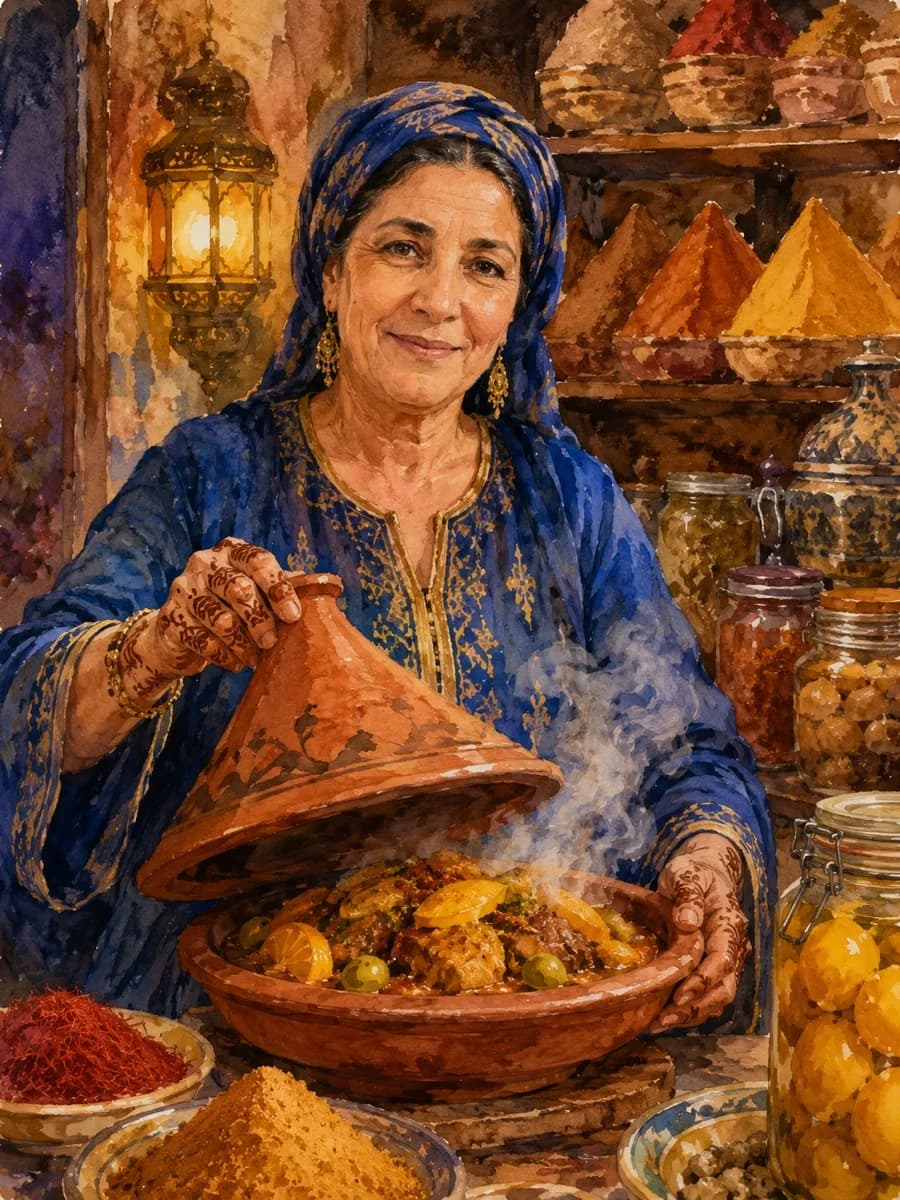
A Dutch oven works beautifully here, but if you have a traditional tagine, use it! The conical lid circulates steam back down onto the dish, creating impossibly tender meat.
Flavor Boost
Add a handful of dried apricots in the last 30 minutes of cooking—their natural sweetness melds with the honey and saffron to create that characteristic sweet-savory depth I love.
From the chef
A generous rub of cumin, cinnamon, turmeric, and ground ginger goes onto the beef before it ever sees heat — that layering is what builds the deep, aromatic foundation this braise depends on. Saffron threads bloom in warm water while the meat sears to a dark crust, then everything comes together in the pot: bloomed saffron, honey, quartered lemon, and enough broth to carry it all through two and a half hours of low, patient cooking. Carrots and potatoes go in during the final stretch and absorb the golden sauce beautifully. The meat surrenders completely; the braising liquid reduces to something glossy and rich. This is slow food, and it is worth every hour.
TagsSlow CookedBraisedBeefSaffronMoroccanOne PotAromaticLemonHoneySpice Rubbed
AllergensSulfitesGluten
Source: generated · June 10, 2026