 French
Medium · Hot
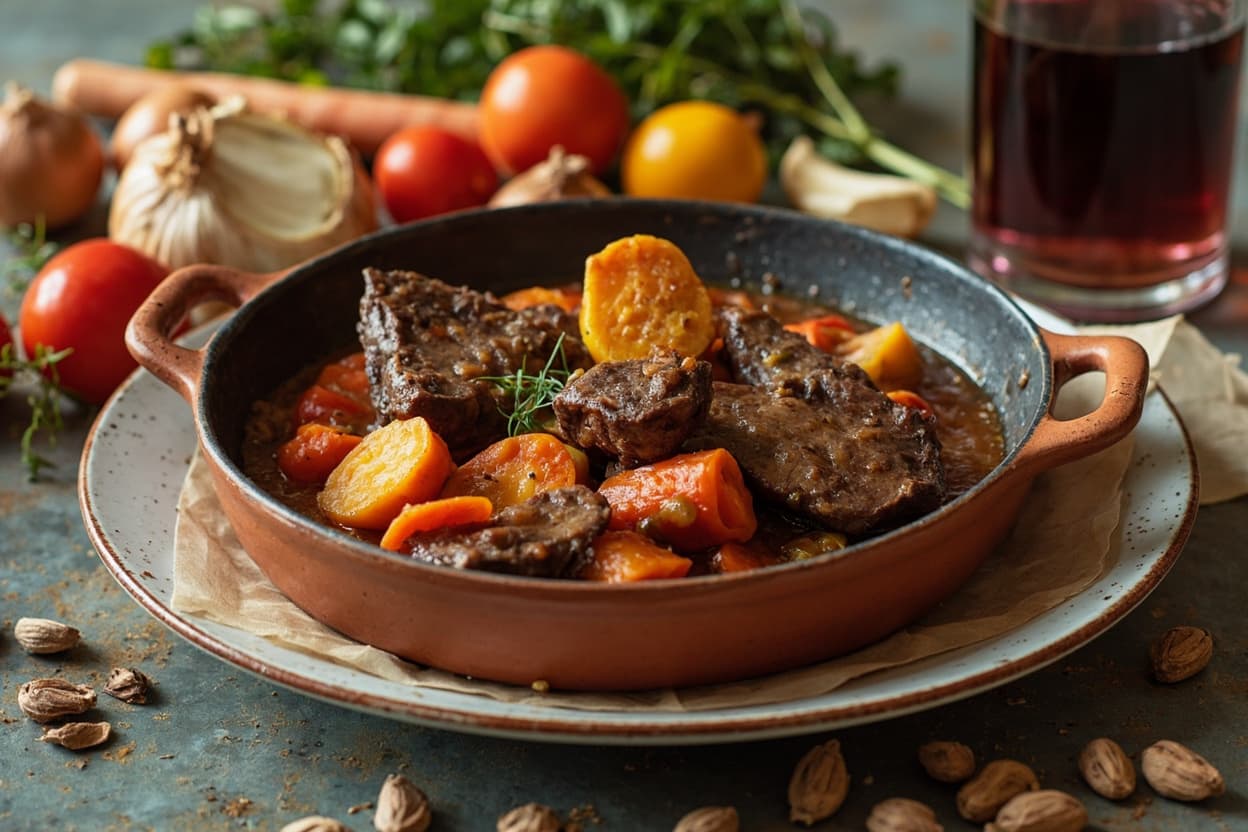
Provencal Daube of Beef and Carrots
Beef and carrot slow-cooked with rosemary, garlic, tomato, and onion until the broth turns deep and the vegetables almost dissolve into it — this is Provencal patience in a pot. There is nothing here to worry over, just trusted pantry staples doing exactly what generations of careful cooks have asked of them.
Prep
15 min
Cook
1h
Rest
5 min
Total
1h 20m
Method
Prep
1
Pat beef cubes dry with paper towels and season generously with 1 teaspoon salt and black pepper.
2
Dice the yellow onion. Slice carrots into 1/2-inch rounds. Mince the garlic.
3
Tie thyme and rosemary sprigs together with kitchen twine for easy removal.
Brown the Beef
4
In a large Dutch oven, heat olive oil over medium-high heat until shimmering.
5
Add beef cubes in a single layer, working in batches if needed. Brown on all sides, about 3-4 minutes per batch.
6
Transfer browned beef to a plate and set aside.
Build the Base
7
8
Add minced garlic and cook until fragrant, about 30 seconds.
9
Add sliced carrots and cook for 2 minutes more.
Braise
10
Pour in tomato sauce and stir to combine with the vegetables.
11
Return the browned beef to the pot, nestling the pieces into the sauce.
13
Cover with a tight-fitting lid and cook on low heat for 1 hour, stirring occasionally, until beef is fork-tender and carrots are soft.
B
Nutri-Score
Good balance
A–E · lower is better · score 0
Calories
625
per serving
High in protein · 45gLow sugar · 9g
Protein
45g
Carbs
17g
Fat
43g
Sat. fat
7g
Fiber
4g
Sugar
9g
Sodium
1198mg
Gluten FreeDairy FreeEgg FreeNut FreeSoy FreeAllvegan IngredientsLow AllergenHeart HealthyDiabetes FriendlyLow Sodium OptionAnti InflammatoryWeight ManagementHigh ProteinBalanced MealLow Added Sugar
Nutri-Score is a general nutritional-balance guide, not medical or dietary advice.
E
Environmental impact
Very high impact
A–E · lower is better · includes estimates
kg CO2e
17
per serving
ECarbonBEU all-round· carbon sets the grade
Water
0.9m³
Land
334Pt
Runoff
0.2g P
Beef steak, cubed 1-inch drives 99% of this recipe’s estimated footprint.
Carbon from Poore & Nemecek 2018; water, land & runoff from Agribalyse — modelled averages for comparing recipes, not a measurement of your groceries.
Flavor Profile
7
Umami
4
Sweet
5
Salty
3
Sour
2
Bitter
3
Spicy
Textures
TenderFork TenderSaucySoft
Aromas
HerbalEarthyGarlickySavoryTomato
Kitchen Equipment
Primary Tool
Dutch OvenCounter FootprintLarge
Safety & Storage
Cooking Temperature
Ensure beef reaches minimum internal temperature of 145°F for medium-rare, or 160°F for well-done, when testing with a calibrated meat thermometer during the braising process.
Cross Contamination
Use separate cutting boards and utensils for raw beef. Wash all surfaces, knives, and boards with hot soapy water after handling raw meat to prevent cross-contamination with vegetables.
Handling
Pat beef dry thoroughly before seasoning and browning. Excess moisture prevents proper Maillard reaction and browning, affecting both flavor development and food safety.
Storage
Cool daube to room temperature within 2 hours of cooking, then refrigerate in airtight containers. Consume within 3-4 days or freeze for up to 3 months.
Allergen Warning
While this recipe is formulated without common allergens, always verify ingredient labels—particularly for tomato sauce, which may contain added thickeners, preservatives, or traces from processing facilities.
While this recipe is formulated without common allergens, always verify ingredient labels—particularly for tomato sauce, which may contain added thickeners, preservatives, traces from processing facilities, or allergens such as celery, fish, or soy commonly used as bases or additives in commercial sauces.
Shelf Life
Herb bundles should be removed after cooking as prolonged steeping can produce bitter flavors. Fresh herbs used as garnishes should be added just before serving and not reused from the cooking liquid.
Pro Tips
Technique
Let the beef come to room temperature for 20 minutes before searing — cold meat won't brown properly, and that caramelized crust is where all the depth lives.
Substitution
No white wine in this version, but if you're not allergen-sensitive to it, you can swap 1 cup of the water for a dry white wine and add a splash more for deglazing after browning the beef.
Make Ahead
Like many braises, this daube tastes even better the next day — the flavors deepen and the sauce thickens beautifully overnight.
From the chef
This daube is built on patience and a short pantry list — beef browned deep in olive oil, then slow-cooked with carrot, onion, garlic, tomato, and a bundle of fresh thyme and rosemary until the broth turns rich and the vegetables nearly dissolve into it. There is no wine, no hidden dairy, and nothing you cannot verify at a glance: just trusted ingredients doing exactly what generations of Provencal cooks have asked of them. It rewards an afternoon on the stovetop with the kind of tender, fragrant braise that makes the whole house feel settled.
TagsFrench CuisineProvencalBraisedBeefOne PotComfort FoodAllergen FreeHearty
Source: generated · May 30, 2026