 Mexican Inspired
Medium · Hot
Dark Chocolate and Cayenne Glazed Duck Breast
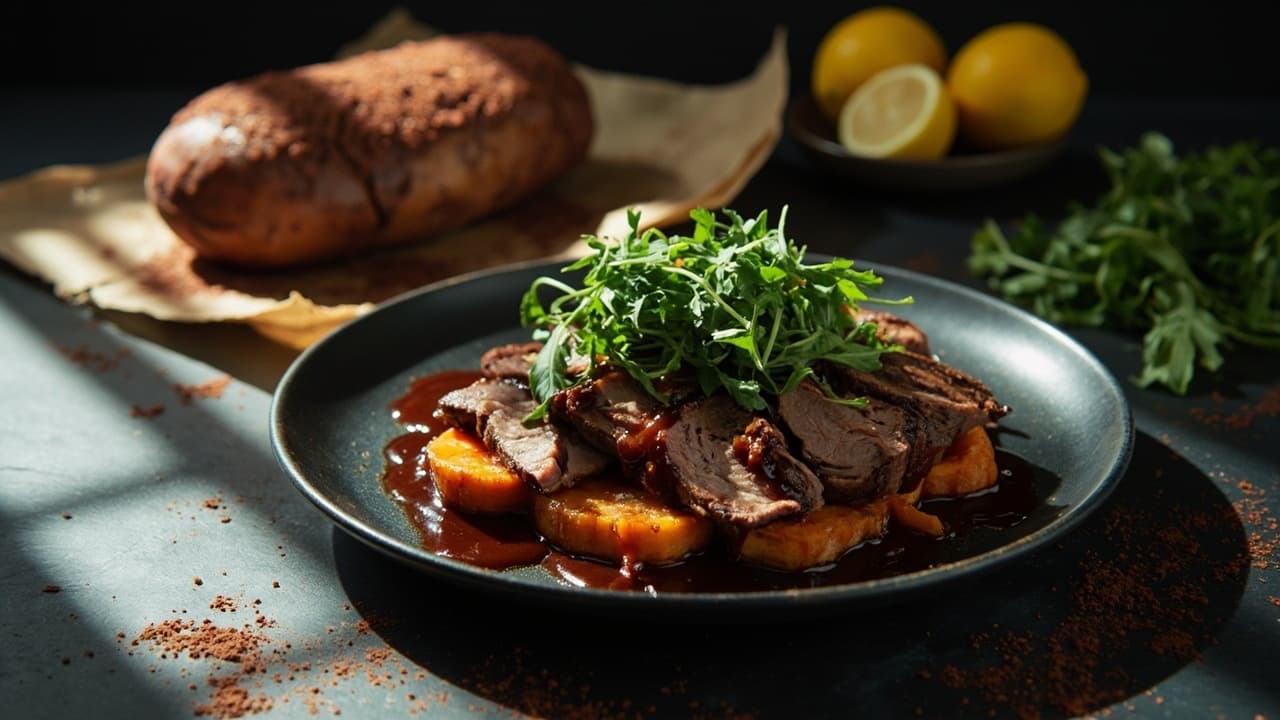
Rich duck breast lacquered with a bittersweet chocolate and cayenne glaze that walks the line between sweet and savory, served over caramelized sweet potato and peppery arugula. This is pleasure refusing to apologize for itself.

Prep
15 min
Cook
35 min
Rest
8 min
Total
58 min
Method
Before You Start
1
Remove duck breasts from refrigerator 30 minutes before cooking to bring to room temperature.
2
In a small bowl, whisk together cocoa powder, cayenne, honey, and soy sauce until smooth. Set aside.
Prepare the Duck
3
Using a sharp knife, score the skin of each duck breast in a crosshatch pattern, cutting through the fat but not into the meat. Season generously on both sides with salt and black pepper.
Sear to Perfection
4
Place duck breasts skin-side down in a cold cast iron skillet. Turn heat to medium-high and cook undisturbed for 10-12 minutes, allowing the fat to render slowly and the skin to crisp deeply.
Glaze and Roast
6
Brush the chocolate-cayenne glaze generously over the skin side of each duck breast.
7
Transfer the skillet to a 200°C (400°F) oven and roast for 5-7 minutes for medium-rare (internal temperature 57°C/135°F). Brush with more glaze halfway through. NOTE: Duck is poultry and can be safely consumed at medium-rare temperatures when properly seared first. For high-risk individuals, cook to 74°C (165°F).
Build the Sauce
9
Pour off excess fat from the skillet, leaving the drippings. Place skillet over medium-high heat and bring drippings to a boil, cooking for 2 minutes to ensure safe temperature before adding the remaining chocolate glaze, scraping up any browned bits.
10
Swirl in remaining butter and cook for 2 minutes until the sauce is glossy and slightly reduced. Remove from heat.
Sweet Potato
11
While duck rests, toss sweet potato cubes with olive oil and salt. Spread on a baking sheet and roast at 220°C (425°F) for 25-30 minutes, turning once, until caramelized and tender.
Arugula Salad
Plate Like You Mean It
13
Slice duck breasts on the bias. Fan slices over caramelized sweet potato. Spoon chocolate-cayenne sauce over the duck. Crown with a tangle of lemony arugula. This is dinner refusing to be boring.
D
Nutri-Score
Needs balance
A–E · lower is better · score 12
Calories
691
per serving
High in saturated fat · 24gSource of protein · 24g
Protein
24g
Carbs
44g
Fat
49g
Sat. fat
24g
Fiber
6g
Sugar
24g
Sodium
1531mg
Gluten FreeMeat BasedGrain FreeLow FiberHigh SodiumHigh ProteinBalanced MacroMuscle Recovery
Nutri-Score is a general nutritional-balance guide, not medical or dietary advice.
C
Environmental impact
Moderate impact
A–E · lower is better · includes estimates
kg CO2e
1.5
per serving
CCarbonAEU all-round· carbon sets the grade
Water
0.9m³
Land
63Pt
Runoff
0.2g P
Duck breast drives 68% of this recipe’s estimated footprint.
Carbon from Poore & Nemecek 2018; water, land & runoff from Agribalyse — modelled averages for comparing recipes, not a measurement of your groceries.
Flavor Profile
7
Umami
5
Sweet
6
Salty
2
Sour
3
Bitter
5
Spicy
Textures
CrispyTenderCaramelizedGlossy
Aromas
RichSmokySpicyCitrusPeppery
Kitchen Equipment
Primary Tool
Cast Iron SkilletCast Iron SkilletOvenBaking SheetChef KnifeCutting BoardSmall BowlWhiskPastry BrushAluminum FoilPlastic Wrap
Counter FootprintMedium
Safety & Storage
Cooking Temperature
Duck breast must reach internal temperature of 57°C (135°F) for medium-rare. Use a calibrated meat thermometer inserted into the thickest part of the breast away from bone to verify doneness.
Searing duck skin-side down for 10-12 minutes at medium-high heat renders fat effectively. Ensure pan is properly preheated before searing.
Cross Contamination
Raw duck breast juice can contaminate ready-to-eat components like the arugula salad and glaze. Use separate cutting boards, utensils, and work surfaces when handling raw poultry versus finished elements.
The same cast iron skillet is used for searing duck and building the sauce. Thoroughly clean and sanitize between uses, or ensure the sauce reaches safe serving temperature after contact with raw drippings.
Handling
Score duck breast skin carefully, cutting through fat but not into meat. Avoid pressing or piercing the meat during cooking to retain juices.
Storage
Leftover duck breast must be refrigerated within 2 hours of cooking at 4°C (40°F) or below. Consume within 3-4 days. Reheat to 74°C (165°F) before serving.
Allergen Warning
Soy sauce contains both soy and wheat allergens. Cross-contact with other ingredients during storage or preparation is possible. Verify all component ingredients are allergen-free if serving to sensitive individuals.
High Risk Population
This dish contains undercooked poultry (medium-rare internal temp of 57°C/135°F). Pregnant individuals, young children, elderly, and immunocompromised persons should consume duck cooked to 74°C (165°F) minimum.
Pro Tips
Technique
Start the duck in a cold pan, skin-side down. I know it feels wrong, but this slow heat-up is what renders all that glorious fat and gives you skin that crackles like you actually know what you're doing.
Substitution
No duck breasts? Thick pork chops or a seared pork tenderloin will carry this glaze beautifully. Just adjust your internal temp—pork wants 63°C/145°F. The chocolate-cayenne balance stays the same because that harmony is non-negotiable.
From the chef
I built this duck to prove a point: dessert doesn't have to wait until the end of the meal. The chocolate-cayenne glaze walks that razor edge I live for—bitter meets sweet meets heat, all anchored by salty soy and butter. The duck skin renders slowly until it shatters, the meat stays pink and unapologetic, and suddenly you've eaten dinner that tastes like midnight. This is the plate I pull out when someone says dinner should be sensible. I disagree.
TagsChocolateSpicySweet SaltyDuckFusionSpecial OccasionPan SearedRoasted
AllergensMilkSoyWheat
Source: generated · June 10, 2026