 Moroccan
Medium · Hot
Sweet Potato and Chickpea Tagine
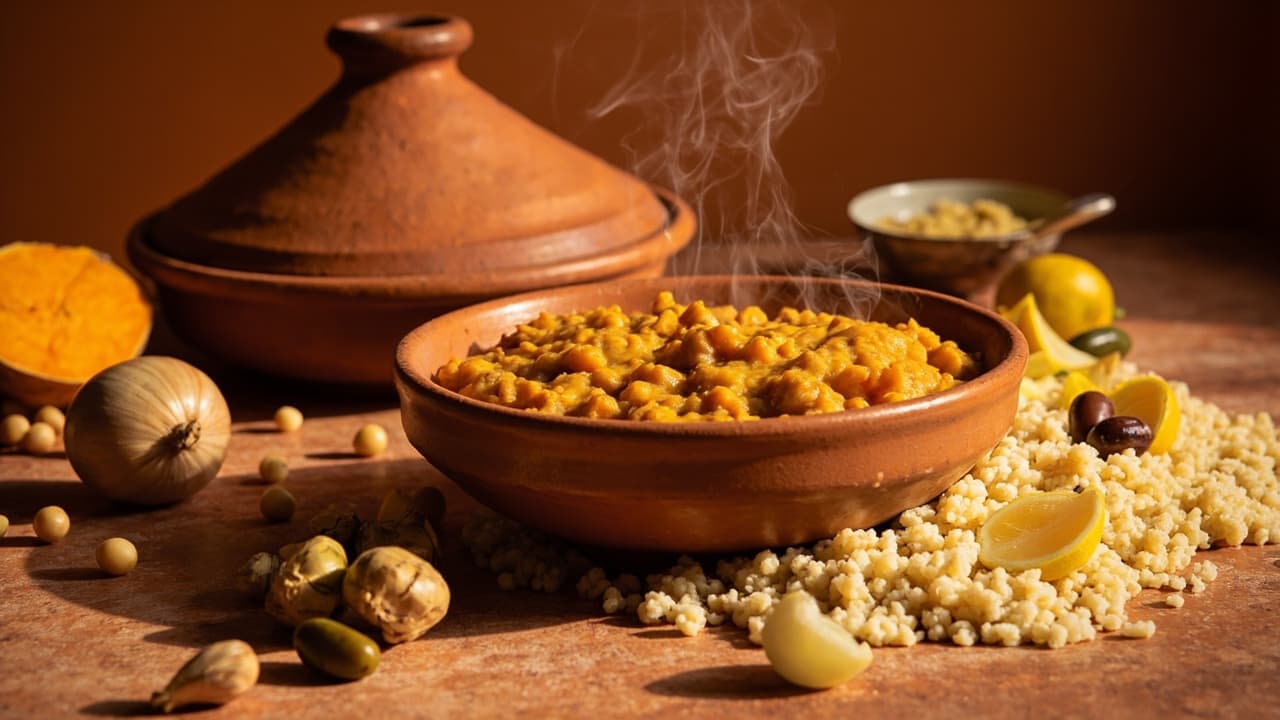
A fragrant Moroccan tagine featuring tender sweet potatoes and hearty chickpeas simmered in a saffron-honey sauce with warm spices. This plant-forward dish embodies the beautiful sweet-savory balance that defines authentic Moroccan cooking.

Prep
15 min
Cook
30 min
Rest
5 min
Total
50 min
Method
Bloom the Spices
1
Warm the olive oil in your tagine or Dutch oven over medium heat. Add the cumin, cinnamon, and turmeric, stirring gently for 60 seconds until the spices become fragrant and their oils are released—this is the soul of your tagine.
Build the Aromatic Base
2
Stir in the minced garlic and grated fresh ginger. Cook for another 2 minutes until fragrant.
Add Vegetables and Liquids
3
Pour in the chicken broth and add the saffron threads. Stir in the salt and black pepper. The saffron will bloom into a beautiful golden hue as it simmers.
Simmer to Perfection
4
Bring everything to a gentle boil, then reduce the heat to low. Cover and simmer for 25-30 minutes, until the sweet potato is completely tender and the sauce has thickened beautifully.
A
Nutri-Score
Excellent balance
A–E · lower is better · score -8
Calories
614
per serving
Source of protein · 23gSource of fibre · 15gLow saturated fat · 2g
Protein
23g
Carbs
98g
Fat
17g
Sat. fat
2g
Fiber
15g
Sugar
18g
Sodium
1102mg
Heart HealthyDiabetes FriendlyAnti InflammatoryHigh FiberPlant Protein
Nutri-Score is a general nutritional-balance guide, not medical or dietary advice.
B
Environmental impact
Low impact
A–E · lower is better · includes estimates
kg CO2e
0.5
per serving
BCarbonAEU all-round· carbon sets the grade
Water
0.7m³
Land
20Pt
Runoff
0.05g P
Chickpeas drives 38% of this recipe’s estimated footprint.
Carbon from Poore & Nemecek 2018; water, land & runoff from Agribalyse — modelled averages for comparing recipes, not a measurement of your groceries.
Flavor Profile
6
Umami
5
Sweet
4
Salty
2
Sour
1
Bitter
3
Spicy
Textures
TenderCreamyHearty
Aromas
SpicedEarthyFloralCitrusWarm
Kitchen Equipment
Primary Tool
TagineCounter FootprintMedium
Safety & Storage
Cross Contamination
Clean all preparation surfaces and utensils thoroughly before use. If cooking for individuals with legume allergies, be aware that chickpeas may have been processed in facilities that also handle tree nuts or peanuts.
Storage
Store saffron threads in an airtight container away from light and heat to preserve potency. Honey should be stored in a cool, dry place and will crystallize naturally over time—place the sealed jar in warm water to return it to liquid form.
Cooking Temperature
Ensure oil is properly heated before adding spices to bloom them—watch for the oils to release and fragrances to become aromatic, approximately 60 seconds over medium heat.
Handling
Use clean, dry utensils when handling saffron threads to prevent moisture contamination. Saffron is expensive and its flavor compounds degrade with improper storage.
Shelf Life
Leftover tagine should be refrigerated within 2 hours of cooking and consumed within 3-4 days. Reheat to 165°F throughout before serving.
Pro Tips
Technique
The moment you bloom your spices in warm olive oil — that 60 seconds where the cumin and cinnamon come alive — this is the soul of your entire tagine. Do not rush it, do not walk away. Watch the oils release and breathe in that fragrance. This is where Moroccan cooking begins.
Equipment
A traditional clay tagine is beautiful, but a heavy Dutch oven will give you identical results. The secret is low heat and a tight lid — we are Steaming gently, not boiling vigorously. If using a tagine, place a heat diffuser beneath it to protect the clay from thermal shock.
Flavor Boost
During the last 5 minutes of cooking, add a quarter-preserved lemon, rinsed and minced fine. The fermented citrus brightness against the honey-saffron sweetness is the hallmark of authentic Moroccan balance. My mother would insist upon it.
Substitution
If good saffron is difficult to find, use a generous pinch of saffron threads dissolved in warm water — never substitute ground turmeric as a color trick, my friends. The flavor of true saffron is irreplaceable, and your tagine will know the difference.
From the chef
Sweet potato is the right vegetable for a tagine: it holds its shape through a long simmer and drinks up spiced broth the way nothing else does. Here, saffron blooms in warm water until the liquid turns a luminous gold, then joins cumin, cinnamon, turmeric, and fresh ginger in the pot. Honey arrives early so its sweetness has time to mellow into the sauce rather than sit on top of it. The chickpeas bring heft and protein, and by the time everything is fork-tender the tagine has thickened naturally into something fragrant and deeply satisfying. Let it rest for five minutes before serving — the flavors come into full focus as it settles.
TagsSaffronSweet Savory
Source: generated · June 10, 2026