 Caribbean
Medium · Hot
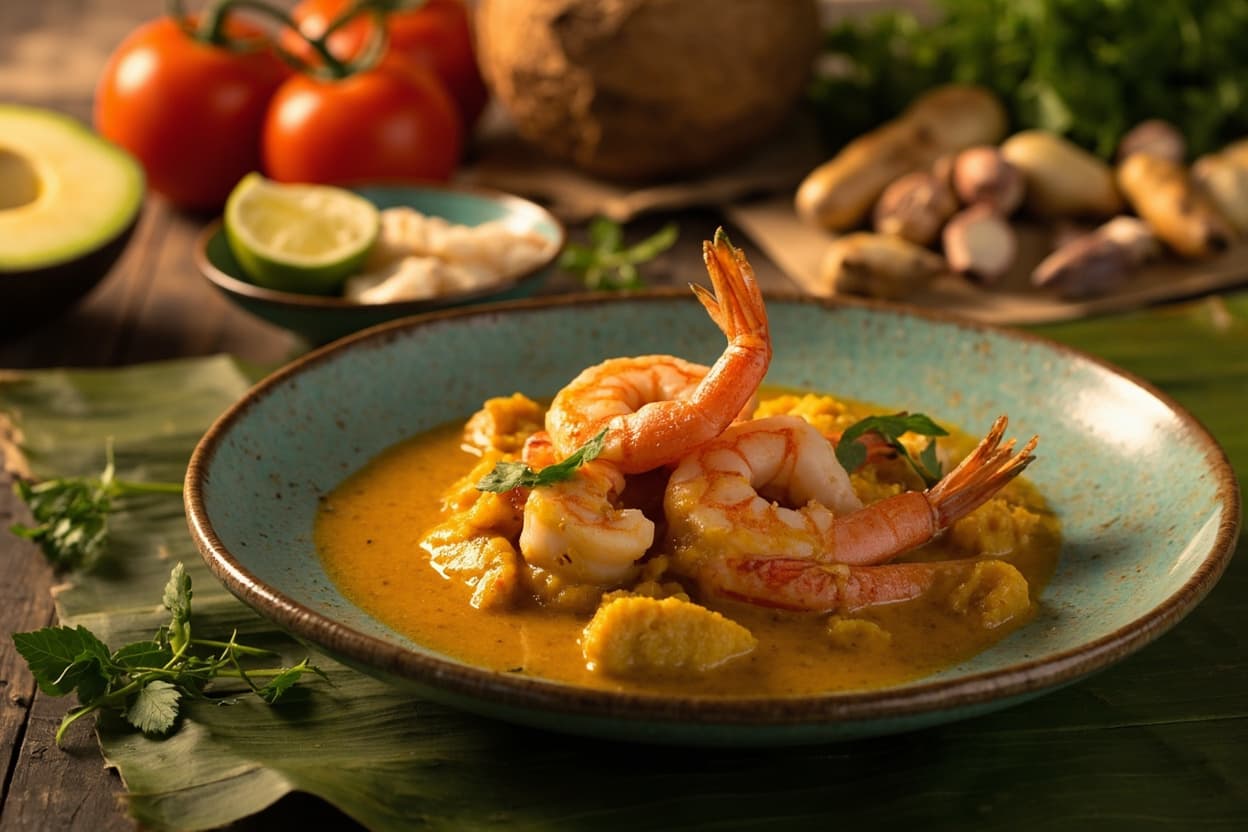
Coconut Shrimp Curry with Lime
Ginger and turmeric hit coconut oil first and turn it golden before the shrimp go in — they cook fast, staying plump and sweet inside a sauce that's warm with spice and rich with coconut. Lime goes in at the very end, its acidity lifting the whole curry and keeping it from getting too heavy. Quick enough for a weeknight, generous enough for company.

Prep
15 min
Cook
25 min
Rest
5 min
Total
45 min
Method
Prep the Shrimp
1
Rinse shrimp under cold water and pat completely dry with paper towels. Season with salt and black pepper. Set aside.
Build the Curry Base
2
Heat coconut oil in a large Dutch oven or deep skillet over medium heat until melted and shimmering.
3
Add diced yellow onion and cook, stirring occasionally, until softened and translucent, about 5 minutes.
5
6
Add diced tomatoes and cook down for 3-4 minutes, mashing them slightly to release their juices and create a thick base.
Cook the Shrimp
10
11
Remove from heat and squeeze in the juice of both limes. Stir gently to incorporate the bright citrus.
Serve
13
Garnish generously with fresh cilantro and serve with lime wedges on the side.
B
Nutri-Score
Good balance
A–E · lower is better · score 0
Calories
413
per serving
High in protein · 47gLow sugar · 12g
Protein
47g
Carbs
23g
Fat
17g
Sat. fat
14g
Fiber
4g
Sugar
12g
Sodium
1553mg
Gluten FreePescatarianDairy InclusiveHeart HealthyLow CarbHigh Protein
Nutri-Score is a general nutritional-balance guide, not medical or dietary advice.
E
Environmental impact
Very high impact
A–E · lower is better · includes estimates
kg CO2e
5.2
per serving
ECarbonCEU all-round· carbon sets the grade
Water
31m³
Land
62Pt
Runoff
1.5g P
Shrimp drives 88% of this recipe’s estimated footprint.
Carbon from Poore & Nemecek 2018; water, land & runoff from Agribalyse — modelled averages for comparing recipes, not a measurement of your groceries.
Flavor Profile
7
Umami
3
Sweet
5
Salty
4
Sour
2
Bitter
5
Spicy
Textures
TenderSaucySilky
Aromas
EarthyCitrusTropicalSpicedAromatic
Kitchen Equipment
Primary Tool
Dutch OvenCounter FootprintMedium
Techniques
Safety & Storage
Cooking Temperature
Cook shrimp in simmering curry until pink and opaque throughout, reaching minimum internal temperature of 145°F (63°C). Use a food thermometer to verify doneness.
Maintain curry at a gentle simmer during cooking. Do not rush cooking by using high heat as this can lead to uneven cooking of shrimp.
Cross Contamination
Rinse shrimp under cold water and pat completely dry. Use separate cutting boards and utensils for raw shrimp and other ingredients to prevent cross-contamination.
Wash hands thoroughly with soap and water after handling raw shrimp before touching other ingredients or cooking equipment.
Storage
Refrigerate leftover coconut shrimp curry within 2 hours of cooking. Store in airtight containers at 40°F (4°C) or below.
Shelf Life
Consume refrigerated leftover curry within 2-3 days. For longer storage, freeze for up to 1 month and thaw safely in refrigerator before reheating.
Handling
Purchase fresh shrimp from reputable sources and use within 1-2 days. Check for any shell fragments or debris in shrimp before cooking.
High Risk Population
This dish contains shellfish and milk allergens. Individuals with severe shellfish allergies should avoid entirely. Those with lactose intolerance should note the milk content and adjust accordingly.
Allergen Warning
Use caution if coconut sensitivity exists—coconut is technically not classified as a tree nut allergen by FDA, but some individuals with tree nut allergies may have reactions.
Pro Tips
Technique
When you bloom those spices in the hot oil, do not rush that 30-second pause. This is where the deep, warm flavors are born — the foundation of every proper island curry.
Substitution
No fresh thyme? Dried works in a pinch, but use a little less since the flavor is more concentrated. And if you want extra island heat, a scotch bonnet sliced into the curry base will change everything.
From the chef
Growing up in Kingston, my grandmother always said a good curry was measured by how far the aroma traveled — and this one would have had the whole yard gathering before the shrimp even hit the pan. I have taken that coconut milk base and given it the Island Smoker touch with warm spices and fresh thyme, letting the lime cut through all that richness like a sea breeze.
TagsThyme
AllergensMilkShellfish
Source: generated · May 30, 2026