 Moroccan
Medium · Hot
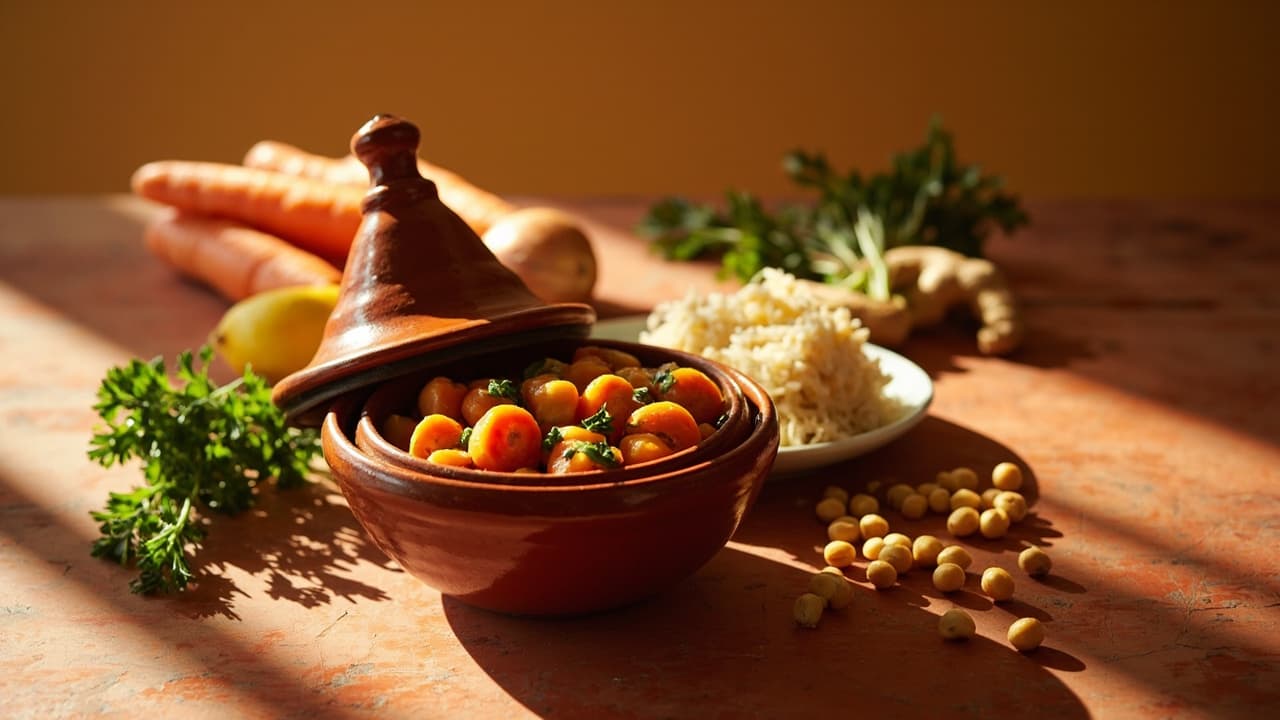
Chickpea and Carrot Tagine with Honey-Lemon Glaze
A fragrant Moroccan tagine where tender chickpeas and sweet carrots meld with warm spices, finished with a bright honey-lemon glaze. Fatima would approve of this patient, aromatic approach to slow food.

Prep
15 min
Cook
30 min
Rest
5 min
Total
50 min
Method
Prepare the Saffron
1
Steep the saffron threads in 2 tablespoons of warm water for 5 minutes to release their color and aroma. Set aside.
Bloom the Spices
2
Sprinkle in the cumin, cinnamon, turmeric, salt, and black pepper. Stir constantly for 30 seconds to bloom the spices.
Build the Tagine
Prepare the Honey-Lemon Glaze
Finish and Glaze
5
Replace the lid and cook for another 5 minutes on very low heat to let the glaze adhere to the vegetables and chickpeas.
Serve
6
Scatter fresh parsley over the top and serve directly from the tagine. Pairs beautifully with warm couscous or crusty bread.
A
Nutri-Score
Excellent balance
A–E · lower is better · score -9
Calories
1025
per serving
Source of protein · 45gHigh in fibre · 27gLow sugar · 21gLow saturated fat · 3g
Protein
45g
Carbs
167g
Fat
24g
Sat. fat
3g
Fiber
27g
Sugar
21g
Sodium
1133mg
Gluten FreeDairy FreeHeart HealthyDiabetes FriendlyAnti InflammatoryHigh FiberPlant Based Protein
Nutri-Score is a general nutritional-balance guide, not medical or dietary advice.
B
Environmental impact
Low impact
A–E · lower is better · includes estimates
kg CO2e
0.6
per serving
BCarbonAEU all-round· carbon sets the grade
Water
1.0m³
Land
28Pt
Runoff
0.07g P
chickpeas, drained and rinsed drives 67% of this recipe’s estimated footprint.
Carbon from Poore & Nemecek 2018; water, land & runoff from Agribalyse — modelled averages for comparing recipes, not a measurement of your groceries.
Flavor Profile
7
Umami
5
Sweet
4
Salty
4
Sour
2
Bitter
3
Spicy
Textures
TenderSoftSaucy
Aromas
Warm SpiceHerbalCitrusEarthy
Kitchen Equipment
Primary Tool
TagineTagineDutch OvenMortar And PestleSteamerChef KnifeCutting BoardGraterFine Mesh StrainerMixing BowlLiquid Measuring CupDry Measuring SpoonsParchment PaperAluminum Foil
Counter FootprintMedium
Techniques
Safety & Storage
Cooking Temperature
Maintain gentle simmer (185-200°F) throughout cooking. Do not rush - low and slow melds the spices properly.
Cross Contamination
If using store-bought chicken broth, verify it is allergen-free. Check labels for hidden gluten, celery, or sulfites. Use separate utensils and cutting boards if cooking for allergen-sensitive individuals.
Storage
Refrigerate leftovers within 2 hours in airtight containers. Consume within 3-4 days. Reheat to 165°F before serving.
Handling
Use caution when handling the tagine lid - steam can cause burns. Allow dish to rest 5 minutes before serving to allow glaze to set.
High Risk Population
For immunocompromised individuals, ensure chicken broth is fully heated and fresh. Discard any leftovers that have been at room temperature for more than 2 hours.
Shelf Life
The honey-lemon glaze has natural preservative properties due to high acidity and sugar content, but the dish contains perishable ingredients (chickpeas, vegetables) and should not be stored at room temperature.
Allergen Warning
Honey is a known allergen for some individuals. While not in the top 9 major allergens, it can cause reactions in those with bee product allergies. Consider adding an allergen note about honey if serving to individuals with unknown allergy profiles.
Pro Tips
Technique
Never rush the saffron blooming—steep those threads in warm water for at least 5 minutes until the liquid turns a deep amber gold. The saffron is the soul of this tagine, and its fragrance must be fully awakened before it meets the other spices.
Substitution
If preserved lemons are available, add two teaspoons of the rind finely chopped when you add the honey-lemon glaze—it brings an ancient depth that fresh lemon zest alone cannot achieve.
Storage
This tagine tastes even better the next day as the spices continue to marry overnight. Store covered in the refrigerator for up to four days, and the flavors will only deepen.
From the chef
This tagine earns its depth honestly. Saffron threads steep until the water turns amber, carrots soften into something almost buttery, and chickpeas absorb every layer of cumin, cinnamon, and turmeric as the pot simmers low and slow. The honey-lemon glaze is added at the end, not stirred in early — it needs the heat of the finished dish to cling and brighten, threading sweet citrus through the warm spices rather than disappearing into them. Let it rest a few minutes before serving; the flavors settle and the glaze pulls everything together.
TagsTagineVegetarianAromaticSaffronOne PotGluten FreeHealthySlow Cooked
AllergensCelerySulfitesGluten
Source: generated · June 10, 2026