 Catalan
Medium · Hot
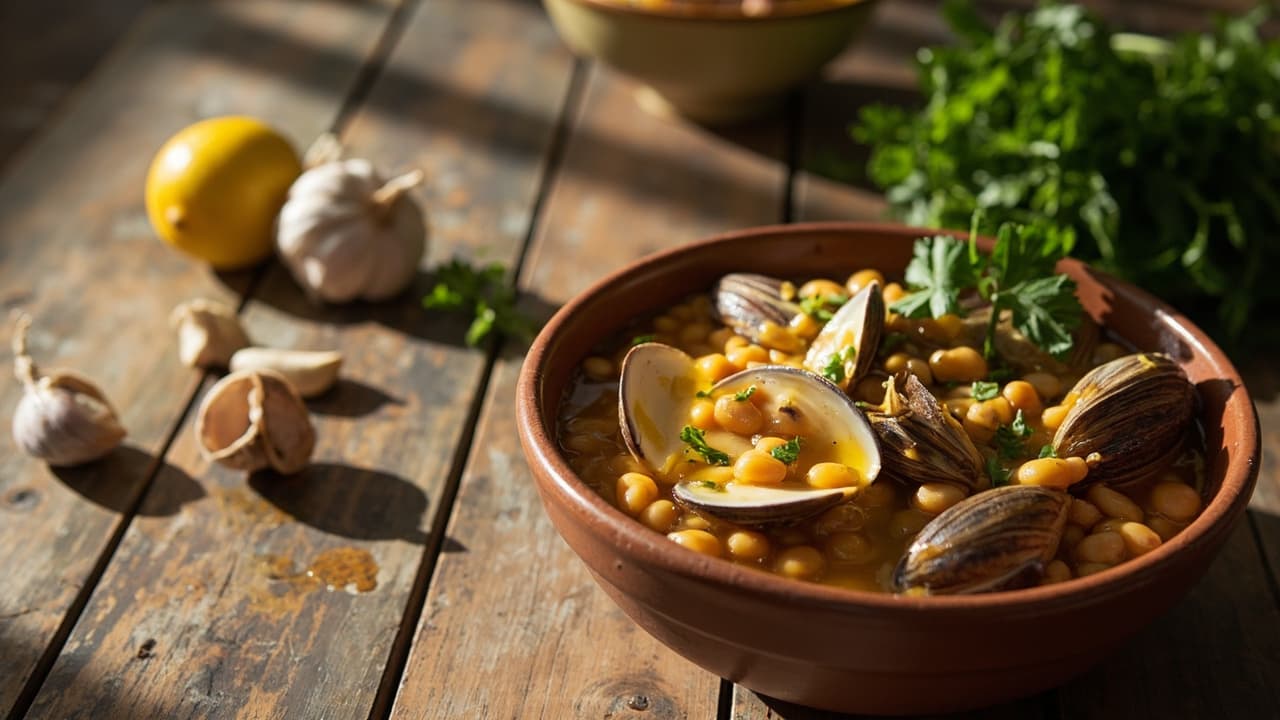
Pinto Bean and Clam Tapa with Saffron Broth
A coastal tapa where tender pinto beans absorb a saffron-stained broth as clams open atop them, finished with a rough almond-garlic picada stirred through at the last moment. Briny, deeply savory, and quietly reverent of the sea.
Prep
20 min
Cook
40 min
Total
1h
Method
1
Dice the yellow onion finely. Grate the tomatoes on the large holes of a box grater, discarding the skin. Crush 4 garlic cloves with the flat of your knife and peel them.
2
Warm 4 tablespoons of olive oil in a heavy Dutch oven over medium heat. Add the diced onion and a pinch of salt. Cook, stirring occasionally, for 8-10 minutes until the onion is soft and translucent but not browned.
3
4
Rinse the pinto beans and pick through them to remove any stones. Peel the potatoes and cut them into 2-centimeter chunks.
5
Stir the pinto beans and potato chunks into the sofregit. Pour in 200 milliliters of white wine and let it bubble for 1 minute to cook off the alcohol.
6
7
While the beans simmer, bloom the saffron: crumble ½ teaspoon of saffron threads into a small bowl and add 3 tablespoons of warm water. Let steep for 5 minutes until the water turns a deep amber-gold.
8
Stir the bloomed saffron water into the bean pot. Season with an additional ½ teaspoon of salt and ¼ teaspoon of black pepper. Taste the broth—it should be deeply savory and fragrant with saffron.
9
Nestle the scrubbed clams into the top of the bean stew, pressing them gently into the broth so they are half-submerged. Cover the pot with a tight-fitting lid. Cook on medium heat for 4-5 minutes, until all the clams have opened. Shake the pot once halfway through. Discard any clams that remain closed after cooking.
10
While the clams cook, toast the almonds in a dry skillet over medium heat for 3-4 minutes until golden and fragrant. Watch carefully so they do not burn. Transfer to a mortar.
11
12
Remove the pot from heat. Stir the rough picada into the stew gently, taking care not to break the potatoes or crush the clams. The broth will thicken slightly and become glossy.
A
Nutri-Score
Excellent balance
A–E · lower is better · score -6
Calories
816
per serving
High in protein · 42gSource of fibre · 21gLow sugar · 6gLow saturated fat · 4g
Protein
42g
Carbs
90g
Fat
29g
Sat. fat
4g
Fiber
21g
Sugar
6g
Sodium
1453mg
Gluten FreePescatarianHeart HealthyHypertension ConsciousHigh FiberHigh Protein
Nutri-Score is a general nutritional-balance guide, not medical or dietary advice.
Grade pending
Environmental impact
Estimated footprint
Grade pending · 85% ingredient coverage
kg CO2e
≥0.6
per serving
pinto-beans drives 29% of this recipe’s estimated footprint.
Carbon from Poore & Nemecek 2018; water, land & runoff from Agribalyse — modelled averages for comparing recipes, not a measurement of your groceries.
Flavor Profile
7
Umami
4
Sweet
6
Salty
3
Sour
1
Bitter
2
Spicy
Textures
SaucySmoothTender
Aromas
FloralHerbalMarineNutty
Kitchen Equipment
Primary Tool
Dutch OvenSafety & Storage
High Risk Population
Clams must be fully cooked until they open. Discard any clams that remain closed after cooking. Elderly, pregnant, or immunocompromised individuals should ensure clams are sourced from reputable suppliers and cooked to internal temperature of 145°F.
Cooking Temperature
Clams cook in their own steam at medium heat for 4-5 minutes. Ensure clams reach proper internal temperature and verify all have opened before serving. Bean stew should simmer gently throughout.
Cross Contamination
Keep raw clams separate from other ingredients during prep. Use separate cutting boards and utensils for raw shellfish. Wash hands thoroughly after handling raw clams before touching other ingredients.
Handling
Scrub clams thoroughly under cold running water before cooking. Remove any dead or damaged clams. Check clams for foul odor before use - fresh clams should smell briny like the sea.
Toast almonds in dry skillet over medium heat for 3-4 minutes, watching carefully to prevent burning. Burnt almonds can affect flavor and create smoke hazards.
Storage
Refrigerate leftovers within 2 hours of cooking. Store bean-clam stew in airtight container. Consume within 2 days. Reheat thoroughly until steaming hot throughout before serving.
Allergen Warning
Contains almonds (tree-nuts) and clams (mollusks). Verify sulfite sensitivity - white wine contains sulfites as a preservative. Stir picada gently to distribute allergens evenly throughout dish.
Pro Tips
Technique
The sofregit is not finished until the oil separates from the tomato and you see it pooling around the edges—this is when the sweetness concentrates and the base becomes something worth building upon.
Substitution
If you cannot find fresh clams, mussels work beautifully here and offer that same briny pop against the beans. Simply add them in the last minute of cooking and watch for the shells to open.
From the chef
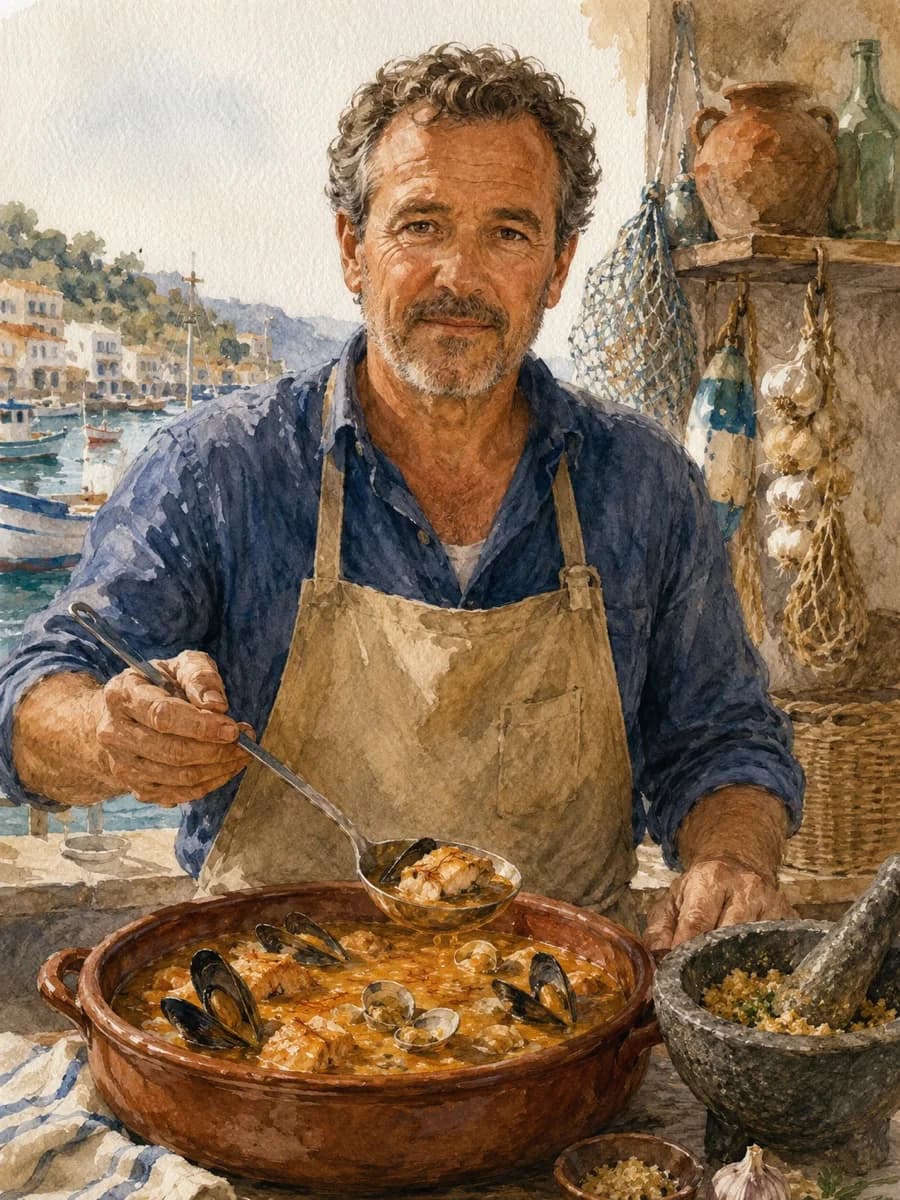
This dish came to me on a grey January morning when the fishing boats had not come in and the market stalls were running lean. I had a bag of pinto beans soaking overnight and a handful of clams that needed purpose. The saffron was already blooming in warm water on the counter—habit from decades of suquet. What emerged was something I now make deliberately, not from scarcity but from respect: the beans drink the saffron broth slowly, the clams open in their own steam, and the rough picada stirred through at the end reminds you that this is Catalan cooking, never smooth, always honest.
TagsSeafoodMediterraneanStewOne Pot MealSaffronGluten FreeCatalanClamsPinto Beans
AllergensMollusksTree NutsSulfites
Source: generated · June 13, 2026