 Brazilian
Medium · Hot
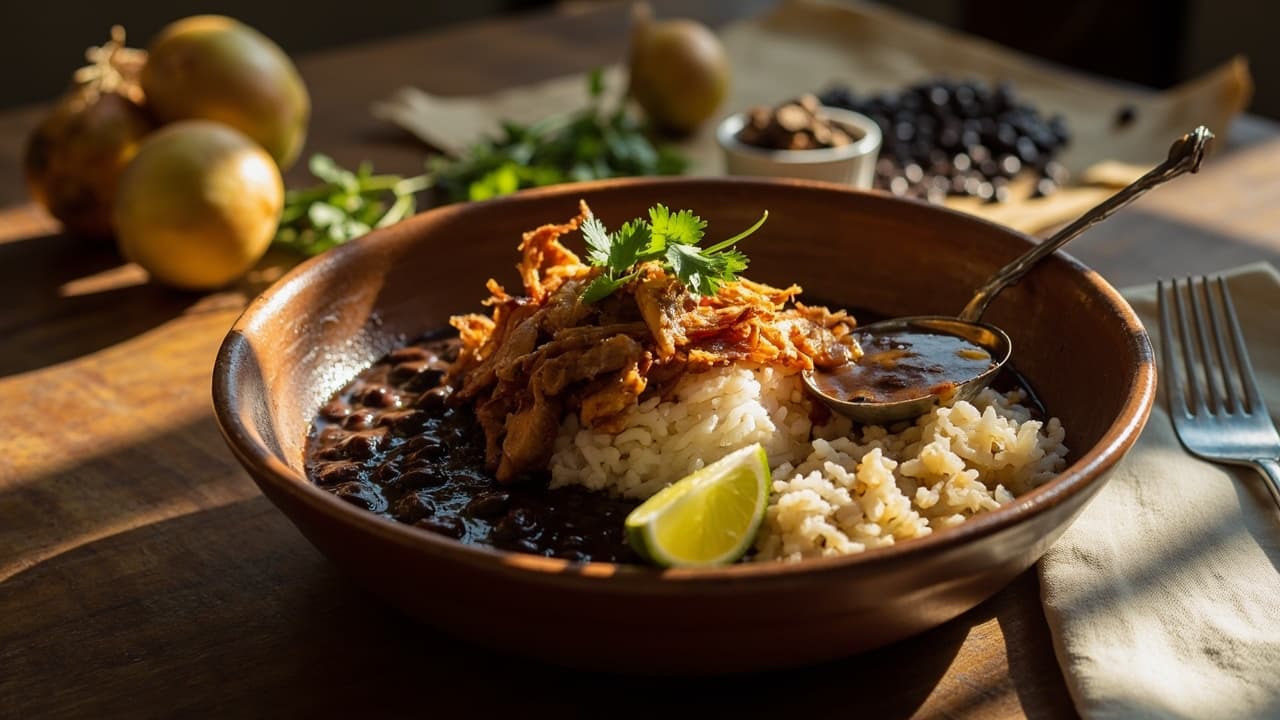
Pururuca de Pancetta Pork Belly Crackling with Black Beans
Crispy pork belly crackling rendered low and slow until golden and shattering, served alongside a hearty pot of black beans infused with smoky garlic and aromatics — a celebration of Brazilian comfort.

Prep
15 min
Cook
45 min
Total
1h
Method
Prepare the Beans
1
Rinse the black beans and soak in cold water overnight or for at least 8 hours. Drain and rinse before using.
Render the Pork Belly Crackling
2
Score the pork belly strips on the fat side without cutting through the meat. Rub all over with salt, black pepper, and paprika.
3
Place pork belly strips in a cold Dutch oven over medium-low heat, fat-side down. Render slowly for 15-20 minutes, spooning off excess fat occasionally, until deeply golden and crackling forms.
4
Flip and cook 5 more minutes until the meat side is caramelized. Remove to a plate and set aside.
Build the Black Bean Stew
5
In the same pot with the pork fat, add olive oil and heat over medium. Add diced yellow onion and cook 5 minutes until softened and translucent.
6
Add minced garlic, diced bell pepper, and chopped tomato. Sauté another 5 minutes until fragrant and the tomato breaks down.
7
Stir in drained black beans, 2 cups water, cumin, and remaining salt. Bring to a gentle boil, then reduce to a steady simmer.
8
Cook uncovered for 25-30 minutes, stirring occasionally, until beans are tender and stew has thickened. Add splashes of water if needed to prevent sticking.
Finish and Serve
9
Return the pork belly crackling strips to the bean pot. Squeeze in lime juice from both limes and fold in fresh cilantro.
10
Taste and adjust salt. Let everything mingle for 2 minutes off the heat.
11
Serve the crackling over white rice with a generous ladle of black beans. Finish with an extra squeeze of lime and more fresh cilantro.
12
Stir in drained black beans, 4 cups water, cumin, and remaining salt. Bring to a gentle boil, then reduce to a steady simmer. Cook uncovered for 45-60 minutes, stirring occasionally, until beans are tender and stew has thickened. Add splashes of water if needed to prevent sticking.
B
Nutri-Score
Good balance
A–E · lower is better · score 0
Calories
1548
per serving
Calorie-dense · 1548 kcalSource of fibre · 23gLow sugar · 9g
Protein
43g
Carbs
172g
Fat
76g
Sat. fat
22g
Fiber
23g
Sugar
9g
Sodium
1731mg
Gluten FreeDairy FreeLow CarbHeart HealthyDiabetes FriendlyDigestive HealthHigh FiberHigh ProteinBalanced Macros
Nutri-Score is a general nutritional-balance guide, not medical or dietary advice.
D
Environmental impact
High impact
A–E · lower is better · includes estimates
kg CO2e
2.4
per serving
DCarbonAEU all-round· carbon sets the grade
Water
2.4m³
Runoff
0.2g P
Pork belly, skin-on, sliced into strips drives 64% of this recipe’s estimated footprint.
Carbon from Poore & Nemecek 2018; water, land & runoff from Agribalyse — modelled averages for comparing recipes, not a measurement of your groceries.
Flavor Profile
8
Umami
3
Sweet
6
Salty
3
Sour
1
Bitter
3
Spicy
Textures
CrispyTenderCreamyChewy
Aromas
SmokyHerbalEarthyPungent
Kitchen Equipment
Safety & Storage
Storage
Store leftover pork belly crackling separately from the bean stew to maintain crispiness. Refrigerate both components within 2 hours of cooking. Reheat crackling in a dry pan or oven at 350°F until crispy before serving.
Consume leftover bean stew within 3-4 days when refrigerated at 40°F or below. The pork crackling is best consumed immediately but can be stored in an airtight container for up to 2 days; texture will soften upon refrigeration.
Cooking Temperature
Pork belly renders slowly at medium-low heat for 15-20 minutes until deeply golden, then flipped and caramelized for 5 more minutes. Beans simmer uncovered for 25-30 minutes until tender. Ensure beans reach a full boil initially and maintain gentle simmer throughout cooking.
Verify pork internal temperature with a calibrated meat thermometer inserted into the thickest part of the pork belly strips. Pork belly should reach 145°F (63°C) minimum. For added safety with raw pork, some cooks prefer 160°F (71°C).
Handling
Use separate cutting boards and utensils for raw pork belly and vegetables to prevent cross-contamination. Wash hands thoroughly with soap and water after handling raw pork before touching other ingredients.
High Risk Population
Beans must be soaked for at least 8 hours before cooking to reduce anti-nutrients and ensure proper digestion, particularly important for children, elderly, or immunocompromised individuals.
Allergen Warning
Although no top 14 allergens are present in this recipe, verify that all ingredients including spices (paprika, cumin) are sourced from allergen-free facilities if serving to individuals with severe food allergies.
Pro Tips
Technique
Render the pork belly strips starting in a cold Dutch oven over medium-low heat — this allows the fat to slowly melt and release, giving you that shattering, golden pururuca instead of a tough, chewy exterior. Patience is the secret, minha gente.
Flavor Boost
Don't rush the sofrito! Cook the onion until it's completely translucent and golden, then add the garlic — this base is where your beans get their soul. The tomatoes should break down completely into the pot.
Substitution
No pork belly? Use thick-cut pancetta or even pork jowl — the fat content and slow render will still give you beautiful crackling texture and all that smoky depth we love.
From the chef
Pururuca is all about patience and heat — pork belly strips rendered low and slow, fat-side down, until the skin shatters into golden crackling that could stop conversation at the table. While the belly renders, that rendered fat becomes the base for a deep black bean stew, smoky with garlic, bright with lime, fragrant with fresh cilantro. When you return the crackling to the beans, everything mingles into something that is bigger than its parts. Finish with a squeeze of lime — always, always the lime — and you have a pot that belongs on every Sunday table.
TagsBrazilianComfort FoodPorkBeansOne PotGluten FreeDairy FreeWeekend CookingSlow Cooked
Source: generated · June 10, 2026