 Mediterranean
Medium · Warm
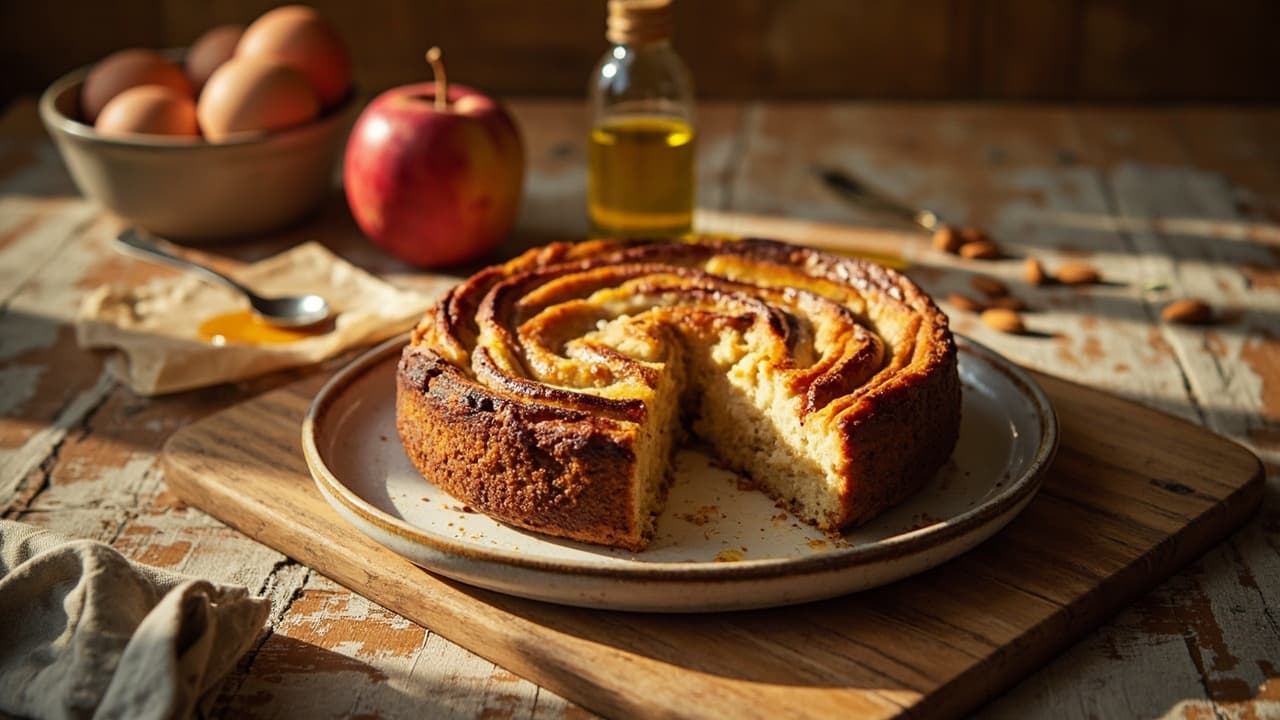
Almond‑Flour Olive Oil Cake with Feta‑Honey Swirl and Roasted Apple
A rustic gluten-conscious olive oil cake with a tangy-sweet feta-honey ribbon running through it, crowned with caramelized roasted apple slices and a drizzle of warm honey.

Prep
15 min
Cook
30 min
Total
45 min
Method
1
2
Toss apple wedges with softened butter, honey, and cinnamon until evenly coated. Arrange on a small baking sheet or in a ramekin.
3
Roast for 18-20 minutes until the edges are caramelized and a fork slides in with no resistance. Set aside to cool slightly while you prepare the cake batter.
4
5
Add almond flour, baking powder, and salt. Fold with a wooden spoon until just combined — a few lumps are fine, don't overwork it.
6
7
8
Arrange roasted apple wedges on top, pressing them lightly into the batter.
9
Bake at 190°C (375°F) for 25-30 minutes. The cake is done when the edges pull away slightly and a toothpick comes out with just a few moist crumbs.
10
11
Serve warm or at room temperature. Store covered in the refrigerator for up to 5 days. The flavors meld nicely overnight. Bring to room temperature before serving for best texture.
C
Nutri-Score
Fair balance
A–E · lower is better · score 10
Calories
632
per serving
High in saturated fat · 9gCalorie-dense · 632 kcalSource of fibre · 9g
Protein
18g
Carbs
36g
Fat
50g
Sat. fat
9g
Fiber
9g
Sugar
24g
Sodium
452mg
Gluten FreeGrain FreeVegetarianHeart HealthyLow SodiumHealthy FatsNatural Sweeteners
Nutri-Score is a general nutritional-balance guide, not medical or dietary advice.
C
Environmental impact
Moderate impact
A–E · lower is better · includes estimates
kg CO2e
0.5
per serving
CCarbonAEU all-round· carbon sets the grade
Water
1.1m³
Land
33Pt
Runoff
0.06g P
Feta cheese drives 42% of this recipe’s estimated footprint.
Carbon from Poore & Nemecek 2018; water, land & runoff from Agribalyse — modelled averages for comparing recipes, not a measurement of your groceries.
Flavor Profile
5
Umami
7
Sweet
4
Salty
3
Sour
1
Bitter
3
Spicy
Textures
CaramelizedCrumblyMoistSoftTender
Aromas
FloralFruityHerbalToastedWarm Spice
Kitchen Equipment
Primary Tool
OvenTechniques
Safety & Storage
Allergen Warning
This recipe contains tree nuts (almond flour), eggs, and milk products. Clearly label leftovers for anyone with food allergies.
Handling
Use clean utensils and separate prep areas when working with allergen-containing ingredients to prevent cross-contact with other foods.
High Risk Population
Eggs and dairy make this cake higher-risk for vulnerable populations including immunocompromised individuals, pregnant persons, young children, and elderly. Ensure eggs are fresh and properly cooked to an internal temperature of at least 160°F (71°C).
Cooking Temperature
Bake at 190°C (375°F) for the full 25-30 minutes. Use a toothpick test — cake is done with just a few moist crumbs. Underbaked batter containing eggs poses a food safety risk.
Storage
Cool cake completely before storing. Keep dairy and egg-containing cake refrigerated at 40°F (4°C) or below. Do not leave at room temperature for more than 2 hours.
Shelf Life
Store covered in the refrigerator for up to 5 days. The recipe states 3 days at room temperature, but dairy and eggs reduce safe shelf life — refrigeration is strongly recommended.
Pro Tips
Technique
When you drag that skewer through the top, think of it like signing your name in cursive—long, confident strokes, no overthinking. You're creating roads for the honey to travel, not mixing the layers into oblivion.
Substitution
No feta on hand? Crushed cottage cheese works in a pinch—the cake doesn't care about your cheese drawer drama. Same goes for the apple: pears roast beautifully with the same method if that's what's wilting in your fruit bowl.
From the chef
This cake earns its place at any table by doing something unusual: a salty-sweet feta-honey ribbon runs through almond flour batter that stays moist and tender without a gram of wheat flour. The roasted apple on top caramelizes in the oven while the cake bakes, and those two things land together in a way that feels inevitable. Olive oil carries everything — richness without weight. You can taste-check the swirl before it goes in; if you want more tang, add more feta, more sweetness, drizzle more honey. That flexibility is the whole point.
TagsGluten ConsciousOlive OilFetaHoneyAppleBakingSweet SavoryMediterranean InspiredAlmond FlourNo Recipe Friendly
AllergensTree NutsEggsMilk
Source: generated · June 12, 2026