 Japanese
Medium · Hot
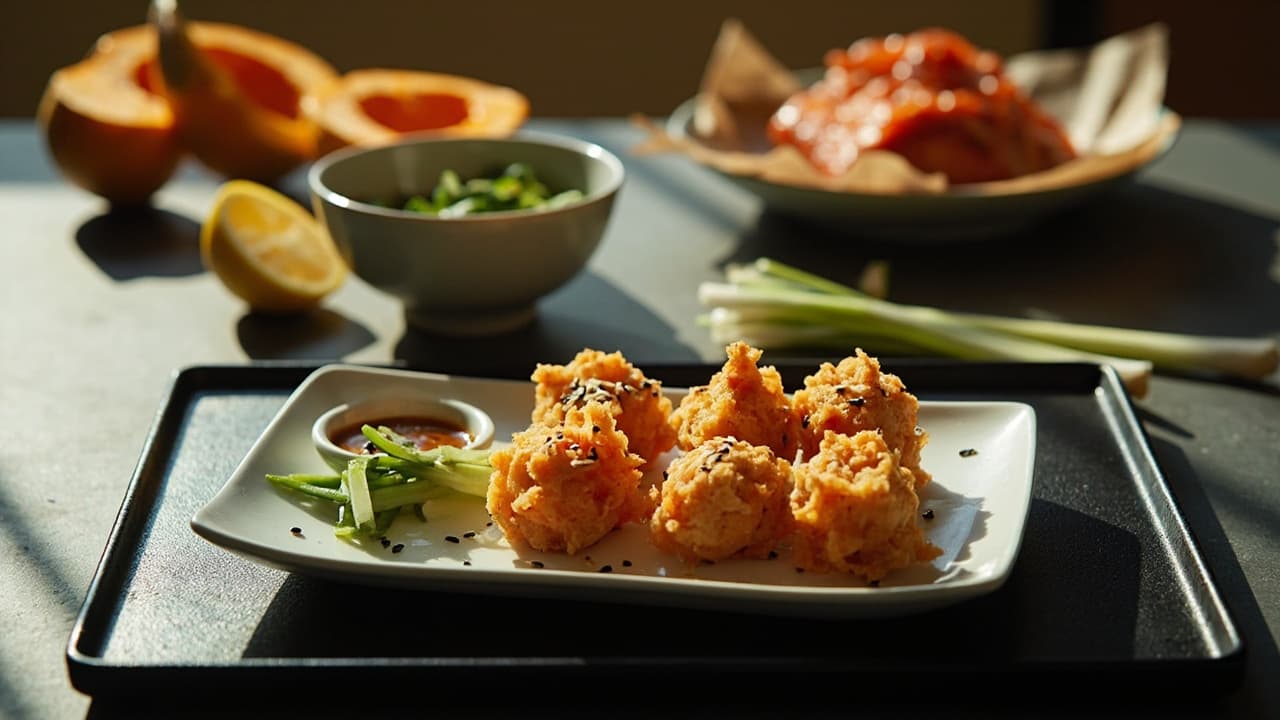
Butternut Squash and Salmon Dashi Tempura Bites
Delicate tempura featuring tender butternut squash and silky salmon, served with a refined dashi dipping sauce that honors the washoku tradition of clean umami.

Prep
20 min
Cook
25 min
Total
45 min
Method
1
Peel butternut squash, remove seeds, and cut into 2cm bite-sized cubes. Pat salmon dry with paper towel and cut into 2cm cubes. Refrigerate both until needed.
2
3
Whisk together all-purpose flour and cornstarch in a chilled bowl. Add cold water and egg, mixing with chopsticks or a fork until just combined—lumps are desirable. Do not overmix. Keep batter ice-cold by setting the bowl over ice if available.
4
Pour sunflower oil into a deep pot or wok, filling no more than one-third full. Clip a thermometer to the side and heat to 175°C. The oil should shimmer with slight movement but not smoke.
5
Dip squash cubes briefly into the tempura batter, letting excess drip off. Carefully lower into hot oil. Fry 2-3 minutes, turning once, until pale golden at the edges and a skewer inserts easily. Remove with a slotted spoon to a wire rack. Continue in batches.
6
Dip salmon cubes in batter and fry at 175°C for 90 seconds per side. The exterior should be light and crisp; the salmon interior should reach 63°C when measured with a digital thermometer—pink and just opaque throughout. Drain on the wire rack alongside the squash.
7
Thinly slice scallion on the bias. Cut lemon into quarters. Arrange tempura bites on a platter. Sprinkle sesame seeds over the top. Serve immediately with warm dashi dipping sauce on the side. Offer lemon wedges for a bright finish if desired.
C
Nutri-Score
Fair balance
A–E · lower is better · score 6
Calories
1475
per serving
Calorie-dense · 1475 kcalLow sugar · 5g
Protein
20g
Carbs
46g
Fat
137g
Sat. fat
17g
Fiber
6g
Sugar
5g
Sodium
1159mg
PescatarianHeart HealthyBalanced MacrosHigh Protein
Nutri-Score is a general nutritional-balance guide, not medical or dietary advice.
C
Environmental impact
Moderate impact
A–E · lower is better · includes estimates
kg CO2e
1.5
per serving
CCarbon
Salmon drives 56% of this recipe’s estimated footprint.
Carbon from Poore & Nemecek 2018; water, land & runoff from Agribalyse — modelled averages for comparing recipes, not a measurement of your groceries.
Flavor Profile
8
Umami
4
Sweet
6
Salty
2
Sour
1
Bitter
0
Spicy
Textures
CrispySilkyTender
Aromas
HerbalMarineUmami
Kitchen Equipment
Primary Tool
WokClip On ThermometerSaucepanWokChef KnifeCutting BoardFine GraterMeasuring CupsMeasuring SpoonsMixing BowlSlotted SpoonTongsWhiskWire RackIcePaper Towels
Techniques
Safety & Storage
Cooking Temperature
Salmon must reach 63°C internal temperature for food safety. Use a digital thermometer to verify doneness - the flesh should be pink and opaque throughout.
Maintain oil at 175°C during frying. If oil is too cool, tempura becomes greasy; if too hot, the exterior burns before the interior cooks.
When preparing the dashi dipping sauce with chicken broth, ensure the mixture reaches 75°C (165°F) during simmering to ensure pasteurization. If using homemade broth, bring to a full boil; if using commercially pasteurized broth, a gentle simmer is sufficient.
Cross Contamination
Keep raw salmon separate from butternut squash and all other ingredients throughout prep. Use separate cutting boards and utensils to prevent cross-contact between allergens.
Do not use the same oil to fry both salmon and squash if serving to individuals with fish allergies. Consider frying vegetables first when allergen concerns exist.
Storage
Tempura is best consumed immediately. Cooked tempura loses crispness within 30 minutes. If storage is necessary, place on wire rack and reheat at 200°C for 3-4 minutes only.
High Risk Population
For elderly, pregnant, or immunocompromised individuals, ensure salmon has been previously frozen at -20°C for 7+ days to eliminate parasites, or use commercially frozen salmon labeled sushi-grade.
Allergen Warning
This dish contains five allergens: fish, eggs, wheat, soy, and sesame. Always inform guests of all allergens before serving.
Handling
Keep tempura batter ice-cold. Place mixing bowl over ice bath during use. Cold batter creates the steam gap that produces crispy, light coating.
Equipment Safety
Fill deep pot or wok with oil to maximum one-third capacity. The oil will rise significantly when ingredients are added. Never leave hot oil unattended.
Use a clip-on thermometer to monitor oil temperature. Do not use thermometer to stir batter. Carefully lower battered ingredients into oil away from your body.
Pro Tips
Technique
The secret to light, ethereal tempura lies in temperature. Keep your batter ice-cold over a bowl of ice, and if the oil begins to lose its shimmer between batches, let it recover. Rushing cool oil produces heavy, greasy结果 — and we are seeking something much lighter than that.
Substitution
If butternut squash is not in season where you are, sweet potato or kabocha would honor this dish beautifully. The principle remains the same — let the natural sweetness of seasonal squash find harmony with the richness of salmon beneath that delicate crust.
From the chef
When I first learned tempura from my grandmother, she taught me that the batter is not meant to dominate — it is meant to celebrate what lies beneath. This autumn, I found myself drawn to the honeyed sweetness of butternut squash, and wondered how it might speak alongside silky salmon in this tradition. The dashi dipping sauce bridges everything here, a quiet reminder that umami is the common tongue we all understand.
TagsTempuraDashiSeafoodDeep FriedJapaneseUmamiEntertainingAutumn
AllergensFishEggsWheatSoySesame
Source: generated · June 13, 2026