Proteins
Beef Tongue
A rich, tender cut of cattle tongue, braised or boiled then peeled and sliced for tacos, deli plates, and stews.
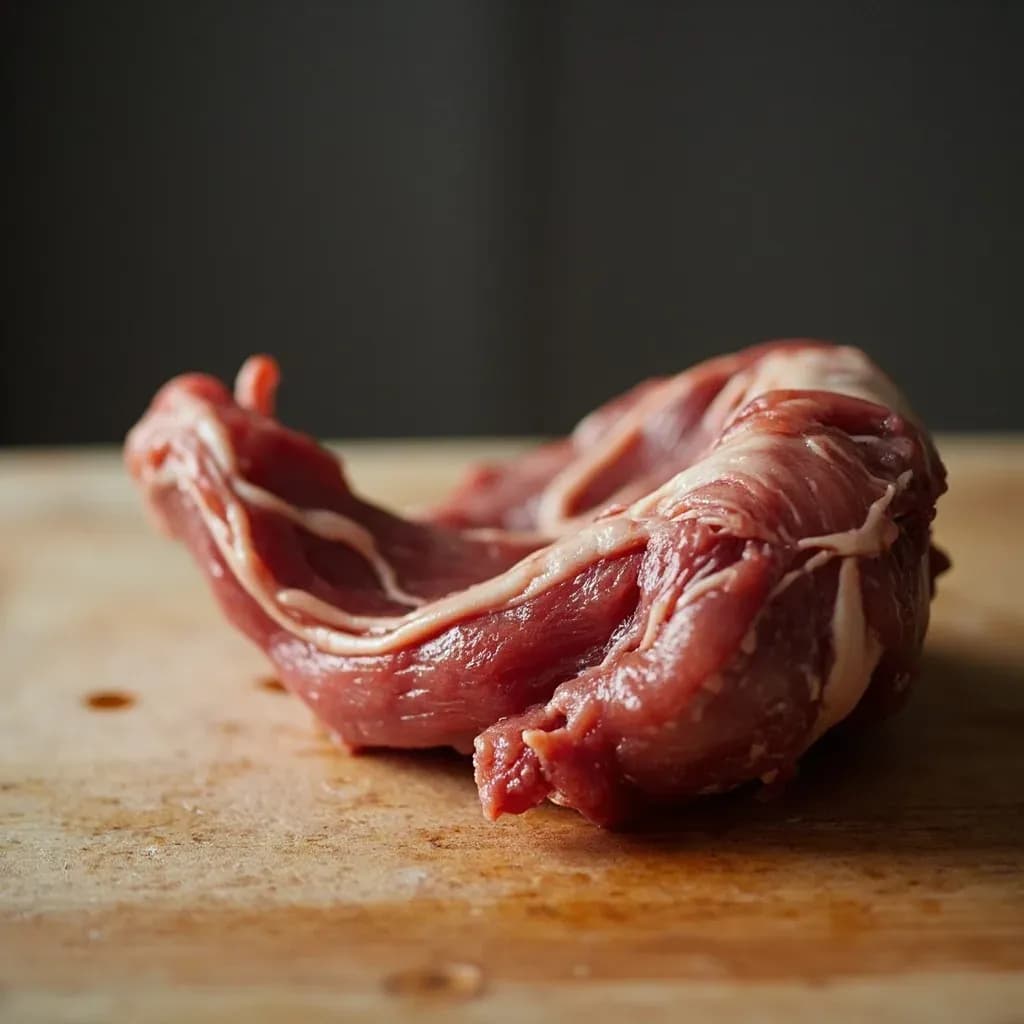
Beef tongue is a whole offal cut prized for its dense, gelatinous tenderness once slow-cooked. It is simmered or braised for hours, peeled of its tough outer skin, then sliced thin for dishes like Mexican tacos de lengua, Jewish-deli sandwiches, and Japanese gyutan. The meat is mild and beefy with a buttery texture that comes from its high collagen content.
Beef tongue is a dense, muscular offal cut from cattle that transforms remarkably through long, gentle cooking. The raw tongue is an extremely tough piece of meat—wrapped in a thick, inedible outer skin—with a surface layer of muscle fibers running in complex patterns surrounding a core of fat and cartilage. What makes this cut remarkable is what happens during braising or boiling: the collagen and connective tissue gradually break down over 2–4 hours, converting what begins as a jaw-breakingly firm piece of meat into silky, almost buttery flesh that holds together beautifully when sliced thin. The characteristic oval cross-section, with its lighter central core, is unmistakable when you see a properly cooked and sliced tongue. Once reserved primarily for immigrant communities and nose-to-tail cooks, beef tongue has earned its place in serious cooking for its exceptional flavor—rich, beefy, with a subtle metallic depth—and its remarkable ability to absorb marinades, sauces, and seasonings while maintaining a tender, yielding texture. The cooking liquid, often called tongue stock, is a hidden treasure: strained and reduced, it becomes a deeply flavored sauce or soup base that captures the essence of the long cook.
- Measured in
- g
- Storage
- Fridge
Types & varieties
Most common retail form; sold whole, skin-on, rinsed and ready to cook. Widely available at butcher shops, Latino markets, and some grocery chains, often frozen.
Pre-cured in vinegar and spices; common in German and Eastern European delis. Often sliced thin for sandwiches; already cooked and ready to serve or briefly heated.
Cold-smoked or hot-smoked after cooking; adds smoky depth of flavor. Used in deli preparations and charcuterie boards.
Brined, rubbed with spices (typically coriander, pepper, and garlic), then smoked like pastrami. A cornerstone of Jewish deli tradition.
From calves; smaller (1–2 lbs), more delicate flavor and tender texture. Considered a premium product; ideal for elegant applications like vitello tonnato-style preparations.
Similar preparation method; smaller (6–10 oz). Can substitute directly in most recipes; scale up quantities accordingly and reduce cooking times proportionally.
Understanding the tongue's structure
The beef tongue is a single large muscle, but its anatomy matters for cooking and slicing. The thick outer skin—which must always be removed after cooking—is inedible and becomes increasingly adhesive as it cools, which is why timing the peel is critical. Beneath the skin lies dense, tightly packed muscle fibers arranged in overlapping patterns. The center contains a core of fat and small amounts of cartilage, which melt and tenderize during cooking. When sliced properly against the grain (perpendicular to the length of the tongue), these muscle fibers are cut short, yielding the most tender results. Slice with the grain and you'll get chewy, stringy pieces regardless of how long you cook.
The importance of the cooking liquid
Never discard the strained cooking liquid from beef tongue. This amber to brown stock is packed with collagen, gelatin, and concentrated beef flavor extracted during the long cook. It forms the base for rich sauces when reduced, or makes an excellent soup stock for bean dishes, pozole, or headwaters for rice dishes. If you pressure cook the tongue, the stock is especially gelatinous and will set slightly when cooled—a sign of its body-building properties. Store it in the refrigerator for up to a week or freeze for three months.
Common uses
Tips & pitfalls
- Salt the raw tongue generously and let it sit uncovered in the refrigerator overnight before cooking—this draws out moisture and improves the final texture and flavor penetration
- Always start beef tongue in cold water and bring to a bare simmer (180–190°F/82–88°C); a rolling boil makes the meat tough and stringy
- Add aromatics to the cooking liquid: onion, carrot, celery, bay leaves, whole peppercorns, and a splash of vinegar—the liquid becomes a valuable cooking stock for sauces or soups
- Cook until very tender—a fork should penetrate with no resistance—typically 2.5–3.5 hours for a 4-lb tongue by conventional method
- Peel the skin immediately after cooking while the tongue is still hot, or cool in ice water for 10 minutes first; the skin must come off before the tongue cools completely or it will adhere firmly and become nearly impossible to remove
- After peeling, press the cooked tongue between two cutting boards weighted with a heavy pan for 30–60 minutes—this firms the flesh for cleaner and more attractive slices
- Common mistake: overcooking beyond the point of tenderness—beyond about 4 hours conventional or 50 minutes in a pressure cooker, the tongue becomes mushy and falls apart when sliced
- Common mistake: peeling too early (dangerously hot) or too late (skin locks on)—work quickly with protective gloves or cool just enough to handle safely
- Pressure cookers produce excellent results in a fraction of the time; the flavor is equivalent to conventional methods, and the sealed environment actually helps retain more aromatics in the meat
- Slice against the grain (perpendicular to the length of the tongue) for the most tender results; the grain runs lengthwise along the top surface
Nutrition
Energy
937 kJ · per 100 g
Where the calories come from
Protein
14.9g
30% DV
Carbs
3.7g
1% DV
Fat
16.1g
21% DV
Fiber
0g
0% DV
Sodium
69mg
3% DV
Source · USDA FoodData Central · Beef, variety meats and by-products, tongue, raw
View on FDC →In the shops
Matched grocery products
No matched grocery products for Beef Tongue yet.
Good to know
- Type
- Organ meat / offal cut from cattle (Bos taurus)
- Primary flavor
- Rich, beefy, slightly metallic; tender when cooked properly
- Typical weight
- 3–5 lbs per tongue (1.4–2.3 kg)
- Edible yield
- Approximately 50–60% after cooking and peeling
- Cooking time (boiling/braising)
- 2–4 hours depending on size and method
- Cooking time (pressure cooker)
- 35–50 minutes at high pressure
- Difficulty
- Medium — long cook time, requires proper peeling technique
- Typical price
- $3–6/lb; relatively inexpensive for the quality it yields
Substitutes
- Pork tongue — Similar texture and mild flavor; smaller size (6–10 oz) means you may need multiple; cooking time is proportionally shorter
- Veal tongue — Ideal substitute with more delicate flavor and tender texture; adjust cooking times for smaller size (1–2 lbs); harder to find and more expensive
- Beef cheek — Comparable beefy flavor and tender texture after long braising; easier to prepare with no peeling required; can be used in the same preparations
- Oxtail — Rich beef flavor and gelatinous texture from long cooking; works in stews and braises but cannot be sliced for tacos or deli-style preparations
- Beef heart — Leaner with a stronger, more metallic flavor; suitable for tacos and stews but not deli-style slicing; requires trimming fat and vessels
- Lamb tongue — Smaller and slightly more delicate; can be used in similar preparations; scale up quantities to account for smaller size
- Flank steak — Not an offal substitute but can approximate sliced beef applications in a pinch; cook to medium-rare only; does not achieve the same tenderness or characteristic texture
Pairs with
Also called
Lengua · Ox Tongue
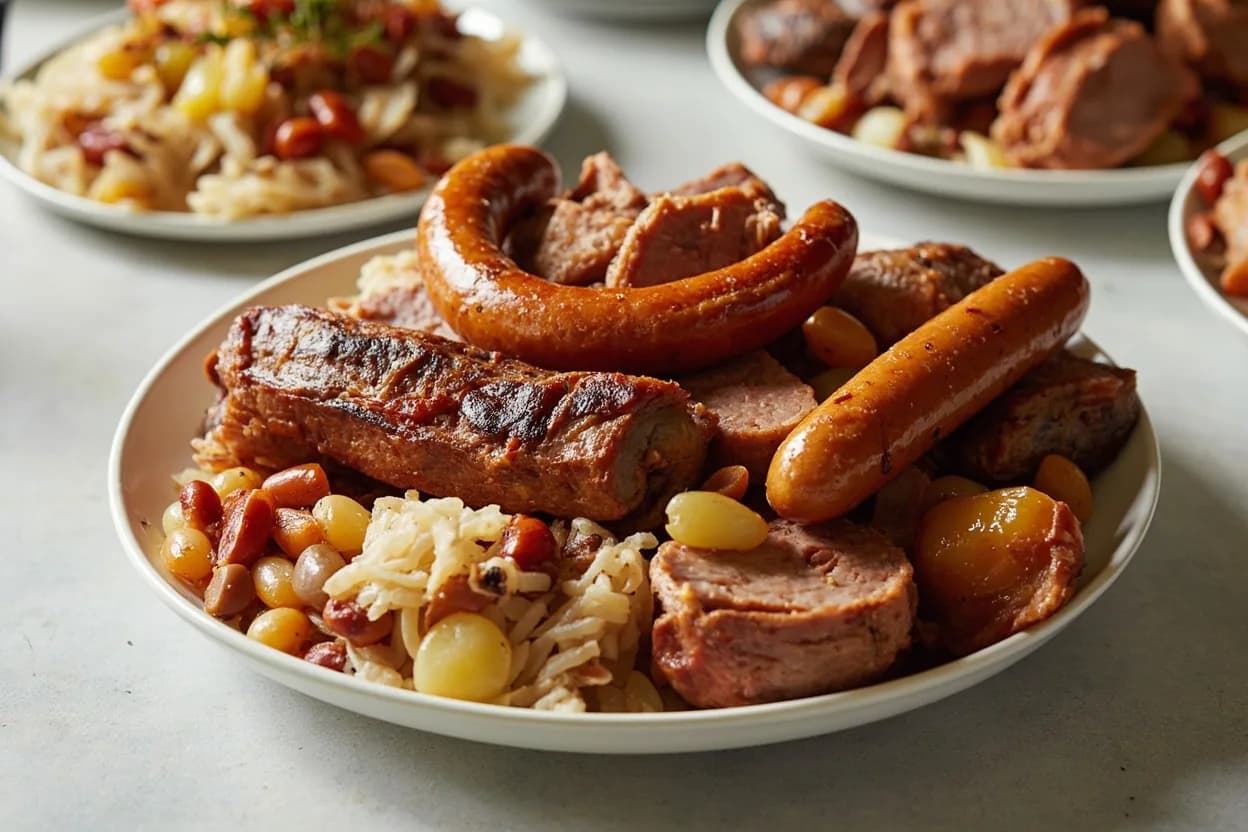
Appears in these dishes
Related

Egg
The kitchen's everything ingredient — bind, leaven, enrich, or fry

Chicken Breast
Lean, quick-cooking white meat for everyday dinners

Ground Beef
Versatile minced beef for burgers, ragù, tacos, and meatballs

Pork Loin
Lean, tender roasting cut that stays juicy with care

Salmon
Rich, rosy fish that roasts, grills, or cures beautifully

Egg White
Pure protein that whips to airy peaks for meringue and more

Egg Yolk
Rich, golden yolk for custards, mayonnaise, and pasta

Quail Egg
Tiny, speckled eggs for garnishing and elegant bites