Proteins
Grey Mullet (Muggine)
Sardinian-prized estuary fish whose roe becomes bottarga; the flesh is grilled or fried.
Grey mullet, called muggine in Sardinia, is a firm white-fleshed coastal fish central to Mediterranean cooking. The female's roe sac is salted and dried into bottarga di muggine, a prized cured delicacy, while the flesh is grilled or fried. It has a clean, mild flavor that takes well to lemon and herbs.
Grey mullet (Mugil cephalus), called muggine in Italian, is an estuarine fish prized across the Mediterranean, Black Sea, and Atlantic coasts from Portugal to Cape Verde. Its defining characteristic is its diet of algae, detritus, and small crustaceans, which imparts a mild, sweet, slightly nutty flavor often compared to hazelnuts. This brackish-water lifestyle makes the fish naturally oily without being fishy—fat is distributed evenly through the flesh, keeping it moist during cooking. Wild-caught specimens from clean coastal waters have the most pronounced nutty complexity; farmed fish raised on pelleted feed are milder and less interesting. The fish's thick, resilient skin makes it exceptionally well-suited to grilling whole, and its firm, medium-flake texture holds up to pan-frying, baking, and even poaching. Beyond the flesh, grey mullet is famous for its roe: when salted, pressed, and sun-dried for two to three months, it becomes bottarga de muggine, the celebrated Sardinian and Levantine delicacy with PDO protection.
In Italian cuisine, grey mullet appears most prominently in Sardinia and Sicily, where it is grilled whole over charcoal, pan-fried with herbs and lemon, or baked in a salt crust. The flesh has few bones—pin bones are present and must be removed with tweezers, but they pull out cleanly and are not numerous. The dark bloodline running along the backbone must also be removed, as it carries a bitter, muddy flavor that will spoil an otherwise clean-tasting fish. A dressed grey mullet yields roughly 45–50% of its weight; filleting yields 30–35%. The fish is sold whole, gutted, or as fillets, fresh or frozen, and should be used within one to two days of purchase when fresh. Its ability to tolerate varying salinity has made it one of the most widely distributed food fishes on earth, and it is increasingly recognized by sustainable-seafood advocates as a sound alternative to overfished species.
In the United States, grey mullet is still largely dismissed as a bait fish, though this attitude is slowly shifting among chefs who appreciate its versatility and low environmental footprint. The striped mullet sold in American markets is the same species as the flathead grey mullet. Beyond the flesh, the fish's value is concentrated in its roe: bottarga is shaved over pasta, risotto, and grilled bread, or sliced thin as an appetizer with nothing more than lemon and good olive oil. The curing process concentrates the roe's umami character dramatically, transforming what is a modest estuarine fish into one of the Mediterranean's great delicacies.
- Measured in
- g
- Storage
- Fridge
Allergens
Types & varieties
Primary species in Sardinia and Western Mediterranean; the source of true bottarga de muggine
Dominant in Northern Adriatic; hardier, tolerates lower salinity; common in Venetian cuisine
Smaller species up to 2 lbs; prized throughout the Mediterranean; has a distinctive golden stripe behind the eye
Smallest commercial species; noted for its ability to leap; used in Istrian and Dalmatian cooking
Common name in the US and Black Sea region for Mugil cephalus; identical to flathead grey mullet
Buying and Assessing Freshness
The single most important decision in cooking grey mullet is buying it in good condition. Fresh whole fish should have clear, convex eyes that are bright and transparent—cloudy or sunken eyes indicate the fish is past its best. Gills should be bright red, not brown or gray. Press the flesh with a finger: it should spring back immediately, leaving no indentation. The skin should be taut and glistening, clinging firmly to the flesh. If buying fillets, look for even color with no brownish discoloration along the bloodline (which should have been removed by the fishmonger but is sometimes left). Smell is a reliable indicator: fresh grey mullet smells briny and clean, like the sea, never fishy or ammonia-like. Ask your fishmonger to scale, gut, and fillet the fish for you if you lack the equipment or experience—grey mullet scales cling firmly and must be removed completely, including behind the fins and along the belly, using a spoon or dedicated fish scaler.
- Clear, bright, convex eyes and bright red gills are non-negotiable signs of freshness
- Press the flesh—it should spring back immediately without leaving an indentation
- Fresh grey mullet smells briny and clean, never fishy or sour
- If buying fillets, inspect the bloodline area for browning, which signals oxidation
Preparing the Fillets
Grey mullet fillets require two preparatory steps that are easy to skip but catastrophic to omit: bloodline removal and pin-bone extraction. The dark bloodline runs the full length of the fillet along the backbone and carries a bitter, muddy flavor that will dominate an otherwise clean-tasting fish. With a sharp flexible knife, make a shallow diagonal cut along the bloodline and scrape or cut it away. Pin bones are present in moderate numbers along the center of the fillet; run your fingers firmly along the flesh to locate each one, then pull them out with tweezers or needle-nose pliers, pulling in the direction of the grain to avoid tearing the flesh. Once these two steps are done, the fillet is ready for any cooking method. If cooking whole, scale the fish thoroughly, then make shallow diagonal scores through the skin on both sides to prevent curling on the grill or in the pan.
- Remove the bloodline with a shallow diagonal cut—it carries bitter, muddy flavor
- Locate pin bones by running your fingers along the fillet; extract with tweezers, pulling in the direction of the grain
- Score the skin diagonally before grilling to prevent curling
- Scale completely, including behind the fins and along the belly, using a spoon or fish scaler
Bottarga: From Roe to Delicacy
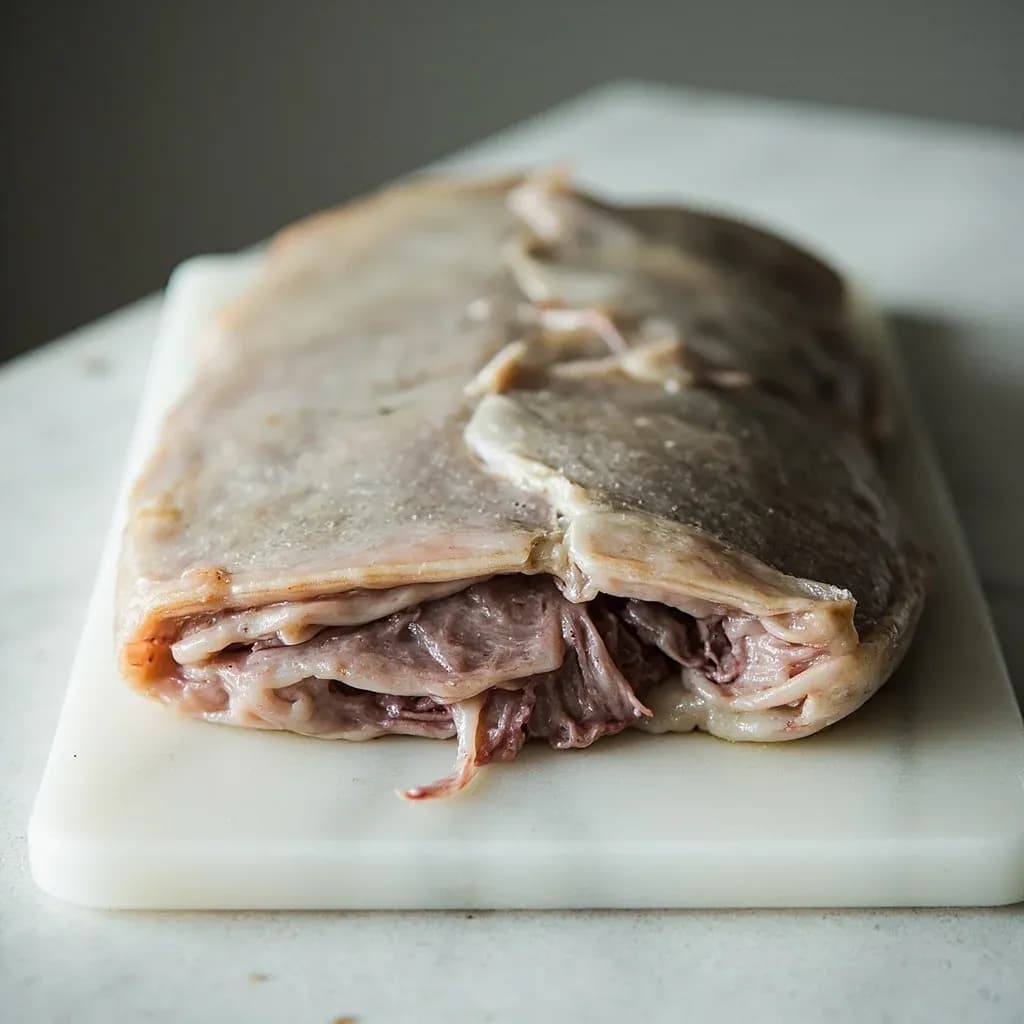
Bottarga de muggine is the cured, pressed, and sun-dried roe of the female grey mullet, and it is one of the Mediterranean's great pantry staples. The process begins in late winter when female mullet are laden with roe: the roe sacs are harvested, carefully cleaned of membrane and blood vessels, then salted heavily at 4–6% by weight. The salted roe is then pressed to expel excess moisture and air-dried in the sun for two to three months, during which it develops its characteristic dense, translucent texture and intensely savory flavor. True Sardinian bottarga de muggine carries PDO protection and is unmistakable in quality. Look for firm, slightly moist lobes with a deep amber color and a clean, sea-air aroma. Bottarga should be stored wrapped in beeswax paper in the refrigerator; it keeps for months. To use, peel away the outer membrane with your fingers, then shave with a plane-style grater or sharp mandoline. It needs no cooking—served over hot pasta, risotto, or grilled bread, or sliced thin as an appetizer with lemon and olive oil, it transforms simple dishes into something extraordinary.
- Bottarga is made only from female grey mullet roe; look for the PDO designation for Sardinian product
- Salting at 4–6% by weight is critical—too little and the roe spoils; too much and it becomes inedibly hard
- Sun-drying for 2–3 months develops the characteristic dense, translucent texture and concentrated flavor
- Store finished bottarga in beeswax paper in the refrigerator; it keeps for months
- Serve raw: shave over hot pasta or bread, or slice thin as an appetizer—never cook it
Common uses
Tips & pitfalls
- Select fish with clear, bright eyes and bright red gills; the flesh should spring back when pressed
- The dark bloodline running along the backbone must be removed—it imparts a bitter, muddy flavor if left in
- Scale the fish thoroughly, including behind the fins and along the belly, using a spoon or proper fish scaler
- To remove pin bones, run your fingers along the fillet to locate them, then pull with tweezers or needle-nose pliers; they are numerous but pull out cleanly
- Grilling with the skin on protects the delicate flesh and creates crispy, flavorful skin; score the skin to prevent curling
- Do not overcook; grey mullet is naturally oily and becomes dry and tough if cooked past 140°F (60°C) internal temperature
- Aquaculture-raised grey mullet from Mediterranean farms has a milder flavor and less pronounced nutty notes than wild-caught
- When substituting, use sea bass or snapper in a 1:1 ratio for most preparations; the flavor will be less nutty and the flesh less oily
- Score the skin diagonally before grilling to prevent the fillet from curling and cooking unevenly
- Bottarga should be shaved raw over finished dishes—never cooked, which destroys its delicate texture and flavor
Nutrition
Nutrition
No USDA FoodData Central match for Grey Mullet (Muggine) yet. We surface a per-100 g profile once a generic whole-food entry is matched and verified.
In the shops
Matched grocery products
No matched grocery products for Grey Mullet (Muggine) yet.
Good to know
- Scientific Name
- Mugil cephalus (Flathead/Grey Mullet); Chelon labrosus, Liza aurata, Liza saliens (other regional species)
- Origin
- Mediterranean, Black Sea, Atlantic coast from Portugal to Cape Verde, Indo-Pacific; dominant in Sardinian, Greek, and Levantine cuisines
- Season
- Fall and winter when fish are at their fattest; Sardinian bottarga season is December through February
- Flavor
- Mild, sweet, slightly nutty; distinctly oily but not fishy; clean, briny quality reflecting estuarine diet
- Texture
- Firm, medium-flake; thick skin holds up well to grilling; pin bones present but pull out cleanly
- Market Size
- 1–3 lbs (450g–1.4kg) for table use; larger fish up to 12 lbs used primarily for bottarga production
- Yield
- Approximately 45–50% dressed weight; fillet yield 30–35%
- Storage
- Use within 1–2 days when fresh; store on ice in refrigerator; freezes well for up to 3 months
Substitutes
- Sea Bass (Branzino) — Similar firm texture and mild flavor; slightly sweeter; best for grilling and baking
- Red Mullet — Not a true mullet but shares texture and cooking behavior; more aromatic and significantly more expensive
- Snapper — Comparable flake and firm texture; good for fried preparations and fish cakes
- Sea Bream (Orata) — Similar oily character and Mediterranean affinity; excellent for grilling whole
- Carp — Appropriate only for fish stock—carp's muddy flavor profile is actually desirable in stock-making
Pairs with
Also called
Muggine · Flathead Mullet
Related

Egg
The kitchen's everything ingredient — bind, leaven, enrich, or fry

Chicken Breast
Lean, quick-cooking white meat for everyday dinners

Ground Beef
Versatile minced beef for burgers, ragù, tacos, and meatballs

Pork Loin
Lean, tender roasting cut that stays juicy with care

Salmon
Rich, rosy fish that roasts, grills, or cures beautifully

Egg White
Pure protein that whips to airy peaks for meringue and more

Egg Yolk
Rich, golden yolk for custards, mayonnaise, and pasta

Quail Egg
Tiny, speckled eggs for garnishing and elegant bites