 Pakistani
Advanced · Hot
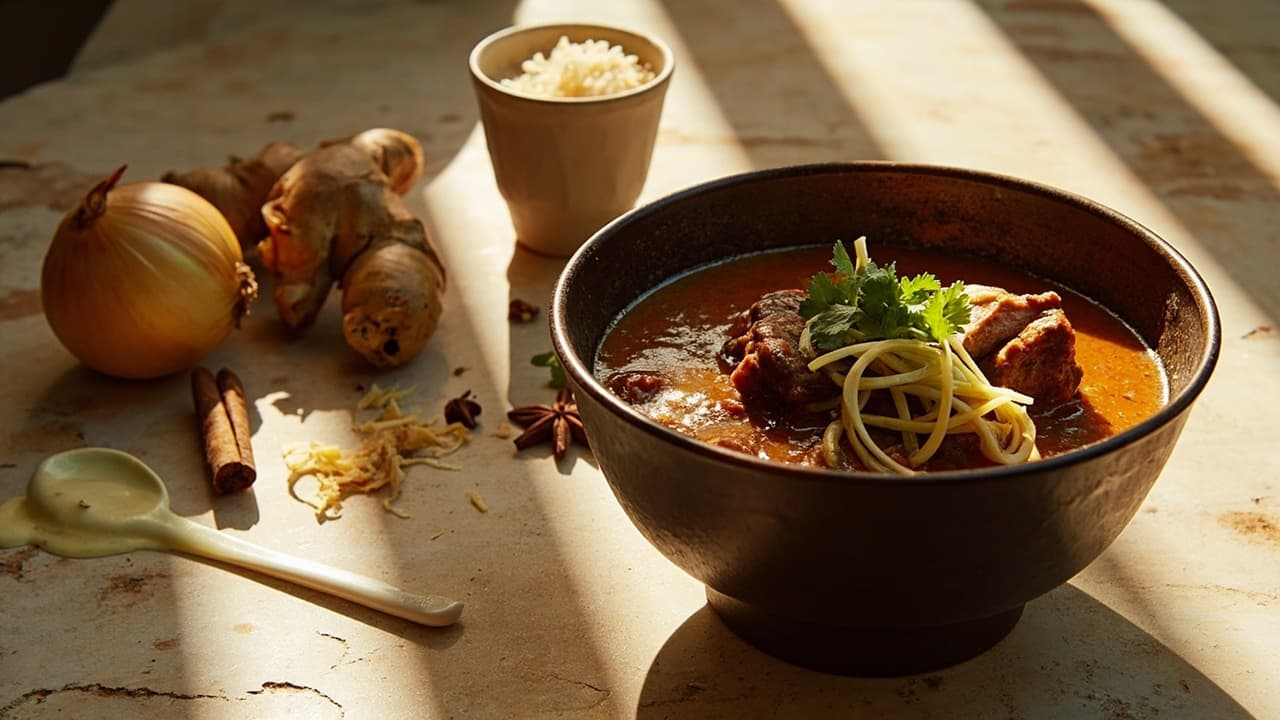
Lahori Nihari: Slow-Smoked Beef Stew with Yogurt and Warm Spices
A traditional slow-cooked beef stew from Lahore, featuring tender bone-in beef simmered for hours in a fragrant yogurt-spice gravy with a toasted cumin and clove backbone, finished with fresh ginger and cilantro.

Prep
30 min
Cook
3h 30m
Rest
10 min
Total
4h 10m
Method
Bloom Whole Spices and Build Base
1
2
Heat 4 tablespoons sunflower oil in a large heavy-bottomed pot or Dutch oven over medium-high heat. Add the sliced onions and cook, stirring occasionally, until they turn deep golden brown and caramelized, about 20-25 minutes. Do not rush this step — the sweetness of the onions forms the backbone of the nihari.
3
4
Add the whole spices (cinnamon sticks, cloves, star anise, and cumin seeds) directly to the pot. Stir and toast in the oil for 60 seconds until they crackle and release their aroma.
Toast Spice Blend and Sear Beef
5
In a small bowl, mix the ground spice blend: 2 tablespoons cumin, 1 teaspoon turmeric, 2 teaspoons cayenne, 1 teaspoon cinnamon, 1 teaspoon black pepper, 1 teaspoon ground ginger, and 2 teaspoons salt.
6
Cut the 1.5 kilograms beef steak into large 3-inch pieces, keeping some bone-in if possible for traditional depth. Pat the beef dry with paper towels and season generously with the spice blend, rubbing it into all surfaces.
Simmer Nihari Low and Slow
8
Chop the 2 medium tomatoes roughly. Return all the seared beef to the pot. Add the chopped tomatoes and 4 cups chicken broth. Stir gently to combine.
9
Chop the 2 medium tomatoes roughly. Return all the seared beef to the pot. Add the chopped tomatoes and 4 cups chicken broth. Stir gently to combine.
10
Finish and Serve
12
For the finish, julienne 2 inches of fresh ginger and roughly chop the half cup of cilantro. These bright elements cut through the rich, slow-cooked gravy.
13
14
Serve the Lahori Nihari in deep bowls with generous spoonfuls of gravy. Top with the fresh julienned ginger and chopped cilantro. Serve alongside 3 cups steamed basmati rice cooked with a pinch of salt.
A
Nutri-Score
Excellent balance
A–E · lower is better · score -2
Calories
1302
per serving
High in protein · 79gLow sugar · 8g
Protein
79g
Carbs
113g
Fat
60g
Sat. fat
9g
Fiber
7g
Sugar
8g
Sodium
867mg
Gluten FreeDairy ContainingHalalMeat BasedHeart HealthyAnti InflammatoryDiabetes FriendlyLow Carb CompatibleHigh ProteinBalanced MealSustainable Energy
Nutri-Score is a general nutritional-balance guide, not medical or dietary advice.
E
Environmental impact
Very high impact
A–E · lower is better · includes estimates
kg CO2e
26
per serving
ECarbonCEU all-round· carbon sets the grade
Water
2.5m³
Land
494Pt
Runoff
0.4g P
Beef Steak drives 97% of this recipe’s estimated footprint.
Carbon from Poore & Nemecek 2018; water, land & runoff from Agribalyse — modelled averages for comparing recipes, not a measurement of your groceries.
Flavor Profile
8
Umami
4
Sweet
5
Salty
3
Sour
2
Bitter
7
Spicy
Textures
TenderFall ApartSaucy
Aromas
Warm SpiceMeatyHerbalPungent
Kitchen Equipment
Primary Tool
Dutch OvenDutch OvenHeavy Bottomed PotSmall BowlChef KnifeCutting BoardTongsMeasuring SpoonsMeasuring CupsWhiskPaper TowelsMixing Bowls
Counter FootprintLarge
Techniques
Safety & Storage
Cooking Temperature
Searing beef at high heat creates fond but ensure internal temperature reaches minimum 145°F (63°C) for medium-rare doneness. Simmering at low heat for 2.5-3 hours should bring internal temperature well above safe thresholds, but use a meat thermometer to verify beef reaches 160°F (71°C) for food safety.
Cross Contamination
Raw beef handling requires dedicated cutting boards and utensils. Wash all surfaces, knives, and hands thoroughly with hot soapy water after handling raw meat and before touching other ingredients like the yogurt or spices that won't be cooked further.
Handling
When tempering yogurt, add hot cooking liquid gradually while whisking constantly. Never add cold yogurt directly to boiling liquid as it will curdle. Start with small increments (2-3 tablespoons) and wait for incorporation before adding more.
Storage
Cool nihari to room temperature within 2 hours of cooking, then refrigerate in airtight containers at 40°F (4°C) or below. Consume refrigerated leftovers within 3-4 days. Nihari can be frozen for up to 3 months in freezer-safe containers with headspace for expansion.
High Risk Population
This dish contains dairy (yogurt) which may not be suitable for those with milk allergies or lactose intolerance. Elderly individuals, pregnant women, young children, and immunocompromised persons should ensure beef is cooked to well-done temperature (160°F/71°C) to eliminate potential pathogens.
Allergen Warning
Primary allergen present: milk/dairy from 1 cup yogurt used in the nihari. Yogurt is added during cooking and remains in the finished dish. No substitution is specified in this recipe for dairy-free alternatives.
Equipment Safety
When searing beef at high heat in oil, watch for oil splattering. Use long tongs or a sturdy spatula and avoid placing wet ingredients directly into hot oil to prevent dangerous grease splashes.
Pro Tips
Technique
Never rush the onions — those 25 minutes of caramelization are not waiting time, they ARE the dish. The deep golden sweetness is the foundation everything else builds upon. If your onions are pale, your nihari will be forgettable.
Substitution
If bone-in beef is hard to find, use beef short ribs or oxtail — both have the marrow and connective tissue that breaks down into that signature silky gravy. Lamb shoulder works beautifully too if you want to switch proteins.
From the chef
Nihari demands bone-in beef and time — there is no shortcut worth taking. The whole spices go into the oil first: cumin seeds, cinnamon, cloves, star anise, all crackling until they release that deep, woody fragrance. The onions caramelize for twenty-five minutes, not five, and the beef sears properly over high heat before the braise begins. Two and a half hours later the gravy is thick, dark, and clinging. The yogurt must be tempered slowly into the hot liquid or it breaks. Finished with julienned ginger and fresh cilantro, this is a pot that rewards every minute you give it.
TagsSlow CookedBeefSpicyYogurtTraditionalBone InAromatic Spices
AllergensMilk
Source: generated · June 10, 2026