 Spanish
Medium · Hot
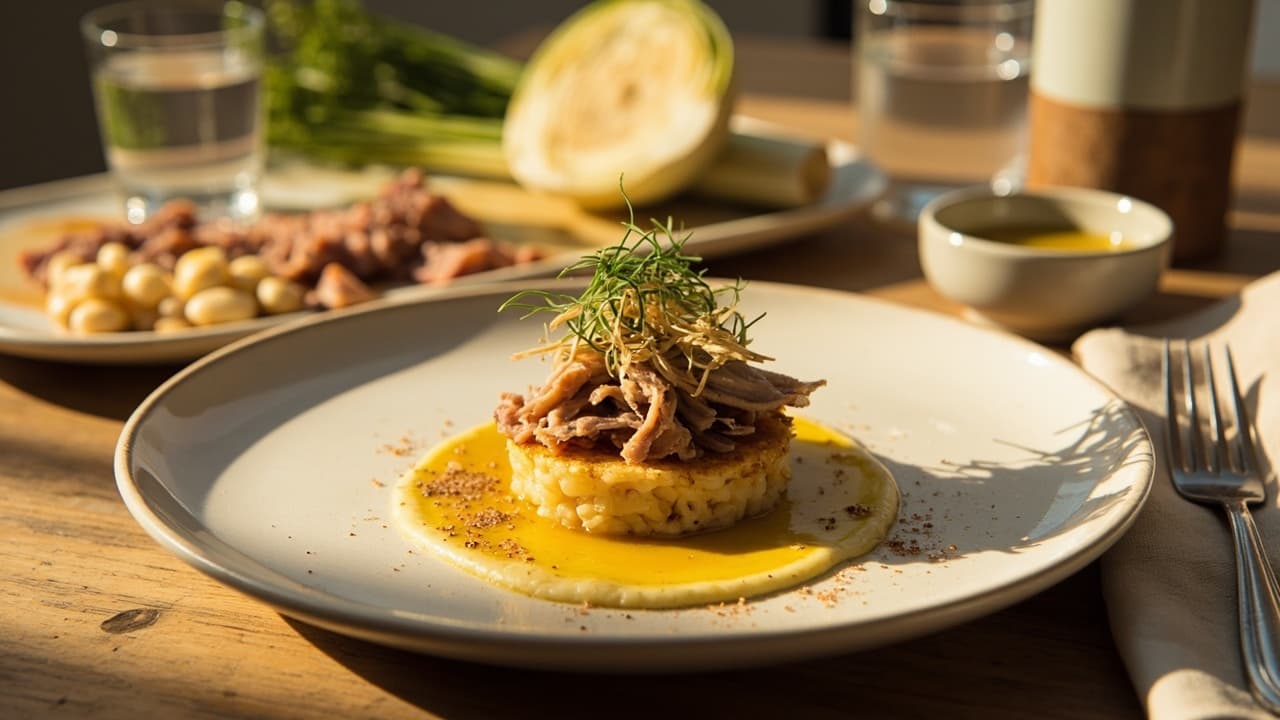
Mini Saffron Rice Cakes with Duck, White Beans and Fennel
Bite-sized saffron rice cakes with crispy duck, tender white beans and caramelized fennel — a proud Valencian twist on the rice cake, built for the Sunday table.

Prep
20 min
Cook
55 min
Total
1h 15m
Method
1
Rinse 240g white rice under cold water until clear. Place in a saucepan with 480ml cold water and 3g salt. Bring to a gentle boil over medium heat.
2
Meanwhile, crumble 0.5g saffron into a small bowl and pour 60ml boiling water over it. Let steep for 5 minutes until the liquid turns deep amber.
3
4
5
6
7
Flip the duck and lay 3 garlic cloves, lightly crushed, beside it. Cook skin-side up 5-6 minutes until an instant-read thermometer reads 65°C at the thickest point. Transfer duck to a cutting board and rest 5 minutes. Reserve the rendered fat in the pan.
8
Slice the duck meat thinly or shred with two forks. Keep warm.
9
Drain and rinse 200g white beans. Place in a saucepan with fresh cold water to cover by 5cm. Add 2 garlic cloves and bring to a simmer over medium heat.
10
11
12
Trim the fennel stalks andReserve the fronds for garnish. Cut the bulb in half and slice each half into 6mm-thick strips.
13
14
15
Transfer the cooled saffron rice to a large bowl. Add 1 beaten egg and 40g breadcrumbs. Mix gently until the rice holds together when pressed.
16
With wet hands, divide the mixture into 12 equal portions. Shape each into a 4cm round, pressing firmly to compact. Place on a tray lined with parchment.
17
Heat the reserved duck fat in a non-stick skillet over medium heat until it shimmers. Working in batches, cook the rice cakes 3-4 minutes per side until deeply golden and crisp at the edges. Transfer to a wire rack.
18
Place 3 rice cakes on each warmed plate. Arrange sliced duck alongside. Spoon the white beans and caramelized fennel around the rice cakes.
19
Garnish with reserved fennel fronds. Finish with a light grind of black pepper over the duck and white beans.
D
Nutri-Score
Needs balance
A–E · lower is better · score 12
Calories
970
per serving
High in saturated fat · 19gCalorie-dense · 970 kcalSource of protein · 39gLow sugar · 4g
Protein
39g
Carbs
92g
Fat
49g
Sat. fat
19g
Fiber
6g
Sugar
4g
Sodium
1631mg
Contains EggContains PoultryMediterraneanHeart HealthyHigh ProteinLow Saturated FatBalanced MacrosFiber Rich
Nutri-Score is a general nutritional-balance guide, not medical or dietary advice.
C
Environmental impact
Moderate impact
A–E · lower is better · includes estimates
kg CO2e
1.6
per serving
CCarbonAEU all-round· carbon sets the grade
Water
1.7m³
Runoff
0.2g P
Duck drives 64% of this recipe’s estimated footprint.
Carbon from Poore & Nemecek 2018; water, land & runoff from Agribalyse — modelled averages for comparing recipes, not a measurement of your groceries.
Flavor Profile
8
Umami
5
Sweet
6
Salty
1
Sour
1
Bitter
3
Spicy
Textures
CrispySilkyTender
Aromas
FloralHerbalPungentSmoky
Kitchen Equipment
Techniques
Safety & Storage
Cooking Temperature
Duck must reach an internal temperature of 74°C (165°F) at the thickest point before consumption to ensure poultry safety. Rice cakes must be cooked until deeply golden and crisp on both sides, approximately 3-4 minutes per side.
High Risk Population
This dish contains raw egg in the rice cake mixture before cooking. Vulnerable populations including pregnant individuals, young children, elderly persons, and immunocompromised individuals should ensure the rice cakes are cooked thoroughly before consumption.
Cross Contamination
Raw duck fat and raw egg present significant cross-contamination risks. Use separate cutting boards, utensils, and platters for raw duck versus ready-to-eat components like rice cakes, beans, and fennel.
Handling
Wash hands thoroughly with soap and water after handling raw duck and raw egg. The rendered duck fat reserved in the pan should be handled carefully to prevent burns and stored properly if not used immediately.
Storage
Leftover rice cakes, duck, beans, and fennel must be refrigerated within 2 hours of cooking at temperatures below 5°C. Consume within 2-3 days. Reheat thoroughly until steaming hot throughout before serving.
Allergen Warning
This dish contains egg and wheat allergens. It is prepared in a kitchen that handles other allergens including but not limited to tree nuts, peanuts, soy, fish, and shellfish. Cross-contact is possible.
Equipment Safety
Use caution when rendering duck fat over medium-low heat for 12-15 minutes. The rendered fat will be reused for cooking rice cakes - ensure the non-stick skillet is stable on the stovetop and handle carefully to avoid burns from hot fat.
Pro Tips
Technique
The saffron rice must cool completely before you add the egg and breadcrumbs — if it is still steaming hot, the egg will cook before it binds, and your cakes will fall apart in the pan. Patience gives you the crust you want.
Substitution
If you cannot find duck, chicken thigh works well here — render the skin the same way for crispy fat, and you will still achieve that savory foundation the rice cakes need to crisp beautifully.
From the chef
Saffron-stained rice forms a golden crust here as close to socarrat perfection as can be managed outside a proper paella pan — each small cake pressed and fried until the exterior crackles and the center stays tender. The rice is non-negotiable: you do not stir it, you do not drown it, you bloom the saffron properly and let the grain do its work. Duck renders its fat into the pan and arrives crisp and yielding on top, white beans add body, and caramelized fennel brings a sweetness the whole thing earns. Texture, tradition, and the honest flavors of the land — on a new stage.
TagsMedium Difficulty
AllergensEggsWheat
Source: generated · June 13, 2026