 Algerian
Medium · Hot
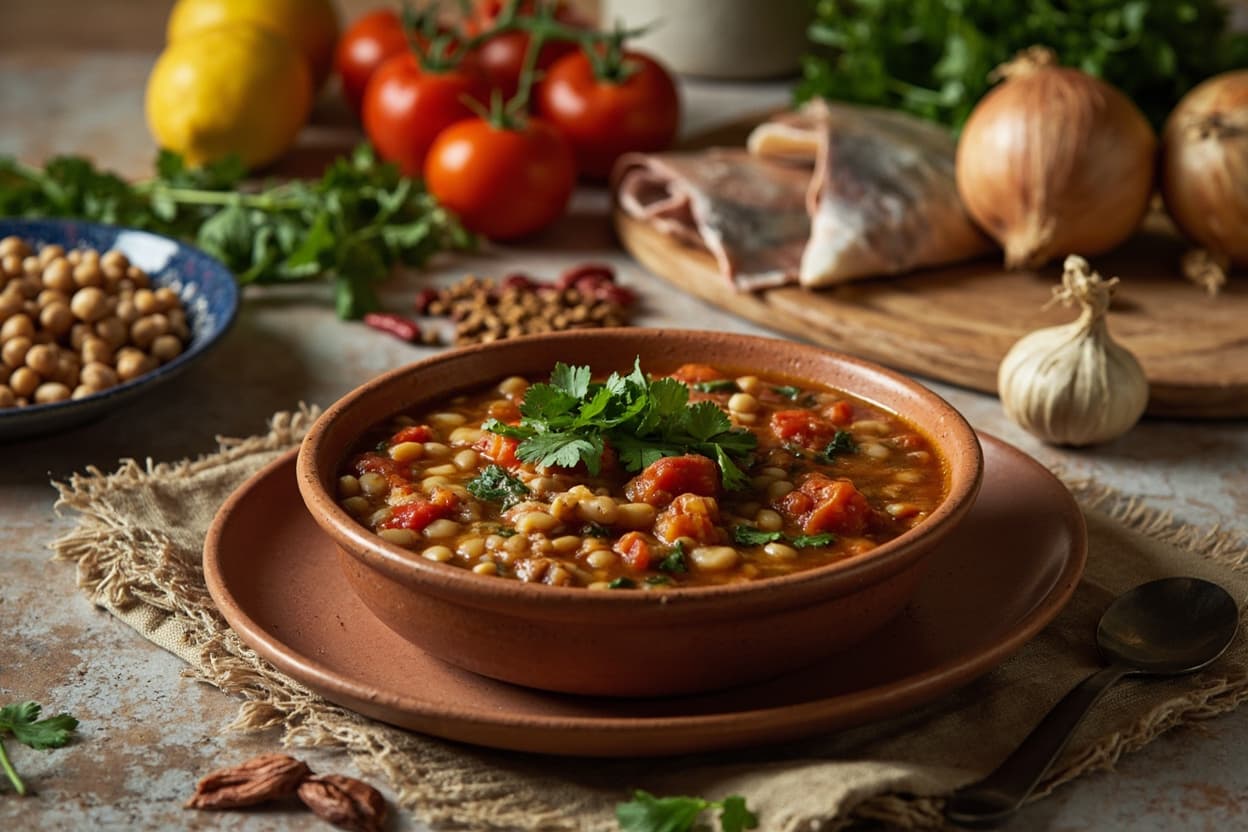
Grandmother's Harira with Lentils and Lemon
Lentils and chickpeas give this soup its body — a thick, satisfying density that builds slowly from tomato and cumin, each ingredient added at its own moment in the sequence. The pot demands time and repays it honestly, deepening in flavor and color over the hour, smelling of something old and certain in the kitchen. Cilantro and lemon are the last things in, and without them the soup would still be good — with them, it becomes the one you remember.
Prep
15 min
Cook
1h 15m
Rest
5 min
Total
1h 35m
Method
Build the spice layer
3
Stir in the cumin, smoked paprika, turmeric, ginger, and cinnamon. Let the spices sizzle in the oil for 60 seconds until deeply aromatic.
4
Add the saffron water and stir to combine, watching the oil turn golden.
Simmer the soup
5
Pour in the diced tomatoes, carrots, lentils, chickpeas, and water. Season with salt and black pepper.
Add the rice
7
Stir in the white rice and continue cooking for another 20 minutes until the rice is tender and the soup has a thick, porridge-like consistency.
A
Nutri-Score
Excellent balance
A–E · lower is better · score -10
Calories
595
per serving
Source of protein · 28gSource of fibre · 14gLow sugar · 6gLow saturated fat · 2g
Protein
28g
Carbs
98g
Fat
12g
Sat. fat
2g
Fiber
14g
Sugar
6g
Sodium
744mg
Gluten FreeVeganDairy FreeEgg FreeHeart HealthyDiabetes FriendlyAnti InflammatoryPlant ForwardHigh FiberHigh ProteinLow FatBalanced Meals
Nutri-Score is a general nutritional-balance guide, not medical or dietary advice.
B
Environmental impact
Low impact
A–E · lower is better · includes estimates
kg CO2e
0.5
per serving
BCarbonAEU all-round· carbon sets the grade
Water
0.8m³
Land
21Pt
Runoff
0.06g P
diced tomatoes drives 26% of this recipe’s estimated footprint.
Carbon from Poore & Nemecek 2018; water, land & runoff from Agribalyse — modelled averages for comparing recipes, not a measurement of your groceries.
Flavor Profile
7
Umami
4
Sweet
5
Salty
5
Sour
1
Bitter
3
Spicy
Textures
SilkyTenderThick
Aromas
Warm SpiceEarthyHerbalCitrus
Kitchen Equipment
Primary Tool
StockpotStockpotChef KnifeCutting BoardWooden SpoonMeasuring CupsMeasuring SpoonsCan OpenerKitchen TowelAluminum Foil
Counter FootprintMedium
Techniques
Safety & Storage
Allergen Warning
This soup contains celery. Clearly label dishes when serving to guests with celery allergies. Use separate utensils and serving ware when handling.
Cooking Temperature
Bring soup to a rolling boil before reducing to simmer. Ensure lentils reach soft texture (45+ minutes simmering) and rice cooks through (additional 20 minutes) to ensure food safety.
Serve harira very hot (above 140°F). Soup must be kept hot when held for service. Warn guests, especially elderly and children, that soup is extremely hot.
Storage
Cool soup rapidly in shallow containers within 2 hours. Refrigerate at 40°F or below. Consume within 3-4 days. Reheat to 165°F until steaming throughout.
Cross Contamination
Clean cutting boards and utensils thoroughly after dicing raw celery, especially when preparing food for allergen-sensitive individuals.
High Risk Population
When serving to elderly, young children, or immunocompromised individuals, ensure soup is served at safe temperatures and ingredients are thoroughly cooked.
Pro Tips
Technique
Take your time blooming the spices. When you add cumin, paprika, turmeric, and cinnamon to the hot oil, listen for the sizzle and watch until the aroma lifts — this should take a full minute, and it's the difference between flat spices and a deeply fragrant foundation that makes the whole soup sing.
Substitution
If saffron feels out of reach, use an extra half teaspoon of turmeric and a pinch of saffron powder — you'll lose the floral notes but keep the golden color and warm depth that defines this soup's soul.
Fresh fava beans or a handful of vermicelli noodles work beautifully as alternatives to chickpeas in spring versions of this soup, though the original remains my favorite.
Make Ahead
Harira actually improves overnight. The spices deepen, the lentils and rice thicken the broth further, and it becomes more silky with each reheating. Make it a day ahead if you can.
From the chef
Harira builds in layers that cannot be hurried. Onion and celery soften slowly in olive oil before the cumin, paprika, turmeric, ginger, and cinnamon go in, where they bloom and turn the oil the color of warm earth. Saffron water follows, then tomatoes, lentils, chickpeas, and enough time for the whole pot to find itself. Rice goes in near the end to thicken things toward something dense and satisfying. Cilantro and lemon are the very last addition — always — because their brightness is what turns a good stew into the one you return to.
TagsSlow CookedHigh FiberOne PotHerbaceousLemon FinishComfort Food
AllergensCelery
Source: generated · May 30, 2026