 South African
Medium · Hot
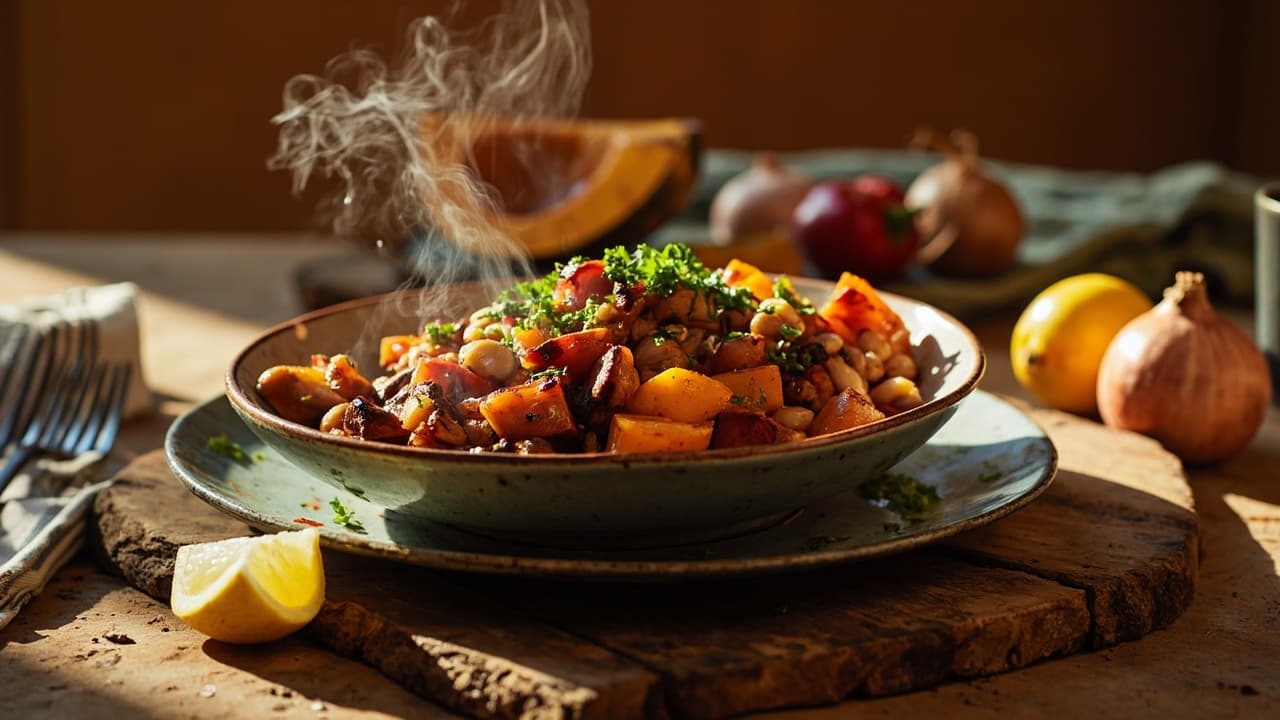
Bean and Butternut Braai Bowl with Peri-Peri Drizzle
A hearty braai bowl featuring flame-charred butternut and smoky beans, finished with a fiery peri-peri drizzle that brings the heat of South African coals to your plate.

Prep
20 min
Cook
35 min
Total
55 min
Method
1
Drain and rinse pinto beans. Peel butternut squash and cut into 2cm cubes. Dice yellow onion. Slice bell pepper into strips. Mince 6 cloves total garlic, reserving 2 cloves separate for the peri-peri drizzle.
2
3
Combine paprika, cumin, salt, black pepper, and 0.5 tsp cayenne in a small bowl to make the braai spice blend. Set aside 1 tsp of this blend for the peri-peri drizzle.
4
Toss butternut squash cubes with 2 tbsp olive oil and 2 tsp of the braai spice blend until evenly coated. Spread on a cast iron grid over medium coals or in a roasting pan at 200C. Roast 20-25 minutes, turning once, until edges caramelize and flesh is tender when pierced.
5
Heat 1 tbsp olive oil in a large cast iron potjie or skillet over braai coals. Saut yellow onion 5-6 minutes until softened and lightly charred at edges. Add minced garlic and remaining spice blend; cook 1 minute until fragrant.
6
Add pinto beans to the potjie with 60ml water. Stir well, then cover and let simmer over gentle coals 10-12 minutes, stirring occasionally, until beans are heated through and liquid reduces to a light glaze. Season with salt to taste.
7
8
Char bell pepper strips directly over open coals 3-4 minutes, turning until blackened in spots. Remove and rough chop.
9
To build each bowl, ladle beans into the center. Arrange roasted butternut squash cubes around and atop the beans. Scatter charred bell pepper and corn kernels over everything.
A
Nutri-Score
Excellent balance
A–E · lower is better · score -10
Calories
613
per serving
Source of protein · 26gHigh in fibre · 26gLow sugar · 11g
Protein
26g
Carbs
98g
Fat
16g
Sat. fat
7g
Fiber
26g
Sugar
11g
Sodium
1037mg
Dairy FreeGluten FreePaleo FriendlyPlant BasedVeganVegetarianWhole30Anti InflammatoryDiabetesDigestive HealthHeart HealthyLow GlycemicNutrient DenseWeight ManagementAntioxidant RichBalanced MacrosHigh FiberLow SodiumPlant Protein
Nutri-Score is a general nutritional-balance guide, not medical or dietary advice.
B
Environmental impact
Low impact
A–E · lower is better · includes estimates
kg CO2e
0.4
per serving
BCarbonAEU all-round· carbon sets the grade
Water
0.8m³
Runoff
0.06g P
Pinto Beans drives 41% of this recipe’s estimated footprint.
Carbon from Poore & Nemecek 2018; water, land & runoff from Agribalyse — modelled averages for comparing recipes, not a measurement of your groceries.
Flavor Profile
6
Umami
4
Sweet
5
Salty
3
Sour
2
Bitter
6
Spicy
Textures
CaramelizedChewyTender
Aromas
EarthyHerbalSmoky
Kitchen Equipment
Primary Tool
Cast Iron Potjie PotBraai GridCast Iron Potjie PotRoasting PanSkilletBraai BrushChef KnifeCitrus JuicerCutting BoardGraterKitchen TongsMeasuring CupsMeasuring SpoonsMixing BowlAluminum FoilFood Storage Bags
Safety & Storage
Cross Contamination
Use separate cutting boards for raw beans and ready-to-eat vegetables. Clean all utensils thoroughly between handling raw and cooked ingredients.
Cooking Temperature
Ensure beans reach minimum 74°C (165°F) when simmering. Butternut squash should be cooked until tender throughout with no firmness at center.
Storage
Refrigerate unused portions within 2 hours. Store peri-peri drizzle separately in airtight container for up to 3 days. Reheat beans to 74°C before serving.
Handling
When charring bell pepper directly over coals, use long braai tongs and position away from body. Allow charred vegetables to cool slightly before handling.
Equipment Safety
Place cast iron potjie on stable, level surface over coals. Handle hot cookware with dry, heat-resistant tongs only. Never add cold liquid to hot cast iron.
High Risk Population
Beans must be fully cooked and heated evenly. Diabetics should note corn content affects blood sugar. Those with nightshade sensitivities may react to peppers, tomatoes in spice blends, and cayenne.
Allergen Warning
While no major allergens are present, this dish contains corn, which some individuals are allergic to. Spices may contain traces of mustard or celery depending on brand processing.
Pro Tips
Technique
Let your butternut sit undisturbed over those coals — the char you want cannot be rushed. When edges turn deep amber and the flesh yields to your tongs with gentle resistance, that is when you know the fire has done its sacred work.
Substitution
No fresh peri-peri chiles? No problem — increase the cayenne in your drizzle by half a teaspoon and squeeze in a touch more lemon. The heat will lift, and the citrus keeps that bright African character alive.
From the chef
Growing up in Johannesburg, I learned that a braai is never just about meat — it is about honoring the fire, about patience and community measured in coal glow and smoke curl. This bowl is my proof that vegetables deserve that same reverence: butternut charred until its edges sing with caramel, beans simmered into smoky depth, all bound together by a peri-peri drizzle that carries the heat and soul of African coals. When you build this bowl, you are not just cooking — you are continuing a ceremony passed down through generations of fire-tenders.
TagsSpicyVegetarianVeganBraaiSmokyHeartyOne BowlPlant BasedCast Iron
Source: generated · June 12, 2026