 Caribbean
Medium · Hot
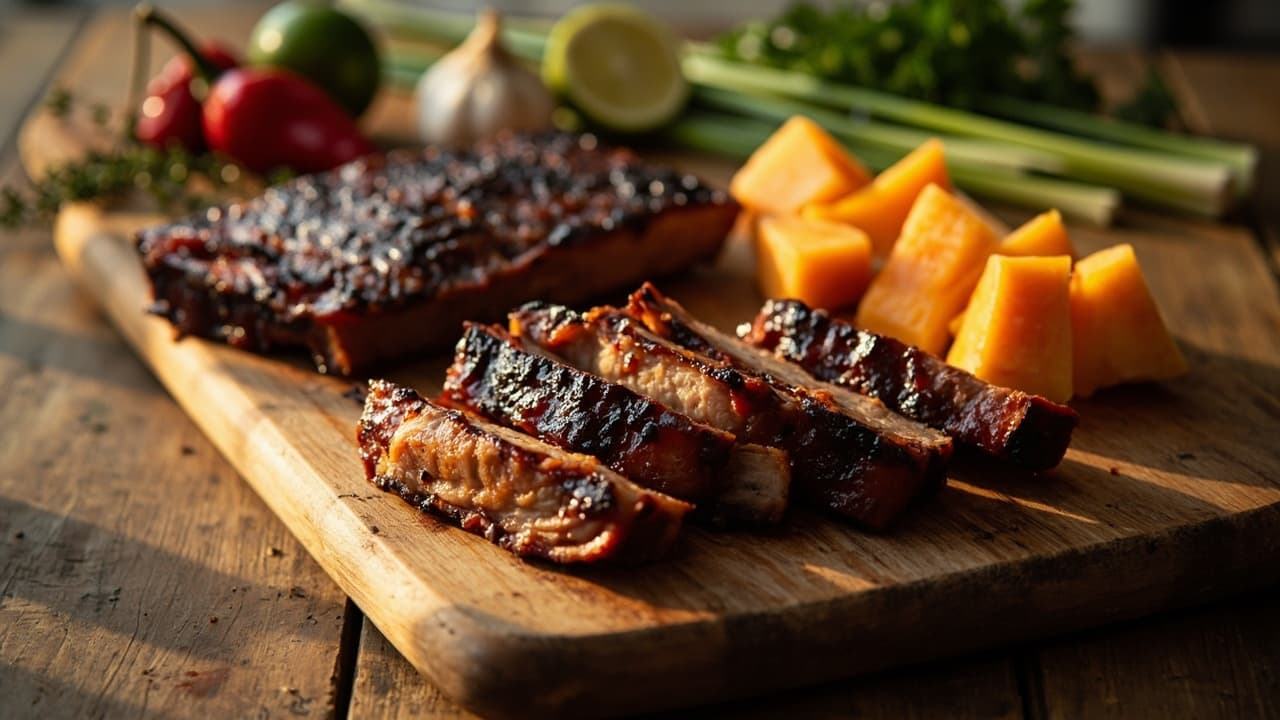
Jerk Glazed Pork Belly with Cantaloupe
Slow-roasted pork belly lacquered in a Scotch bonnet jerk glaze, finished with smoky char and served alongside sweet, cool cantaloupe for a balance of heat and refreshment.

Prep
20 min
Cook
1h 30m
Total
1h 50m
Method
1
2
In a bowl, combine the chopped aromatics with cayenne, cloves, ground ginger, cumin, apple cider vinegar, olive oil, and salt. Squeeze in the juice of one lime and stir until a cohesive jerk paste forms. Taste — it should be pungent, warm, and bright.
3
Score the pork belly skin in a crosshatch pattern, cutting about 1cm deep without piercing through to the meat. This allows the marinade to penetrate and renders fat evenly. Season all over with black pepper and a pinch of salt.
4
Rub the jerk paste generously over every surface of the pork belly, pressing it into the scored lines and between the fat layers. Reserve 3 tbsp of paste for the glaze. Cover and refrigerate for at least 2 hours, ideally overnight for deep flavor penetration.
5
Preheat oven to 160°C (325°F). Place the marinated pork belly skin-side up in a roasting pan or cast iron Dutch oven — the skin will render and crisp during roasting. Add 100ml water to the pan to prevent the fond from burning during the first phase of cooking.
6
Roast uncovered for 1 hour, until the skin has begun to render and the edges show golden fat. The internal temperature should reach 60°C (140°F) at this stage.
7
While the pork roasts, combine brown sugar, honey, soy sauce, hot sauce, and the reserved jerk paste in a small saucepan. Simmer over medium-low heat for 5-7 minutes, stirring often, until the glaze thickens and coats a spoon. Remove from heat.
8
Increase oven temperature to 180°C (350°F). Brush the pork belly generously with the glaze, coating all exposed surfaces. Return to oven and roast for another 25-30 minutes, glazing twice more, until the skin is deeply caramelized and the internal temperature reaches 74°C (165°F) for safe consumption.
9
Remove pork belly from oven and rest for 10 minutes. This allows the juices to redistribute and the glaze to set into a lacquered finish. The skin should be burnished and slightly sticky.
10
Halve the cantaloupe and remove seeds. Cut into half-moon slices about 1cm thick. Arrange on a serving platter with a squeeze of fresh lime and torn mint leaves — the citrus and herb brighten the melon without cooking it.
11
Slice the rested pork belly between the scored lines into 2cm pieces. Arrange over or beside the cantaloupe, letting the caramelized glaze shine. Serve immediately while the skin retains its crispness.
D
Nutri-Score
Needs balance
A–E · lower is better · score 18
Calories
994
per serving
High in saturated fat · 26gCalorie-dense · 994 kcal
Protein
16g
Carbs
31g
Fat
91g
Sat. fat
26g
Fiber
3g
Sugar
23g
Sodium
1625mg
High ProteinHigh Sodium CautionLow Carb FriendlyOccasional IndulgenceBalanced Meal
Nutri-Score is a general nutritional-balance guide, not medical or dietary advice.
D
Environmental impact
High impact
A–E · lower is better · includes estimates
kg CO2e
2.3
per serving
DCarbonAEU all-round· carbon sets the grade
Water
1.4m³
Land
74Pt
Runoff
0.2g P
Pork Belly, skin-on drives 81% of this recipe’s estimated footprint.
Carbon from Poore & Nemecek 2018; water, land & runoff from Agribalyse — modelled averages for comparing recipes, not a measurement of your groceries.
Flavor Profile
7
Umami
6
Sweet
5
Salty
5
Sour
1
Bitter
7
Spicy
Textures
CrispyJuicyStickyTender
Aromas
CitrusHerbalSmokyWarm Spice
Kitchen Equipment
Techniques
Safety & Storage
Cooking Temperature
Pork belly must reach a minimum internal temperature of 74°C (165°F) for safe consumption; use a calibrated meat thermometer inserted into the thickest part of the meat away from bone and fat
The high fat content in pork belly can cause inconsistent heat distribution; ensure even rendering by scoring the skin properly and roasting fat-side up initially to allow fat to baste the meat
High Risk Population
The glaze contains honey; raw honey poses a risk of infant botulism and should not be consumed by children under 12 months or immunocompromised individuals
Allergen Warning
Soy and potential gluten in soy sauce may not be fully degraded during cooking; individuals with severe soy allergy or celiac disease should verify soy sauce is wheat-free tamari before consumption
Handling
Scotch bonnet and cayenne peppers contain capsaicin oils that can cause severe skin and eye irritation; wear gloves when handling peppers and avoid touching face; if contact occurs, rinse with oil then soap and water
Allow pork belly to rest 10 minutes after roasting to allow juices to redistribute; cutting too early results in moisture loss and less tender meat
Cross Contamination
Raw pork belly is a high-risk protein; use separate cutting boards, utensils, and platters for raw and cooked meat; wash all surfaces and hands with hot soapy water after handling
Storage
Leftover pork belly must be refrigerated within 2 hours of cooking at 4°C (40°F) or below; consume within 3-4 days or freeze for up to 3 months
Shelf Life
Marinated pork belly should not exceed 24-48 hours refrigerated before cooking; extended marinating in acidic lime juice and vinegar may degrade protein texture without food safety benefits
Raw Paste Warning
Do not taste the jerk paste after it has contacted raw pork belly; always taste the marinade paste before applying it to the meat to verify seasoning, then discard any remaining untainted portion for glaze use, or prepare a separate batch for tasting.
Pro Tips
Technique
When you score that pork belly, cut deep enough to reach the fat layer but stop before you hit the meat—this creates channels where the jerk paste can work its way deep, and those same channels let the fat render slow and golden. Cut too shallow, and you're just decorating.
Make Ahead
This pork belly rewards patience like a good story rewards a listening ear. Overnight marination isn't just convenience—it's transformation. The lime juice tenderizes, the spices penetrate between the fat fibers, and by morning, your pork has become part of the jerk, not just wearing it.
Substitution
If the Scotch bonnets make you nervous, a habanero carries the same fruity heat and works beautifully here. And if pimento wood chips are nowhere to be found, a handful of allspice berries thrown on your charcoal will call to the allspice already in your paste—the dish remembers its roots.
From the chef
Pork belly and jerk glaze are a slow, serious conversation — the Scotch bonnets and allspice paste works overnight into every scored cut, the oven renders fat for an hour, then brown sugar, honey, soy, and hot sauce reduce into a lacquer that caramelizes over two more passes of the brush until the skin is burnished and slightly sticky. Then sweet, cool cantaloupe with lime and torn mint rests beside it, tender against all that boldness. This is fire and patience and something refreshing to lean on — a plate that holds the whole story together.
TagsSpicySlow CookedJerkCaribbeanPorkGlazedAromaticCitrus
AllergensSoyGlutenSulfitesMustard
Source: generated · June 12, 2026