 Indian
Medium · Hot
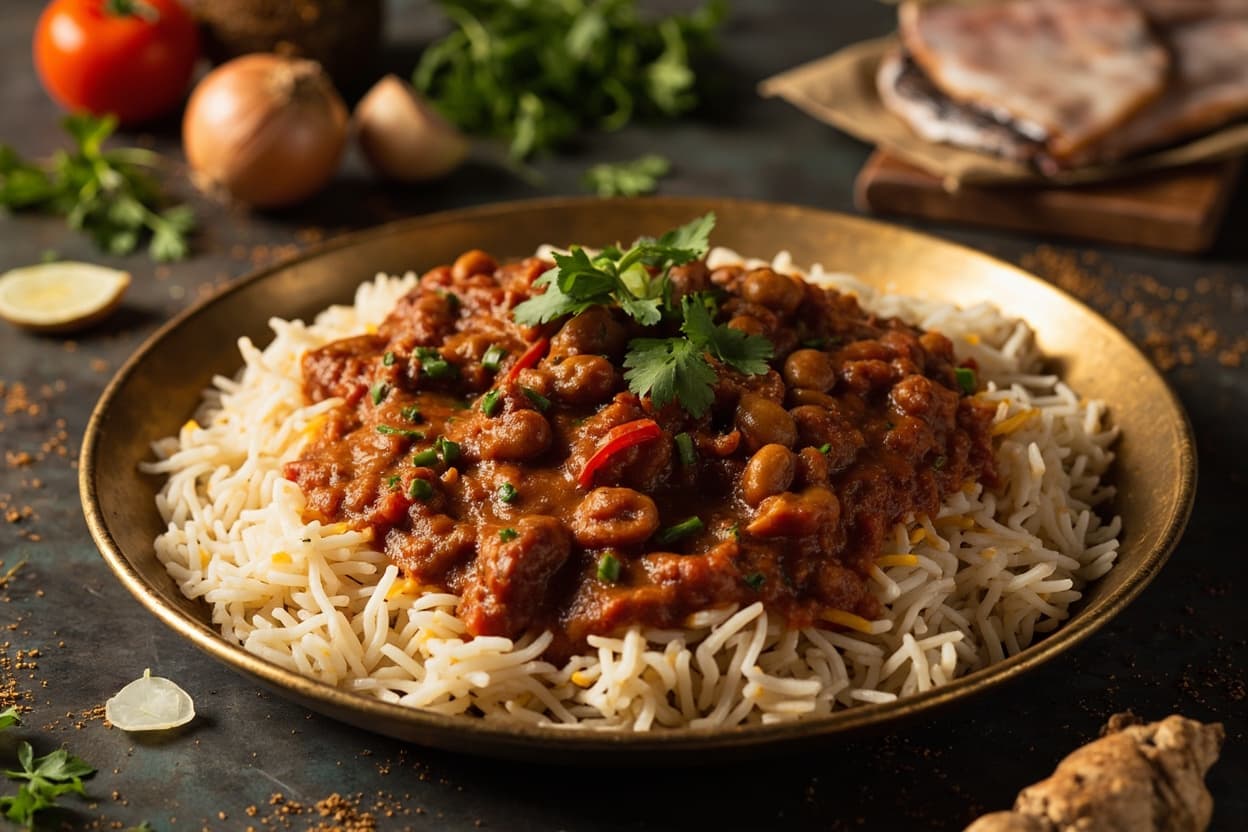
Punjabi Rajma over Steamed Basmati
Kidney beans cooked until they yield to a spoon absorb a masala of long-cooked onion, tomato, ginger, and cumin that is thick, brick-red, and fiercely comforting. Spooned over basmati rice that has been steamed until each grain separates, this is the Sunday lunch Priya grew up eating every week without ever tiring of it — the benchmark for what a dal-rice combination can be.

Prep
15 min
Cook
55 min
Rest
25 min
Total
1h 35m
Method
Prep the Beans
1
The beans are safe when they can be easily mashed between your fingers or a fork prong.
Build the Rajma Base
2
In a heavy-bottomed saucepan, melt 1 tbsp butter over medium heat. Add diced onions and cook for 8-10 minutes until golden brown.
4
Add chopped tomatoes and cook down for 5-6 minutes until soft and oils begin to separate from the masala.
Add Spices and Beans
6
Add ground cumin, ground coriander, turmeric, Kashmiri red chili powder, and black pepper to the masala. Stir well and cook for 2 minutes.
7
Add the cooked kidney beans along with 1 cup of the reserved cooking liquid. Stir to combine and bring to a gentle simmer.
8
Crush a handful of beans lightly with the back of your spoon to thicken the gravy. Simmer on low heat for 15 minutes, stirring occasionally.
Steam the Basmati
13
Rinse basmati rice in cold water until water runs clear. Soak for 20 minutes, then drain.
14
In a saucepan with a tight-fitting lid, bring water and 1 tsp salt to a boil. Add drained rice.
15
Stir once, reduce heat to low, and cover tightly. Steam for 12 minutes without lifting the lid.
16
Remove from heat and let rest covered for 5 minutes. Fluff gently with a fork before serving.
Plate and Serve
17
Mound steamed basmati rice on a large platter or individual bowls.
18
Ladle the hot Punjabi Rajma over the rice, making sure to get plenty of that thick, spiced gravy.
19
Garnish with extra fresh cilantro if desired. Serve immediately while piping hot.
C
Nutri-Score
Fair balance
A–E · lower is better · score 6
Calories
896
per serving
High in salt · 72354mgSource of protein · 37gSource of fibre · 22gLow sugar · 10gLow saturated fat · 7g
Protein
37g
Carbs
164g
Fat
12g
Sat. fat
7g
Fiber
22g
Sugar
10g
Sodium
72354mg
VegetarianGluten FreeDairyHeart HealthyLow Sodium OptionDiabetes FriendlyWeight ManagementHigh ProteinAnti InflammatoryGut HealthLow Processed Foods
Nutri-Score is a general nutritional-balance guide, not medical or dietary advice.
C
Environmental impact
Moderate impact
A–E · lower is better · includes estimates
kg CO2e
1.1
per serving
CCarbonAEU all-round· carbon sets the grade
Water
1.8m³
Runoff
0.1g P
Basmati rice drives 42% of this recipe’s estimated footprint.
Carbon from Poore & Nemecek 2018; water, land & runoff from Agribalyse — modelled averages for comparing recipes, not a measurement of your groceries.
Flavor Profile
8
Umami
5
Sweet
5
Salty
4
Sour
2
Bitter
5
Spicy
Textures
TenderSilkyCreamyFluffy
Aromas
Cumin ForwardAromaticEarthyHerbaceousWarming
Kitchen Equipment
Primary Tool
Pressure CookerPressure CookerHeavy Bottomed SaucepanSmall Frying PanSaucepan With LidChef KnifeCutting BoardMeasuring CupsMeasuring SpoonsWooden SpoonWhiskSlotted SpoonKitchen TimerMixing Bowl
Counter FootprintLarge
Techniques
Safety & Storage
Cooking Temperature
Ensure kidney beans are cooked thoroughly until tender (pressure cook 25 minutes or simmer 1.5 hours). Undercooked beans contain lectins that can cause food poisoning.
When tempering yogurt into the hot masala, add it gradually while whisking continuously over low heat to prevent curdling.
Handling
When making the tadka, use caution when heating butter to the foaming stage. The hot fat can cause severe splashing burns.
Cross Contamination
If soaking beans for more than 8 hours, change the soaking water and refrigerate the beans to prevent bacterial growth.
Storage
Refrigerate leftover rajma within 2 hours. The curry can be stored for 3-4 days refrigerated or frozen for up to 3 months. Reheat to 165°F throughout before serving.
Cooked rice should be refrigerated within 2 hours and consumed within 3-5 days. Reheat steam rice thoroughly before serving.
Allergen Warning
This dish contains dairy (yogurt and butter). Persons with milk allergies or lactose intolerance should avoid or substitute with non-dairy alternatives.
High Risk Population
Beans contain purines. Individuals with gout, kidney disease, or uric acid sensitivity should consume in moderation and stay hydrated.
Pro Tips
Technique
The most important step is cooking your onions until they're truly golden—this takes patience, about 10 minutes over medium heat. Those caramelized onions create the sweet, savory foundation that makes the rajma sing.
Substitution
If you're short on time, canned kidney beans work in a pinch, though the flavor won't be quite as deep. Just drain and rinse them, and add them to the masala with a splash of water instead of the cooking liquid.
Equipment
A pressure cooker is your friend here—it cuts the bean cooking time from 90 minutes down to 25. The beans come out perfectly tender without losing their shape, and you still get that starchy cooking liquid that's pure gold for the gravy.
Flavor Boost
The tadka is where the magic happens—don't skip it. That moment when butter, cumin seeds, and cloves hit the hot rajma creates an aroma that no restaurant can replicate. Pour it sizzling hot and cover immediately to trap every bit of that fragrance.
From the chef
Every Sunday in my mother's kitchen began with a pot of rajma simmering on the stove. This is the dish that taught me patience—let the beans and spices slow-cook together until they become something greater than their parts. Served over basmati with that final sizzling tadka, it fills not just your stomach but your whole home with warmth.
TagsVegetarianHigh ProteinGluten FreeComfort FoodSpicyHeartyOne PotAromaticTraditional
AllergensMilk
Source: generated · May 30, 2026