 French
Medium · Room Temp
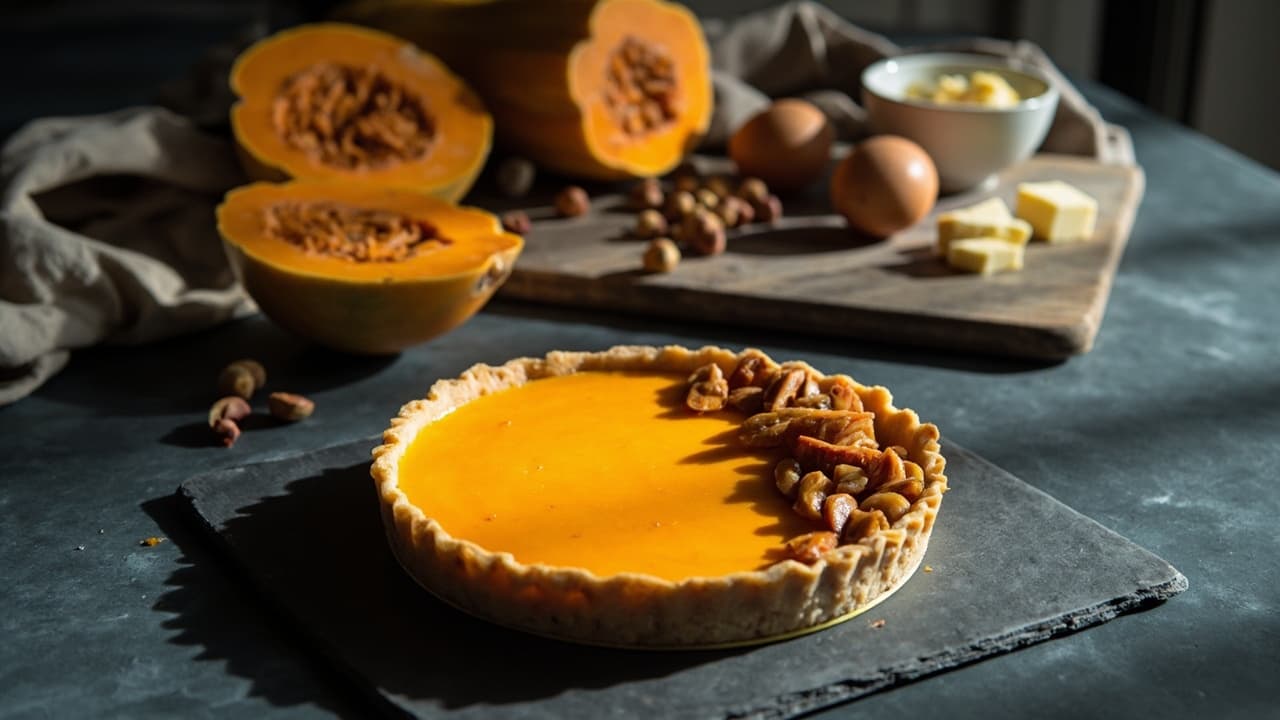
Butternut Custard Tart with Hazelnut Praline
A velvety butternut custard nestled in a buttery shortcrust shell, crowned with shards of caramelized hazelnut praline — a sophisticated balance of smooth, sweet, and nutty with a whisper of warm spice.

Prep
30 min
Cook
55 min
Total
1h 25m
Method
1
2
Add 1 egg and 1 tbsp ice water; mix with a fork until the dough just comes together. Form into a disc, wrap tightly in plastic wrap, and refrigerate for 30 minutes.
3
Preheat oven to 180°C. On a lightly floured surface, roll the chilled pastry to 3mm thickness. Carefully lift into a 23cm tart tin, pressing into the edges. Trim overhang with a rolling pin and prick the base several times with a fork. Freeze for 10 minutes.
4
Line the chilled shell with parchment paper and fill with pie weights or dried beans. Bake for 15 minutes until the edges are set.
5
6
7
Roast at 200°C for 25-30 minutes, turning once halfway, until tender and caramelized at the edges. Cool for 10 minutes.
8
9
Blend on high for 2 minutes until completely smooth. Taste and adjust sweetness or spices if desired. Reduce oven temperature to 160°C.
10
Pour the butternut custard through a fine mesh sieve into a jug to remove any fibers. Discard solids.
11
Carefully pour the smooth custard into the pre-baked tart shell, filling to just below the rim.
12
Bake at 160°C for 25-30 minutes. The filling should be set at the edges but still have a very slight wobble in the center (internal temperature 82°C if using a probe). Remove from oven and cool to room temperature, about 30 minutes.
13
Cover loosely and refrigerate for at least 1 hour until the custard is firm and fully set.
14
Toast 100g hazelnuts at 180°C for 8-10 minutes until golden and fragrant. Transfer to a clean kitchen towel and rub vigorously to remove most of the skins. Cool completely.
15
16
17
Immediately pour onto a silicone mat or parchment-lined baking sheet. Using two forks, separate the nuts into a single layer. Cool completely at room temperature for 15-20 minutes until hard and brittle.
18
Break the cooled hazelnut praline into irregular shards. Arrange decoratively over the top of the chilled tart just before serving.
19
Slice with a hot clean knife, wiping between cuts. Serve at room temperature for the best texture contrast between the set custard and crunchy praline.
C
Nutri-Score
Fair balance
A–E · lower is better · score 10
Calories
675
per serving
High in saturated fat · 20gCalorie-dense · 675 kcalLow salt · 146mg
Protein
12g
Carbs
63g
Fat
44g
Sat. fat
20g
Fiber
6g
Sugar
30g
Sodium
146mg
Comfort FoodIndulgentVegetarianNot Suitable For DiabetesNot Suitable For Heart HealthOccasional TreatBalanced IndulgenceFlavor ComplexityTextural Contrast
Nutri-Score is a general nutritional-balance guide, not medical or dietary advice.
B
Environmental impact
Low impact
A–E · lower is better · includes estimates
kg CO2e
0.7
per serving
BCarbonAEU all-round· carbon sets the grade
Water
0.4m³
Land
40Pt
Runoff
0.08g P
heavy cream drives 28% of this recipe’s estimated footprint.
Carbon from Poore & Nemecek 2018; water, land & runoff from Agribalyse — modelled averages for comparing recipes, not a measurement of your groceries.
Flavor Profile
5
Umami
6
Sweet
4
Salty
2
Sour
3
Bitter
3
Spicy
Textures
ChewyCreamyCrispySilkySmoothTender
Aromas
CaramelEarthyFloralHerbalNuttySpicy
Kitchen Equipment
Primary Tool
23cm Tart Tin23cm Tart TinBlenderOvenRoasting TraySaucepanFine Mesh SieveHeat Resistant Silicone SpatulaKitchen ScaleKitchen TimerMeasuring Cups SpoonsMixing BowlsPastry BrushProbe ThermometerRolling PinWire RackClean Kitchen TowelsParchment PaperPie WeightsPlastic WrapSilicone Baking Mat
Techniques
Safety & Storage
Cooking Temperature
Caramel reaches dangerous temperatures during praline making — watch closely as it transitions from amber to burnt in seconds. Remove from heat immediately when deep amber color is achieved.
Butternut squash roasts at 200°C initially, then oven reduces to 160°C for custard baking. Ensure custard reaches internal temperature of 82°C for food safety.
Handling
When incorporating cold butter into hot caramel, the mixture will bubble vigorously — use a long-handled utensil and keep face and hands away to prevent splashing burns.
Toast hazelnuts carefully at 180°C, watching for golden color rather than time alone as ovens vary. Over-toasted nuts become bitter and can scorch.
Allergen Warning
This recipe contains multiple common allergens. Clean all utensils, cutting boards, and surfaces thoroughly between uses when preparing for allergen-sensitive individuals.
Cross Contamination
The same blender used for the custard filling must be fully disassembled and cleaned before use with allergen-free preparations. Hazelnut residue in gasket seals poses contamination risk.
The roasting tray used for butternut squash (at 200°C) should not be reused for the hazelnuts (at 180°C) without thorough cleaning, as squash residue could fall into the praline during hazelnut processing.
Storage
Refrigerate completed tart at 4°C or below for up to 3 days. The praline shards should be stored separately in an airtight container at room temperature to preserve crunch; add to tart just before serving.
Cool tart completely at room temperature (30 minutes) before refrigerating. Placing hot or warm custard into cold refrigeration creates condensation that compromises texture and creates bacterial growth environment.
Equipment Safety
Use caution when transferring hot caramel-coated hazelnuts to the silicone mat — the caramel remains extremely hot for several minutes and can cause severe burns if touched.
Shelf Life
The custard tart is best consumed within 24-48 hours for optimal texture. After this period, the pastry absorbs moisture from the custard, compromising the buttery shortcrust texture.
Blind baking requires pie weights or dried beans — never skip this step or the pastry base will bubble and warp during baking, creating uneven texture.
Pro Tips
Technique
For the caramel, resist the urge to stir — just swirl the pan and watch the edges melt from pale gold to that deep amber. Stirring invites crystallization, and we want glass, not fudge. When you add the butter at the end, it will bubble aggressively — stand back and embrace the drama.
Substitution
No hazelnuts? Pecans work beautifully here — same caramelized depth, slightly different regional accent. Or if you want to go full borderless patissier, try blanched almonds for a more classic French praline finish.
From the chef
Here's where my French patisserie grammar gets properly mischievous. The shortcrust? Absolutely classical — beurre, farine, the whole foundation. But then I take that pristine egg custard technique and whisper it something unexpected: butternut squash instead of the usual suspects, warm spices dancing with vanilla beneath the surface. And the praline? That's where I build architecture — caramelized hazelnuts shattering over that velvet surface like a beautiful controlled disaster waiting to happen.
TagsFrench PatisserieAutumnHazelnutButternut SquashPralineCaramelizedTextural ContrastMake AheadMedium DifficultySweet
AllergensEggsMilkTree NutsWheatGluten
Source: generated · June 13, 2026