 Chinese
Advanced · Hot
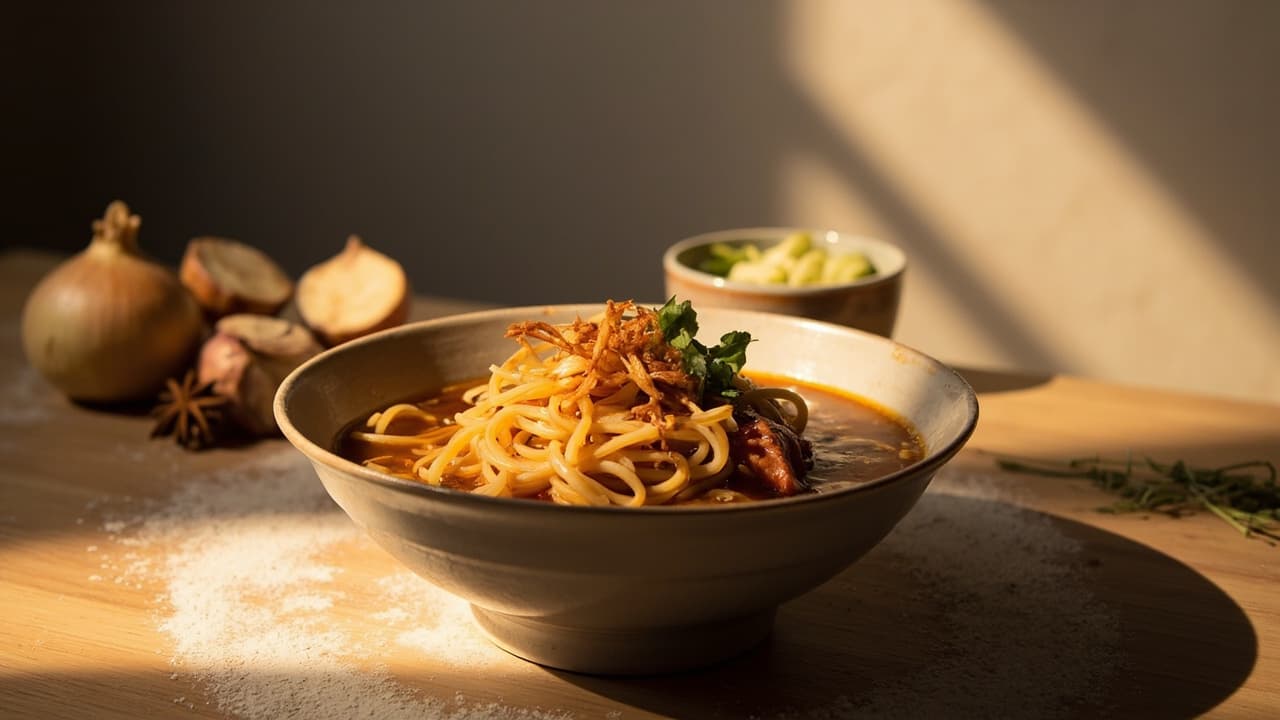
Hand-Pulled Noodles with Silky Pork Broth and Crispy Shallots
Tender, chewy hand-pulled noodles served in a deeply flavored silky pork broth, finished with golden crispy shallots and fragrant herbs. This is a meditative Sunday project that rewards patience with restaurant-quality results.

Prep
30 min
Cook
2h 30m
Rest
45 min
Total
3h 45m
Method
Noodle Dough
1
Gradually add water, a splash at a time, while continuing to incorporate flour. The dough will become shaggy and difficult to mix with the fork—switch to your hands and knead vigorously for 10-12 minutes until the dough is smooth, elastic, and springs back when poked.
2
Form the dough into a tight ball and wrap tightly in plastic wrap. Allow to rest at room temperature for at least 45 minutes—this relaxes the gluten and makes pulling significantly easier.
Silky Pork Broth
3
Add the seared pork belly back to the pot. Cover partially and maintain the gentlest simmer possible—barely a whisper of bubbles—for 2 to 2.5 hours. A violent boil will make the broth cloudy; patience yields silkiness.
4
Remove the pork loin and pork belly. Strain the broth through a fine-mesh strainer lined with cheesecloth. Season with salt and white pepper. Keep warm.
Crispy Shallots
5
Add shallots in batches, stirring gently with a spider strainer. Fry for 3-4 minutes until deeply golden and crisp. They will continue to crisp as they cool. Transfer to paper towels and season immediately with a pinch of salt.
Pulling Noodles and Assembly
6
Bring a large pot of generously salted water to a rolling boil. Cook the pulled noodles for 2-3 minutes until they float and have a slight chew at the center when bitten. Drain immediately.
7
Divide noodles among deep bowls. Ladle hot broth generously over each portion. Top with thin slices of the reserved pork belly, a handful of crispy shallots, and fresh thyme leaves. Serve immediately while the noodles are hot and the shallots retain their crunch.
B
Nutri-Score
Good balance
A–E · lower is better · score 2
Calories
1556
per serving
Calorie-dense · 1556 kcalSource of protein · 64gLow sugar · 15g
Protein
64g
Carbs
103g
Fat
98g
Sat. fat
24g
Fiber
9g
Sugar
15g
Sodium
2077mg
High ProteinHigh SodiumGluten ContainingNot Keto FriendlyNot Low FatNot Heart HealthyModerate Purine ContentMuscle MaintenanceComfort FoodHigh Protein Lunch
Nutri-Score is a general nutritional-balance guide, not medical or dietary advice.
E
Environmental impact
Very high impact
A–E · lower is better · includes estimates
kg CO2e
3.6
per serving
ECarbonBEU all-round· carbon sets the grade
Water
0.7m³
Land
131Pt
Runoff
0.3g P
Pork Loin drives 68% of this recipe’s estimated footprint.
Carbon from Poore & Nemecek 2018; water, land & runoff from Agribalyse — modelled averages for comparing recipes, not a measurement of your groceries.
Flavor Profile
8
Umami
4
Sweet
5
Salty
1
Sour
2
Bitter
3
Spicy
Textures
CrispyChewyTenderSilky
Aromas
HerbalWarm SpicedSavoryPungent
Kitchen Equipment
Primary Tool
Large StockpotLarge StockpotNoodle PotDutch OvenFrying PotRolling PinFine Mesh StrainerCheeseclothSpider StrainerTongsLadleStand MixerMixing BowlsMeasuring CupsMeasuring SpoonsKitchen ScalePastry BrushThermometerSpatulaWooden SpoonChef KnifeParing KnifeCutting BoardKitchen TimerFine GraterSmall SkilletPlastic WrapAluminum FoilPaper TowelsKitchen TwineClean Kitchen TowelsFreezer Bags
Counter FootprintLarge
Safety & Storage
Cooking Temperature
Maintain pork broth at a gentle simmer—barely bubbling—for 2 to 2.5 hours. A violent boil will cloud the broth and may not achieve proper silky texture. Internal pork temperature should reach 145°F for loin cuts.
Heat sunflower oil for crispy shallots to proper frying temperature. Shallots should fry for 3-4 minutes until deeply golden. Undercooked shallots retain moisture and can cause splattering.
Cross Contamination
Use separate cutting boards and utensils for raw pork products and ready-to-eat ingredients like fresh herbs. Wash hands thoroughly after handling raw pork and before handling noodles or serving dishes.
Prevent gluten cross-contact by cleaning all surfaces, bowls, and utensils when preparing for gluten-free diners. Flour dust can linger on workspace surfaces.
Storage
Cool pork broth rapidly in shallow containers and refrigerate within 2 hours. Consume within 3-4 days or freeze for up to 3 months. Reheat to 165°F before serving.
Crispy shallots lose crunch rapidly. Prepare fresh and serve immediately. Store any leftovers in airtight container at room temperature for up to 24 hours maximum.
Handling
Use thermometer monitoring for extended simmering period. Monitor noodle cooking water to maintain rolling boil for proper texture. Never leave hot broth unattended on heat source.
High Risk Population
For immunocompromised individuals, pregnant individuals, or elderly: ensure all pork reaches minimum internal temperature of 145°F. Avoid consuming broth that has been at warm temperatures (40-140°F) for more than 2 hours total.
Allergen Warning
Clearly label dishes containing wheat/gluten, eggs, and milk for serving. For guests with severe allergies, prepare their portion first before handling allergen-containing ingredients.
Equipment Safety
Use spider strainer for removing crispy shallots from hot oil. Allow oil to cool before disposing. Never add water to hot oil—this causes violent splattering and steam burns.
Pro Tips
Technique
Never rush the broth's simmer. A violent boil bruises the proteins and clouds your efforts—keep it at the gentlest whisper, just enough movement to show it's alive. That's how silk happens.
Make Ahead
Make the broth up to two days ahead and refrigerate. The fat solidifies on top, making skimming effortless, and the flavors actually deepen with time. Pull the noodles fresh though—that texture is non-negotiable.
Substitution
If pork belly is unavailable, duck fat renders beautifully for the broth and adds a deeper, more complex richness. The thyme stays; it's the bridge between the earthy pork and something almost aromatic.
From the chef
I learned patience the hard way—first batches of broth clouded by my own impatience, noodles that snapped instead of stretched. But there's a meditative rhythm to this dish: the gentle whisper of a two-hour simmer, the satisfying resistance of well-rested dough giving way under your hands, those shallots turning amber in hot oil. This isn't cooking for efficiency; it's a Sunday ritual where time becomes the most important ingredient, and the reward is four bowls that taste like you slow-cooked something extraordinary.
TagsHand PulledPork BrothSlow CookedWeekend ProjectAdvanced TechniqueComfort Food
AllergensWheatEggsMilk
Source: generated · June 10, 2026