 Indonesian
Medium · Hot
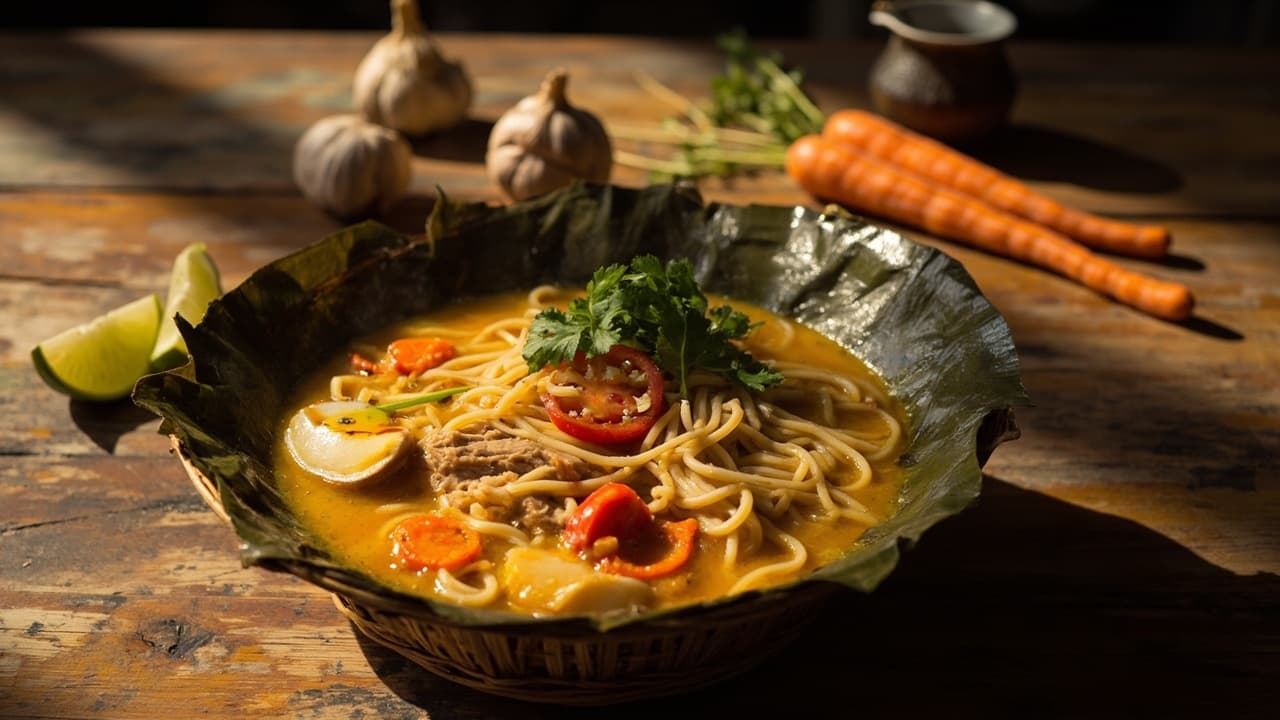
Mie Rebus — Comforting Indonesian Noodle Soup
A soul-warming Indonesian noodle soup with tender chicken, silken egg, and vegetables in a rich, slightly sweet broth seasoned with aromatic spices and finished with a drizzle of sesame oil and fresh herbs.

Prep
20 min
Cook
35 min
Total
55 min
Method
Prepare Ingredients
1
3
Slice chicken breast into bite-sized pieces and season lightly with salt.
4
Slice chicken breast into bite-sized pieces and season lightly with salt.
5
Build the Broth
8
Heat coconut oil in a large wok over medium heat until melted and shimmering.
9
Add spice paste to the wok and fry for 2-3 minutes until fragrant and paste darkens slightly.
10
Cook Proteins and Vegetables
13
Push vegetables aside and add sliced chicken breast to the broth. Poach for 5-6 minutes until chicken reaches internal temperature of 165°F/74°C throughout.
Cook Noodles and Assemble
15
Bring a large pot of salted water to boil. Cook spaghetti according to package directions until al dente, about 7-8 minutes. Drain well.
16
Divide cooked spaghetti among four deep bowls.
17
Ladle hot broth with chicken, vegetables, and tofu over the noodles, filling bowls generously.
18
Top each bowl with 2 halved hard-boiled eggs.
Finish and Serve
19
Drizzle sesame oil over each bowl for aroma.
21
Serve immediately with extra lime wedges and soy sauce on the side for guests to adjust seasoning.
A
Nutri-Score
Excellent balance
A–E · lower is better · score -3
Calories
819
per serving
High in protein · 51gLow sugar · 12g
Protein
51g
Carbs
104g
Fat
23g
Sat. fat
11g
Fiber
10g
Sugar
12g
Sodium
779mg
High Sodium CautionHigh ProteinBalanced Meal
Nutri-Score is a general nutritional-balance guide, not medical or dietary advice.
C
Environmental impact
Moderate impact
A–E · lower is better · includes estimates
kg CO2e
1.5
per serving
CCarbonAEU all-round· carbon sets the grade
Water
0.7m³
Land
64Pt
Runoff
0.2g P
Chicken Breast drives 48% of this recipe’s estimated footprint.
Carbon from Poore & Nemecek 2018; water, land & runoff from Agribalyse — modelled averages for comparing recipes, not a measurement of your groceries.
Flavor Profile
8
Umami
4
Sweet
6
Salty
2
Sour
1
Bitter
5
Spicy
Textures
SilkyTenderChewySmooth
Aromas
HerbalEarthyNuttyPungentSmoky
Kitchen Equipment
Primary Tool
WokCounter FootprintMedium
Techniques
Safety & Storage
Cooking Temperature
Poach chicken breast for 5-6 minutes in simmering broth to reach safe internal temperature of 165°F/74°C. Hard boil eggs for full 8 minutes. Ensure tofu and vegetables are heated through before serving.
Cross Contamination
Use separate cutting boards and utensils for raw chicken and other ingredients. Wash hands thoroughly after handling raw poultry. Avoid contact between raw proteins and ready-to-eat items like herbs and garnishes.
Storage
Refrigerate leftover soup within 2 hours at 40°F/4°C or below. Store noodles separately from broth to prevent mushiness. Consume within 3-4 days. Reheat broth to 165°F/74°C before serving.
High Risk Population
Soup contains undercooked risk for eggs if cooking time is insufficient. Immunocompromised individuals, pregnant women, young children, and elderly should ensure eggs are cooked to firm yolk and chicken reaches safe temperature.
Allergen Warning
This dish contains multiple major allergens: wheat/gluten from spaghetti, eggs, soy from tofu and soy sauce, and sesame from finishing oil. Cross-contact with other allergens including peanuts, tree nuts, fish, and shellfish may occur if equipment is shared.
Handling
Handle eggs carefully during ice bath transfer after boiling to prevent burns. Use caution when working with hot wok containing coconut oil at frying temperatures. Prevent splattering when adding spice paste to hot oil.
Equipment Safety
When blending spice paste, ensure blender lid is secure. When boiling eggs, use appropriate pot size to prevent overflow. Handle wok with care on stovetop as contents are heavy when filled.
Pro Tips
Technique
Never skip the step of frying your bumbu paste in coconut oil — this is where the magic happens, when the heat wakes up every aromatic compound in the garlic, shallot, and ginger. Keep stirring for those full 2-3 minutes until you see the color deepen and the fragrance fill your kitchen.
When poaching your chicken in the broth, do not boil — keep it at a gentle simmer so the pieces stay tender and absorb flavor rather than toughening up from agitation.
Flavor Boost
Add a teaspoon of terasi (shrimp paste) to your bumbu for that authentic umami depth that makes mie rebus taste like it came from a warungs in Yogyakarta. My grandmother would not approve if you skipped this!
Substitution
If you cannot find kecap manis, mix 2 tablespoons of regular soy sauce with 1 tablespoon of brown sugar — it will not be quite the same, but it will keep you close enough to the spirit of this dish.
From the chef
Mie rebus earns its warmth from a bumbu built with turmeric and ginger ground until fragrant, then fried in coconut oil until it blooms into the broth. Tender chicken, soft tofu, and vegetables cook in that spiced liquid until everything is saturated with it. The sesame oil finish adds depth at the last moment, and the lime you squeeze over your bowl at the table is non-negotiable — that acidity is what makes all the flavors land. This is the Indonesian noodle soup that rewards patience in the paste and generosity at the garnish stage. Do not hold back on either.
TagsSpicyComfort FoodNoodle SoupIndonesianWeeknight DinnerUmami
AllergensWheatGlutenEggsSoySesame
Source: generated · June 10, 2026