 Caribbean
Medium · Hot
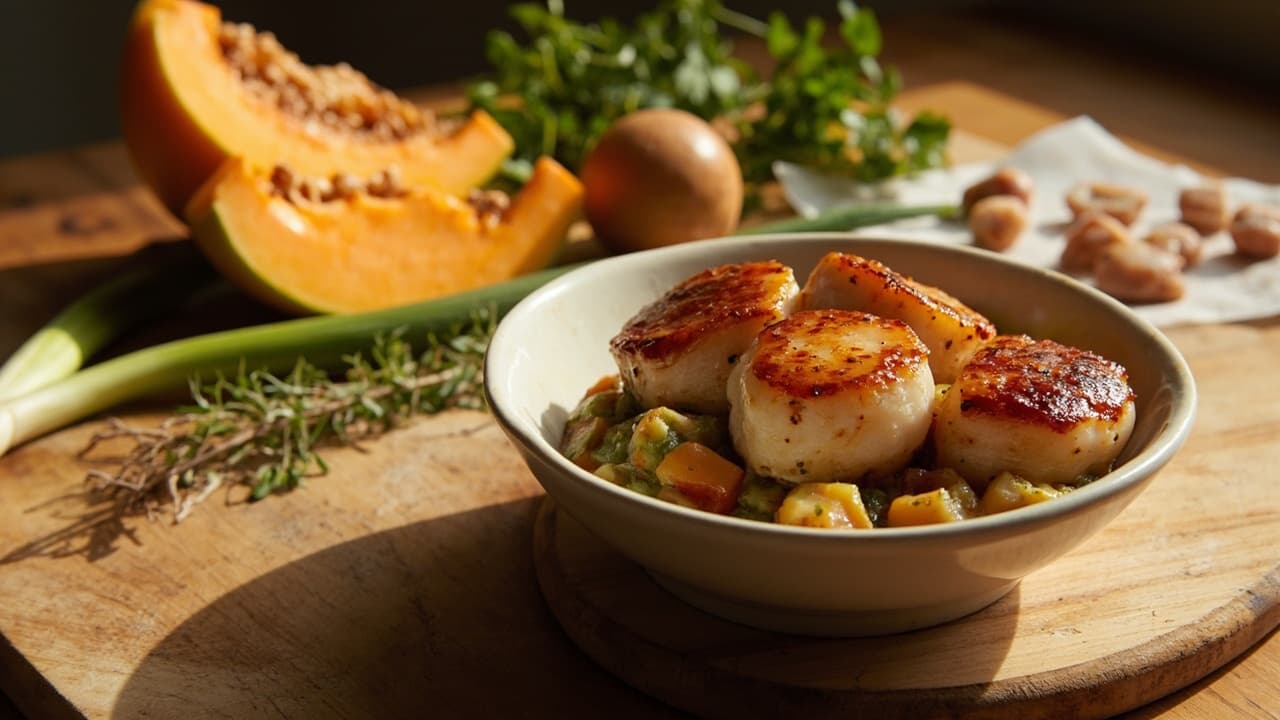
Jerk Glazed Scallops with Cantaloupe Salsa Verde
Pan-seared scallops finished with a warm Jamaican-inspired jerk glaze, served alongside a bright cantaloupe salsa verde. The smoky heat of the glaze meets the sweet freshness of the melon in perfect island harmony.
Prep
20 min
Cook
10 min
Total
30 min
Method
1
2
3
4
Remove from heat. Zest both limes directly into the glaze, then halve one lime and squeeze in its juice. Stir well and set aside to cool slightly.
5
Cut the cantaloupe into small dice, about 1/4-inch pieces. You should have about 2 cups.
6
Finely chop the cilantro and parsley. Thinly slice the remaining scallion. Combine these with the diced cantaloupe in a mixing bowl.
7
8
Pat the scallops thoroughly dry with paper towels — moisture is the enemy of a good sear. Season evenly with salt and black pepper.
9
Heat a cast iron skillet or heavy-bottomed pan over high heat. Add the olive oil and heat until it shimmers and just begins to smoke lightly, about 2 minutes.
10
Lay the scallops in the pan in a single layer, leaving space between each. Listen for the sizzle — it should be vigorous. Sear undisturbed for 1-2 minutes until a deep golden crust forms on the bottom.
11
12
Reduce heat to medium-low. Brush the top of each scallop generously with the jerk glaze. Flip and brush the second side. Let the glaze warm through for 30-45 seconds as it caramelizes lightly onto the scallops.
13
Remove the scallops from the pan immediately to prevent overcooking. Let them rest for 1 minute.
14
Spoon the cantaloupe salsa verde onto serving plates or a shallow bowl. Arrange the glazed scallops atop the salsa. Serve immediately while the scallops are tender and the glaze is still glossy.
A
Nutri-Score
Excellent balance
A–E · lower is better · score -1
Calories
362
per serving
High in protein · 22gLow saturated fat · 3g
Protein
22g
Carbs
31g
Fat
19g
Sat. fat
3g
Fiber
6g
Sugar
20g
Sodium
1112mg
Dairy FreeGluten FreeLow CarbMediterraneanPaleoWhole30Anti InflammatoryDiabetesHeart HealthyLow Sodium AdaptableWeight ManagementBalanced MacrosHigh ProteinLow Sugar AdaptableNutrient Dense
Nutri-Score is a general nutritional-balance guide, not medical or dietary advice.
Grade pending
Environmental impact
Estimated footprint
Grade pending · 70% ingredient coverage
kg CO2e
≥0.3
per serving
Cantaloupe drives 37% of this recipe’s estimated footprint.
Carbon from Poore & Nemecek 2018; water, land & runoff from Agribalyse — modelled averages for comparing recipes, not a measurement of your groceries.
Flavor Profile
6
Umami
5
Sweet
4
Salty
4
Sour
1
Bitter
5
Spicy
Textures
CrispySaucySilkyTender
Aromas
CitrusHerbalSmokySpicySweet
Kitchen Equipment
Primary Tool
Cast Iron SkilletSafety & Storage
Cooking Temperature
Scallops must reach an internal temperature of 57°C (135°F) as specified; use a calibrated meat thermometer to verify doneness and avoid undercooking.
Cross Contamination
Raw scallops must not contact the cantaloupe salsa or finished plates; use separate cutting boards and utensils, and sanitize surfaces after handling raw seafood.
High Risk Population
Scallops are considered a high-risk seafood for bacterial contamination; immunocompromised individuals, pregnant persons, young children, and elderly should ensure scallops are fully cooked to safe temperature.
Storage
Raw scallops must be refrigerated at 4°C (40°F) or below and used within 1-2 days of purchase; keep hot sauce refrigerated after opening per label instructions.
Handling
Pat scallops completely dry before searing to prevent steaming and ensure proper browning; moisture on the surface creates a steam barrier rather than a crust.
Equipment Safety
Heat olive oil in cast iron pan until it shimmers and just begins to smoke before adding scallops; do not overheat unattended as oil can reach dangerous temperatures and cause burns.
Pro Tips
Technique
Listen to your pan, mon — when the scallops hit that screaming hot oil and you hear a deep, sustained sizzle, that’s the sound of the sear forming right. Don’t move them for at least ninety seconds. The caramelization you want is like the crust on good porchini bread — it only comes to those who wait and let the heat do its sacred work.
Substitution
If the hot sauce you have on hand lacks that true Scotch bonnet fire, take a whole bonnet, puncture it twice with a fork, and let it steep in the glaze while it simmers — you’ll draw out that island brightness without overwhelming the honey’s sweetness the way a dumped-in chili might.
From the chef
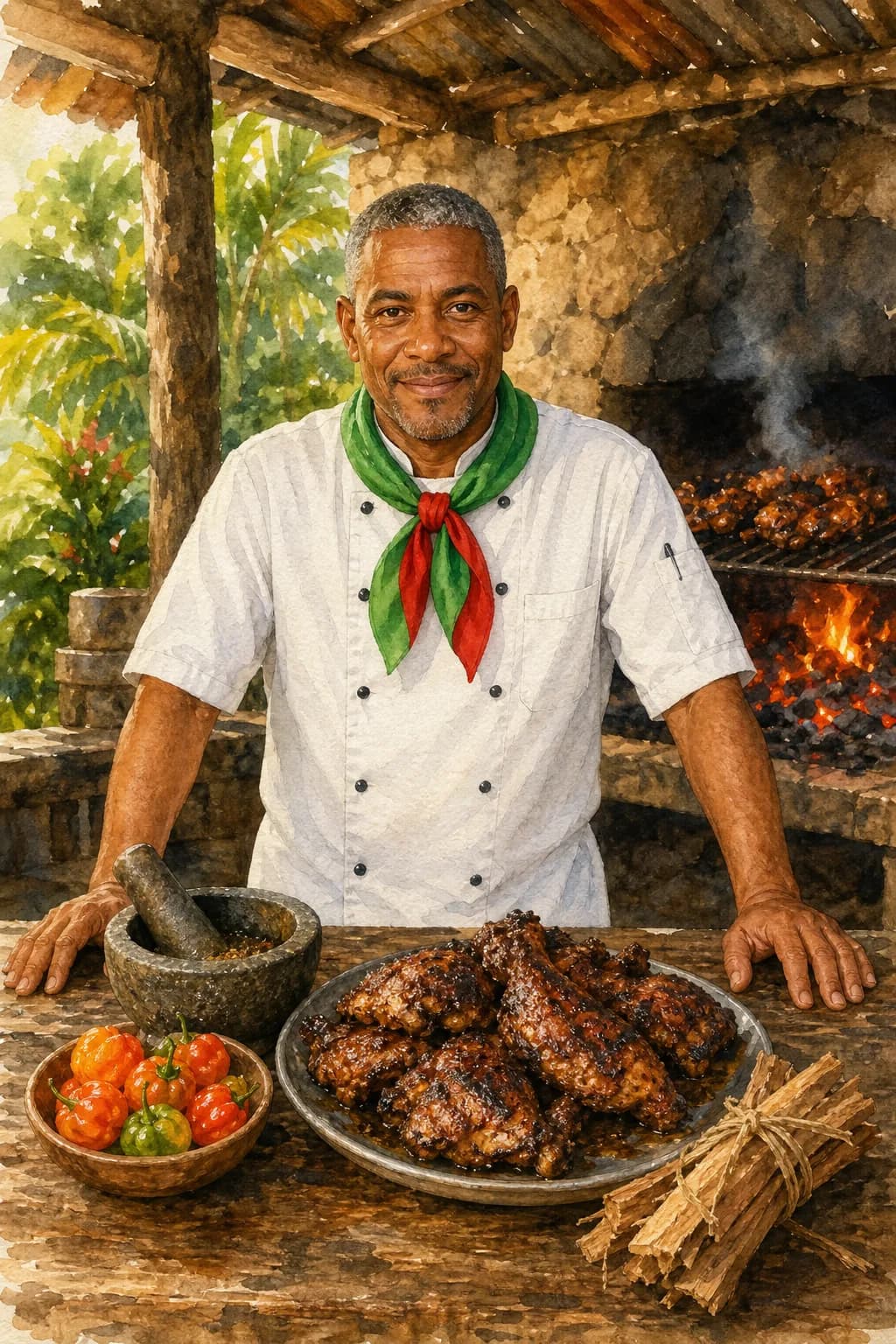
Scallops need a hard sear first — that deep golden crust on a dry cast iron pan, undisturbed, is what this dish is built on. Then the jerk glaze goes on: hot sauce, honey, ginger, cloves, and thyme simmered down into something fragrant and warm, brushed onto the scallops as the heat drops. Against that smoky sweetness, the cantaloupe salsa verde does real work — cold diced melon, bright lime, cilantro and parsley all tossed together, cutting through the heat with clean freshness. Sea and fire meeting on one plate, each one making the other taste better.
TagsJerkSeafoodScallopsCaribbeanSpicyPan SearedMedium
AllergensMollusksSulfites
Source: generated · June 12, 2026